Tuesday, July 24, 2012

The Dark Knight Massacre and the Ungodliness of Christian Mercy


As I watched the gruesome details unfold surrounding the recent mass killing in an Aurora, Colorado movie theater, I, like most people, had to wonder to myself how something and/or someone like this could happen. How does one get to the point where they become so blatantly indifferent to life that they view killing as a kind of virtual blood sport? As human beings, we have to believe that there is some sort of satisfying explanation for behavior like this (a human vulnerability that the "Joker" incidentally played on in the previous Batman film). Maybe there is some sad story from his childhood that is responsible for the evil, or maybe there is a narrative that helps explain how, little by little, this man chose to go down this particular path of wickedness.

According to numerous reports, when they brought him into the station, he acted as if he thought he were still "in character". Spitting at everyone who came into view, he declared to all present that he was in fact "the Joker". No doubt such a cold blooded murderer could exist in any era, but what makes our time particularly ripe for such a figure has something to do with our uncanny ability to churn out alternate realities quicker than the world can produce its own. In these times more than any other a man really does have the option of living in a kind of surreal world (I'm sure MTV is working on this one as we speak).

In ancient times you at least had to be around other human beings when you went to the Roman Coliseum. Today, you can enter the Flavian Amphitheater without leaving the confines of your own living room. Indeed, we have fostered a culture so digitally connected- and yet so socially disconnected- that it is no wonder that people like James Holmes can't tell the difference between a movie and reality. Incidentally, before Heath Ledger played the role of the Joker, he apparently prepared for the part by isolating himself in a hotel room for an entire month- watching films like "A Clockwork Orange" over and over again in the hope of getting in the right head space. Tragically, it should not surprise us that after so artfully poisoning his mind, he was never quite able to recover from it. Indeed, one cannot so easily dip their head into the great abyss and then pull it right out again. The question for us, however, is whether this James Holmes character is a complete aberration, or whether we as a society are cultivating a whole generation of little "Jokers". Certainly a case could be made for this.

Yet of all the things that stood out to me as I listened to the harrowing details of the case (both tragic and heroic), there was one thing that really struck me- a beacon of hope and sanity amidst all of the carnage and chaos of the story. What I am referring to is something that has become so second nature to us here in the West that we no longer recognize just how extraordinary and outrageous it is. There has always been a form of justice, even in the most barbaric societies, but it is thanks in large part to our Christian heritage that we have also learned to temper that righteous (and sometimes unrighteous) anger with mercy. Not only was the murderer not gunned down on the spot, but when he was detained and taken into custody, he was given a respect and dignity that he himself had denied others. And as he was placed in a prison cell, special care was taken to make sure that he was separated from the other inmates (there was apparently no shortage of prisoners who wanted to kill him). Furthermore, if you take a look at all of the recent cases of mass murderers, from Jared Loughner in Arizona, to Major Nidal Hasan in Texas, to Anders Breivik in Norway, they all have something in common that goes well beyond their senseless disregard for life... the even more senseless mercy that was shown to each of them. It is a practice rooted in the Gospel, and one which finds its full voice in figures like Augustine and Aquinas in their articulation of Just War Theory; which includes, among other things, the basic notion that God is the author of life, and that one should never directly take a life- unless it is necessary for self defense. Call it crazy, call it reckless, call it ungodly if you like, but do not forget that without this kind of mercy, life would simply be an endless cycle of vengeance and retribution- a state of mind not unlike the aforementioned killers.

Consequently, there will be a trial for James Holmes, not because we think men like this are innocent, but because we, unlike the Joker, cling to a set of principals, though sometimes in our haste we might prefer to set them aside. All of the evidence will be heard, not because we think there is any question about his guilt, but because we prefer a coherent moral order to a mob rule. Oh, how tempting it would be to throw out restraint and just kill a man like this with our bare hands, and yet even the families of those affected by this tragedy are denied such a privilege. Great care will be taken to ensure that the man's behavior is not the result of some mental illness, a "minor detail" that would be so easy to jettison given the public outcry. Still, we hold firm to our Christian principles, attempting with all of our moral might to create the necessary groundwork wherein justice and mercy may effectively "kiss". It is in some ways a comical form of restraint not unlike the kind that Jesus proposes when he suggests that 'one good slap deserves another.' Nevertheless, it is precisely this kind of mercy and restraint that separates us from the barbarians; this kind of "due process" that prevents us from returning to the type of savagery that was so clearly evident in the shootings in Colorado.


Authors Notes: Let me state for the record that I am not proposing a justice system that blithely looks the other way when there are terrible crimes such as this, for I could say a lot about the kind of "mercy" that allowed Major Nidal Hasan escape the scrutiny of his military superiors, or the type of coddling that Ander Breivik will receive in a Norwegian "prison". The type of mercy of which I speak is real mercy, not stupidity and moral cowardice; mercy that ensures that justice is genuinely served, as opposed to a form of social venting and scapegoating that ultimately seeks to operate under the guise of justice. 


Tuesday, July 17, 2012

Why Atheists and Agnostics Should Defend Religious Liberty


The presumption of many today is that religious liberty is a matter which only concerns those who are religiously inclined. This could hardly be further from the truth. The concept of religious freedom goes well beyond whether or not one is able to attend church or believe certain things about God. Indeed, everyone knows that even at the height of the Cold War in the Soviet Union people were attending church and believing what they chose to believe. And certainly religious freedom includes the ability for one to practice their religion privately without interference from the government, but, once again, it goes much further than that.

The first amendment to the Constitution, like the first commandment in the Decalogue, is not happenstance. The commandments and the amendments are listed in the order of their importance. In practical terms, this means that one dare not remove the first principle unless one's intention is to lose all the rest besides. For this reason alone it would be more than a little prudential to understand the significance of our own country's "first commandment". Many who originally came to the shores of this country did so under the impression that they would be able to practice their religion freely. However, by enshrining this principle in the Constitution, the founding fathers were elevating more than religion; they were elevating the freedom for a man to live according to his own lights and conscience. This includes the freedom, not just to think certain thoughts, but to live in accord with those thoughts (presuming that one's actions do not deprive another of their own); "Congress shall make no law respecting an establishment of religion, or prohibiting the free exercise thereof; or abridging the freedom of speech, or the press; or the right of people to peaceably assemble, and to petition the government for a redress of grievances." Notice, freedom of speech is inextricably bound up with religion. Why? Because without religion there is no freedom of conscience. This even includes the rights of those who choose not to believe in anything. Thus, to defend God's existence is to defend your right to deny his existence. Ironic isn't it?

How can this be, you say? Let us consider for a second what freedom is and what a conscience is. Whether one recognizes it or not, both are supernatural principles, for the basis of each one requires belief in things that are scientifically and empirically unverifiable. The idea of freedom is only possible in a world where the individual is regarded as having an intrinsic worth and dignity. How does one derive the idea of worth from evolution, and how does one derive the idea of equality in a world with such blatant disparities? I will tell you where. They are derived from the Christian conception of man being in imago Dei (in the image of God). And what about conscience? On what secular basis does one determine that there is an inner voice, belonging to each human being, which is the very essence and authority of their being? This certainly did not come from those who view humanity as little more than a glorified piece of meat. Some may say what we call conscience is merely instinct. Go ahead, but if you do, you also forfeit any real reason to honor it. And unless we believe from the outset that the individual conscience has a dignity all its own, who the hell cares what their convictions dictate?

The truth is that everything that makes life worth living is empirically and scientifically unverifiable (beauty, love, conscience, freedom, free will, dignity, etc.). Can you prove that we have free will, or that love really exists? Nevertheless, these are the very things upon which our world turns (the earth's axis itself cannot be observed). Hence, the agnostic and the atheist have a choice that lingers before them, and it is not an easy one. They must choose whether or not to reject or accept a principle which they themselves cherish, but in no way can be upheld by their philosophy. Indeed, based on their own philosophical worldview, the first amendment to the constitution, as has been discussed here, must be deemed superstitious, and might I add, "unconstitutional." But if they do follow this pattern of thought to its end, they will most certainly lose far more than a theological proposition. For as they are unceremoniously taken away in shackles to a gulag, no one will bother consider whether or not this is humane; after all, who can really verify scientifically that there is such a thing as human rights in the first place?


Tuesday, July 10, 2012

10 Science Fiction Films That Are Coming True...


The science fiction genre is generally not taken very seriously. In fact, when most people think about it, what usually comes to mind is all of the technological gadgets. However, quite often what is missed in this evaluation is what the genre is really about. Yes, there are usually some cool futuristic devices that are introduced, but that is quite often secondary to the soul of  a science fiction story. In spite of the uber secular world in which these stories take place, most of them have a definite moral center. Indeed, one might even call them moralistic (though they are hardly recognized as such). In other words, more often than not, films/novels of this genre are concerned with very specific anxieties about the future, and perhaps even how to avoid them. Thus the genre is not only a moral one, but a prophetic one as well. It proposes what the future will look like if we continue on our current path. As for all of the technology that surrounds it, that is not incidental to the plot either, for it is usually these devices or mechanisms that serve to frame the particular moral concern. However, what was once believed to be the distant future, has now become the present, and what was once thought of as a fantasy, is now a form of realism. Below is a list of 10 science fiction films that pose interesting moral and philosophical dilemmas concerning the future/present state of technology. Spoiler alert: in the process of explaining what I deem to be of interest in the following films, I reveal some important plot twists. Please be aware of this fact, for I do not wish to ruin anyone's viewing experience.


10. Gattaca


This 1997 movie starring Uma Thurman and Ethan Hawke raises a cautionary flag concerning advances in genetic technology. Like many films of this genre, there is very little time spent outside the impenetrable glass and white washed biomedical walls. This laboratory feel is more than a little common in this style of movie. The plot of the film revolves around the way in which the government, in cooperation with science and medicine, supervises the birthing process of every individual via embryonic testing (presumably in such a society it would be safest, genetically speaking, to avoid natural birth altogether). Yet even in such societies there are "genetic mistakes". This is where Ethan Hawke comes in, for he plays the part of one of those so called "genetic accidents," referred to as an "in-valid" (along with all others who are defective like he). Those who are considered genetically above board, or pure, are called "valids". This all leaves us to ponder a question. Is unchecked genetic technology working to create a better, healthier society, or is it simply putting a friendlier face on Hitlerian eugenics?


9. Never Let Me Go


As is often the case in these sci-fi films, there is some kind of ruse that is being perpetrated on society at large by a totalitarian regime. In the beginning of the film, we as an audience only have a vague notion that something is wrong. However, as the movie progresses we, along with the central characters, begin to realize that something is rotten in Denmark- and begin to seek a way out of the "machine." All the same, in this particular film, the main characters know all along that they are a part of this "program". The story begins in a prestigious private school where the students are presumably being prepared for great things; little does the audience know that this "preparation" is not for a happy life, but so that they will be suitable organ donors for the ones after whom they have been cloned. In this, and most science fiction stories, there is an adequate amount of creepy- yet pleasant ways of saying something awful. For instance, when donors "give" until they can no longer "donate", it is called a "completion". Perhaps the most interesting part of this film is the fact that no one, including the so called donors, really objects to this injustice. The practice has become so endemic to their way of thinking that it is accepted without any scrutiny at all. Such is the reality in a culture, that once certain moral attitudes are embraced, right or wrong, they often go unquestioned.


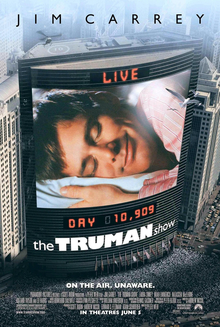
8. The Truman Show


This movie is in some ways a little dated, but the message is nevertheless still quite relevant. Released before reality TV had become de rigeur, this prophetic picture foresaw the direction of this kind of programming. The basic story line follows a man who is part of a reality TV show- though he does not know it. Since his birth he has been part of a fraud perpetrated against him by a TV corporation that was permitted to "adopt him". Appropriately, his name is "Truman", for he is the only one on set that is not playing a part (viz. true man). Through a kinder form of totalitarianism, he is kept on this impressive set/island until the climax of the film. Beyond questioning the wisdom of our "reality" obsessed culture, the great insight of this film is the recognition that a perfectly manicured reality, as they have attempted to create, does not make for a happy Truman. Man cannot live by bread alone, and Truman is a wonderful example of man's yearning for authenticity in a world that is counterfeit.


7. Minority Report


Loosely based on a Philip K. Dick short story, the central theme of this film surrounds law enforcement in the future, and the question of whether or not you can convict someone of a crime before the fact. This reminds me of an old Howard Jones song which states; "You can feel the punishment, but you can't commit the sin." At any rate, this question is particularly poignant in this era of pre-emptive wars, political divining, and genetic predetermination. But the larger issue is centered around this indispensable question of whether or not events are pre-determined or are subject to our free will. As the movie reveals, the answer to this question is yes. Yes, there are certain things that will inevitably happen, but what can and does change is our response to these events. However, even when someone does have the gift (or  curse) of premonition, the fact is they generally can only see the future in shades and shadows. For this reason, as the movie points out, it is a dangerous to attempt to play God and determine an outcome before something has really "come out."


6. Fahrenheit 451


There have been a few screen adaptions for this Ray Bradbury novel, but I recommend the 1966 version in particular. Though it is not nearly as good as the novel (of course), it still has much of the spirit of the piece. One of the amazing prophetic insights of Bradbury is that he seemed to foresee the "catatonic flat screen fad" from a distance. In the film we observe flat screens that cover the entire walls of rooms, with television programming not unlike the Oprahesque-navel-gazing-self-empowerment nonsense that has characterized the last twenty years of television. Bradbury even seemed to foresee the use of tablets. Nevertheless, the central issue he deals with in the story is the manner in which technology and intellectually passive forms of entertainment are being used to numb people and "protect" them from certain unpleasant patterns of thoughts. This is seen as a way of shielding them from any thoughts that might disturb them. Consequently, all books are henceforth to be banned because, classic literature, properly speaking, is frivolous at best, and at worst treasonous and a threat to the common good. In our society, books are becoming obsolete for a different reason (as least at this point). Due to advances in technology, we spend far more time on our tablets and laptops, reading our summarized news feeds and reader's digest versions of stories, rather than engrossing ourselves in a novel. For our purposes, the larger question seems to be whether or not we want to elevate our thoughts, or soothe ourselves with superficiality. This I would submit is not so much a shot at technology, as it is a shot at those who would use it to do their thinking for them.


5. Brazil


This 1985 film by director Terry Gilliam (I also recommend Twelve Monkeys) is a slightly more hopeful version of the George Orwell novel 1984. They are similar in that they both depict a totalitarian regime, though not one built on mere totalitarian brutality, but rather one built on a "kinder" and "gentler" form of cruelty (see blog on the 10 Worst Euphemisms); one more likely to brutalize you by ceaselessly beating you with velvet pillows than doing so with a tire iron. However, what separates these stories is that Brazil is in fact a satire. Instead of simply presenting a government that is all-powerful and inscrutable based on its own merits, he presents one that is inscrutable and all-powerful because it is hopelessly bureaucratic. Subsequently, man finds himself utterly stifled and suffocated under a tremendous pile of papers, cubicles, and legalisms that make getting to the truth a practical impossibility. There are numerous interesting subplots of this film- like his mother's addiction to plastic surgery- but perhaps the most unique aspect of the film, which seems to run through all Gilliam productions, is this glimmer of hope, some element of humanity that lives on despite the all pervading oppression of the "machine." What he is proposing is something akin to a kind of fairytale ex machina; an interior world of heroicism and liberty that is not necessarily perceived by human eyes. The abiding fear that characterizes the director's vision of the future is not specifically the idea that there will come a time when the government will impose unjust laws (for that is already the case), but that the government will seek to spiritually and intellectually castrate us, thereby taking away our power for doing good or ill (principally turning us all into well-medicated patients). Despite proposing such a depressing vision of the world, Gilliam also proposes a kind of every day hero that is not victorious in any outwardly and obvious way, but is successful in slaying the black dragon of mediocrity and mechanization, thereby triumphing in a grander narrative wherein the liberty of the spirit is maintained in spite of every attempt to crush it.


4. I Am Legend


As is the case with some of the other films on the list, there are different versions of the same film. I thought the version starring Will Smith was quite effective in communicating a couple of interesting motifs. One such thread is what I call the Frankensteinian motif. A natural characteristic of this story line involves some form of invention/creation that goes awry (so much so that its inventor loses control over it altogether). In the case of this film, the lead protagonist is a virologist named Robert Neville (Will Smith) who discovers a cure for cancer. However, soon after this discovery is made, his "creation" reverses field and winds up spreading a virus  killing 99% of the world's population. Though Neville is not killed in all of this, his "creature" develops a mind of its own and wreaks havoc on humanity. The second motif that runs throughout the film relates to the sort of effect that isolation has on a man. "It is not good for man to be alone", and this film in no way militates against that Scriptural verse. Robert Neville lives in a world without fellow human beings, and so he has no one to talk to, save a dog, some mannequins, and anything else that will listen. Even so, the film's primary focus is on Neville's attempt to find a cure for the virus and ultimately bring back from the land of oblivion the so-called "dark seekers" (the dark seekers are humans corrupted, but not killed, by the virus, who, wild with rage, seek to devour any kind of flesh they can get their hands on). This notion of a post-apocalptic zombie-like creature also has its own tradition in films, and perhaps should make us consider just how thin the veneer of civilization is once put to the test. As depicted in Cormac McCarthy's The Road, the question put to us is whether we are in fact the "good guys" who endure, or are we, in the absence of civilization, little more than "dark seekers" in sheep's clothing.


3. Eternal Sunshine of the Spotless Mind


Technology makes all things possible, including things that might be better left to the fancy of our imaginations. So also is the technology that is proposed in Eternal Sunshine of the Spotless Mind. Taken from an Alexander Pope poem, the movie title, like the poem itself, bespeaks the happiness that one may enjoy when/if their memory were to be purged of some of the more painful moments in our lives. The central figures in the film are Jim Carrey (this is not a comedy, though sometimes it is filed under that category) and Kate Winslet,  whose failed relationship is the center piece of the story. The sequencing is a bit unusual because the movie begins without you even knowing that it has begun. In other words, the two characters that meet for the first time, have already met, they just don't know it. Using new technology, both figures have chosen to receive a procedure that serves to strategically erase certain memories. The question the movie raises is whether or not it is preferable to engineer our memories so that we only remember happy things, or it is rather preferable to accept all of the memories together- even if some of them are tragic. The movie ultimately sides with the latter, concluding that one cannot extract core memories from one's life and still remain fundamentally ourselves. Indeed, in spite of our desire to make everything glossy and perfect, there is still something more perfect than a cosmetic "perfection"; a beauty that is superior because it encompasses all of the tragedy and comedy and drama bound up in this thing that we call humanity.


2. Blade Runner/Do Androids Dream of Electric Sheep?


This film adaptation of another Philip K. Dick novel, stars a young Harrison Ford, playing a police detective who is sent out to "retire" human androids known as replicants. Often indistinguishable from human beings, these androids were created in the first place to do dangerous (and menial) work on off-world colonies. Nevertheless, these replicants are so intelligent and powerful that they defy those in authority over them and return to earth to live among the populace (another example of the Frankensteinian motif). Because they are not permitted on earth, the authorities send out the "experts" to hunt them down. There are a couple of interesting issues that are raised in this quest to "retire" these replicants. One of the questions that is posed is how exactly does one distinguish a humanoid from a human? In other words, what makes a human a human, and if an android possesses these same characteristics, do they deserve to be classified as such? If not, why? One of the signs these detectives look for when they are attempting to test a possible replicant is whether or not they have the capacity for empathy. And indeed, even if you are a human, but you lack a certain empathy for others, you may be a prime candidate for some of the most inhuman behavior. At the end of the novel (not so much the movie), there is another interesting motif that plays out. Throughout the film, there is always a question about whether anything is real at all; from the people, to the animals, down to even the detective whose name is Richard Deckard. So desperate is he for something real, Deckard spends half of the story trying to purchase a real animal, which ultimately turns out to be a fruitless endeavor. At the end of the novel, after Deckard retires the replicants, he drives to a remote area and discovers what he believes to be a rare species of toad; however, he is crestfallen to discover that even the toad is mechanized. This scene immediately casts doubt on the rest of the story, causing the reader to wonder if there was "anything real in the story at all." As it applies to our mechanistic culture, we too might begin to wonder if flesh and blood is slowly being covered over by a wilderness of metal and wires. Incidentally, if you do watch the movie, I recommend that you not watch the editor's cut. The original movie version is- in my opinion- better because it also contains Harrison Ford as a narrator, filling in some of the gaps that might otherwise be lost on audiences.


1. Children of Men


A more recent classic, this story written by the novelist P.D. James (she is generally known for her mystery novels), is about the consequences of a universal loss of fertility. There is no explanation for why this is the case. What you do glean from the very beginning is that no baby has been born in eighteen years. As one of the characters despairingly declares; "No one has heard a baby cry in eighteen years." You also discover in the opening scene that this last child has just been fatally stabbed to death. At this stage in the film, the main character, known as Theo, walks outside of the store where the news was broadcast, and virtual anarchy breaks out. Much of the drama in this film is derived from the loss of hope that results from the fact that they literally have no future to look forward to. As a consequence of this, England has become a kind of compound state, hoarding her resources so that her citizens can die in relative comfort. In place of children, the people obtain dolls which called "re-borns", creepily life-like, though nevertheless a poor substitute. Amidst all of this despair, a singular hope arises- there is a story of a woman that claims to be with child. It turns out that this is true, and thus it is ultimately the job of the reluctant protagonist, Theo, to lead her to safety. Like some post modern St. Joseph, he protects her until she is able to board a ship called the Tomorrow (no accident there). The most impressive thing about this film is how they utilize the device of infertility in order to  impress upon everyone watching just how much we take life for granted (as cliche as that sounds). In one of the most exquisite scenes, the pregnant woman (Kee) carries her newborn out of a house that is being heavily bombarded, but as she carries the baby out, even soldiers bow and kneel in the babies presence, staring at him in absolute shock and reverence. Softly in the background you can hear someone declare "hosanna". In a time where everyone is so worried about there being too many children in the world, this film is a healthy remedy and reminder of how without children there is no real hope for the world.        


Sunday, July 1, 2012

The 25 Most Romantic Songs of the Past 40 Years


I am sure that this post will inspire outrage among some because there is always a song that could have made the list. Nevertheless, do not mistake this for a list of the 25 best love songs, for there are a great many songs that might make the list before these. Rather, consider it a list of songs which seek to provide a unique angle on romantic love. There are some songs here that may even inspire scoffing, but I remind you, these songs are not so much about musical genius, as they are about lyrical insight. The majority of the following songs are situated within the last 40 years. If I were to go beyond that I would need another list of songs, and frankly I would be venturing into territory with which I am less familiar. So I will let others make that list, and stick with what I know best.


25. Key Largo - Bertie Higgins


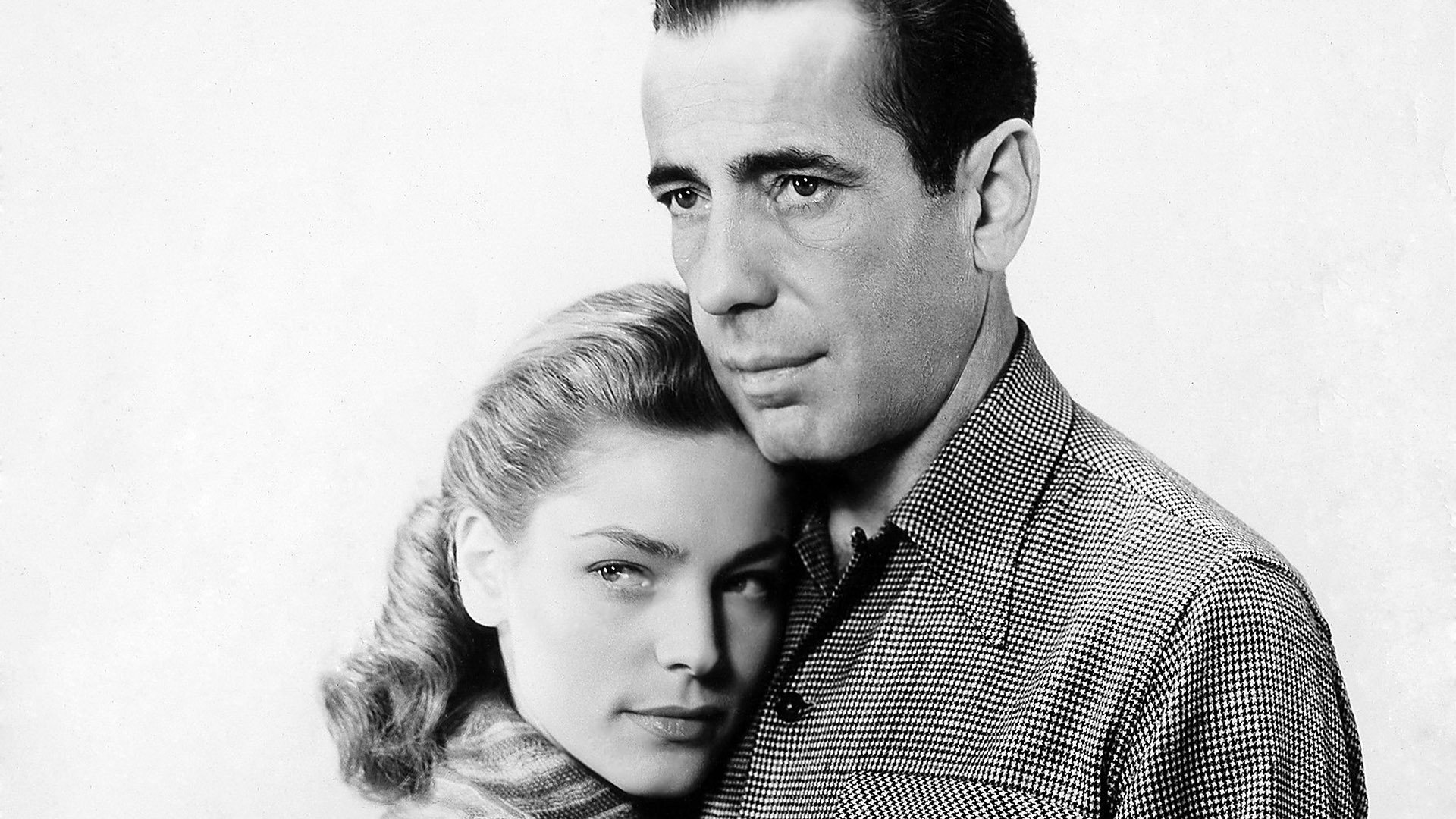
Everyone wants their romance to have a dramatic element to it, and perhaps even a musical soundtrack that seems to detail the harrowing and beautiful events that characterize the relationship. Key Largo is no different. Higgins wrote this ballad as a means to try to win back his ex-girlfriend, comparing their time in Key Largo to a scene from a "Bogie and Becall" movie. It worked... for a little while.


24. I Would Give Everything I Own - Bread


I wouldn't call the lyrics to this song the most stellar on the list (which is in part why it's second to last), but what it does ultimately manage to say is worth noting. Love in itself is a powerful force, but combine that with a love lost due to some form of negligence, and what you get (quite often) is the birth of a poet and a troubadour. From the world of "you don't know what you've got till it's gone" springs any number of romantic ballads about what measures a man will go to win back a lost love; "And I would give anything I own, give up my life, my heart, my home. I would give anything I own... just to have you back again." A man that has been humbled is a man that can recognize that his ego, along with all his other possessions, means nothing in the face of losing the one who has "given you the finest years you've ever known." Indeed, so repentant is he of this fact, that as a sign of contrition, he is willing to forsake all worldly goods, if it means winning her back.          


23. True Companion - Marc Cohn


From the singer/songwriter who gave us the classic, Walking in Memphis, this lesser known hit is no less lyrically substantial. However, instead of writing a song dedicated to his love of Elvis, this one is dedicated to his bride to be; "There ain't no act of God, to keep you safe from me. My arms are reaching out, out across this canyon. I'm asking you to be true companion." In part, it is romantic because he declares that nothing, including an "act of God," can keep him from her. Even the "canyon" that seems to loom between them is something that will not hold him back. Yet beyond that what makes this ballad so notable is the fact that his passion is geared, not just to some fleeting romance, but to one that is enduring. Indeed, his deepest desire is to bind himself to her; "So don't you dare try to walk away. I've got my heart set on our wedding day. I've got this vision of a girl in white. I made my decision that it's you alright. And when I take your hand, I'll watch my heart set sail. I'll take my trembling fingers and lift up your veil. And then I'll take you home, and with wild abandon, make love to you just like a true companion." One of those rare instances in music, physically speaking, when everything happens in the right order. But notice that even when he refers to "making love" to her, he still keeps that same chivalric tone- never alluding to her as some mere instrument of pleasure, but as a "true companion"; someone he views as the flesh of his flesh and bone of his bones.


22. She's Got a Way - Billy Joel


The first of two times that Billy Joel appears on the list, he is undoubtedly one of the more romantic balladeers of our time. She's Got a Way is basically an ode to everything that is beautiful- yet intangible- about women. If a woman loves you, she certainly wants you to respond in kind, but what is even more important to her is that you explain in detail why you love her in the first place (you must be able to give a litany of reasons, if you only give one you better make it a good one) In essence, this song is dedicated to that kind of explanation; "She's got a smile that heals me, don't know why it is, but I have to laugh when she reveals... She comes to me when I'm feeling down, inspires me without a sound. She touches me, and I get turned around." There is only one word for this kind of "intangible power", and that word is "grace."  


21. Faithfully - Journey


Other than being a well written song, what puts this one on the list is something quite simple and straight forward. Faithfulness is always romantic. The story is a common one in Rock n' Roll. The band  goes on a grueling road trip, and we get to hear how difficult it is (particularly on the lead singer). But this song is not about how difficult the road is on Steve Perry, rather it is about the toll "being a music man" takes on his wife and family. To talk about being faithful while you're in a rock n' roll band is not the coolest thing that a rocker can talk about, but it is certainly one of the more romantic things. Unfaithfulness is the easy way, while faithfulness takes valor and courage. At any rate, his focus is on what this is doing to his wife. The song is in many ways an ode of gratitude to her for sticking it out with him through it all, and a pledge of faithfulness, which is no small matter out on the road. Perhaps the most unique insight in the song is the unusual benefit that comes from being apart for such long periods of time; "Being apart ain't easy on this love affair. Two strangers learn to fall in love again. I get the joy of rediscovering you. Oh girl, you stand by me. I'm forever yours... faithfully. According to Mr. Perry, there is a hidden advantage to all of this, every time he returns he is given the opportunity and "joy" of falling in love with her all over again. We would all do well to consider the significance of this point.


20. Your Song - Elton John


Right off the bat there is obviously something romantic about immortalizing your beloved in a song (and a successful one at that). There are few better ways to say to a woman that she stands apart from the crowd than to, not only write a song about her, but to call it "Your Song". It has a purity and innocence about it that some might call naive, but for those who are not too cynical, it should remind them of first love; "It's a little bit funny, this feeling inside, I'm not one of those that can easily hide. I know it's not much, but it's the best I can do. My gift is my song and this one's for you." Here is a man who doesn't have much money, but he does have the gift of song. And so like some Franciscan troubadour, he carries nothing with him, but his instrument and his passion to sing the virtues of his glorious and gracious lady; a lady, I might add, whose very presence in the world is so cherished, that the light of the sun continues to shine on her behalf! "But the sun's been quite kind, while I wrote this song. It's for people like you that keep it turned on."


19. Have You Ever Really Loved A Woman - Bryan Adams


A song off the soundtrack for the movie Don Juan Demarco, this Latin influenced ballad already has a romantic edge simply because of the style of music. Nevertheless, it made the list for a different reason. Apart from describing, more or less successfully, what it means to love a woman, there is one romantic line that stands above all others; "...and when you see your unborn children in her eyes. You know you really love a woman." Amen! For all the songs that talk about love, few, if any, get around to discussing what is very often the fruit of true love.


18. My Eyes Adored You - Frankie Valli


There were other songs I could have included from Valli, but this one has it all. A man is never so inspired to write poetry for a woman than when she is just out of his reach. Along with the story line about a grade school crush that is never actualized, Valli makes it all the more bittersweet with this line; "Though I never laid hand on you, my eyes adored you." One can almost hear the girls swoon at such a line. Why? Because the writers of the song (which were originally The Four Seasons) understood something extremely important about romance. After all, there are few things more romantic than a man who continues to love and praise a woman, even without any sort of physical reciprocation. Dare I say it, it is an ode to chaste love! Forgive me.


17. Forever and For Always - Shania Twain


This is the only female artist on the countdown because women are the object and inspiration of romance, men are not. A woman doesn't "romance" a man (see #5 on the 8 Girliest Songs post). Consequently, what makes this song romantic is not what Shania Twain says about how she has won her man over by sending him flowers (or some such thing), rather it describes the manner in which her man (presumably Mutt) makes her feel loved; "In your heart, I can still feel a beat for every time you kiss me, and when we're apart I know how much you miss me... In your eyes, I can still see the look of the one who really loves me, the one who wouldn't put anything else in the world above me..." The key to romancing a woman is to do something that makes her feel uniquely loved, demonstrating through your actions that, as far as you're concerned, no other woman exists. As for the object of this song, namely Mutt, needless to say, running off with the nanny is not romantic.


16. I'll Still Be Loving You - Restless Heart  and  Longer - Dan Fogelberg


Many love songs have discussed loving someone for a lengthy period of time (i.e. forever), but these two songs are on the list together because they accomplish this better than any other. Restless Heart declares; "I'll be yours until the sun doesn't shine, till time stands still, until the winds don't blow. When today is just a memory to me, I know, I'll still be loving you." While Fogelberg says; "Longer than there've been fishes in the ocean, higher than any bird ever flew, longer than there've been stars up in the heavens, I've been in love with you." It feels as if both of these songs are in a duel to show whose love is more enduring. In fact, all of this talk of eternity gives the song an almost Biblical feel. Longer seems like an ode to Genesis- especially as it describes the creation of the heavens and the earth- or when Jesus says to the Father that he has loved him from before the foundation of the world. I'll Still be Loving You feels a little bit like a tip of the cap to Joshua where the suns stands still, or to the Gospels where Jesus predicts that the sun will be "blackened". Perhaps I am over thinking this a little, but what cannot argued is that both of these songs are meant to embody a love that is epic and timeless.


15. Haven't Met You Yet - Michael Buble


What makes this love ballad so special is Buble's insight about the nature of how love transforms a man; "And I know that we can be so amazing, and being in your life is going to change me, and now I can see every possibility. And someday I know it will all turn out, and you'll make me work to work it out. Promise you kid, I'll give more than I get... I just haven't met you yet." There is a lot in those few lines, but what is most impressive is what the words reveal about how a desire for love makes a man want to "work". In point of fact, he is happy to work if that means being in love. But even more extraordinary is the fact that he is vowing not to be outdone by her in generosity of spirit. These words more than most, vindicate the paradoxical notion that it is "better to give than receive." He concludes the chorus with another bit of romantic bombast; "I just haven't met you yet". Wouldn't you prefer to meet the person first before you go about promising her the world? Nope. We are made for perfect love even when the object of that love is just a shadow and a dream. If you want to give it a divine twist, Augustine offers us a helpful insight; "Our hearts are restless until they rest in you, Oh Lord."


14. You Decorated My Life - Kenny Rogers and  You're My Home - Billy Joel


These songs may be regarded by some as hokey and maudlin, and maybe they are, but I can say from a husband's point of view, they simply reveal an existential fact. Kenny Roger's song focuses on how his life was basically a blank and bland canvas before this unnamed woman came along; "Like a rhyme with no reason, in an unfinished song, there was no harmony life meant nothing to me, until you came along." In Billy Joel's, You're My Home, his wife represents to him "a roof above and good walls all around". Indeed, wherever he goes in the world, as long she is there, he is home. The truth is without a woman men are bland and colorless- doomed to wander the earth homeless, like a "rhyme with no reason", but with a woman they have direction and purpose.


13. When the Stars Go Blue - Ryan Adams


One of the more melancholy songs on the list, even the stars are "blue" in this one. A common theme in many romantic tales, Adams give these "stars" a bit of a mournful glow.  The idea behind this is that romance is sometimes mingled with sorrow- though even the sorrow may have its own beautiful hue. But as "blue" and discontented as the girl apparently is, on this particular occasion she is evidently content to laugh and dance in a "wedding gown". All the same, he still promises to "follow" her down every lonely corridor; "Where do you go when you're lonely, where do you go when you're blue, where do you go when you're lonely... I'll follow you. When the stars go blue..."


12. Just Like Heaven - The Cure


This is the one new wave entry on the list. The goth thing is certainly evident in the vocals and the lyrics (and the video), but at its core this song is still romantically substantive. In other words, the focus of it is not so much on Robert Smith moping around- as it is on this beautiful ethereal woman he is describing; "Spinning on that dizzy edge, I kissed her face, I kissed her head, and dreamed of all the different ways I had to make her glow." There it is. In order to be a true romantic, your aim must be to connive all kinds of different ways to make your beloved "glow" (in a non-radioactive way). The song also captures many of those moments that indeed make romance so sweet; " Show me, show me, show me how you do that trick, the one that makes me scream she said, the one that makes me laugh she said, threw her arms around my neck. Tell me how you do it, and I promise you, I promise that I'll run away with you... I'll run away with you." The chorus captures a fundamental truth about the end and purpose of life. At its core love is meant to be a foretaste of heaven; or as Robert Smith puts it, "just like heaven."


11. Making Memories of Us - Keith Urban


Read all of the lyrics to this song, it is practically a catechism for how to woo a woman. Here are a few highlights; "I'm gonna be here for you baby, I'll be a man of my word... I'm going to honor your mother; I want to learn from your pa... I want to stand out in a crowd for you, a man among men. I want to make your world better than it's ever been... And I'm going to love you, like nobody loves you. And I'll earn your trust making memories of us." Now whether or not Mr. Urban is like this in real life, I could not say; what I can say, however, is that he covers just about as many bases of chivalry as any song could. In any case, the line that really sets it apart is the one that depicts the type of relationship he wants with her parents. It is an important insight to recognize that one of the ways that you love and honor a woman is by first honoring the one's who gave her life.


10. My Little Girl - Tim McGraw


In a time where father's so rarely stand guard over the purity and innocence of their daughters, this song is a timely antidote. From my personal perspective, there is nothing so wretched as a father shrinking from his duty to protect his daughter. Does "dad" go too far sometimes, maybe, but better that than abandoning her to all of the nameless wolves out there. Hence, this song (not to be confused with the insipid Butterfly Kisses) is about a father's solemn recognition that his daughter is growing up and will soon leave the nest. What is most romantic, however, apart from him reminiscing over the strange power his "little girl" has over him, is his reaction to the day that "some boy" comes along and asks his permission for her hand; "Someday some boy will come along and ask me for you hand, but I won't say 'yes' to him unless I know, he's that half that makes you whole, he's got a poet's soul, and the heart of a man's man. I know he'll say that he's in love, but between you and me, he won't be good enough... You're beautiful baby from the outside in..." Every last father should put the fear of God into any young man who would dare take his daughter out on a date. And if the boy is man enough, he will not shrink from the challenge, rather he will embrace it, and treat the girl with the kind of love and respect that is consistent with the father's wishes.


9. Skin - Rascal Flatts


This is the last of the country songs to make the list. In some ways, country music is the perfect genre for romance because country generally involves some kind of narrative. Truly romantic stories always demand some sort of narrative, while lustful tales require little. Based on a true story about a young girl who is diagnosed with cancer, the song details her trials and tribulations. The story reaches its climax when the young girl receives chemotherapy and as a result loses her hair. What makes this particularly poignant (other than the fact that few woman want to be bald), is that this all happens around the time of the prom, a prom that she now believes she will not be attending. However, not only is she asked to the prom, but when her date arrives, he himself reveals that he has no hair, for he had shaved it in order to stand in solidarity with her. Cancer is not romantic. What is romantic is a young man doing everything in his power to make a girl who probably feels both frightened and alone, feel, at least for the evening, neither one nor the other.


8. The Glory of Love - Peter Cetera


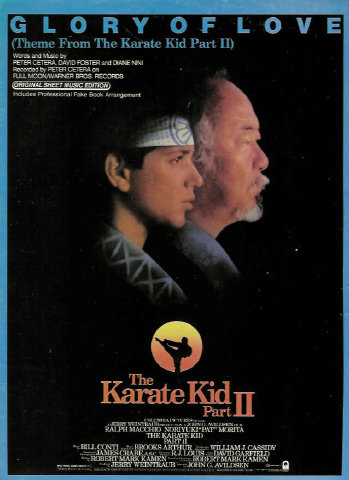
On the "cheesometer" this may rank pretty high, and I would not necessarily disagree; "Like a knight in shining armor from a long time ago (as opposed to recently). Just in time I will save the day take you to my castle far away". If you really want to be horrified just watch the video... I will say no more. The fact is most of the song is, lyrically speaking, rather generic; it is only when you get to the chorus that you start to see something altogether different; "I am a man who will fight for your honor...We'll live forever knowing together that we did it all for the glory of love." The image of defending a woman's honor may seem like an insignificant (if not anachronistic) detail, but it is anything but that. It is true, you cannot see "honor" or touch it; nevertheless, it is no exaggeration to say that "honor" lies directly at the heart of everything that we mean when we talk about dignity and respect. It is not so much something that we defend in ourselves, as it is something that we defend in others. In this particular song (which was written for the sequel to the Karate Kid), a damsel, through no fault of her own, is being threatened by some unsavory character. The protagonist (Daniel son) must intervene in order to defend this woman from some form of bodily harm. As the scene suggests, honor may not be something you can point to specifically, but it certainly is something worth dying for. The latter part of the chorus also reveals something interesting; "We'll live forever knowing together that we did it all for the glory of love." To what end are they enduring all of these trials? For each other? Yes; but also, according to the song, for a "greater glory"; a glory that is everlasting. Although he says no more about it, the line would suggest that their love is meant to be a kind of tribute, an offering, an act of thanksgiving for the exquisite pleasure of being a part of- in some small way- the grander narrative of Love.    


7. Arthur's Theme - Christopher Cross


On a less sublime level, though no less integral to defining romance, Arthur's Theme describes that intoxicating feeling of meeting the person that you believe to be "the one"; "Once in your life you find her, someone that turns your heart around, the next thing you know you're closing down the town." What can compare to that incomparable feeling of meeting someone that revives us and makes us believe that anything is possible. It is a feeling that can make you behave in ways that only a saint, or an ascetic, might be able to appreciate. When this feeling of love comes over you, you can't eat, you don't sleep- though not out of sorrow- but like a St. Francis, you do so out of a romantic enthusiasm. The chorus heightens this sense of romantic intoxication by implying that even the whole natural order seems to be in on this conspiracy of love; "When you get caught between the moon and New York City, I know its crazy but its true. When you get caught between the moon and New York City; the best that you can do is fall in love." And indeed, when love is running on all cylinders, it is not only you who affirm it, but all of the created order seems to join in as well.        


6. The Way You Look Tonight - Frank Sinatra  and  Wonderful Tonight - Eric Clapton


I lied a little when I said that I wouldn't include any song that was written before 1970. Just the Way You Look Tonight was written in 1936 (Sinatra performed it much later, however, and it is my preferred version) and has been covered numerous times. Wonderful Tonight was written in 1977. At any rate, I selected both of these classics, not because I like them equally (without question, I prefer the former to the latter), but because the message of each are both similar and salient. There is only one insult that no man minds hearing, "You married above yourself..." The point is a man doesn't mind being thought less of, as long as it is because they think that his wife is beautiful. That is what both these songs are about in a nutshell. Both are devoted almost entirely to that special moment of awe when a man realizes just how beautiful and "wonderful" his wife is- and then subsequently realizes just how lucky he is to be with her; "We go to a party and everyone turns to see, this beautiful lady, who's walking around with me." In her presence, he is just a third person dude that happens to be there with her. On the surface, this might seem to be a downgrade, especially for a man that wants to be regarded in his own way, but for the poet and the romantic, this "down grade" is an upgrade. Another important aspect of both of these songs is the element of memory. Everyone has a night that they will probably remember for the rest of their lives, a night that represents perfection for them; "Someday when I'm awfully low, when the world is cold, I will feel a glow, just thinking of you, and the way you look tonight." It is ultimately the type of memory that could make the cold of a prison cell seem warm and bright.


5. In Your Eyes - Peter Gabriel


The lyrical force of this song lies in the slow lamenting build up of the verse, transitioning into the flurry of beautiful images in the chorus. The verse concerns itself with the strifes and struggles of love, and how sometimes love is a survival rather than a marathon of bliss; "Love, I don't like to see so much pain. So much wasted, and these moment keeps slipping away. I get so tired working so hard for our survival. I look to the time with you to keep we awake and alive." What he expresses here is not just some feeling of warmth towards a woman, but something far more profound. As much work and struggle as the relationship requires, in truth it keeps him "awake and alive". But if there is any doubt that this woman is worth all of the work that is necessary to keep relationship "alive," then the chorus should relieve us of any of those concerns; "In your eyes, the light the heat, I am complete. I see the doorway of a thousand churched; the resolution of all my fruitless searches." Though it may seem contradictory, there is no real contradiction of sentiments here. Love requires constant struggle and effort to keep it "awake and alive". And furthermore, it is in that struggle that we come to realize that unavoidable truth that love isn't really love until it's been tested. The chorus is so charged with grandiosity, that one almost gets the impression that this woman represents for him almost a kind of religious experience. Like many of these romantic ballads, you could easily substitute God for the woman that he describes. And indeed, this is an appropriate parallel, for in both cases (faith and love), the role of one's beloved is to lead them to salvation.


4. Lady in Red - Chris DeBerg


In some ways the theme of this song is to the one at #6- for the vocalist seems rather enamored with one very special lady in red; "I never will forget, the way you look tonight." However, my intention is not repeat an angle that has already been covered, but rather to tell the romantic back story about this woman that he claims he "hardly knows". This "stranger" is in truth not a stranger at all. The woman he describes in the song is in fact his wife. So then why does he describe her as a stranger? Was this the first time he ever met her? No. The story goes that he was out to dinner, and saw this beautiful woman in a red dress that he couldn't stop looking at; a woman who he eventually came to realize was his wife. Apart from the basic appeal of a man talking about the beauty of his wife, this song expresses a sentiment that is essential if one intends to keep romance alive in a relationship . Every man should take a cue from Chris DeBerg on this one. What I am saying is that one of the ways a romance thrives is through the imagination of the two parties involved. Just as a new angle allowed Chris DeBerg to see his wife for the first time again, we too must do everything in our power to try see our beloved from a new perspective, a perspective that reminds us why we fell in love in the first place.


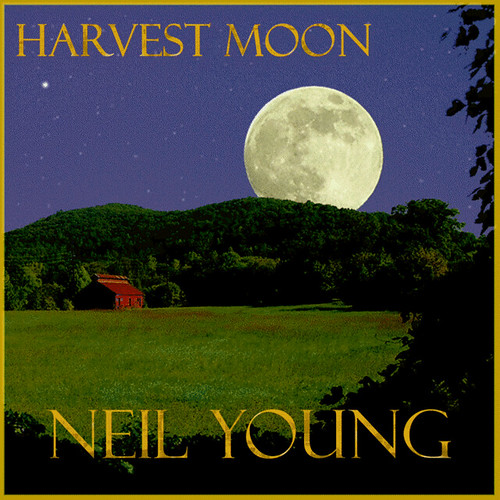
3. Harvest Moon - Neil Young


Neil Young has always seemed to me like an old man (no pun intended); in part because he has a kind of wizened air about him, but also because he just sounds old and rusty; not in a bad way, mind you, but in the sense that he is almost like an Ent; timeless. Harvest Moon is one of those stories, not so much about first love, as it is about love that is a little like aged wine. In other words, the years have not worn away this love. To the contrary, the years have given it more depth and richness, without removing any of the original sweetness; "When we were strangers I watched you from afar. When we were lovers, I loved you with all my heart. Now it's getting late, and the moon is gettin' high. I want to celebrate, see it shinin' in your eye. Because I'm still in love with you, I want to see you dance again. Because I'm still in love with you, on this harvest moon." Exquisite. Few things are more romantic than the notion of a love that endures. Throw in the image of the harvest moon "shinin' in her eyes" as she dances, and what you have is a romantic masterpiece.


2. Mad About You - Sting


I chose this song because it includes not only divine imagery, but the earthly kind as well. As a matter of fact, the song is down right cosmic in its implications; "A stone's throw from Jerusalem, I walked a lonely mile in the moonlight, although a million stars were shining, my heart was lost on a distant planet, that whirls around the April moon, whirling in an arc of sadness. I'm lost without you. I'm lost without you. Though all my kingdoms turn to sand and fall into the sea. I'm mad about you. I'm mad about you." Many of Sting's lyrics have a literary bent to them. On his solo albums, especially the Soul Cages, there is a distinct chivalric bent. For Sting, love is not merely a powerful emotion, but a cosmic struggle. Everything is either fighting in favor of it, or is tearing it apart. As for us, we are all apart of this cosmic conflict, whether we like it or not. At the heart of this struggle, however, there is one force, one more powerful than any another, and it holds the key to our ruin; "And I have never in my life felt more alone than I do now. Although I claim dominion over all I see, it means nothing to me. There are no victories, in all our histories without love." As Sting points out here, whether you're talking about the history of the world, the kingdoms of the earth, or the movement of the spheres; all of it is irrelevant in the absence of love. Without love,  even the most extraordinary things lose their meaning; "And though you hold the keys to ruin of everything I see. With every prison blown to dust my enemies walk free. Though all my kingdoms turn to sand and fall into the sea. I'm mad about you. I'm made about you."


1. Bargain - The Who


Some may be surprised that The Who would make #1 on the list of most romantic songs. But whether or not The Who may be thought of as a romantic band, this song, lyrically speaking, is the perfect piece. In a most remarkable way it sums up everything one needs to know about love, romance, and chivalry. What really sets it apart is that it, unlike any of the other songs, seems to be able to encapsulate and articulate the irony and absurdity of the lover. The lover is fundamentally a fool, and he is a fool because he is willing to do the most unpleasant things in order to win over his beloved; "I'd gladly lose me to find you. I'd gladly give up all I had. To find you I'd suffer anything and be glad. I'd pay any price just to get you. I'd work all my life, and I will. To win you I'd stand naked, stoned, and stabbed. I'd call that a bargain, the best I ever had." Certainly the fact that he is willing to endure all these things to win over his beloved is magnificent, but there are other songs which describe to what great lengths an individual might go to prove his love. What distinguishes this one is not only the fact that he would endure all things, but that he would be "glad" in doing so. In fact, he would even call that a "bargain". It is in some ways reminiscent of what St. Paul had to say about suffering; "I consider that the sufferings of this present time are as nothing compared to the glory that is to be revealed to us." (Romans 8:18). It would not be an exaggeration to say that it is this insight that generally only the mystics and the most generous people understand. Some may call it masochistic, some may call it strange, but for the true lover, it is merely justice. If he is to feel at all worthy to stand beside this incomparable beauty, he must offer some form of oblation or sacrifice that is equal to the dignity of this individual (though the secret of the romantic is that he never deems himself adequately worthy). And as if that weren't enough to chew on, Townsend then articulates something about the nature of love that is rarely understand in theology, much less articulated in a rock song; "I sit looking 'round. I look at my face in the mirror. I know I'm worth nothing without you. In life, one and one don't make two; one and one make one." Wow, you could do a theology class on this song alone. There are not many songs that I would accuse of having blatant Trinitarian imagery, but this is one of them. In any case, he seems to understand quite well that by ourselves we are not really ourselves, it is rather in the exchange of love with another that we really begin to comprehend who and what we are.              

             
Honorable mention goes to Dire Straight's "Romeo and Juliet"; Boz Scagg's, "Look What You've Done to Me"; David Gates, "The Goodbye Girl"; Genesis, The Script, "For the First Time"; When in Rome, "I Promise"; The Proclaimer, "500 Miles". The last two have similar themes which, were I to do this list again, would certainly be included. In this case the romance is about the literal "length" the artist would travel to win the heart of their beloved.   


Friday, June 22, 2012

The 10 Saddest Songs Ever Written


When I say "saddest" pop song I do not mean the most depressing, for there are a lot of sulky songs  out there; "'Cause I'm dying inside and nobody knows it but me..." Nor does this list consist of the most nihilistic songs, of which "Death Metal" and "Grunge" have kindly obliged; "The world is a vampire, sent to drain..." Thank you for that master stroke of wisdom, Mellon Collie and the Infinite Corgan. For some such a list may seem depressing, and indeed it is in some ways- but the aim of this post has not been to point out depressing things (which is easy enough). Rather it is to highlight certain songs that, poetically speaking, capture some of life's most tragic moments- which are beautiful even if they are sad. In any case, wherever one can still sing their pain, hope remains. Just ask that Maroon 5 dude who sings the words "I am in misery" as if he were the happiest man alive.                    


10. I Can't Make You Love Me - Bonnie Raitt


A beautifully written song, this ballad, cowritten and performed by the blues artist Bonnie Raitt, is in many ways self explanatory. The verse details the story of a woman who is trying to come to terms with the fact that her partner (presumably) does not share the same affection for her that she has for him. In the process, she compromises herself by virtue of the fact that she still wants to be with him physically; "Lay down with me, tell me no lies, just hold me close, don't patronize... I'll close my eyes, then I won't see the love you don't have when you're holding me. Morning will come, then I'll do what's right, just give me 'till then to give up this fight... and I will give up this fight..." But what makes this song so unbearably sad is that universally relatable human experience wherein we love someone (or at least believe that we do) and we realize that this person feels nothing for us in return. Indeed, perhaps they even wish that they did feel the same, but the the truth is that one just can't manufacture those type of feelings- no matter how hard they try; "'Cause I can't make you love me if you don't. You can't make your heart feel something it won't. Here in the dark, in these final hours, I will lay down my heart, and I'll feel the power, but you won't." So there you are on the outside looking in, pouring your heart out to a person who looks back at you with eyes as disinterested as a stranger's. If you are interested in another beautifully tragic song performed by Raitt, I highly recommend the song "Angel of Montgomery".


9. The Boys of Summer - Don Henley


If the Cars' "Magic" is the epitome of a happy summer song, then this song by former Eagles drummer Don Henley is its ultimate antidote. It expresses everything that we hate about the summer, namely the feeling we had in our youth when it was coming to an end; "Nobody on the road. Nobody on the beach. I feel it in the air, the summer's out of reach. Empty lake, empty street, the sun goes down alone. I'm driving by your house, though I know you're not home." If summer is all about the atmosphere and the people, then this image reveals that sinking feeling we get when all of the drama and romance once again goes back into hiding. But this song is more than just some seasonal instruction guide, it is about the doubt, sorrow, and ambivalence one experiences as they leave their childhood and come face to face with the reality that those people and places are no longer really there in the way they were; "I'm driving by your house, though I know that you're not home." Perhaps she hasn't been at "home" in that house in quite a long time. However, the chorus reveals a last attempt to recapture those days of old; "I can see you, your brown skin shining in the sun, you got your hair combed back and your sunglasses on, baby. I can tell you my love for you will still be strong, after the boys of summer have gone." It is as if he is still fighting some old battle in his head between his love interest and those "boys" that seem to have a different agenda for the summer. At any rate, the video lends itself to such an atmosphere, for it is shot in black and white, and features the central figure at different stages in his life. This seems to be an attempt to play up the nostalgia angle. The last verse is the most tragic of all, perhaps because it expresses the very essence of why the message is so sad; "Out on the road today I saw a Dead Head sticker on a Cadillac, a little voice inside my head said don't look back, you should never look back." In the video, when he utters this line, the central character- at every stage in his life- turns around a looks behind him. And with a look of tired resignation, the last image you see is of Henley looking forward again into the grey autumn streets.


8. Angel of the Morning - Juice Newton


Originally written in the 1960s by Chip Taylor, the version I grew up with is the one by Juice Newton. It seems to detail the story of a young woman who is so enamored with an older man that she is willing to give away the whole farm for (along with the milk) in return for nothing; "There'll be no strings to bind your hands, not if my love can't bind your heart. And there's no need to take a stand, for it was I who chose to start. I see no need to take me home. I'm old enough to face the dawn." There's a lot to say here, but I suppose the line that reveals the most is the girl's hope that she can "bind his heart" through physical intimacy. How often does it happen that a young girl thinks that she can keep a man if she will only sell out physically to him? Far too often to mention. Such behavior, more often than not, actually provokes the opposite reaction in a man (fair or not). But what's even more tragic is the fact that this woman seems more than a little prepared to get used. In fact, she has practically resigned herself to this terrible fact; "Just call me angel of the morning, angel. Just touch my cheek before you leave me." 'Blessed is he (or she) that expecteth nothing, for he shall not be disappointed!' I suppose what makes the lyrics so poignant, however, are the startling descriptions of the awkward and pitiful circumstances that surround the one that has made this devil's deal; "Maybe the sun's light will be dim and it won't matter anyhow. If morning's echo says we've sinned, well it was what I wanted now. And if we're victims of the night, I won't be blinded by the light." One can almost feel the sting of the morning sunlight, making its way into the room, as this guy avoids any eye contact with the girl, only to shuffle away to the land of "anywhere but here".


7. Diary - Bread


This song is like a lesson in why one should never read the diary of another, or eavesdrop on a conversation that is about you but is not meant for you. The benefit of the knowledge gained is not equal to the amount of anxiety and sorrow that usually accompanies it. We hear enough negative things out there. The last thing we need to do is to go around scouting for bad (or even good) things. Besides all that, we may not even understand the entire nature of the conversation we overhear. In any case, this is an example of how reading something that is not your business, delivers more sorrow than good. One of the reasons it is particularly tragic is because the words that this girl wrote in her diary were extremely positive. As a matter of fact, much to his surprise, the object of his affection, who seemed previously indifferent to him, now has seemingly expressed her profound affection for him. And so in the first chorus he talks about all the things that he will give to her; "And as I go through my life, I will give to her, my wife, all the sweet things I can find". But as he confronts her about these feelings, she behaves in her usual cold and indifferent way- at which point he realizes, much to his embarrassment, the love that she expressed in the diary was for someone else. It is tragic enough not to be loved by someone whom you love (as was the case with Bonnie Raitt), but it is even worse to have laid your heart on the line thinking that that person has the same affinity for you, only to discover that it lies elsewhere. And as if that weren't enough, he ends the song in bittersweet fashion, changing the original chorus to reflect this new awareness, wishing them both the happiness that he had once wished for he and his beloved; "And as I go through my life, I will wish her, his wife, all the sweet things they can find." The moral of the story is... Do not read someone else's diary!    
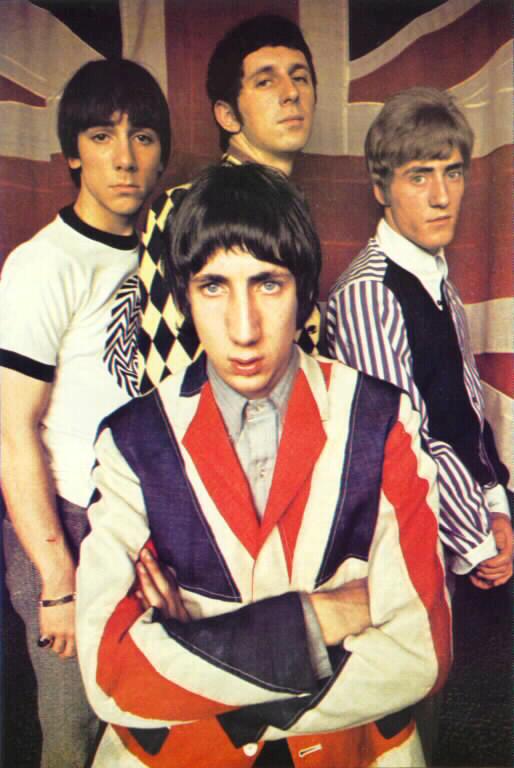

6. Cat's in the Cradle - Harry Chapin


This particular song is the epitome of a classical tragedy, for there is a great deal of irony, not to mention a certain painful lesson that is learned by the father in this tale. This tale of a broken father-son   relationship begins by foreshadowing in the first verse all that is to come; "And he was talking before I knew it, and as he grew he said 'I'm gonna be like you dad, you know I'm gonna be like you." The old expression; "like father, like son", has both a positive and a negative connotation. On the one hand, a child might imitate the virtues of his father, but if he does, he may very well imitate his vices as well. In this case, the prodigal father is breezing through life, setting as his first priority his own wordily success, but in the meantime he leaves little time for his son; "...But there were planes to catch and bills to pay; he learned to walk while I was away." In the next verse he continues this theme; "My son turned ten just yesterday, he said thanks for the ball, dad come on let's play. Can you teach me how to throw? I said not today, I've got a lot to do." The chorus consists of a loose array of nursery like images, culminating with a promise that apparently is never fulfilled; "When you comin' home dad, I don't know when, we'll get together then." The last two verses show the son doing the same thing as his father did (as he goes from college to having a family), and now he too cannot seem to "find the time" for his father. The tragic irony consists of the fulfillment of the son's words at the beginning of the song in a way that hits at the heart of the lesson. The story would be far less of a tragedy had not the father realized too late (presumably) that he had no one to blame but himself for this disconnect. Indeed, after his son gives him a laundry list of excuses as to why he can't see him, the father comes to a painful realization; "And as I hung up the phone it occurred to me, he'd grown up just like me; my boy was just like me."


5. Wish You Were Here - Pink Floyd


Many don't know the fascinating back story to this song. Indeed, most assume that it is about the mere physical absence of a loved one. But what the song is actually getting at is far more disturbing. One of two songs on this list about mental breakdown, Pink Floyd's, Wish You Were Here, concerns a former bandmate named Syd Barrett (he was originally the lead singer), who, due to excessive drug use and a profound disillusionment with the trappings of fame, fell into madness. From this perspective the words of the chorus "...wish you were here" take on a far more haunting tone; "Can you tell a green field from a cold steal rail, a smile from a veil, do you think you can tell... And did you exchange a walk on part in the war for a lead role in a cage." Sadly, the reality is even more tragic than the song suggests, for apparently when they were recording the album, he showed up to the studio unannounced- bald, overweight, and with his eyebrows completely shaved off. Initially no one recognized him. Eventually, however, someone queried as to whether or not this strange apparition was in fact "Syd". It is said that upon seeing him in this condition some in the band actually broke down and wept.


4. You Don't Bring Me Flowers - Neil Diamond and Barbara Streisand


You Don't Bring Me Flowers is a duet performed by Barbara Streisand and Neil Diamond about two spouses/lovers who can no longer communicate as they once did. The lyrics are written from both sides of the relationship, and express in heart rending fashion how each one knows that the other no longer loves them as they once did; "You don't bring me flowers. You don't sing me love songs. You hardly talk to me when you come through the door at the end of the day. I remember when you couldn't wait to love me, you used to hate to leave me." Like a married couple sitting across from one another at dinner- entrenched in an agonizing silence, so this song palpably communicates one of life's great tragedies; a love that has been permitted to die.


3. Eleanor Rigby - Beatles


A song penned mostly by Paul McCartney, this ode to "lonely people" is haunting if only for the fact that it is written about those people that no one writes songs about. The song revolves around a woman named Eleanor Rigby and a priest named Father McKenzie. What can be gleaned from the scant lyrical content is the fact that Eleanor Rigby is what they call a "church mouse", the sort of woman that haunts a church like a ghost. Oftentimes women like this are the de facto caretakers of a church and presumably "picking up the rice" was one of her many unnamed duties. The "rice" it would seem also represents the disparity between the loneliness of her life and the relative joy and comfort of the rest of us. But Eleanor is not alone in being alone, for there is also the celibate Father McKenzie who composes "sermons that no one will hear". There is not much depth in the lyric writing, but McCartney paints just enough of a picture to leave us pondering our own set of lonely people, and asking sorrowfully with him; "All the lonely people where do they all come from? All the lonely people where do they all belong?"      


2. Fire and Rain - James Taylor


Released in 1970, many have speculated about the meaning of this song. However, in several interviews Taylor has explained that the song was inspired by his personal struggle with depression as well as a close friend's suicide; "Just yesterday morning they let me know you were gone. Suzanne the plans they made put an end to you. I walked out this morning and I wrote down this song, I just can't remember who to send it to." Taylor had apparently been out on the road trying to make it in the music business, and his friends, out of a desire to prevent him from becoming too distracted, didn't tell him about her death for six months. What "plans put an end to her" one can only surmise, but if I had to guess I would say that  there were arrangements to send her away for some "treatment"; treatment that seemed to her, for whatever reason, worse than death. Speaking of treatment, another theme that is spelled out in this song is Taylor's own experience in a mental institution. According to an interview, the chorus is about his struggle with drug addiction, but more specifically about the shock treatments he received while institutionalized. Indeed, the "fire" that he describes in the song is not merely a poetical reference to one of his favorite elements, but rather a description of what it felt like to have electricity running through your body. The song itself is a haunting contrast to the spirit of the times, which sought to convince everyone that "free-living" and recreational drug use were the ultimate key to happiness. Mr. Taylor provides a tragic, but helpful, counterpoint.          


1. Same Old Lang Syne - Dan Fogelberg


If ever there were a sad song, this one is it. Whereas the "Boys of Summer" focuses on lost youth, this song is the icon of what lost youth looks like. Written by the recently deceased Dan Fogelberg (R.I.P.), this story is told with the frankness and straight forward lyric styling of a country song; "Met my old lover in the grocery store. The snow was falling Christmas Eve. I stole behind her in the frozen foods and I touched her on the sleeve." OK, it's not Shakespeare, but it makes the story far more believable. You have a girlfriend, you've got a little snow, you've got Christmas Eve, the only thing that's missing is a roaring fire. This could be the beginning of something good, right? "She didn't recognize the face at first, but then her eyes flew open wide. She went to hug me and she spilled her purse, then we laughed until we cried." So far so good. "We took her groceries to the checkout stand her food was totalled up and bagged. We stood there lost in our embarrassment as the conversation dragged." Hmm, sounds like the first sign of a problem. "We went to have ourselves a drink or two but couldn't find an open bar. We bought a six pack at the liquor store and we drank it in her car." This is the first clear evidence that something is amiss in this re-connection with his old girlfriend. There is a good reason that they "drink the beer in her car" (at least from her end)- the woman is married, so obviously she didn't feel comfortable going back to her house. Apart from the questions that could be raised about that, what sticks out most in my mind is how depressing the image of two older adults drinking a six pack in a car is. It is something a bunch of teenagers might do for lack of a better place to imbibe. At any rate, this is consistent with the disillusionment expressed by the woman surrounding her loveless marriage, as well as, he, the musician, who "never had the time to settle down." Nevertheless, as the chorus explains, they are both grasping and groping after some long forgotten sense of romance; "We drank a toast to innocence. we drank a toast to now. We drank to reach beyond the emptiness, but neither one knew how." There is something of the sorrow of all mankind in these words, that sense of life passing you by, that sense that you have lost something that you can never get back, that awareness that even reenacting those old times won't bring them back. Perhaps if one wants to see a glimmer of hope in all this, one should realize that what makes us ache when we experience something like this, is the very thing that suggests that the ache has an antidote- even if that antidote doesn't come in this life. And then as if to put the final dagger in the heart of the listener, Fogelberg writes this last devastating verse; "Our beer was empty and our tongues were tired, and running out of things to say. She gave a kiss to me as I got out, and I watched her drive away. Just for a moment I was back at school, and felt that old familiar pain, and as I turned to make my way back home, the snow turned into rain..." Each line of this last verse could be discussed in detail, but for me the line that is most characteristic of this feeling of loss, is the last one. As a child I loved snow, probably in part because it happened so rarely in the south. Nevertheless, whenever it snowed it was to me like little flakes of manna falling from heaven; it was miraculous. By contrast, the ultimate image of my childhood dreams being dashed was that terrible, almost apocalyptic moment, when the snow, due to rising temperatures, would change back over to rain.


Honorable mention goes to Simon and Garfunkel for "The Boxer," Tracy Chapman for "Fast Car," Billy Joel for "Captain Jack," Mike and the Mechanics for "The Living Years", Phil Collins for "Against All Odds," Skid Row's "I Remember You", and "Circle" by Edie Brickell and the New Bohemians.