Have you ever read the lyrics to your favorite song only to realize that what itsounded like they said was far more interesting than what they actually said? The music, coupled with the singers vocal stylings, can impute a depth to the lyrics that the lyrics don't actually have. At any rate, I am the type of music lover who is interested in the story behind the music, so whenever I like a song I naturally gravitate towards the lyric sheet. However, over the years I have come to realize that some things are better left misunderstood, or at least untranslated. To give an obvious example of this, how might one for instance translate "Alleluia"? Would you say that "Yay!" is acceptable, or what about "Woo-hoo!" The truth is when it comes to our everyday language we use any number of songs, phrases, aphorisms, and prayers that are not translated from their original tongue, not because we understand the exact meaning of the words, but because, more importantly, we understand their substance. This is not a post about alliteration and the texture of how words sound in their original form, but can anyone deny the pleasure of saying or singing certain phrases in their original tongue? "Salve Regina" or "Je ne sais quoi" immediately come to mind. Indeed, the flow of certain phrases, a certain mystery of language, the power of wise sayings sound as if they are from distant lands... because they are. Which brings me to two of the most exquisitely beautiful scenes that one will find in cinema, both of which possess, how shall we say it, that certain linguistic "Je ne sais quoi" I have been getting at this whole time.
The first scene comes from The Lord of the Rings: Fellowship of the Ring. After Gandalf the Grey presumably dies in Khazad-dum, the other members of the fellowship flee, and soon find themselves in realm of the elves. Gandalf was apparently quite dear to the elves, so they are profoundly saddened at the news of his "falling into shadow". Consequently, they begin to chant in the most haunting and beautiful of tones in order to lament his passing. When one of the members of the fellowship hears this he asks Legolas (an elf that is with the company) what they are singing about. He tells them, in essence, that it is too painful to reveal, especially with all of the events being so fresh in their memory. Soon after, one of the Hobbits (Sam-wise) gets up and tries to offer his own poetic lament, but against the background of their celestial chant, it sounds clunky and awkward, provoking him to abruptly sit back down. This is not to say that Sam's attempt was not adorable and appropriate in its own way, but by comparison there is clearly something more haunting and beautiful about this elvish hymn, something that might be betrayed were it to be translated into the common tongue.
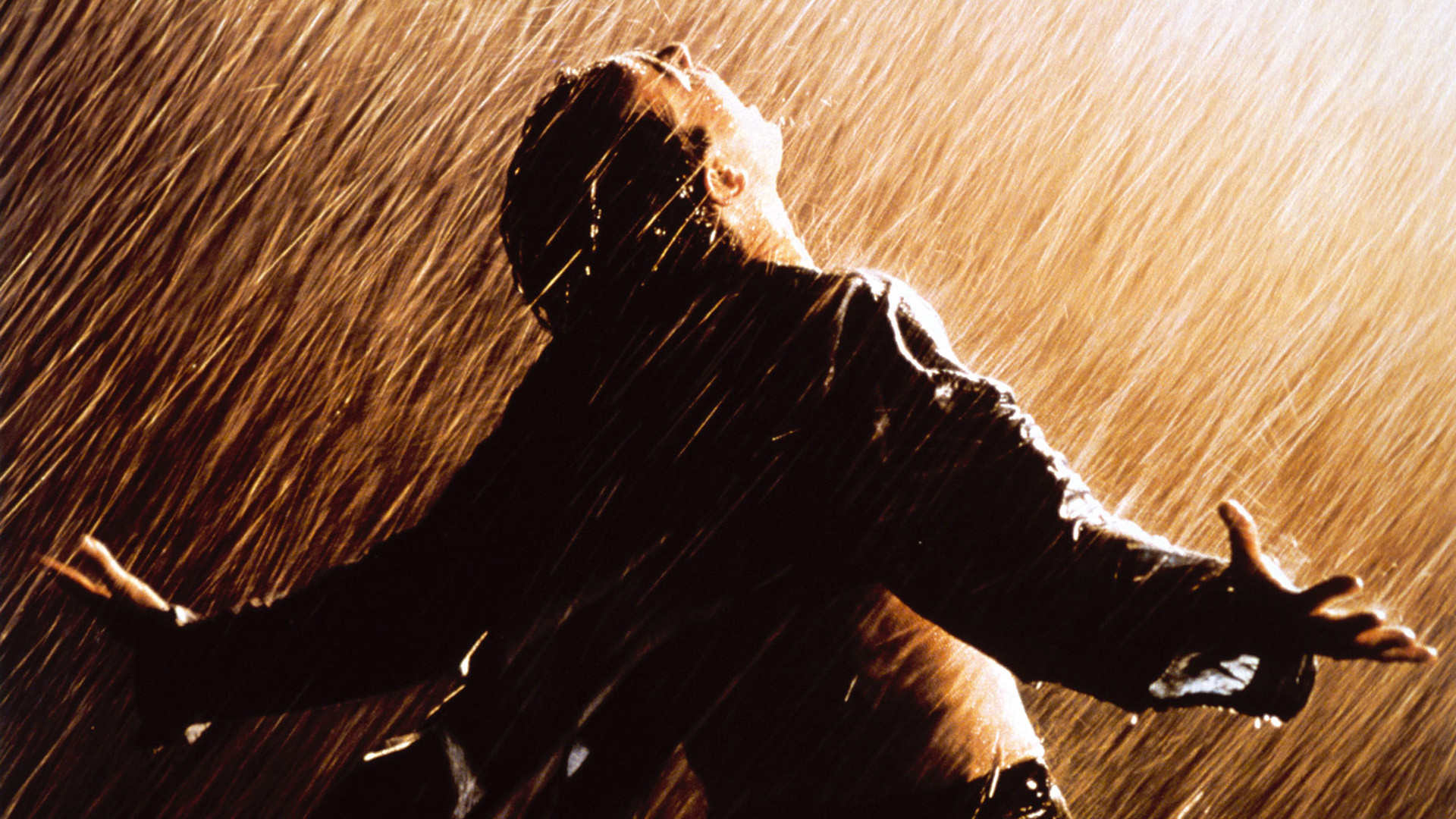
The second scene which I would point to comes from the Shawshank Redemption, and is for my money, even more beautiful than the previous scene. The movie itself is about a man who is falsely accused of murder and must serve twenty years in a state penitentiary. His name is Andy Dufresne (played by Tim Robbins) and he quickly shows himself to be a rather resourceful inmate. Generally speaking, the other inmates respect him. And perhaps more importantly (at least for the purpose of the scene) the warden finds his talents quite useful for his own designs. More to the point, Andy used to be a banker and so is able to help the warden (and others) get around paying some of their taxes. As a result, he is given special privileges, which he generally uses to benefit his fellow inmates and bring a little humanity inside those prison walls. In one instance he continually petitions the state for books in order to start a prison library. After failing on numerous occasions to have his request granted, he apparently annoys them so much that they finally send him books just to shut him up. He writes them twice as much after that.
Yet something else was included with the books that was in some ways even more exciting. As Andy opens the boxes he sees that there are vinyl records inside along with the books. He is told rather pointedly by the Warden to get those things out of his office immediately (or by the time he gets back). The warden then leaves and Andy is left with one of the prison guards who apparently trusts him enough to leave him alone as he uses the bathroom. However, while in the bathroom, Andy decides to play one of the albums which happens to be the "Marriage of Figaro". At first the officer simply asks Andy what's going on, but soon Andy gets another idea. He decides to lock the bathroom door as well as the door to the Warden's office. He then proceeds to play the music over the intercom for everyone in the entire prison to hear. Morgan Freeman, who plays the narrator in the film, and who is also one of Andy's fellow inmates and friends, describes it this way; "I don't know what those two Italian ladies were saying, and the truth is I don't want to know. I like to think that it was something so beautiful that it can't be expressed in words and makes your heart ache because of it." If ever there was a scene that epitomizes what movie-making should be, this is it.
However, as a consequence of Andy's "mischief", he receives two weeks in the hole, which must seem like an eternity. Yet when he comes out again and joins his fellow prisoners for dinner, he surprises them by saying that it wasn't that bad because he had "Mr. Mozart" to keep him company the whole time. When they ask him what he means by that, he simply explains that there are some things (inside themselves) that the warden can't take, and that music (among other things) is a necessary reminder that there are places beyond these walls that are not made of stone. Truly, these scenes communicate what all cinema and art should seek to communicate. They remind us that amidst our earthly strife, we must never forget that there is a beauty beyond the prison walls of daily life, lyrics to a song so beautiful that they cannot be transcribed in this life, and "make your heart ache because of it."
After observing the media's stunning indifference to the Hermit Gosnell "house of horrors" abortion trial, I felt both haunted and hunted by the whole thing. I suppose one could argue that the "fetal blood bath" (these are the words of those who worked there, not mine) that took place in that Philadelphia clinic is the exception rather than the rule, though it is an exception that would likely have gone unnoticed were it not for the women who were maimed and/or died as a result of their abortions. Then again, even with that being the case, precious little has been said in the national media about it. Why? Because there's a dirty little secret surrounding the abortion debate, a deceit that screams to high heaven. The ugly truth is that "choice", at least for the hard-core advocates, was never really about protecting women's rights at all, but rather about protecting abortion at all costs. If some women have to suffer death in the process, so be it. What's a few sacrifices in the name of keeping it legal?
Yet this remarkable treachery extends well beyond those who actively promote abortion. Indeed, if you want to know the reason vile places like this still exist, look not first to the abortion doctors like Gosnell, but to the silent majority who lack the moral conviction to truly oppose abortion. Yes, it is fair to say that abortion is still legal not because there are too many people that are adamantly "pro-choice", but because too many people are only partially pro-life. For even as we continue to be horrified about the abuse of our little ones, we strangely turn a blind eye to the ill-treatment of... well... our little ones.
Two examples which epitomize this hypocrisy come from the states of Illinois and Florida. The first story, describes an Illinois woman who just received a fifty year prison sentence for giving birth to, and leaving, her newborn child to die on the side of the road in a bag filled with soiled laundry.
The second story involves a Florida court hearing wherein a Planned Parenthood lawyer attempts to explain why the organization she represents is against legislation that compels a doctor to save the life of child born as a result of a botched abortion. Behold the similarities of both cases: child born and thrown away with some dirty laundry on the side of the road... outrage; child born and thrown away in a dumpster filled with human waste and used medical supplies... ambivalence and uncertainty.
I have always hated when people are too quick to pull out the "Hitler card", because it tends to immunize people from a healthy horror of the name and the associated reality. But when you look at the willful ignorance that seems to pervade public discourse on these matters, one cannot help but to think of all the people who turned a blind eye during the holocaust in spite of hearing all of whispers and rumors about Germany's own "house of horrors" at Dachau and Auschwitz. It is not the abortion doctors that are primarily responsible for making all of this possible, but the deafening silence of those who either prefer not to know the truth, or those who do know, but lack the moral courage to speak it. Indeed, these are the ones who allow this most abominable industry to continue to fly under the radar.
In the book of Genesis, God says "Let there be Light..." and there is light. The remarkable thing about this is not just that God can demand that light should appear and it does, but the fact that God actually invented light itself. I may be able to bake a mean batch of cookies from scratch, but God invented the very idea of cookies... from scratch. As for myself, I can only utilize the materials that God has already placed before me, but God actually invents the materials as well as what those materials can ultimately become. Most recently I was thinking about this, strangely enough, when I was watching the latest State Farm advertisement. As I was watching the commercial (seen above), I began to consider how far we've come in terms of technology. Certainly God didn't use the "Clapper" when he called up out of nothing that glorious reality known as "light," but it is not all that different of a concept when you think about it. In fact, just as everything has quickly gone from push-button to touch screens, soon enough light switches and other appliances will cease to have on-off buttons and instead become completely voice-activated. When seen in this light, one comes to realize that the book of Genesis is not merely a "silly mythical fantasy", but rather a practical reality happening right in front of our face (though the act of creating "ex nihilo" will forever remain a mystery).
On the positive side of things, man's technological insight has offered further evidence that the words of Genesis are true; "Let us make man in our image and likeness..." Indeed, man has the capacity to mirror God in the most remarkable of ways. As evidenced by modern innovation, he is more than capable of manifesting his thoughts and dreams in a tangible and concrete way. On the darker side of things however (as exhibited by this State Farm commercial), seeking to make manifest everything in one's thoughts and dreams is only good if one's thoughts and dreams are not like those of the serpent in the garden; "You will become like gods, knowing what is good and evil..." Thus, the real question here is: is the God of State Farm more like the God of Genesis, or is he a little bit too much like the Deceiver? At any rate, it is perhaps one of the biggest paradoxes that in order for man to be godly, he cannot regard himself as God at all.
The primary difference between the God of Genesis and the God of State Farm is that the latter exists (at least in the commercial) so that whatever man demands he gets; whether it be a jacuzzi, a girl, or a sandwich. It is all about obtaining whatever I want until I want something else. The former does not demand immediate results, but rather lays the foundation and provides the ingredients for the world to develop into all that He envisions it to be, and perhaps even more. For there are two things in particular in Genesis' creation account that aren't in the State Farm story. Firstly, the creation in Genesis takes place over an extended period of time. Indeed, most good things in life require a little patience (with a garden being no exception). The other important difference between the two accounts is the fact that God's creation is a cooperative effort. God says to the sea; "bring forth life..." Notice he doesn't demand a particular sea creature, he leaves it "up to the sea" to do so. Though it is important to mention that he does "intend" everything, creating "each one according to its kind". This is in stark contrast to the Genie-like (interesting similarity in the word) mentality in the State Farm commercial. For this very reason, I would like to contrast the former advertisement with the one that I have placed at the bottom. In the one above the guy in the commercial gets everything he demands. However, the one at the bottom is far more amusing, not because both girls get everything they want, but because one of the girls doesn't. Apparently you must not only call out to the agent but you must use the proper words/form of address, and because she doesn't know it, she gets a second rate agent (to put it mildly). Yet how boring this commercial would be without her and her awkward attempt to get an agent? A world filled with naught but a host of Veruca Salts would be down right depressing. Moreover, it should be noted that Ms. Salt did not become happier and happier the more she received, but instead became all the more disdainful because of it. On the other hand, the humor and unpredictability of a world that has everything we need, yet doesn't necessarily deliver in the way that would predict, is far more suspenseful. And despite what AT&T would have us believe "faster is not always better", there are some things (I would argue the best things) which require real time and patience. Yes, what makes this world both beautiful and exciting is not that we get everything the moment we ask for it, but that there are surprises and wonders out there far greater than ones we could have envisioned, and few of those, if any, happen on cue.
A few years back, I was attending the Good Friday service with my little brother-in-law, and at some point in the middle of the service he looked up at me and said; "When will it end?" When I tell this story today, I repeat this line, but I do it a little more dramatically than it was originally stated. Perhaps I do so mainly because the story is funnier that way, but I also do so because, frankly, I know exactly how he feels. For the most part, I hate the stations of the cross. And as for the Friday liturgy, there is a desert dryness in it that only serves to remind me of just how hungry I really am. Stale toast and rumbling tummies, ah, now that's bliss. Indeed, my brother-in-law is only echoing what everyone else in that church is thinking. Sure, there might be a moment or two in which one finds one's self moved by the liturgy (like when the priest in the very beginning lies prostrate on the floor, and there's a deafening silence). But by the time those intercessions kick in, and we find ourselves kneeling and standing over and over again for what seems like an hour and half, that little boy's words become my own; "When will it end?!"
And don't even get me started about those stations of the cross, wherein we tell Jesus "we love him more than we love ourselves" and that "we truly despise our sins" and that "all we want to do is love Him forever". "No", "no I don't", and "no it isn't"! Whenever I find myself saying these words during the St. Alphonsus Liguori stations, I feel like a fraud, a phony, and a loveless shell of a human being. If I were really being honest, my words would probably be more like; "Lord, I love you more than my toothbrush and perhaps even more than my GPS, but not quite as much as every other imaginable thing." And as for the sins I've committed, generally speaking, I feel very little about them one way or the other. Occasionally I may experience a burst of compunction, but that quickly fades back into indifference again. And as for loving Jesus forever, there are perhaps instances where I have genuinely desired that... I think? The point is Good Friday makes me feel like the Walking Dead, A Dark-Seeker, the undead. So does this mean that the prayers of Good Friday are useless, or that the Stations of the Cross are worthless?
To the contrary, the fact that I feel like the Walking Dead on Good Friday (and practically every Friday during Lent), is in a way the actual point of Lent. Lent does not exist to make us feel like we are righteous, it exists to remind us that without God we are a stale flavorless piece of bread; "Remember, from dust you came and to dust you will return." The fact that I "hate" Good Friday is not a sign that I am irredeemable, but rather a sign that I am a perfect candidate for it. If it does not make me want to leap for joy, so be it. I hardly think, in spite of what the "Lord of the Dance" says, that even Jesus felt much like dancing on that day. So if I feel like I'm walking in the desert during the liturgy, all the better for the spirit of the day. The real question is am I accompanying my Lord to the dark abyss known as Golgotha, or am I looking to escape to some Caribbean island where they play steel drums all day? If I feel dry, emotionless, and without consolation, I should not shun this feeling, but recognize that I am participating in only the tiniest portion of that profound God-forsakenness that our Lord faced. To feel nothing, and still accompany our Lord on this journey, is not only not a sin, but rather a far greater act of faith than simply being motivated by tears. The virtues of faith, hope, and charity are best understood not as something sentimental, but as a movement of the will towards God's purpose in spite of our inclination to do otherwise.
Therefore, the name Good Friday is truly apt in that delightfully paradoxical (Christian) kind of way. There is something remarkably morbid and strange about calling the day that God died "good". And yet... this is the irony which marks every aspect of our Faith. Indeed, our Faith is forever surprising us by redeeming those things that seemed, at least on the surface, most irredeemable (like myself). The truth is I am a zombie, I am the undead, I am a "warm body", but in light of the Good Friday liturgy that comes as good news! Why? All those Stations of the Cross, all of that kneeling and standing, all of that baroness of spirit- is only a stark, but happy, reminder that; a) Jesus died for me; and b) without that awful sacrifice I would never know the joy of the resurrection and instead be condemned to a permanent state of the undead. So rejoice and be glad, it's good to "hate" Good Friday!
When it comes to explaining one's devotion to Mary, or why, for instance, we pray the rosary, Catholics are not always the most articulate of defenders of this particular practice. Perhaps one reason for this lack of eloquence has to do with the fact that Marian devotion comes so naturally to them that they have never really thought about the "why" of it all. And when something becomes second nature to an individual, presumption can be a dangerous thing. For example, a child would probably be left speechless if you were to ask him or her to explain why they love their mother so much. Why? "Because she's "mommy" of course. By the same token, Catholics rarely contemplate Marian devotion because, well, she's our mother, so what else is there to say? Protestants, on the other hand, don't think much about Marian theology because they are taught as children that to do so could lead to some form of idolatry. Their reasoning is that God is God so why waste time on the Mother of Jesus? Hopefully, they would not regard it a waste of time to ask their own biological mother to intercede for them with Jesus. At any rate, Catholics have a most useful and simple resource when it comes to easing concerns about Marian piety. Certainly one can attempt in their own way to help their Protestant brethren to understand where they are coming from when they "pray to Mary", but there is an even easier resource at their disposal: Catholic prayers. Indeed, it is through the different Marian prayers that the Church articulates her relationship with Mary and reveals most succinctly how it is that we can devote special attention to her without simultaneously ignoring God. Below are 5 classic examples of Marian prayers which reveal the true nature and purpose of our devotion to her. The truth is if you want to learn the art of true devotion to God you must learn why Catholics devote so much of their energy to Mary.
The Stabat Mater
For those unfamiliar, the "Stabat Mater" means "the mother stood" and is sung as the priest or deacon processes from one station to the next during the Stations of the Cross; "At the cross her station keeping, stood the mournful mother weeping, close to Jesus to the last". By itself, the notion of a human being "standing" is quite unremarkable, but when put in context, it says everything that needs to be said about a disciple. Indeed, this brings new meaning to the words "stand by your man" or as Chrissie Hynde of the Pretenders put it, "I'll stand by you". The fact that Mary stood at all must of required unimaginable courage and strength. But whatever the case, Mary reveals here what it means to be a true devotee of God. She cannot save the world, nor can she carry Jesus' cross for him, but she can remain "close to Him to the last"; she can "suffer with" her Lord, Savior, and Son until the he breathes his last. To stand with Christ at his most godforsaken moments and look upon his wounds with perfect love and adoration is a summary of the Law and the prophets. And of course as Christians this compassion extends to our neighbors as well, for they too represent to us Christ incarnate. "Make me feel as you have felt. Make my soul to glow and melt. With the love of Christ my Lord... Let me mingle tears with thee, mourning him who mourned for me, all the days that I may live." The goal of discipleship consists in acquiring a Marian heart, a heart which not only loved him more than any other human being on the face of the earth, but who also grieved him as one grieves the death of an only Son. Hence, our prayer to Mary is that she allow us to partake in "her pain", not because her pain is valuable in itself, but rather because she is the only human being who has complete knowledge of what it means to love God without reservation. We, like John, accompany her at the cross, and learn the proper disposition and response in the face of so great a love. Jesus can tell us how to love him, but even he cannot do it for us. Thus, when it comes to showing the rest of humanity what it means to love God, who else should we consult but the one who loved him from the very first moment of his conception?
The Hail Mary
It is utterly amazing how few Christians, both Catholic and Protestant, seem aware that the Hail Mary is a prayer taken straight from Scripture; "Hail Mary full of grace the Lord is with thee. Blessed art though among women and blessed is the fruit of thy womb, Jesus." When Catholics pray this all they are doing is reciting the plain words of Scripture. Granted, these words are taken from two different sections in the Gospel of Luke, but they nevertheless relate to the same thing, namely Mary and her subsequent part in the conception of Jesus. A Protestant might concede that the Hail Mary is primarily a Biblical prayer, and that Scripture does indeed declare that the "all generations should call Mary blessed" (though this part might be accepted more begrudgingly), but what they will likely still complain about is the amount of Hail Marys that a Catholic prays. First of all, it may be just a shortcoming of our humanity, but it is undeniable that when we have certain types of troubles we go straight to mom. Even in modern parlance, especially in football, it has been referred to as a kind of "Hail Mary". But there is a better theological reason for this (though it would seem that the instincts of love have a great deal to say themselves). There is something profoundly logical about the fact that Catholics say so many Hail Marys (incidentally we say quite a few Our Fathers and Glory Bes as well). However, I think the problem is not so much the prayer itself, as with what it begins with. Nevertheless, if one actually pays attention to the logic of the prayer then they will also recognize what it ends with, namely Jesus. This is the point of all Marian prayer and theology in general. We ask Mary to lead us to Jesus, just as the prayer itself "leads to Jesus". In fact, there is a sense in which all things on earth are meant to begin with the world and end with God. Anyhow, the ultimate point of every created thing is that it must find its ultimate meaning in God. What is the purpose of repeating this prayer then? To put it plainly, the Annunciation is the pivot point of History, it is the moment when despair was transformed into hope, when death became life. It is the Headline of History, the only bit of Good News ever to come across the wire (besides the Resurrection) that bears repeating ad nauseam. It is that moment when you hear the words 'I love you' for the first time, or that instant when you see your bride walking up the aisle. It is the moment you find out your going to be a father, or the words "we've found a cure...". Can those moments be repeated enough? Do we not spend a good bit of our lives trying to re-capture them? All Marian prayers are ultimately related to her role as the one who delivers Christ to us. Hence, the "Hail Mary" is fundamentally a prayer of the Incarnation. In a sense we are like spiritual midwives asking/pleading with her to deliver our Lord to us. Perhaps that is the best way to think of Mary as the one who "delivers" Jesus to us in the midst of our earthly "labor" and strife. And so as a consequence of having Jesus delivered to us, we are ultimately delivered from whatever is weighing us down. It is a prayer which is almost priestly, for it petitions Jesus to make himself concretely present to us in a given moment. She is like a priest during the consecration who, by her simple words makes Christ incarnate upon the altar. A similar way to envision the prayer is to put yourself in the shoes of Gabriel, asking this "gifted lady" if she will once again bring to us the Son of God, which she no doubt obliges. In the end the goal of the prayer is not to dwell on the power of Mary, but to dwell on and make present, that very moment which irrevocably changed the course of history.
The second part of the prayer is perhaps more controversial because some of it involves words which are not taken directly from Scripture. Historically speaking, it makes perfect sense that the latter part of the prayer was a later addition and was not part of the initial prayer. For this reason, some may conclude that this "add on" is unbiblical and therefore doesn't belong. Yet if this is our conclusion, then we are missing the whole point about how, and to what end, the Church does theology. Simply put, the Bible did not come with a commentary. The commentary of the Bible is, and has always been, what the authoritative Church has to say about Scriptures. If not for this authoritative voice, we would never really know what the Bible meant in the first place. If this sounds strange, just remember that the Church has done this with just about every major teaching in the deposit of faith; from the Trinity, to original sin, to grace and salvation. Despite what some Protestants suggest, the "plain words of Scripture", are far from plain. Just ask ten different people the meaning of a particular passage, and expect ten different explanations. The point is if it took five hundred years to settle the central doctrine of the Christian faith (viz. the Trinity), then it stands to reason that the work of theology, or interpreting the truths of revelation, is part of a lengthy process that must be worked out with the help of the Holy Spirit. For example, it is not enough to say that God is a Trinity, there must be some subsequent explanation of how that is possible- along with why it is necessary to believe in it at all. Hence, the Church gave us the Creed. In the same way, from the beginning of the Church, Mary was recognized as having a special role in the life of the Church because of her intimate role in the Incarnation. As a consequence, the Church asked, just as Mary did, what the significance of the angel's greeting to her meant, and what it implied about her part in the economy of salvation. Far from jettisoning the role of the Virgin Mary postpartum, the Church concluded that based on the teachings of the Apostles, Mary would remain forever that "Woman" whose vocation it was to help "deliver us" by virtue of the Son she herself delivered. Her "yes" to God is simultaneously a "yes" to humanity. Therefore, the second part of the Hail Mary might be considered something of a logical and theological explanation of that original Scriptural event. No doubt, it is a recollection of the angel's announcement to her, but even more importantly, it is a plea for Mary to impart to us her immaculate "yes", so that we might receive the fruit of her womb "now", and especially "at the hour of our death".
The Angelus
Certainly Protestants are wrong for trying to minimize Mary's role in salvation, but some Catholics are equally wrong for trying to understand Mary's role in a much too clinical manner. The reason Mary can't simply be "kept in her place" (very misogynistic, no?), or kept out of the way, is for the same reason a mother can't just be ignored in the life of her son, or a bride cannot be disregarded in favor of the groom. They are a package deal. The Lord has united his flesh with another, thus you can no more dispose of her role than a body can be disposed of in favor of the head. That's why Mary is always "hangin' round" Jesus, because he wants her there. If these analogies seem shocking, just remember, they come right from Scripture. Moreover, if we are shocked about the significance of Mary's role, we should also be terrified of our own as well. Why? Because Mary represents a foreshadowing of the type of intimacy/communion that Christ longs to share with every member of the Body of Christ. The Angelus, for its part highlights this heavenly ambition. Yes, it alludes first to Mary's unique relationship with Jesus, but it also implies that we all share in this Marian vocation. One of the primary reasons Catholics invoke Mary is so that we too might become an immaculate version of ourselves. In other words, just as a mother teaches her child, not merely to remain a child, but to one day become a father or mother in their own right, so this prayer implies that we ourselves are to strive to speak with a Marian voice. In the Angelus, Mary's words become our own, and God's words to Mary become God's words to us; "And the angel of the Lord declared unto Mary... And she conceived of the Holy Spirit". God always takes the first initiative. Then comes our/Mary's response; "Behold the handmaid of the Lord... Be it done unto me according to thy word." And finally when we consent to embrace the will of God in our lives, he returns the favor by permitting us to truly "conceive" God in our lives, "And the Word was made flesh". By time the final part of the prayer rolls around, Mary is not mentioned at all, as if we have, spiritually speaking, taken on her identity; "Pour forth we beseech thee O'Lord thy grace into our hearts, that we to whom the Incarnation of Christ thy Son was made known by the message of an angel, may by his passion and cross be brought to the glory of his resurrection. Through the same Christ our Lord, Amen." Thus, it is we to whom the angel has come, and so we pray that what he has begun in us, he will complete by bringing us bodily to himself as he has already done (and appropriately so) for his mother.
The Magnificat
Complaining that Mary serves as an obstacle to authentic worship of Jesus is a bit like saying that a womb is an obstacle to the conception of a child. No one who strives for holiness themselves would ever complain that a truly righteous man obscures the glory of God. Rather, if they have any brains in their head at all, they will thank that individual for making the Gospel of God more clear and intelligible to them. They are a spotlight and a beacon which illuminates the truth of God, not some kind of lunar eclipse. In the same way, Mary is a magnifier of God. Whereas the sinner makes God microscopic, if not invisible, by his deeds, Mary by her praise and her witness, makes God so present in fact that you must in essence pluck out your own eyes in order to miss him. And even then, because of her witness, you still just might find yourself tripping over him. Another Marian prayer taken directly from the Scriptures, these words are subsequent to Elizabeth's remarkable greeting to her; "Who am I that the mother of my Lord should come to me... blessed are you among women, and blessed is the fruit of your womb..." How does Mary respond? She responds with unmitigated praise for the God "who has done great things for me". Mary has won the divine lottery, and so like a Biblical Cinderella she can do naught but express full-throated gratitude; "My soul magnifies the Lord, my spirit rejoices in God my savior! For he has looked with favor on his lowly servant. From this day all generations will call me blessed..." She says this not as a boast, but rather in disbelief at the inevitable consequence of bearing God into the world. Here is a nobody, a Jewish handmaiden whose destiny prior was so insignificant that to even declare it so would be sheer redundancy. From a flake of ash in the dust bin of history, to the queen of heaven who is enthroned above the angels- it is a story that frankly makes the Brothers Grimm version seem almost mundane and cynical by comparison. By saying this prayer we at once acknowledge the Biblical fact that Mary had a special part in the economy of salvation and that she is truly set apart and/or "blessed among all women". We also say it because they should be our words as well. Though the words "the Almighty has done great things for me" apply first to Mary, they apply as well to us as well by implication. And as we learn to form our own "yes" to God with our lips, we too participate in this exuberant celebration, this dance of joy which once saw David leaping before the Ark of God.
The Confiteor
This is not technically a Marian prayer, but it does have elements which help to articulate in a simple fashion that Catholics do not believe that Mary is divine, though we do believe that she deserves her own category of respect. Catholics explain this with three Latin words; "Latria", Dulia, and Hyperdulia. Latria means "worship", which, according to Catholic teaching, is due God alone. Dulia is translated to mean "veneration", a sort of special respect afforded those who have successfully "finished the race". And lastly "hyperdulia", which is a special veneration afforded to the lady who with God helped to re-open the gate of heaven for us. The prayer itself is penitential and meant to be a kind of antidote to Adam and Eve's denial in the garden, wherein they failed to take responsibility for their failings, and instead blamed someone or something else. Through this prayer we take full responsibility for the only thing that we control, namely ourselves, and we admit that the sins our own fault, and not to be attributed to anyone else. The second half of the prayer is a call for mercy, and in particular a plea for help from all of our baptized brothers and sisters, as well as the angels; "And I ask you blessed Mary, ever Virgin, all the angels and saints, and you my brothers and sisters, to pray for me to the Lord our God." Yes there is a pecking order of importance in this prayer, but notice with what solidarity we ask Mary, angels, saints, brothers and sisters, not to "have mercy on us", but rather "to pray for us". It's a family thing, and what a great joy it is to know that I have a people on my side in high (and low) places. If this can be recognized, who in truth can feel alone? Incidentally, is it even possible to commit the sin of idolatry when one is asking for prayers from another? Indeed, were I to ask a golden calf to pray to God for me, I doubt even that could be considered idol worship. Sure it might be ignorant (but let's face it- we are all ignorant in divine matters), but what it can't be by its very definition is an attempt to bypass God in order make manifest my own will.
I thought the video for Journey's Separate Ways was the best/worst video of all time. I stand corrected. I think Falco should have been content with "Rock Me Amadeus."
For my money the Twilight Zone is the best show ever to appear on television. Even fifty years after the series concluded the Twilight Zone is still relevant enough to be parodied by Saturday Night Live. This is quite an accomplishment, especially considering just how quickly TV shows pass in and out of our collective consciousness. To my knowledge SNL has done at least two parodies based on Twilight Zone episodes; one involving William Shatner's harrowing flight at "20,000 feet", and another involving a woman who apparently endured repeated attempts by doctors to fix her "hideously disfigured face".
Called "Eye of the Beholder", the ultimate message of this particular vignette is that, as the title implies, beauty is determined by the ones who set the standard. Thus, what is ugly to one may be beautiful to another, and vice versa. The implication is that there is nothing that is objectively beautiful. Beauty consists essentially in a set of arbitrary standards dictated by a society which is obsessed with conformity and uniformity.
Visually this episode is stunning, and while there is much positive to say about its overall message, I have to quibble a little bit (as much as it pains me) with its general implication. Though it is true that there are different kinds of beauty, it nevertheless does not follow that physical beauty is purely a figment of our imagination. Ironically, it is SNL in the following video which rather eloquently points this out. No doubt there are dictatorships out there which do/have compelled people to embrace what would otherwise strike them as vile. However, none of this disproves the existence of objective beauty. The dictator has not changed what is beautiful, rather he has compelled his people to call something beautiful which they otherwise would not. Why does he do this? Because if he cannot convince them to believe that black is white, up is down, and ugly is beautiful, then how else will he convince them that his brutal behavior is commendable. If you have never seen the episode, I highly recommend that you watch it first. But even if you have never seen it, the sketch is still pretty amusing anyway. Enjoy.