Tuesday, June 25, 2013

The Top 11 Creepy Stalker Songs of All Time


When we think about heaven and hell, most of us presume that they are as different as any two things could possibly be. Yet what is often missed in this overly facile evaluation is just how frequently one is mistaken for the other. After all, who would Satan deceive if he simply appeared in all his "gory"? You need look no further than love ballads in order to encounter this strange phenomenon. Who among us has never had the experience of singing a beautifully crafted romantic song only to realize that there is something a little (or a lot) off about the lyrics? Obviously there are quite a few songs that could fit into this category, but in this particular list I wish to focus principally on the phenomenon of stalking. All of these are "stalker songs" to one degree or another, but some are more "stalky" than others. Indeed, while not every song is about a creeper per se, what each demonstrates is that sometimes there is a very fine line between a romance and a restraining order, between the passionate unblinking gaze of a lover, and the unblinking gaze of a surveillance camera.


11. I Can't Stay Away From You  - Gloria Estefan


Not technically a song about stalking, it nevertheless possesses many of the same characteristics; "Anything for you, though you're not here. Since you've said we're through, it seems like years...I can pretend each time I see you, that I don't care and I don't need, and though you'll never see me cryin', you know inside I feel like dyin'... I hope you find someone to please you, someone who cares and never leaves you. But if that someone ever hurts you, you just might need a friend to turn to..." Within a few lines she seems to have accepted her fate, and then the next moment she's plotting how she can get back into the picture. I'm baaaaack! Both the monster in the horror flick and the stalker have an incredibly terrifying way of coming back from the dead. Not exactly the type of rational consistent thinking that you're looking for in a lady. In the song I Can't Stay Away From You (same song, different title; which is another sign of obsession, disguises and repetition); "Look over your shoulder/ I'll be there. You can count on me to say. But I can't stay away from you/ I don't want to let you go/ And though it's killing me that's true/ There's just some things I can't control... I know you're telling me the truth/ I know it's just no use/ But I can't stay away from you..." You'd better stay away from me, woman, or I'm calling 5-0! A little advice for men and women who want to win back a love: you don't do it by desperately pleading with them to love you! These people remind me of the Jim Carrey character in the movie Dumb and Dumber, especially when he asks the Lauren Holly character if there is a chance that they might get together. She responds by saying that there is about a one and a million chance that this could happen. To this rhetorical face palm, he replies enthusiastically; "So you're telling me there's a chance..." When it comes to groveling and begging people to love you, a "one in million" chance is proabably far too generous an estimation. Indeed, once you have that smell of desperation about you, it is quite difficult to get the stench of loser off of you. Moreover, Ms. Estefan describes the man's disaffection for her as something which is "killing her", and then she also adds that "inside she feels like dying". And though she doesn't mention suicide per se, the fact that she twice resorts to mentioning death could suggest some form of emotional blackmail, which is always part and parcel of the stalker's play book.


10. I Found Out About You - The Gin Blossoms


This particular song is about the profound humiliation that one feels, not only when one is cheated on, but when one discovers that they are the last to know. Understandably, this can create all sorts of conspiracy theories in the mind of the one who is prone to stalking. As it relates to the subject here, the one who was cheated on has no doubt spent a considerable amount of time imagining how this deception went down; "Whispers at the bus stop/ Nights out in the school yard/ I found out about you..." The last verse in the song is a veritable compendium of what a stalker might do (and think) when once he finds himself on the outside of a relationship (incidentally, no matter what the circumstances, the stalker always believes himself to be on the outside of things, which is why he/she can't ever be in a lasting relationship). "Street lights blink on through the car window/I hear the time too often on an AM radio/ Well, you know it's all I think about/ I write your name/ Drive past your house. Your boyfriend's over/ I watch the lights go out..." In spite of the fact that the ideas in this final verse seem more or less inchoate, they make a certain poetic sense when placed in the psyche of the stalker who is going out of his mind with jealousy. Another common characteristic of the stalker is a kind of repetitive childish narcissism (viz. "I write your name/ Drive past your house"). Indeed, it is somewhat reminiscent of the scene in the movie The Shining where the lead character, played by Jack Nicholson, also seems unwilling, or rather unable to let go of certain repetitive tendencies (see above).


9. Maniac - Michael Sembello


Taken from the soundtrack to the movie Flashdance, this song was in fact originally about a stalker; "He's a maniac, maniac that's for sure/He will kill your cat and nail him to the door." The subject matter of the song was inspired by a movie of the same title, which was about a killer in New York City who stalked his victims. However, when he received an offer to appear on the soundtrack of the movie, they were more than happy to change the stalking maniac into a dancing one; "It can cut you like a knife (I wonder what this originally related to?), if the gift becomes the fire. On a wire between will and what will be. She's a maniac, maniac on the floor, and she's dancing like she's never danced before." What is most fascinating to me is the fact that you can turn a song about a serial killer who stalks his victims into a song about a young woman who is wildly passionate about dancing without ever changing the title and only slightly altering the songs lyrics. Perhaps there is some lesson to be learned here about how the only thing that really separates a success story and a serial killer is the end to which they channel their "maniacal" passions.

   
8. Eye in the Sky - The Alan Parsons Project        


One of the classic science fiction metaphors for government surveillance is the so called "eye in the sky". An idea inspired originally by the totalitarian state as described in the novel 1984, this all-seeing surveillance device keeps everybody in check and prevents the citizens from behaving in any way that would undermine the public order (or at least as the state defines it). In essence this all-seeing eye becomes a rather grandiose Peeping Tom, which "...Sees you when you're sleeping/ Knows when you're awake/ Knows when you've been bad or good/ So be good for the sake of the State." When applied on the state level it becomes a kind of substitute for God. When applied on the individual level, as in this song, it becomes the Mini-me version of an all-seeing eye; "I am the eye in the sky, looking at you/ I can read your mind/ I am the maker of rules/ Dealing with fools/ I can cheat you blind." God complex, anyone? Obviously it is terrifying to imagine that someone is watching you even while you are alone and/or unaware of it (what would horror movies be without such a premise), but even more terrifying is the notion that even your secret thoughts are no longer private, and that someone villainous "can read your mind". It is bad enough to have a stalker following you everywhere, but how about a stalker with the power of being able to invade the most intimate part of yourself? The stalker is all about control, and so whatever he can use to bring his victim under it, he will no doubt exploit. After all, he is, at least according to his lights, the "maker of rules."      


7. Into the Night - Benny Mardones


There is a distinct difference between a romantic song like "Someone To Watch Over Me" and the songs that appear on this list. Some may look at the title and argue that it amounts to the same thing, but look a little deeper and observe just how far apart they really are. The first involves an invitation on the part of a "little lamb that's lost in the woods", not to be spied on by an unwelcome visitor, but one that is based on a desire for intimacy. A true romance does not seek to take advantage of a perceived vulnerability in another individual. To the contrary, it seeks to safeguard it. Sometimes, however, it is not so simple to distinguish the one from the other. Once upon a time if someone wanted to kidnap a young child, you offered them candy; but in our day and age, candy has gone viral. For example, a show like To Catch a Predator highlights just how easily young girls (and boys) can be manipulated into putting themselves into dangerous situations via internet relationships. Likewise, this little gem written by Benny Mardones seems to offer a similar scenario. Lyrics like this just goes to prove that as long as they comes with a pleasant tune, it really doesn't matter what you say. "La La La... statutory rape... La La La... kidnap the girl from her parents house while they're sleeping." Ah, the sweet hint of first love! "She's just sixteen years old, leave her alone they say/ Separated by fools who don't know what love's about... If I could fly/ I'd pick you up and take you into the night and show you a love like you've never seen... It's like having a dream where nobody has a heart..." I do apologize to you, Mr. Mardones for the heartless and ruthless laws that exist on the books to prevent older men like you from whisking away younger impressionable girls back to your lair. Maybe one day soon the state will grow a heart and finally give your sacred romance the go-ahead, but for now you must wait in agony for a few years until she is legal before you can, like a bird of prey, "lift her up into the night". The question is, will the relationship be as interesting for you when there is no danger involved?      


6. Sweet Caroline - Neil Diamond


If you are ever looking for a little insta-karaoke, all you need to do is crank up a little "Sweet Caroline" in the middle of a crowded room and then the next thing you know out of nowhere people will put their arms around each other and start belting out "BA BA BA" at various intervals. At some point in the last decade or so this song has turned into an anthem of sorts, one in which people feel no qualms at all about singing along together like some kind of unexpected flash mob. Nevertheless, if I were to change the words in such a way so as to accurately depict from whence the orginal inspiration came, you might get a slightly different reaction; "Where it begin/ I was watching TV one day/ And I saw Caroline Kennedy's 11 year-old daughter there. And for whatever reason/ I got inspired to write a love song about her/ Now I've just ruined the song for good. Warm, touchin' warm/ reachin' out/ touchin' me, touchin' you. Sweet Caroline good times never seemed so good... that is until the Secret Service were tipped off and arrested me for writing this messed up ballad about the president's daughter... BA BA BA!" I can only hope that it was her purity and innocence that initally inspired the song, and only later did it become a song about "warm, touchin' warm", and nights that are "filled up with only two".


5. Animotion - Obsession


When people find themselves in an unhealthy relationship, they often describe it as a drug. This is a good metaphor for describing just how quickly a relationship can go from a pleasurable attraction to an unhealthy attachment. Those who are the victims of this "obsession" quite often make the mistake of thinking that if they just appease/feed this beast a little more then it will eventually satisfy that other person's need for that drug... I mean person. But just as someone addicted to drugs is never appeased, so also the stalker is not appeased. And the problem can become even more acute when sex is added to the equation. On a list of things that will serve to pacify the obsessed, this is the least likely to do so (in case you were unsure of that); "You are my obsession, yes my obsession. Who do you want me to be, to make you sleep with me?" What is terrifying about this type of person is that they have so little self-respect, that they will do just about anything to share a few intimate moments with that person (i.e. I'll subjugate myself, just be with you). Yet what is so pitiful about this approach, is that whatever happens in the end, the person will inevitably be worse off than before. Even if the person acquiesces and agrees to sleep with you, you still have "lost your religion", "given up the ghost", and "shown your hand." No one wants to give themselves to that kind of neediness and desperation. And thus the conclusion to this saga is more than a little predictable; "My fantasy has turned to madness/ All my goodness has turned to badness. My need to possess you has consumed my soul/ My life is trembling/ I have no control... Just like a butterfly, a wild butterfly/ I will capture you and collect you." Cue the psycho music. Incidentally, this behavior need not necessarily be associated only with a love interest- one can see this same behavior in unhealthy friendships as well.


4. Every Breath You Take - The Police      


It is pretty much common knowledge that this song is about Sting's ex-wife and about how in the midst of their divorce there was a bit of stalking going on (though in interviews he doesn't say on the part of who). When asked about the song he describes it as a "nasty little song about surveillance and ownership". What's most fascinating to me (and apparently Sting as well) is just how many people have it played on their wedding day to represent their love; "Every breath you take/ Every move you make/ Every vow you break/ Every step you take/ I'll be watching you." It doesn't get any sweeter than that, does it? I mean who would have suspected that such brooding music could be about something so menacing and grim? However, even if one does read love into these lyrics, what type of person would deem twenty-four hour surveillance as desirable? Perhaps the most important lesson here is not so much about paying close attention to music lyrics (though I think there is value in that) as it is about how fine the line is between Godly love and one that borders on obsession. A lover finds repose in staring at the beloved, examining carefully all of her features (physical and otherwise). So also does a stalker, but in a very different kind of way. Indeed, even a couple that is married, or getting married, can mistake the freedom that love brings with its evil twin, possessiveness and co-dependence. A "love" such as this inevitably swallows up the individuality of the other person in the vacuum of mistrust.


3. Stan - Eminem    


When we think of stalking we generally envision some man or woman harassing and/or threatening some unrequited lover. In the case of "Stan", it is more the case of a man-crush gone terribly wrong. The lyrics detail a series of letters that are sent to Eminem by his "biggest" fan, but when this fan receives no immediate response from the object of his affection, his letters become progressively threatening and violent. Interestingly enough, Eminem was inspired to write this song when he heard a composition by a relatively unknown artist by the name of Dido. The song was called "Thank you" (which later became a hit in its own right), a delightful little ballad about offering encouragement in the face of life's little disappointments. However, when Eminem heard the first verse, something very different occurred to him; "Tea's gone cold I wonder why I got out of bed at all. The morning rain clouds up my window and I can't see at all/ And even if I could it would all be gray/ But your picture on my wall/ It reminds me that's it not so bad..." Once again we come face to face with how short of a leap it is between devotion and craziness. Obsession mimics many of the same things that love does ("put your picture on my wall..."). What is missing in the mind of a stalker when it comes to a relatioship is that fundamental notion of freedom that must exist between the two, without which love is not "love" at all. If there is no respect for the other person's freedom, then infatuation quickly becomes Fatal Attraction. The obsessed party is always idealizing the one he loves to the point of delusion. And so when that object of affection fails to respond in accordance with their grandiose dreams, the deluded one cracks along with his dreams. In extreme cases, as depicted in this song, the individual will even begin to threaten to harm the person (or themselves) they claim to love, hoping that they can somehow coerce them into responding the way that they wanted them to in the first place. Indeed, how futile their position, for they want to force the other individual to love them freely. There is nothing wrong with a little hero worship as long as the one engaging in it doesn't imagine that the "hero" is capable of doing what only God can do; namely filling the void that is in their soul. Sadly, these situations don't generally end well. Either they in end in the death of the performer (as was the case with the singer Selena), or what is more typical, they end with the one who is obsessed taking his (or her) own life.


2. Crash - The Dave Matthew's Band


When first one hears the beautiful instrumentation of this next song, one cannot help but to expect to hear an exquisite love ballad. Heck, as beautiful as the music is, all you would really need to do is tease a few phrase out about the woman's hair, eyes, nose hairs, whatever. But no, Dave Matthews had to write a song about a Peeping Tom creeping around some woman's house and leering at her through the window; "In a boy's dream/Oh I watch you there through the window and I stare at you/ And you wear nothing and you wear it so well. Tied up and twisted the way I like to be/ For you, for me/ Come crash into me." Well isn't that special! In some ways that isn't even the worst of the lyrics, but that is about all I really care to repeat. I suppose there is something highly appropriate about the fact that the peeping Tom is regarded as a kind of perverse adolescent in the song, for oftentimes individuals who succumb to these kind of infatuations have the psycho-sexual mentality of a middle-schooler. Indeed, he spoken of as if he were some thirteen year old kid gawking at some nude images of some woman on the internet. At any rate, what the Dave Matthews Band does to this lovely melody is ultimately what all perversity does- it takes something that is pure and wholesome, and completely chokes and defile what originally was quite good and innocent. You can be sexual without being exploitive, but a song cannot be sexually exploitive and remain in any way romantic. The only way that that can be the case is if you ignore the lyrics as well as blog posts like this that ruin songs for you. OK, one more line; "I'm the king of the castle/ You're the dirty rascal..." Wow.


1. Possession - Sarah McLachlan                    


What other song would be number #1 on this list but the one that actually contains real poetry from a stalker? The double connotation of the title only makes the listening experience all the more unsettling; "And I would be the one to hold you down/ Kiss you so hard/ I'll take your breath away/ And after I'd wipe away the tears/ Close your eyes dear." Certainly once you understand what this song is about it brings a dark significance to the words and phrases in the song that would otherwise be dismissed as hyperbole. Hmmm, why is he holding her down again? What does he mean when he says that he will take her breath away? And wait a second, did you say that she was crying? Um, why is she crying? All of these lyrics might have a normal explanation in the context of normal love, but in the face of abnormal love, they take on a whole new meaning. Likewise when you talk about "possessing" someone in the context of genuine love, there is nothing disturbing about what it means for two people to give themselves entirely in the context of matrimony. They belong to each other. However, possession in the darkest sense is a form of physical, psychological, or spiritual hostage taking. The most extreme example of this can be seen in Satanic possession, wherein the person is so utterly "possessed", or taken over, that there is no longer any "they" there to respond (or at least they are so utterly taken over that they are not at liberty to express themselves). And that's the point in the end. The stalker really is not so much interested in the one that they are stalking as they are in projecting themselves onto and into that person. Thus, it makes perfect sense then that when Ms. McLachlan released this album, her stalker sued her for $350, 000, and the opportunity to do an interview with her where they "discussed the lyrics to the song." So much for a stalker's integrity, right? Notice, he is not interested in so much meeting Ms. McLachlan as he is in talking about the words he wrote to/about her. Me, Me, Me. In some way, I do think that he captures the romance of hell quite well in all this. The Satanic impulse thrives on eternal separateness, and the idea, not the reality, of getting what you want. The true fulfillment of this romance is to never be filled at all; "Listen out your window, from across the great divide/ Voices trapped in yearning/ Memories trapped in time/ The night is my companion/ Solitude my guide/ Would I wait forever here and not be satisfied?" One final key to the stalker's delusional behavior is isolation. The man who spends too much time by himself can create his own world as he sees it. The problem is once he is confronted by reality, which has a way of disagreeing with our own version of it, such individuals may either be provoked to violence, or they may retreat even further into the dark cave of unreality; "into the sea of waking dreams I follow without pride/ 'Cause nothing stands between us here/ And I won't be denied." Sadly, this "sea of waking dreams" did lead to violence, though not towards Ms. McLachlan. Shortly before the case was to come to trial, the crazed fan, Uwe Vandrei, killed himself, a tragic reminder of what such isolation and unreality can lead to.        


Wednesday, June 19, 2013

The Good, the Bad, and the Absent: 16 Songs On the True Meaning of Fatherhood


In an age where true fatherhood seems to have lost all meaning, it is all the more important to consider its impact on society today. How do you explain the significance of fatherhood? How do you put into words just what a father's love means to the soul of a child? All of this seems lost on a generation that might be able to comprehend the virtue and beauty of maternity, but cannot see much value in manhood. Is fatherhood obsolete? Is it preferable for Heather to have two Mommies because men/daddies are just useless buffoons? Simply judging from the TV shows and movies out there, one would certainly get the impression that fathers should be seen and not heard. Either they are idiots, doormats, or just some vaguely benevolent force, trained to remain painfully docile. This is not to say that fathers should be a bunch of patriarchal blowhards, but it would be nice if we were to see every once in a while a bit of paternal authority represented in a more positive light. In spite of this emasculating tendency, it is interesting to note that popular music provides a far less facile assessment of what a father means to our lives. Thus, during this octave of Father's Day, let us consider the true meaning of fatherhood, and let us do so through the vehicle of popular music.


Another Brick in the Wall (Part I) - Pink Floyd

"Daddy's flown across the ocean/ Leaving just a memory/ The snapshot in the family album/ Daddy, what else did you leave for me/ Daddy what you leave behind for me? All in all it was all just bricks in wall..." This semi-autobiographical album by the band Pink Floyd explores all of the things which can ultimately lead a man to build a wall around himself. "Pink" (the main character in the story) loses his father during the war in childhood, and as a result has a profound identity crisis, especially as he grows into manhood. The more the father is remote (whether physically or emotionally), the more the son will, in all likelihood, follow suit. A child who lacks a consistent male role model in his youth, more often than not finds himself struggling to figure out who he is as a man. This lack of a "sense of self" quite often manifests itself in the form of substance abuse, mistreatment of women, bouts of anger, and an overall inability to articulate one's feelings of frustration and confusion. Ultimately every son derives his sense of meaning as a man from his father, and if there is no father, there is a tendency on the part of the son to feel impotent and unmanned. In short, the absence of the father begets the absence of the son.


The Leader of the Band - Dan Fogelberg

Among all of the the songs on this list, more than a few touch on the matter of how a son inevitably reflects his father. There is something more than a little Biblical about the notion that the son is in the father and the father is in the son. As it relates to this song by the late Dan Fogelberg, we can see how this intermingling of flesh and blood expresses itself in a whole host of ways; "... his blood runs through my instrument and his song is in my soul. My life has been a poor attempt to imitate the man. I'm just a living legacy to the leader of the band." There is something bittersweet about Fogelberg's description of his father (pictured above), for it sounds like he, who is a musician in his own right, is suffering underneath the heavy burden of his father's legacy. Yet if this is the only thing you get out of the song, then you have missed something most profound about the father-son relationship. To someone who knows nothing about this bond, Fogelberg's sentiments must seem to be little more than a tragic lament, but to one who understands the way a son looks at (or up to) his father, it is much more than that. To believe that your father is Superman is no more of an obstacle to a child's love than a bow is to a violin. They are complete only in tandem. Yes, there is an element of sadness in the song, but it is not the defining mood. The defining mood is one of gratitude. If there is sorrow in the song at all, it comes from the fact that he has not expressed this sentiment sooner. "I thank you for the music, and your stories of the road. I thank you for the freedom, when it came my time to go. I thank you for the kindness, and the times when you got tough. And papa I don't think I said 'I love you' near enough..." Gratitude for music, gratitude for stories, gratitude for kindness, and even gratitude for toughness and discipline. Yes, a young boy wants his father to call him out when he is out of control in spite of what some may believe. Spare the rod and not only will  you "spoil the child", but the child will later resent you for failing to prepare him for life. This is not to say that the child will thank you immediately, or even that he will thank you in this life, but a true father is willing to forego this sort of immediate gratification in order that his son or daughter may grow in virtue and discipline. The fact that his father is a "quiet man" (or so the song says) should not be regarded as a bad thing either. Indeed, a man does not have to be constantly "sharing his feelings" in order for his son to understand that he loves him dearly. As a matter of fact, in some ways a father communicates his love more through his quiet durability than through any needless proliferation of words.


Daughters - John Mayer


There are few people on the face of the earth that I would want near my daughter less than John Mayer (he would be a close second to a rapist, though there's much in common between the two). However, the muse is sometimes an incredibly indiscriminate with these things, and even when a musician himself does not live the virtues he sings about, he may still on occasion provide good insight on a subject. Such is the case with this John Mayer song; "Fathers be good to your daughters, daughters will love like you do... Oh you see that skin, it's the same she's been standing in..." Scripture says that the sins of the father will be visited upon the children unto the third and fourth generation, but who knew how practical this advice would be? If one possesses any kind of awareness at all about the development of young girls, one knows that they ultimately derive their sense of love and self-worth from their father. If they do not receive it from him, then they will generally chase love in all of those places where they are incapable of finding it... thus perpetuating a cycle. "Boys you can break. You'll find out how much they can take. Boys will be strong. And boys soldier on. But boys would be gone without the warmth of a woman's, good, good heart... on behalf of every man looking out for every girl (really, John???). You are the god and the weight of her world." One wonders where a snake like this would get such wisdom. Nevertheless, his point is well taken. Women are the great humanizers of the human race, but without a father loving his daughter as he ought, that warmth will quickly dwindle away (think feminism).


New Life - Blind Melon

This song by the late Shannon Hoon is in many ways a kind of simple prayer. It is about the announcement of the birth of his daughter, and an expression of hope that this "annunciation" will mean "new life" for him; "'Cause now she's telling me she'll have my baby/ And a faithful father I am to be/ When I'm looking into the eyes of our own baby/ Will it bring new life into me?" On the positive side of things, this is obviously a beautiful sentiment. Many a man who was derelict prior to becoming a father finds new strength in this beautiful vocation. Emotions arise that were long dormant. And when you're "looking into the eyes of your own baby" it breaks your heart even to consider the possibility that something so pure might be sullied by the perversity of a fallen world; "Should I teach one not to know how/ How to live in the world we live in now?" Tragically, Mr. Hoon was not able to fulfill his dreams of fatherhood (he died of an overdose). Not to over-speculate, but perhaps there was something missing in his overall disposition towards this new life. On the one hand, he most certainly had a sense of awe and wonder in the face of this spectacular gift. Not only did his little girl Nico represent "new life" for him in the physical sense, but equally important is the fact that she represents it in the divine sense as well. She is the image of his redemption. Still, what is fundamentally lacking from his general disposition, at least from the perspective of this song, is a real sense of resolve to change. He wants the baby to "bring new life into him", when in truth he is the one that has to be willing to change his life in order to be the father that he knows he should be. In the end, whether it's a baby, falling in love, or some other beautiful but terrifying responsibility, you cannot sit idly by and hope that those initial feelings will provide enough impetus (on their own) to make you change. Part of being a man is to recognize what has been entrusted to you, and then to change accordingly to protect that interest. You cannot simply wait around hoping that the feeling of love will be so powerful that you can do naught else. Love may begin as feeling, but it must end with an act of the will.


I'm Taking You Home - Don Henley

Back in the 1970s Eagles front man, Don Henley, was certainly not the worst of his breed, but he also was not someone who avoided the "fast lane" either. With songs like Hotel California and Pretty Maids All in a Row, he and his other band mates revealed a little bit of what life was like for them at the time. And though there is a clear hint of ambivalence in these songs about the whole rock n' roll lifestyle in general, there was certainly not enough ambivalence to change their behavior. During this time, it is purported that Henley and Stevie Nicks had a semi-serious relationship which ultimately led to a pregnancy and an abortion. Apparently, it was quite common for Henley to romance a lady with flowers, dinners, and an occasional surprise trip to Paris on his personal jet. "Love 'em and Lear 'em" was the amusing way that Henley's band mates described his behavior. At any rate, in the above song we see a profoundly different attitude on the part of Henley. In many ways, it represents the conversion and transformation that the late Shannon Hoon longed for but never achieved. What it also points to is the difference between self-love and one that is sacrificial. It is not that Henley was unhappy in his former life, but when compared to real love, one realizes just how shallow and empty the former was; "I had a good life before you came. I had my friends and my freedom and I had my name. Still there was sorrow and emptiness, 'till you made glad. Oh in this love I found strength I never knew I had. And this love is like nothing I have ever known. Take my hand love, I'm taking you home." The difference between the two versions of Henley is the difference between mediocrity and manhood, between the Hotel California and Heaven. To those who are properly disposed to receive it, fatherhood is the fulfillment of manhood. To those who are not, it is merely the unwelcome end to adolescence.


Father of Mine - Ever-clear

This late 1990s song by the band Everclear is about a father who is apparently there at the beginning for his family, but then soon after abandons them. What is most striking and unique about this story is that it describes in detail the direct emotional and psychological toll that it takes on a child; "Father of mine. Tell me where have you been/ You know I just closed my eyes/ My whole world disappeared... I remember blue skies/Walking the block/I loved it when you held me high/I loved to hear you talk/ You would take me to the movie take me to the beach/ You would take me to a place inside that is so hard to reach." Not only do these words describe what the father meant to the son (i.e. the world), but it also describes in a very telling way what the sound of a father's voice means to his son, not to mention what it feels like to be held in your father's arms. We assume that the boy's mother was there for him all along, but whatever good she did (which I assume was much), could not substitute for the loss of his father. As a consequence of this abandonment, the lead singer (about whom the song is written) vows never to do the same to his own child, but nevertheless admits that not having a father in his life has left him permanently scarred; "I will never be safe/ I will never be sane/ I will always be weird inside/ I always be lame." It is impossible to report exactly what a father means to his son in the end, but in the context of this song we can at least say that to the lead singer of the band Everclear, a father's presence (as well as the lack thereof) means the "whole world."    


My Little Girl - Tim McGraw

Fatherhood is not just about what fathers mean to their children, but what children mean to their fathers. Men do not possess the same umbilical attachment to their children as do mothers, but their fate is no less tied to their children. A few years back, I remember there was a controversy over a photo shoot that involved the bare back of a then fifteen year old Miley Cyrus. When pressed on the issue, her father, Billy Ray Cyrus, responded that there was nothing to be alarmed about, especially since he (Achy Breaky Dad) was there for the whole photo shoot in order to make sure the pictures were not too exploitative. With guardians like that, who needs photographers to exploit you? In my view there are few things a father could do that are more reprehensible than this. The most natural instinct in the world for a father to want is to protect his daughter from the ogling eyes of a creep. However, in this situation, what is most stunning is the fact that not only is Mr. Cyrus giving innumerable creeps a front row seat to leer at his daughter, he is actually accepting admission for it. It is true that a father may go overboard with this at times, telling everyone, including his daughter, that she may not date until she is thirty, but can anyone in all honesty argue that this is not preferable to the former? To his credit, Mr. Cyrus admitted some years later that his laxity was instrumental in leading his daughter astray, but sadly this does not change, at least for now, the damage that has already been done. The above titled song is the antidote to the aforementioned tragedy. A father should put the fear of God into any man who would dare even dream of taking his daughter out. He must make it abundantly clear to this boy/man that he (the father) cares far less about what the authorities think than he does about protecting his daughter. No one is worthy of his daughter, but if the boy proves himself worthy enough, the father may nevertheless recant on his demands for perfection; "Some day some boy will come along and ask me for your hand. But I won't say 'yes' to him unless I know he's the half that makes you whole, he has a poet's soul, and the heart of a 'man's man.' I know he'll say that he's in love, but between you and me, he won't be good enough." A true father is above all things a guardian of his most priceless treasure, and if he is not that, then he is not worthy of the title.                    


The Shadowlands - Ryan Adams


As suggested in the previous example, a father is fundamentally a protector, but one needs not necessarily be a father to be a guardian. Sometimes even while the father fails in this respect, another man will come along and provide what he has not. So many fathers are lost out there in the shadowlands, and as a consequence many children feel themselves orphaned. In the midst of such tragedy, there are those who thankfully become a kind of St. Joseph to the abandoned ones; "God please send the rain. Yeah, bring it soon. Let it flood right through the houses, into Judy's room. With a father on amphetamines, the mother hides her pearls. Reach out into the darkness and find my little girl." Even while her real father is as a ghost of who he should be, there is another man who in essence adopts her and gives his "little girl" the care that she undoubtedly seeks. Within this kind of disinterested  love, there is some of the mystery of the Catholic priesthood, a fatherhood which seeks only the highest good for the other, without demanding anything in return; "Please lead her to the mountain/ that you (God) fashioned out of sand..."  Both the father and the daughter are a prisoner in these "shadowlands", and thus all the subject can do is to pray that mercy will fall like rain and wash them clean. "Cause she's angry like a salesman/ that just couldn't make a sale/ Threw the wedding rings in the sewer/ and damned them all to hell." Needless to say, this cycle of abuse and despair can only be broken by a miracle of grace- a divine intervention into the gloomiest regions of this ghost world.


Coward of the County - Kenny Rogers

A son doesn't need his father to be a perfect man- what he needs is for his father to care enough about him to tell him how to be one. It is true to say that a father's actions are more important than his words, but it is also true that a few words of wisdom at an opportune time can stick with a child for the rest of his life. Such is the message of the song Coward of the County by Kenny Rogers. It is a song about a father who goes to prison and dies before he can be released. Yet before he dies, he makes one final request of his son; "Promise me son not to do things I've done/ walk away from trouble if you can/ It don't mean you're weak if you turn the other cheek/ I hope you're old enough to understand/ Son, you don't have to fight to be a man." Perhaps it is a bit of a stretch to say that there are parallels here between Jesus' words to his apostles; "do this in memory of me," and those of the father's in this song; nevertheless, it does show you the power of a request that is made when one is on the brink of death. What this song also demonstrates is the desire in the heart of every young boy to idealize his father and subsequently "do whatever he tells you." All the same, the father in this story is clearly not ideal in the traditional sense, yet once again, a son doesn't need his father to be flawless, what he needs is for his father to teach him right from wrong. In spite of the fact that "Tommy" had so little time with his dad, his father still clearly had a great influence over him. There are two reasons for this. First, the father was humble enough to recognize that what he had done in his past was wrong (not always a common trait in men), and secondly, he loved his son enough to give him a commandment before he died (viz. turn the other cheek, unlike me). For most of the song Tommy keeps his father's command- even doing so at the expense of his own reputation (he was called "yellow"). Indeed, only reluctantly does Tommy choose to break his father's command at the end of the song; "I promised you dad not to do things you've done. I walk away from trouble when I can. Now please don't think I'm weak, I didn't turn the other cheek. And papa I still hope you understand. Sometimes you've got fight when you're a man". This faithful son was willing to be called the "coward of the county" rather than disobey his father. The only thing that could get him to "break" his father's command was an act of chivalry whereby he sought to defend the honor of his girlfriend Becky. At this moment Tommy makes the ever important distinction between the letter of the law and the spirit.


I'm Watching You - Rodney Atkins


This sweet little country ballad has a very simple but potent message. The point here is not simply that our children reflect us in our behavior, but that they are,  in spite of what we may think, taking note of everything we say and do (who needs NSA when you have kids?). In the first part of the song, the son hears his father using profanity, and so happily imitates him. Saddened by these earlier events, the father later gets on his knees and prays to God to save him from his "stupid self." That night as he is about to tuck his little boy into bed, his son gets on his knees and prays to God in such a way that it impresses the father. When the father asks his son where he learned to pray like that, the son responds; "I've been watching you... I'm your buckaroo. I want to be like you... We like fixin' things and holdin' mama's hand. We're just alike. Hey, ain't we dad? I want to do everything you do, so I've been watchin' you". It ain't Shakespeare, but it does demonstrate the grave responsibility each father has to model the right things to his children. In these particular lines, we see not only how the father's negative behavior affects the son, but also the affect of the positive behavior as well. Indeed, just by watching the way the father interacts with his mother, the boy learns how to show respect to women. And just by watching his father pray, he learns how to revere the Father in heaven (not to mention his own). How many spiritually absent fathers are there out there today? How few men actually teach their children how to pray? How many times have I seen a mother alone in the pews with her children in tow- like a bookend without its companion piece? How likely are the male children to continue the practice of their faith without a father who believes as well? Hint: not likely.


Fast Car - Tracy Chapman     

This haunting ballad by Tracy Chapman chronicles the struggles of a young lady who's dreams are brought to a screeching halt because of the alcoholism of her father; "See my old man's got a problem. Live with the bottle that's the way it is. He says his body's too old for working; body's too young to look like his. So mama went off and left him. She wanted more from life than he could give. I said somebody's got to take care of him. So I quit school that's what I did." The daughter is willing to work "down at the convenience store" if only to take care of her alcoholic father. There's something beautiful and tragic about the love of a child who is willing to honor her father, even when her father is unworthy of such honor, and even while her mother is unwilling to do it. This is not to say that a child should always stand by her father no matter what, but only that the loyalty of a child sometimes surpasses any and all reason. God knows we need people in this world to love us beyond all reason.


Tiny Broken Heart - Allison Krauss and Union Station


This blue-grass standard was recorded by Allison Kraus and Union Station for a live album in 2002. The song is about a seven year old boy who has big plans to raise enough money to prevent his childhood sweetheart from moving away; "I know dad you don't understand, how a heart so young could conceive a plan. I'm only seven now but it's just like you said, daddy someday I'll be a man... Let us buy the farm so they can stay. And give them all the toys that my dear Santa gave. And give them all the money in my little piggy bank; money that my darlin' helped me save." The beauty of this song is its simplicity.  Some father-son experiences are not meant to be headlines, or even tragedies, but simply one of those "slice of life" moments in some way relatable to all. The father in this story must be in absolute awe over the depth of his son's desire to keep his female buddy from moving away. Back in the 1990s it was fashionable to talk about "getting in touch with your inner child", but this story is the exact reverse: a story about the man inside the child. It is telling I think that in these times we try to extend adolescence as long as possible by speaking of our "inner child", whereas in prior generations it was more about a father teaching his sons how to be a man. Anyhow, who can't relate to the sweet dreams of a child who's ideas are as large as any man's, but who's awareness of life's larger complications are about as small as his "tiny piggy bank".


 Oh Father - Madonna

Oh Father is a song about a daughter who blames herself for her father's abuse. As mentioned before, children will often blame themselves for things that they couldn't possibly have been guilty for (like their parents' divorce), but because they share the same flesh and blood with their parents, there is a mysterious sense of culpability on the child's part. Fortunately, some grow out of this false and debilitating sense of guilt and culpability; "It's funny that way, you can get used to the tears and the pain. What a child will believe... It seems like yesterday, I sat down next to your boots and I prayed for your anger to end, Oh father I have sinned. You can't hurt me now. I got away from you, I never thought I would. You can't make me cry, you once had the power, I never felt so good about myself." Perhaps we do carry their sins about in our flesh like Christ carried our sins- and unless we put them to bed, they do become a part of us. But whatever the situation, realizing that you are not guilty of the sins of your father is not the highest and most important form of wisdom (though it might be the beginning). Indeed, there is another step in the healing process. One of the greatest signs of emotional maturity is the simple discovery that we are not the source of every good thing our lives, nor is someone else the source of every bad thing. This is what we call perspective and it is given only to those who are willing, not only to forgive the sins of others, but to realize that we too have quite a few of our own to be forgiven. When you see this, you begin to realize for the first time just how much time you spent blaming, and how little time you spent thanking. Being sanctimonious and superior with respect to your parents is not only obnoxious, but a lie. You are not the first or last victim of ill-treatment. In fact my guess is, you too may fail in many of the same ways that your parents did. You may even fail in ways that they did not. The best way to avoid some of the pitfalls of parenting, is by realizing that you are just as capable of making the same mistakes; "Oh father, you never wanted to live that way, you never wanted to hurt me, why am I running away? Maybe someday I will look back and be able to say; you didn't mean to be cruel, somebody hurt you too.." There, but for the grace of God go I.


Cats in the Cradle - Harry Chapin Carpenter


More than anything else, this song is a lesson and warning for future fathers. Harry Chapin Carpenter once commented (in reference to the song) that many of the most important lessons we learn in life are often after the fact. This may often be the case, but in this instance it need not be. I would argue that just as science fiction screams at us to avoid a future that resembles 1984, so also this song screams at us like a warning from Marley's ghost. Fathers need to be reminded just how quickly the time slips away from them. If you are constantly waiting around for the right time to do what you should have been doing all along, that time will never come. Wake up! Now is the time to throw ball with your son, for if you wait until tomorrow, tomorrow will turn into the next day, and into the next, on and on until you realize that it is too late for you; "And the Cat's in the Cradle and the silver spoon, Little Boy Blue, and the Man in the Moon..." These words, according to Harry Chapin, were meant to express the speed and transience with which childhood passes. Obviously this is yet another example of a song that reminds us that our sons will be (and want to be), "a lot like you, dad"; but just as important is the troubling admonition, which essentially states; "It's too late for me, but you still have a chance..." Tragically, there are far too many dads who hear this warning, but nevertheless share the same fate as the subject of the song.


All This Time - Sting


After the death of his father, Sting dedicated his next album to his memory. Several of the songs on this album, titled The Soul Cages, chronicle the manner in which Sting mourned his passing. Based on the content of these songs, it is clear that Sting is very conflicted about his father, and even after his death he seems to be more than a little ambivalent about their relationship; "Why should I cry for you? Why would you want me to? What would it mean to say, I loved you in my fashion?" There are some aspects of a father-son relationship that will never be worked out in this life. Indeed, there are some emotional chasms so deep and wide that only God can bridge them. In some sense the problem is not that there is too much space between fathers and a sons, but that there is too little. When we are around our fathers, more often than not, we may wish that were in fact more emotionally distant than we are. The truth is we feel stifled and overwhelmed by the tangle of emotions which are impossible to adequately distinguish; "And if I built this fortress around your heart. Encircled you in trenches and barbed wire. Let me build a bridge for I cannot fill the chasm. Let me set the battlements on fire." The frustration and complexity of the struggle that Sting describes is so epic, that he can only describe them in the most cosmic of terms. Who's right? Who's wrong? God knows. "Then I went off to fight some battle that I invented inside my head. Away so long for years and years. You probably thought or even wished that I was dead..." And even after his father's death, this battle of epic proportions is still going on in his head; "Two priests came 'round our house tonight, one young, one old, to offer prayers for the dying to serve the final rite. One to learn one to teach, which way the cold wind blows. Fussing and flapping in priestly black lack the murder of crows... All this time the river flowed, endlessly, like a silent tear. All this time the river flowed. Father, if Jesus exists then how come he never lived here..."                      


Father and Son - Cat Stevens

With all this discussion about how the father reflects the son and vice versa, I will conclude this post with how they are also different. They are a communion of flesh, which makes them a biological and psychological reflection of one another, but they are nevertheless unique persons as well. It is understandable that a child would seek to imitate his father, but a son has his own vocation to consider as well. Yes, he wants to please his father, but sometimes the father's pleasure is not his own. This is perhaps the most difficult thing for any loving (and sometimes unloving) parent to accept. For in many ways the parent sees the child as an extension of their own hopes and dreams. At worst, the parent sees the child as little more than a projection of their thoughts- like an old nostalgic movie projected onto a screen. Similarly troublesome are those parents that see their children as a separate, if manipulatable, appendage protruding from their own body. It is a little like a three legged race, one in which the child is forced to finish at the parents behest. In any case, most parents (including Mary) have some degree of "separation anxiety." After all, that indelible belly button marks us as connected even after the line is cut. It is only natural and healthy therefore to desire great things for your child. Likewise, it is understandable to fear that you are losing control over their fate when they gain their freedom. Nevertheless, this is the transition that must take place in every case. In order for a child to remain in union with his parents, his parents must permit him to find out who he is in himself. A true union must involve free persons. You cannot at once emotionally enslave someone and then demand that they love you of the their own volition. You must impart to them every good thing that you have, and when it's time- leave them to it; all the while keeping in mind that the conclusions they reach for their life are not merely meant to mimic your own; " (the father) Find a girl, settle down. If you want you can marry. Look me, I am old, but I'm happy. (the son) How can I try to explain, when I do he turns away again. It's always been the same old story. From the moment I could talk I was ordered to listen. Now there's a way, and I know that I have to go away. I know, I have to go." No doubt there is an obvious tension between the wisdom and deliberateness of a father who says; "Take your time, think a lot. Think of all the things you got. For you will still be here tomorrow, but your dreams may not"; and a son who is young and wants to leave his mark on the world. But whether or not a father and son strike the right balance between practicality and liberality- between oneness and uniqueness- there is something of the eternal to be witnessed here. This back and forth between father and son is not just some challenging- though otherwise meaningless hoop to jump through in life. It is an expression of the very tension that exists within the Holy Trinity- and which is further expressed when Jesus (the Son) consoles the apostles about the nature of his imminent departure; "But very truly I tell you, it is good for you that I am going away. Unless I go away, the Comforter (i.e. the Spirit of Communion) will not come to you; but if I go, I will send him to you." In the same way, if the son does not depart from the father's house and properly distinguish himself, there cannot be an authentic bond of equal, yet unique, persons. Hence, it is the duty of the father to send the son out (and for the son to go), for it is only in this outward procession that the son can ultimately return to the father and embrace him freely. Indeed, without this subsequent procession, the bond of love that is shared between the two of them is utterly meaningless.      


The point of this list is not only to demonstrate the importance of a father's love through a series of good examples, but also through a series of bad ones. The virtue and necessity of fatherhood is proved by the good it accomplishes when it functions as it should, and by the evil it accomplishes when it fails at its duty. If it were unimportant, the effects would be negligible on both fronts. Just as the absence of faith in God creates the conditions for inhumanity, so also the loss of faith in fathers can inspire the same in their children (see the "Jeremy" video). Some will argue in essence that because men/fathers have failed so miserably that fatherhood in the old sense has become obsolete. Children, they argue, will adapt to whatever environment into which they are placed, and that as long as there is love in those places, it matters very little who's giving the love. And indeed this sounds very convincing on the surface, until you realize that this formula only works if you are declaring the surrender of the family. The problem with this solution is not that love as a general concept is unimportant as long as you have a family, but that love of its nature is not sexless and interchangeable. Life is not unisex. Rather, it is overrun (or it would not be overrun at all) with the glory of the two sexes. "Two mommies" can love their baby boy, but how can they even begin to model manhood for him. And two daddies can show up to their daughter's dance recital, but God knows that no man can even begin to replicate the true feminine genius? One does not fix the problem of derelict parenting by inventing an artificial version of it, one fixes it by fixing it! If, for whatever reason, one prefers the destruction of the human family as constituted by nature, then at least be honest enough to admit as much, but do not pretend as if there were no other alternatives. The truth is we are marked indelibly by the distinction of the sexes. There is no "us" without them. And no matter how far we drift from the significance of this truth, that umbilical cord of being will always yank us right back to that objective truth that is inscribed into our bellies. What better evidence have we for this reality, than the beautiful- though sometimes tragic affection that we feel- not for some nameless-sexless parent- but at the mere mention of a word that marks our being from all of eternity: Daddy.


For my Dad: Father's Day 2013

Wednesday, June 12, 2013

The One Lesson Every Man Must Learn About a Woman


In the previous post I offered some advice to mothers who believe it to be their primary duty to prevent their child from suffering any and all difficulties in life. I reminded them that in order to for a boy to grow into a man, there are times where she must stand with him, while resisting the temptation to stand in front of him. Today I would like to offer the men a little advice. And though this is not specifically about fatherhood per se, it is certainly a lesson that every husband must learn if he wishes to communicate properly with a woman. What I am speaking about is the frustration that often takes place when a woman tries to explain her problems to a man, only to receive a response that irritates her even more than the original problem.
   
Understandably, when a woman begins to express her frustration about a certain set of circumstances, a man's natural response is to try to mitigate the situation. And from his perspective this makes perfect sense, for if he were in a similar predicament this is precisely what he would do. Yet no sooner has he offered his reasonable and systematic analysis, then she is back to her original complaint. Feeling ignored, he repeats his advice once more, only to discover that she seems completely uninterested in his "sage wisdom." Gentleman, this is a clear signal that she wants you to abandon this approach. In fact, if you continue along these lines you too may end up on the enemies list. Efficiency is not what she is after here. Actually, it may be the very last thing she is after.


If it is true to say that mothers need to learn to practice the virtue of "stabat mater" (see previous post), then it is equally true to say that men need to practice that same virtue, especially as it relates to their wives. One might even call it the "stabat pater". Yes, the hardest thing for a man to do when he sees his wife frustrated, is to stand by and do nothing as she gives a detailed account of her misery. If she were to sit around and devise the most onerous task for a man it could hardly be much worse than this. Needless to say, a man is not always motivated by the purest of intentions, sometimes he is merely motivated by the desire to make the complaining stop. But in any case, what he must understand is that what she wants from him [even more than a viable solution] is to know that he is listening to her. Sure, she may want you to throw in a few hopeful words about how things are going to get better in the not too distant future, but whatever you interject, just make sure it doesn't involve any concrete advice. If you do this, she is likely to become further irritated with you and accuse you of "not listening".  Then, worst of all, she may even hit you with these ominous words; "You know, you just don't understand me". If she says this, do not argue with her- simply respond; "I know I don't, but I'm trying." Only give her advice if she asks for it, and even then do not expect her necessarily to heed it.


The one thing she wants to communicate to you is that she is not a problem to fix, but a person to love (as maudlin as that may sound). And the fundamental way that you show her this is not by becoming her own personal Dr. Phil, but rather by sharing her aches and pains with her (and by sharing I mean hearing her complain about them). In her mind, the calamity has already happened- who cares about the mechanics of the problem when there are victims who require your special attention? Before you get too annoyed by this, just remember that women were sent by God to give men something that they are sorely lacking, and these good women will not let you sleep until you realize what that is. Men tend to turn everything (including their wives) into impersonal objects to be manipulated to their advantage, whereas women tend to personalize everything; even things which aren't "personal" at all (just ask Sarah McLachlan and PETA). Both positions obviously have their value and their place, but in this case the larger lesson for men is that women prevent men from seeing the world in a purely cold and rational way. Indeed, women are the great humanizers, and without them there would be no room for any discussion about things like "human dignity" and/or concern for the "least of our brothers." Remember you don't have to completely understand it- you simply have to love your wife enough to realize that this is what she wants from you.  


Friday, June 7, 2013

The One Lesson Every Mother Must Learn


As a teacher, one of the most challenging aspects of my job is mollifying a mother who believes that some form of injustice has been inflicted upon her child. Yet whatever the merit of her complaint, there is a lesson to be learned that is far more important than whether or not she can convince me that her child deserves an "A". Only one mother in the history of the world has ever had the right to say that her son was perfect, but don't tell that to the rest of the mothers out there. I say this not as a reproach, but as a way of pointing out that a mother's love is by its nature blind. After all, somebody has to see greatness in us in order for us to see the potential for greatness in ourselves. All the same, idealizing one's child should not be regarded as the end and purpose of motherhood. Even sinless Mary, whose own child was without blemish, had to learn something greater than this. The Latin phrase "Stabat Mater" is translated to mean "the mother stood". But as unimpressive as this phrase may seem, it represents the greatest and most profound lesson that Mary ever had to learn.

Perhaps the last thing that I would associate with a mother is passivity and inactivity. Every woman who is worth being called a woman is the furthest thing from idle. Indeed, her beautiful busy-ness is one of her most attractive features. Who can deny that as a general rule the maternal heart is like a wellspring of generosity and a fountain of charity, rarely taking even a moment to think of herself? If you think I am generalizing too much, just come to one of my classes and see what happens when I ask for a volunteer to do some odd job. By virtue of the enthusiasm with which these young ladies extend their hands, you would think I was offering them a salary in exchange for performing the task. This is a marvel to me as a man, and as I observe such inexplicable generosity, all I can do is take off my hat and bow to such a mystery.


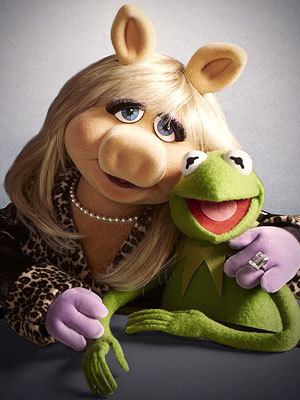
However, the purpose of this post is not simply to boast about women/mothers (though I could all day), but instead to point out another virtue which is far more difficult for women. The vice of a woman is oftentimes the inverse of the vice of a man. Nevertheless, in what sense can it be said that "standing by" the cross, or anything else for that matter, is a virtue? The great temptation of every mother is to remove any and all burdens from her son/child. This is an understandable weakness, but carried to its extreme it can ultimately retard his development. A young boy learns pretty early on if he can manipulate mommy into running interference for him, and though he may resent her for it in the end, he knows full well "where his bread is buttered." Slothfulness tends to be the failing in most men, while gluttony tends to be the vice of every women. I do not mean gluttony in the traditional sense (though it can manifest itself that way), but rather the kind of gluttony which, intended or not, ultimately serves to eclipse the role of a man. I call it the Miss Piggy syndrome (if you like), for if you look at Piggy's relationship with that inept little frog, you learn pretty much everything you need to know about this "syndrome."


My mother-in-law is one of the most generous people I know (not withstanding my own mother), but she has a habit of doing everything for everybody. In fact, at times it becomes a sort of fatalistic self-fulfilling prophesy. "Nobody in the house will help me, so I am doomed to do such and such." On one occasion she even lamented to me that one of her sons wouldn't do his chore; "But that's OK," she said, "because I like to give to my children." Well, for the Marthas of the world, and for those who want their little boys to grow up as they should, sometimes it is actually more important "to receive than it is to give." Let your child serve you, not for your own sake, but for his own. It is great that you yourself know how to give abundantly, but your insufferable generosity is preventing him from learning how to do the same.

The truth is if a mother really wants her little boy to grow up and be a man she must resist the temptation of always trying to wipe away every little tear from his face. Rather than attempting to forestall any and all challenges in his life, she must restrain herself and permit him take up his cross. I know this is the most painful thing a mother will ever have to do, but she must find a way to do so, lest her little boy grow up to be a lazy man-child who sits around with a remote control (clearly a male invention) ignoring his wife, or if it suits him, demanding this or that thing. Don't try to remove his cross from him or you will remove his very potential for salvation (not to mention self-respect). Don't perform his duties for him- tell him to step up and "be a man", otherwise he will shrink away as Adam once did into the bushes of oblivion and narcissism. In the film The Passion of the Christ, this distorted image of a mother and her child is captured in a terrifying fashion. Alongside the original image of mother and child, the movie presents a Satanic mockery of the former ideal (as evil does with everything). Instead of the sweet maternity of Mary, what you get is the dreadful androgyny of Satan. And in place of the sweet innocence of the Christ child, you get two features that no child should ever possess: perversity and corruption.


Thus, if a mother truly wishes for her son to become a man, she cannot take away all his struggles and disappointments. Of course there is nothing wrong whatsoever when a mother chooses to suffer with her child, as Mary once did with Jesus. But what a mother cannot do is allow herself to attempt to take away all the sufferings and sacrifices that are bound to turn her little boy into a man. This was perhaps Mary's greatest suffering in her life, and it is evident at various points in the Gospels, where she is told, in no uncertain terms, that her vocation involves more than simply shielding Jesus from the storms of life. Below is one of the most heartbreaking and beautiful depictions of what it must feel like for a woman to "stand" with her son without trying to remove his cross. Mary's crucifixion was Jesus' crucifixion. In this instance, allowing him to be crucified was a greater act of love and deference than she herself being crucified in his place. Indeed, at this moment it was her gut wrenching vocation to permit her Son to fulfill his terrible destiny, while never ceasing to see him as her precious little child. This is the true passion of Mary and every other mother who has ever loved her child with every inch and fiber of her being.        


Sunday, May 26, 2013

Cool Hand Luke and How to Win a Debate Against an Atheist


Up until sixth grade I was a bit of a bully. But that abruptly changed when I had my rear end handed to me by a country boy named Adam Johnson who used to drink "Tequila with his 'diddy' in the woods behind his house". I started the fight, but boy, he ended it, and subsequently ended my reign of terror. I bring this up as a metaphor to describe the way in which many people lose a battle, not because they are unable to win it, but because they fight the battle in the wrong way. Before Adam Johnson so kindly humbled me (I am truly grateful for his fine work), I had won my previous battles, not due to the fact that I was a particularly skilled brawler, but because I was athletic and had pretty good instincts. I was generally quicker and more agile than my opponents, and so I came out on top. However, with Adam Johnson I met my match. In fact, I met more than my match. Adam punched me about five times before I even lifted my arms. I was so dazed and disoriented, that the fight was over before it began. He didn't knock me out, but after a few minutes I basically hugged him like a boxer begging for mercy. The problem wasn't necessarily that I couldn't have won the fight (though it would have been difficult), the problem was I had fought him in a way that inevitably put me at a disadvantage. I was all arms. And so was he. But in a war of "all arms" he was far stronger and quicker than I.

In the same way, intellectuals like the recently deceased Christopher Hitchens, as well as other like-minded skeptics, may also have a similar kind of "upper body strength" when it comes to debate (see below). Yet in spite of all this, there is no reason that one should be humiliated like I was in sixth grade. To carry the metaphor a little further, if they keep hitting you up high (which is all the atheist and skeptic can really do), then go for legs. How do you respond to a stinging indictment of your beliefs? Well, you certainly don't do it by simply addressing each particular criticism, one by one. If your opponent wants to drag you into a hundred unrelated scandals, then don't try to match him blow for blow, for you will most certainly find yourself in the weeds. Rather, go for the "legs of his argument." I say this in particular for those who feel intellectually overmatched. It certainly isn't a bad idea to try and respond to one or two of their best objections in the hopes of getting a technical knockout, but why not try and get them on the ground as quickly as possible. Knocking their legs out from under them is the best way to bring the argument to equal footing- otherwise you must depend upon your natural skills for eloquence. Indeed, on the ground their greatest weapon (viz. their ability to deliver quick blows) is almost entirely neutralized.


To bring this back to practical terms, I present several basic ways in which you can "go for the legs" (i.e. take the offensive) when confronted with a litany of accusations like those above:

  • It is important to understand from the outset that there is, on some level, a built in disadvantage to defending the Catholic Church. Why? Because the Church holds such high standards for itself, it can be criticized anytime it fails to live up to them, while the atheist is given a pass precisely because there is no universally accepted standard for them. That said, if one simply exposes this inequity from the beginning, one may also be able to expose just how shallow and whiney folks are that demand great things from others but nothing from themselves. 
  • Don't allow them to bully you with accusations. Accusations are not arguments. Saying the Church started the Inquisition because it loves to torture people is not an argument. Saying the Catholic Church is cruel because of its teachings on sexuality is not an argument. Calling Catholic priests a bunch of pedophiles is no more rooted in sound reasoning than calling parents or school teachers a bunch of pedophiles because they are parents and school teachers. The point is you must not let them get away with superficial name calling. Accusations are to argumentation what heckling is to comedy.   
  • Always bring the discussion back to authority. In other words, upon what standard of morals does your opponent judge the Church? Darwinian evolution? Survival of the fittest? No, in all likelihood, he is criticizing the Church based on the best standard of morality available, namely that of the Catholic Church. Thus, don't let them simply just go about accusing the Church, make them explain where they themselves get the justification to do so.
  • Hitchens, and many others, like to invoke the Enlightenment, while simultaneously appealing to things which are decidedly not empirical, such as: morality, beauty, love, free-will, conscience, equality, etc. A good question to ask them is how they justify appealing to these supernatural principles when they themselves are only interested in debating what is rationally verifiable?
  • Church history may seem like the enemy in any discussion, but let me suggest otherwise. First, it is always good to make your opponent prove himself. Don't let him continually put you on the defensive. Might I recommend that you use the intellectual equivalent of a "rope a dope" when you engage in verbal sparring. Let them accuse away, and then make them prove that they know what the are talking about. If it's Galileo, then ask them for at least two other examples of the Church meddling in science. If it's the Inquisition, then ask them to tell you what they know about the Inquisition. In many cases, their knowledge will be limited at best. In the case of someone like Hitchens (who is a little more intellectually sophisticated), ask them to explain the origin of the Inquisition and why it was instituted in the first place. Many things have gone awry in Church history, but few things (if any) were from their outset corrupt.
  • Simplistic rants like the one above almost invariably include some accusation that the Church was always and everywhere against progress. The simplest way to refute this is to ask them the origin of just about every major institution in the West today. Why are so many hospitals named after saints? Where did the university system come from? Why were so many early scientists not only Catholics, but clerics in the Church. Where did the notion of charity beyond borders (and religion) come from? If the Church is so anti-woman, then why did so many women in the early centuries convert? If the Church is so ignorant and evil then why do so many people derive hope and refreshment from it today? On and on. Pretty much everything humane today can be historically tied to the Church.
  • Since child-abuse is such a topical issue let us address that one individually. Who would deny the horror of child abuse (except pederasts and a society like ours that was relatively silent on the matter until recently). Yet the question should be asked: why is it that we as a society are so disgusted by the idea of it in the first place? Is it because atheists throughout the centuries have demanded justice for little children? To the contrary, if you read St. Paul, or know anything about the sexual attitudes in the Mediterranean world during Paul's day, you know just how common the practice of pederasty was. The pagan world had no problem with man-boy love. Thus, it was only after the Christian Church gained influence that the behavior ultimately became taboo. 
  • Always look to return the discussion to first principles. If someone points to the evil and intolerance of the Crusades, press them on their knowledge of why the Crusades were launched in the first place. Whatever you want to say about the results, it was initially a war of defense. If someone brings up pederasty in the priesthood, bring the subject back to the original inspiration for the priesthood (i.e. imitating Jesus Christ). If someone regards the Church as intrinsically anti-Semitic, point out the Jewish roots of the faith (which by the way was the taunt of the Nazis about the followers of Jesus). There indeed have been those in the Church who have been responsible for anti-Semitism, but it is also true that the Church's doctrine regarding the spiritual equality of all human beings provides the only logical basis for an end to all discrimination. 
  • In the above video Hitchens ridicules the Church's idea of infallibility, and then expresses his hope that such an arrogant office would quickly come to an end. This is certainly ironic, especially considering that Hitchens and others like him are themselves a kind of self-elected official, ordained to stand above all of history judging it more scrupulously than any real pope would. Yet not only is Hitchens infallible on historical matters (apparently), he is impeccable as it relates to his own life. And so as a result I am always wont to say; "there but for the grace of Hitch go I". Behold the arrogance of the man who receives all of the wisdom and experience of the ages, and then roundly mocks and ridicules those who lived in prior ages because they do not have the same benefit as he. A little historical humility is never a bad thing.
  • Probably one of the most effective and easiest applause lines for atheists is to condemn the Church for what the Church herself already condemns in principle; "In Uganda priests are responsible for raping and killing this or that group of individuals. This is disgusting." Well, yes, it is. Thanks for pointing that out." The force of the argument comes not as a consequence of being an atheist or a skeptic, but from living in a Christian society that condemns certain behavior as immoral. Congrats you have merely plagiarized a Christian principle and then used it to accuse Christians. 
  • Oftentimes the Church is roundly criticized (as in this video) for teaching that there is such a thing as sin. However, I would argue that this practice is entirely practical. First, in order to have a moral basis for making any judgment whatsoever one needs a basic standard of right and wrong. And secondly, in order for there to be any possibility of reform and/or correction in religion (or anything else for that matter), there must be an idea of perfection towards which one strives.
  • Classic witch hunt rules here. If the Church admits to evil, she is condemned by her own words. If she hasn't admitted it, then she is evil for failing to admit it. All this from a man/group that doesn't believe that such a thing as evil exists in the first place.
  • If they accuse the Church of murdering millions of Africans because the Church doesn't believe that condoms will solve the Aids crisis there, then play dumb and ask the individual to explain how promoting widespread condom use is a solution to the crisis. Many times when people are forced to explain their position the weakness of their argument is exposed. The truth is it is easier to demand eloquence than it is to produce it. However, I have to admit that I have always found it rather strange that the same people who complain that the Church promotes overpopulation in Africa, are the same folks that complain that the Church is creating a holocaust there.
  • One final way to avoid getting "Hitchslapped" is by asking a simple question. This question has been around a while, but it is nevertheless still potent. If the Church is as thoroughly corrupt as Hitchens and others like to think, then how do you account for her longevity and resilience?" Remember we are not speaking here about some vague but popular idea that has been floating around for a millennia or two, we are talking about an institution running, uninterrupted, on the same principles she began with. To shrug off this question without offering a solution is simply to avoid the elephant in the historical room.


Hopefully at least some of the above suggestions offer insight into how to approach a discussion that is laden with accusations against the Church. Like I said, one need not be a black belt in apologetics to force an intellectually impressive opponent to the mat simply by forcing them to defend their own position. In closing, I leave the following scene from the film Cool Hand Luke. I have always felt that in some small way it summarizes the inexplicable resilience of the Catholic Faith. To the eyes of the outside world it must really seem like the Church is forever getting Hitch-slapped, or going down in a sea of flames- and yet, in spite of all this, it is an indisputable fact that the Church is somehow the only one left standing in the historical ring.