Thursday, July 25, 2013

Is Jesus Rude?


When people talk about the life of Jesus, depending on their temperament, they tend to focus on one extreme or the other; either Jesus meek and mild, or Jesus coming on the clouds of glory ready to judge the world. What few tend to focus on is the more definitively human aspect of our Lord, like did Jesus ever have any amusing quirks. While it is ultimately difficult to answer this question adequately, Scripture does lend us some insight into other aspects of Jesus' behavior. Scripture attests that there were times that Jesus was incredibly merciful to those around him, but then there were other times in which he appears to be arbitrarily harsh even when the individual whom he is addressing seems sincere. Which begs the question: is Jesus in a bad mood during these encounters, or is he just plainly being rude?


Now before you consign me to the 9th circle of hell for my insolent statements about our Lord, let me first present the circumstances where this alleged behavior occurs. The first instance of this behavior comes at the wedding feast of Cana, wherein Mary the mother of Jesus asks her Son for a teeny tiny favor. She wants him to replenish the wine that had run dry at the party. However, when she asks him to do this, he seems more than a little dismissive, if not downright ornery; "Woman, how does your concern affect me?" (John 2:4) Later on in his ministry a Syrophoenician woman (code name for pagan) comes to Jesus specifically because her daughter is apparently ill with a demon. She begs him to heal her daughter. What does Jesus meek and mild say in response? "Let the children first be fed (i.e. Israel), since it isn't wise to take the bread out of their mouths and throw it to the dogs." (Mark 7:25-30) Wow. I think he just called her a female dog (which is never a polite thing to call a woman). According to this account, Jesus' bedside manner is more akin to Dr. House's than to what we have come to expect from the divine physician.


The third instance of this rudeness occurs when he meets the Samaritan woman at the well. Also regarded as a pagan by devout Jews, he begins to speak to her as she looks to draw water from the well. After a brief dialogue about Jesus' identity, he asks her where her husband is. She responds that she is not married. And all of that would have been fine if he had just left it at that, but he doesn't. Jesus instead responds to her statement in a way that is more than a little condescending; "What you have said is true (you have no husband). The fact is you have had five husbands and the one that you are with now is not your husband." (John 4:17-18)

In truth I believe there are two questions that need to be answered here. The first is of course whether or not Jesus is rude. The second follows from that, which is whether or not Jesus is sexist; after all, every single one of the above mentioned encounters involve women. Avoiding a long historical debate about the cultural context and Biblical criticism, let us simply deal with the passages as they are. First of all, it is difficult to regard Jesus as particularly sexist considering the fact that he speaks to both men and women in the New Testament in a brusque fashion. In other words, since when did it become sexist to treat women as badly as men? However disquieting that may be, isn't this a sign of equality? The only difference I can see between the guys and the girls in this instance is that the guys (except for a few instances) do not receive what they ask for, while the women do.

As for the "rude" behavior itself, perhaps the only way to go about assessing it is by recognizing that Jesus did not come to this world first and foremost to perform miracles, provide kind words, or even to heal people of their physical ailments. Rather, he came as a teacher and a divine coach whose role it was not only to provide a means of salvation, but to draw greatness out of his spiritual athletes. And one of the ways any great coach tests his players is by testing them especially in the areas of their greatest weakness. The fact of the matter is- it is not so easy to enter heaven, or as Jesus so concisely puts it; "Strive to enter through the narrow gate, for many, I say, will seek to enter and will not be strong enough..." (Luke 13:2). He is not so much concerned about celebrating our natural talents (which will be there regardless) as he is in challenging us in those ways in which are most spiritually soft.


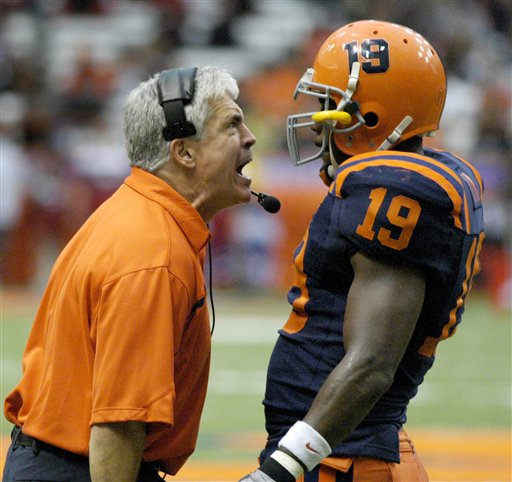
Beyond natural skill, the greatest test of any champion is his willingness to be taught. Indeed, he must be humble enough to do whatever the master tells him, however odd the request may initially seem (which incidentally was Mary's instruction to the wine stewards). The spiritual athlete must also be tough enough to withstand the coach's challenge, as the Syrophoenician woman demonstrated. In other words, when corporal Christ gets in your grill and challenges your lack of heart and grittiness, you must demonstrate to him that you are not afraid to get your jersey a little dirty and fight. It is worth noting that  on any number of occasions Jesus did this during his ministry. Not everyone responded so positively to his technique. In fact, some disciples even "quit the team" on account of Jesus challenging them. Apparently the Syrophoenician woman was much tougher than they, for instead of complaining about the way he spoke to her, she responded to him in a way that utterly disarmed him. Not only did she not get offended by his words, she cleverly used his own words as means to make a case for her daughter; "... even the dogs get the food that falls from the master's table...". If Jesus were French he would have said "touché", but instead he praised her for her faith (actually the Scripture says he was "amazed"). And that's the whole point: he did not say what he said to her in order to degrade her anymore than a good coach yells at a player in order to destroy their spirit. To the contrary, Jesus did what he did as a means to test her humility, or rather to challenge her to a game of spiritual limbo... which by the way, she won.


In order to be a master at anything you must first recognize that you are not the Master. When you recognize this very important detail, you will then be in a perfect position, as well as disposition, to receive all of the wisdom and learning of the Teacher. To whatever extent you believe that you are beyond training, or superior to master, is the extent to which you will cease to develop into one yourself.

The final way in which the divine coach tests the spiritual athlete is not by avoiding their weakness, but by going straight after it. If a man loses a leg and receives a prosthetic one, what kind of therapist would spend all of his time working on the leg that is in perfect condition? In the same way, when it comes to the Samaritan woman, Jesus goes right for the area in her life that clearly requires the most therapy and healing. But whereas our culture might be tempted to turn her into a victim, or even regard her as some kind of liberated hero, Jesus goes right to the heart of the matter and calls her out on her loose living, once again not as a means to humiliate her, but as a means to expose it in order to heal it.


Yet what is most strange about these narratives is not really the harshness with which Jesus speaks to these women, but just how undaunted each one of them seems to be by his words. I think most of us, including myself, would be hurt and think "what a jerk, who does this guy think he is, and why should I listen to him anyway?" (which is of course what happened to him on any number occasions). But these glorious women clearly are not as prideful and thin-skinned as we. As a matter of fact, they act in these narratives as if they were simply exchanging harmless banter with an old friend who knows them all to well. Indeed, only when we feel that someone knows us and loves us do we let them challenge us on such a level. Anyway, as is the case with most good coaches, there is generally little smiling and congratulations that goes on until the championship trophy is firmly in hand. The same can be said for our Lord. Nevertheless, in either case, there is one type of student/athlete that the coach always seems to have trouble being too stern with. For how is it really possible to be too harsh on the kid that is always looking to do your will and to please you, or better still, how can the coach ever demand too much from the kid who is always demanding too much from himself?
                                              
The scene below from the movie Charlie and the Chocolate Factory always seemed kind of strange to me until I began to fathom this notion of spiritual training. Although the movie has numerous elements that one might question (like is Willy Wonka a little sadistic, or what?), the end does seem to highlight this interesting paradox of the stern teacher, whose sternness is really only a mask worn in an attempt to inspire his players. No, Charlie is not perfect, but truth and goodness covers a multitude of sins. Anyhow, recognizing this in the movie helped in some ways to unlock the Gospel mystery for me.


Friday, July 19, 2013

What I Learned from Jim Carrey About Demons


I have always been amused by the movie Liar Liar if only because I find Jim Carrey pretty hilarious when he is given the right script to work with. In this particular comedy, he plays a lawyer named Fletcher Reede, who is unscrupulous, and spends a good portion of his time deceiving people and failing to fulfill his commitments. However, there is one love in his life that is not simply the result of his selfish narcissism: the love he has for his son Max. However, in spite of this, he nevertheless fails (for a variety of reasons) to be the father that he should be. Consequently, at Max's birthday party, he (Max) makes a wish that his father will no longer be able to lie. And as the smoke from candles rises like incense to the heavens, the effect of Max's words immediately takes effect.

As a result of Max's "wish", Fletcher finds that nothing that he thinks and believes is hidden from those with whom he comes into contact. So if someone asks him how's he's doing, he says something like; "I'm fine, but I would be doing a lot better if you would get the hell away from me..." Or if someone asks him what he thinks about their dress, he says something like; "well at least it takes my attention off your hair..." He therefore walks around in terror afraid to look at anyone or say anything lest his secret thoughts be revealed. Before all of this happened, his success depended on the fact that he could manipulate the truth and make it redound to his benefit- regardless of the contempt he had for others. But as a result of his son's "wish" his interior life has been made manifest. Human beings are made for truth- thus when someone comes along with the distinct ability to make a lie sound like the truth, most people buy it. The movie doesn't go into any great detail about the difference between telling the truth and the failure to be charitable (i.e. telling the truth is the same thing as saying everything that pops into your head); nevertheless it does reveal in a riotous fashion what it would look like if every interior thought we had was uncensored (and riotous is the operative word).

In this life it is entirely possible to live in two worlds at once. As a matter of fact, one can be saying one thing, while the truth can be something prohibitively different. In this respect then reality can be bent according to our will, or as George Costanza once put it; "It's not a lie if you believe yourself." This is not to suggest that human nature, or the natural world, will simply conform to what we want, but it does mean that given enough brain washing, our minds, at the prompting of our will, will attempt to force us to to see things that aren't there.


However, when the veil of this life is broken, what is objectively true will not be able to be manipulated. Indeed, those who wish to commune with the Truth will no longer suffer the pain of doubt, or wonder what is "is" anymore. And those who wish to continue to delude themselves (or be deluded by others) will be able to do so for all of eternity if they wish. The truth teller is forever at one with himself, while the liar is forever divided within himself (think Gollum), since he is always attempting to have it both ways. In the kingdom of heaven the distinction will be obvious, for in the presence of unadulterated truth, the infernal hypocrite will feel obliged to walk around like some immortal leper declaring his wicked identity.

If you wish for evidence of this peculiar phenomenon, simply observe the behavior of the Gerasene demoniac, who when confronted by Jesus, felt compelled not only to herald His divinity, but to declare his own fraudulent nature; a truth so apparently appalling that he/they actually begged Jesus for mercy (it is interesting how the possessed man is literally of two minds, or in this case of many minds). So also Mr. Carrey demonstrates in the scene below how agonizing it would be to be a committed liar, only to have the truth thrust upon you in a way that renders you incapable of further deceit. In fact, as you will see, not only can Fletcher Reede no longer lie, but like some indelible mark inscribed by the hand of God, the truth is written all over his face.


Sunday, July 14, 2013

How to Ruin a Love Song: The Top 10 Romantic Songs... That Really Aren't


One argument for never paying close attention to song lyrics is the fact that the moment you do, you immediately discover that what you originally thought was romantic is quite the opposite on closer examination. Romance is all about leaving something to the imagination, as well as treating the one that you love as if they were the only one in the world. When once either of these concepts are compromised, you get this list of the most romantic songs that really aren't:


10. I'd Really Love To See You Tonight - England Dan and John Ford Coley

   
 We all know that "playing it cool" is the approach that one takes when trying to attract the attention of a girl, but this duo brings this tactic to new heights. With a remarkable air of disinterest (if not indifference), the protagonist of the song explains to this nameless girl that he would "really love to see her tonight", which would be fine if it ended there- but alas! It does not. Instead, he chooses to make his grand plans available to all; "We could go walkin' through a windy park, take a drive along the beach, or stay at home and watch TV, you know it really doesn't matter much to me". Impressively, the song gets even worse than that. "I'm not talkin' 'bout movin' in, and I don't want to change your life, but there's a warm wind blowing the stars around and I'd really love to see you tonight." Do you see rainbows and unicorns yet? I could be wrong, but I think he just tried to proposition her while simultaneously suggesting that this is the most thoughtful thing he could do. Apparently even "movin' in" is setting the bar too high for this Casanova. Come on, ladies! Who could resist a man who wants to be with you primarily because there's a "warm wind blowin' the stars around" ?

Lesson: You ruin a love song when you act like the woman that you are singing about really isn't worth the creative effort... that is, unless she decides to sleep with you   


9. Amie - Pure Prairie League 


I don't know what it was about the music in the 70's, but there seemed to be a whole genre dedicated to romantic mediocrity. Music has always told the story of this or that ne'er-do-well, but never had it so audaciously tried to convince us that women really don't want a passionate loving man so much as an existential coach potato. At any rate, this nonchalant attitude was indicative of what many felt at the time. Amie is no exception. Equipped with a pleasant, laid-back melody, and a quiet, if not shy, vocal performance, one could get the impression that this ballad is nothing more than a sweet, down home, southern-fried classic. What it is instead is the same old mealy mouthed indecisive half-plea to a girl to maybe come back to him; "Which way we should turn together or alone, I can never see what is right or what is wrong... I keep fallin' in and out of love with you... don't know what I'm gonna do." Well, it's good to hear your thoughts on the matter, and I cannot imagine that Amie would have the strength to resist such a heartfelt invitation to vacillate with you for all of eternity. The chorus is the most telling of all; "Amie, what you wanna do, I think I could stay with you for a while, maybe longer, if I do." Listen buddy, don't write a check that your butt can't cash. After all, how could any one hope to be true to a woman for "a little while," or dare I say it, "maybe longer."

Lesson:  You ruin a love song when you are terminally indecisive and ambivalent about the girl you claim to care deeply for


8. Fooled Around and Fell In Love - Elvin Bishop


"I must have been through about a million girls/ I'd love 'em and I'd leave 'em alone. I didn't care how much they cried, no sir/ Their tears left me cold as a stone. But then I fooled around and fell in love... since I met you baby"         
You've got to love this guy. Notice, he doesn't say "I must have been with about a million girls, which would be disgusting enough- he uses the word "through", as if they were some sort of wiping agent. He then proceeds to admit, without even an ounce of compunction, that in spite of the misery he's inflicted, he's about as affected by the whole thing as those terrifying beasts in those Alien movies, or at minimum, that android from the second Terminator film. And so what kind of reward does he receive for all of his dallying? He meets the love of his life! How? He meets her while he's cheating on one of those million girls he's purported to have been through. Karma must have taken the day off. I mean this guy is so awful that even the Prodigal Son, who himself wasted all of his father's money on prostitutes, thinks that this guy got off easy.

Lesson:  You ruin a love song when you live happily ever after in spite of the fact that you have spent the majority of your life treating women like garbage 


7. Little Jeannie - Elton John


For the most part, this song is quite endearing. It is about some young girl named Jeannie (since she is referred to as "little Jeannie" I wonder if she's related in any way to "tiny dancer", but I digress)  coming up in the world, who is wearing herself out searching for "some lasting truth". Not a bad thing to wear yourself out for. In the mean time the lyricist (Bernie Taupin) professes his deep and abiding affection for her, all the while sympathizing with the struggles that she has apparently endured. All the same, with one stroke of the pen this quaint little ballad takes a rather awkward turn.


"And I want you to be my acrobat/ I want you to be my lover..."

Is she a gymnast? And if so, what exactly does that have to do with the song? Does he  have some sort of pommel horse at his house, or a set of uneven bars? In any case, whatever the implications of this reference, it is nonetheless a strange one. Either it is a non sequitur about his desire for his girlfriend to join the circus, or what is more likely, one of those off-putting "TMI" moments where someone tells you about their sexual exploits. But wait, there is one more particularly uncomfortable moment in the song that comes at the end. Just when you thought you successfully put that whole acrobat business behind you, this line hits you right between the eyes;

"...And I want you to be by my acrobat/ I want you to be my lover/ But oh there were others/ And I've known quite a few..."

Really?!? Was that necessary? Here you wrote a nice song about how much you love "Little Jeannie," and then you go and ruin it by saying in essence; "you ain't the first babe, and far from it." File that under stupid things that men say to ruin a tender moment.

Lesson:  You ruin a love song when you arbitrarily bring up the acrobatic flexibility of your partner- only to conclude your song with a mystifyingly insensitive detail about the number of women you have slept with in your life     


6. As Long As You Love Me - The Backstreet Boys
"People say I'm crazy and that I am blind, risking it all in a glance... Don't care what is written in your history as long as you're here with me... I don't care who you are/ Where you're from/ What you did/ As long as you love... Doesn't really matter if you're on the run, as long as you're here..."
File this under the category of the lowest standards for a relationship in human history. The real question is what do you do if the girl really does want to start talking about her past- do you just start going "la la la" I'm not listening... as long as you love me? I thought the whole idea of loving a person involved precisely everything he so blithely swears off; (viz. who you are, where you're from, what you've done). Without an answer to these questions, the person who you apparently "love" would in effect have no identity at all, and if you don't care about that, then the statement "as long as you love me" is a completely an egocentric one. Don't get me wrong, she may be a perfectly nice girl, but by the standards set forth in the song, you may just as well be singing about a sex offender, Adolph Hitler, a serial killer, or someone in a bath house.

Lesson:  You ruin a love song by suggesting that you have absolutely no standards whatsoever when it comes to women... as long as they love you


5. Private Dancer - Tina Turner 


This is an example (for me at least) of one of those songs that you listen to a thousand times and never notice what it's about, because the chorus is the "hookiest" part of the song. Then on some random occasion you decide to pay close attention to the rest of it, only to realize that the song is about a  "hooker." OK, not technically, but the song is about exactly what the title advertises:

"Well the men come in these places/ And the men are all the same/ You don't look at their faces/ And you don't ask their names. You don't think of them as human/ You don't think of them at all. You keep your mind on the money/ Keeping your eyes on the wall... I'm your private dancer/ Dancer for money, and any old music will do. I'm your private dance/ Dancer for money/ Do what you want me to do..."

In romantic ballads, you get so used to hyperbole, that you just assume that the reference to "private dancer" involves, however over-the-top, some sort of romantic interlude. In fact, I think initially in my naiveté I thought it was about someone giving ballroom dancing lessons or something like it. Ironically, in some ways I find this song a bit refreshing, especially considering that it is an honest attempt to literally tell the woman's side of the "exotic dancing" story (which is certainly not romantic); that, as opposed to another one of those trashy metaphorical songs about someone's sexual fantasy.

Lesson: You ruin a love song by overusing romantic cliches to the point that they are rendered utterly meaningless (the fact that I never noticed what this song was about until recently demonstrates just how empty and casually terms of endearment are tossed about in these songs)  


4. I'm Saving All My Love - Whitney Houston


This ballad is just vague enough that a young man (I think I was about 13 when it came out) could easily miss what this song is really about. As is the case with the former song, all you tend to notice is the hook line in the chorus, as opposed to the larger context. If all you pay attention to in the song is "I'm saving all my love for you..." and then ignore; "A few stolen moments, is all we can share. You have your family, and they need you there"; then you will likely have a very different experience of the song. As a boy, I always interpreted this in a much nobler fashion. Well, gosh, maybe his mother is very sick, and he has to care for her, leaving too little time for the both of them. Uh.... not exactly. Here are a few more lines that pretty much hit you over the head with the real meaning of the song:

"It's not very easy living all alone/ My friends try and tell me find a man of my own... You used to tell me we'd run away together/ Love gives you the right to be free. You said be patient/ Just wait a little longer/ But that's just an old fantasy."

One of the things I appreciate about the song is the subtlety of it. Good artistry for the most part is never overly blatant. This allows the listener to come to understanding of the song at his or her own pace. Nevertheless, this song is far from romantic in the end, for in spite of the fact that this guy is clearly just going to string her long (oh and that minor detail about him having a wife and kids), she's going to hold out for this big nothing burger until she's an old maid. Why? "'Cause each time I try/ I just break down and cry/ 'Cause I'd rather be home feeling blue..."

Lesson: You ruin a love song by making it about a simpering mistress who doesn't care a fig about destroying a family as long as she gets her man.   


3. Hot Child in the City - Nick Gilder


Not only is this song not romantic, it is illegal twice over. The hot child in the city that he is referring to is in fact a child, and as if that weren't enough she is, uh, well, a child prostitute on top of it all.

"Danger in the shape of something wild/ Stranger dressed in black she's a hungry child... So young to be loose and on her own/ Young boys they all want to take her home... Come on down to my place baby/ We'll talk about love. Come on down to my place women, and we'll make love! Hot child in the city."

In the 1960's, when the Rolling Stones played the Ed Sullivan Show, they were told to replace the line "let's spend the night together" with "let's spend some time together". What a difference a decade makes! If you thought for a second that this guy (and I use that term loosely) was singing about the tragedy of underage runaways being exploited in the city, you would be right. What you might not have suspected is that the songwriter himself seems quite content to perpetuate that process of exploitation. Not since the introduction of "Huggy Bear" have we seen such an attractive image of the relationship between child prostitute and a pimp. Hot indeed! Anyhow, considering Mr. Gilder's slight appearance, as well as his less than masculine singing voice, it did occur to me that a payment of some sort might be necessary in order for any girl to "come on over" to his place at all. Incidentally, why are prostitutes in movies and music almost always presented in the most attractive light? How about a "Pretty Woman"-like movie where the object of one's desire is a toothless meth addict (cue the theme song from Pretty Woman)? Wouldn't that be a little more true to form?

Lesson: You ruin a love song by attempting to romanticize what is perhaps the least romantic thing in the history of the world (viz. child prostitution)


2. All I Want To Do Is Make Love To You - Heart           

This song leaves me at a loss as to what to say about it, for it combines a level of moral vacuity and stupidity that heretofore was unimagined by me. I must simply tell you what the song is about and let you decide for yourself. The title sounds as if it were your typical romantic schlock. However, this again is another case where the title is to be read literally in order to get the gist. No really, that is all she wants to do... "make love to you". As the story goes, she's driving one night and there's this dude on the side of the road standing in the rain, so she picks him up,  concluding that he is sufficiently hot and seems harmless enough (which is a reasonable enough thing for a woman to think, right?) She then proceeds to stay the night at a hotel with this guy whom she is careful to learn nothing about, including his name. By the way, this hotel, as the song informs us, is a "place she knew well". I am not sure why the lyricist (Mutt Lange) felt the need to tell us this- other than to imply that perhaps she liked to bring all of her boys there. Who knows? Next we are told that they make love all night, love like "strangers" (which seems highly  appropriate for the amount of time they have been acquainted). In the morning she leaves him a note, which says in essence 'Look, I really appreciated the service you performed for me last night. You see, my husband is shooting blanks, so I needed a good sperm donor. Oh by the way, if you still don't understand, here's a little botany lesson; "I am the flower/ You are the seed/ We walked in the garden/ We planted a tree... Now stay the hell away!" Love, Nancy. And if that weren't enough bombast for you, the last verse informs us that it "...happened one day, we came 'round the same way. You can imagine his surprise, when he saw his own eyes..." I mean what does this guy do with his time anyway? Does he just walk around at night in the rain hoping for some random chick to pick him up (which we all know happens all the time), generously offering to impregnate any women who unfortunately happens to be stuck in a marriage where her husband has fertility issues?

Lesson:  You ruin a love song by imagining that songs about anonymous sperm donors could be, by any stretch of the imagination, romantic


1. To All the Girls I've Loved Before - Willy Nelson and Julio Iglesias
   

"To all the girls I once caressed/ And may I say I've held the best/ For helping me to grow/ I owe a lot I know/ To all the girls I've loved before. The winds of change are always blowing/ and every time I try to stay/ The winds of change keep blowing/ And they just carry me away..." 

Ah, it doesn't get much more romantic than Julio Iglesias, does it? As for Willie Nelson, well, he did write that beautiful song called "You Were Always On My Mind". At any rate, both he and Willie Nelson set out to do a romantic ballad dedicated to "all the girls they've loved before." The question is: can a song be about a litany of nameless women and still have the savor of romance? Perhaps if the song were about nameless martyrs, but alas, it is not- it is simply about a host of women who share one thing in common: they have all been bedded by one (or both) of these men. And it is for this reason that songs about harems can never be romantic. As could be said by anyone who knows anything about a woman, women feel special only to the extent that they are made to feel special. They wish to feel, in the best sense of the expression, set apart. They do not feel particularly "set apart" when they must in essence take a number behind another nameless mound of flesh. And so having Julio and Willie sitting around exchanging anecdotes about women whose names they may or may not remember- who happened to shuffle in and out of their door- does not exactly make the eyes moist with nostalgia. Check that, it may make some spinster feel important for a moment or two- just as it may make these good old boys feel proud of themselves, especially when comparing numbers, but as for the majority of the women out there who have any sense of shame, it must be an all too unpleasant reminder that they were never anything more than a service to these men. After all, the lover always calls his beloved by name, and never once in this song is anyone names. At least in the song Mambo #5 the girls were significant enough for Mr. Bega to provide a whole litany of them (which might introduce a whole different set of problems altogether). Indeed, it would have been better not to have thanked them at all, rather than to have thanked them in this way. And what if she's married by now and her husband knows anything about it; "To all the girls who shared my life/ Who now are someone else's wife (yuck)/ I'm glad they came along/ I dedicate this song...". It is difficult to imagine any scenario in which a husband wants to hear another man reminisce about how he slept with your wife, and then subsequently disposed of her out like yesterday's garbage. But hey, at least she did have a song dedicated to her, right? Uh, well, sort of.

Lesson: You ruin a love song by generically expressing your affection, not for one woman, but for a whole host of them. No greater indignity has woman than this- than to be tossed into a bin (or rather harem) of nameless women, only to be thanked indiscriminately along with the rest of them    


Thursday, July 11, 2013

Comedian Jim Gaffigan On Family and the Beauty of Motherhood


It is rare to hear a man, much less a comedian, wax profound about the sublimity of motherhood. However, in the following clip the comedian Jim Gaffigan does just that. The bit centers around raising his four (now five) children, and of course the zaniness that naturally ensues from all of that. Though the whole routine is excellent and worth watching, about half-way through he describes rather beautifully why he is in such awe of motherhood- and in particular the mother of his own children.  


Sunday, July 7, 2013

Would You Like a Little "Whine" with that Cheese: The Top 10 Whiniest Songs of All Time


Just as there is sometimes a fine line between romantic love and stalking, so also there is a fine line between tragic and down right whiny. The distinguishing characteristic between one and the other is the primary ingredient of self-pity. The tragic and lamentable figure can be more easily mourned because he does not generally sit around feeling sorry for himself and telling you endlessly about his injuries, while the whiny one feels it necessary to report every last ache and pain as if no one in the history of the world had ever endured anything quite like it. If hell is filled with self-pity then the following songs are probably on the playlist:


10. Everybody Hurts - R.E.M.


This song appears as the last one on the list because at least the lament is directed outwards. But when you combine Michael Stipe's grating voice with this suicide inducing composition and video, it is difficult not include it somewhere.

"When the day is long/ And the night, the night is yours alone/ When you feel you've had too much of this life, well hang on. Don't let yourself go/ 'Cause everybody cries/ Everybody hurts sometimes..."

Drone, drone, drone. I am all for finding hope where there's misery, but if someone informs me, using a droning whiny sad voice to "hold on", I am not so sure that I will feel much comfort in that, especially when the depressing part is more compelling than that which is supposed to be hopeful. It is like being comforted by a mournful ghost. Add to that an emo-type dude wearing guyliner, and I suspect the best way not to "throw your hand", as he suggests, is to avoid this song altogether.


9. Without You - Nilsson


Originally performed by the artist known as Nilsson in the early 1970s, this song made a comeback in the late 1990s when pop diva Mariah Carey released her own version of the hit single. If you are a man and Mariah Carey regards your music as saccharine enough to be right in her wheel house of what she would like to perform, then that should give you pause.

"No I can't forget tomorrow, when I think of all my sorrows. And I had you there, but then I let you go. And now it's only fair that I should let you know (what you should know). I can't live, if living is without you. I can't give. I can't give anymore..." 

Men talking about emotions in a song is one thing, but men moping around complaining about how much sorrow they are going to feel tomorrow, not to mention how much emotionally they have given to a relationship, is more worthy of a diva than a man. And adding insult to injury, this pity party is not something he keeps only to himself, but rather feels that it's only "fair" that he shares it with her and everyone else on the face of the earth. (Insert the melody here as I give my own rendition of the chorus) "Me. Me. Complain. Gripe. Whine. Plead. Me. Me. I don't deserve all this pain. Me. Me. I'm so generous and giving. Me. Me. I can't whine anymore..." Crying in front of everyone and begging- all teary-eyed- for a girl to come back to you generally has the reverse effect. I learned this lesson in fourth grade, some people apparently never get the memo. 


8. Just When I Needed You Most - Randy VanWarmer


"You packed in the morning and I/ Stared out the window and I/ Looked for something to say. You left in the rain without closing the door/ I didn't stand in your way. But I miss you more than I/ Did before and now/ Where I 'll find comfort, God knows. 'Cause you left me just when I needed you most..." 

I am not sure why, but when I hear these words I cannot help but think of a tiny little man with a shawl and grandmother-like spectacles shivering in front of the window on a cold winter's day. And according to the second verse, this is pretty much all Mr. VanWarmer has done every day since this heartless woman left him "without closing the door."

"Now most every morning I stare out the window, and I think about where you might be/ I've written you letters that I'd like to send/ If you would just send one to me..."

Not only does he sit by the window wrapped in his shawl, but he also keeps letters on the window's ledge that he's apparently too feeble to send. There is nothing wrong with a man struggling to find words to express his feelings (we're not all poets, you know), but she ain't coming back, dude, so get on with your day already. Do you not have a job, or are still waiting by the window afraid to leave the house- lest you miss her upon her arrival? Yeah, that's gonna happen. Where can you hope to find comfort now? "God knows", but in the mean time let me suggest that there's a better chance of you finding it if you get off your rear end and leave the house rather than sitting helplessly by the window.


7. All By Myself - Eric Carmen


Another song included in this list that has been covered by a Diva (Celine Dion in this case), this one laments not so much the loss of a loved one, or a broken heart, but rather the feeling of being all alone. No one likes to be alone, but being alone is one thing, and singing to millions and millions of people about being alone strikes me as a little disingenuous. Is this simply a clever method to get a date? "All by myself/ Don't want to be, all by myself... anymore." Women do have a soft spot for men who are a little like stray puppies. But can a pop singer surrounded by groupies all day really sell that one? In fairness, if you read all of the lyrics, he doesn't seem so much to be complaining about the fact that he can't get a date as he is lamenting the loneliness of life on the road:

 "When I was young/ I never needed anyone/ And makin' love was just for fun/ Those days are gone... Livin' alone/ I think of all the friends I've known/ But when I dial the telephone/ Nobody's home... All by myself" 

I'm sorry that "nobody's home", and that everyone else has grown up and gotten themselves a life. We call that maturity, and it's what people of action do- as opposed to sitting in the dark and crying about your life. I understand how tempting it is to want to stay in your youth. But it's time to move on man! No one's going to carry Baby into adulthood- you have to make that decision yourself. If you don't want to be alone, then get your priorities straight. My guess is you are not having any problems finding a women. You can either sit there and whine about being alone, or you can exercise a little bit of virtue and make a real commitment to change your life. Otherwise, prepare to be "all by yourself" for a whole lot longer.


6. Nobody Knows - The Tony Rich Project


There is a certain type of person to whom you really would really like to offer comfort, but something happens to interrupt your sympathy for them... their sympathy for themselves. In fact, they are so utterly proficient about brooding over their own injuries that you find yourself unable to muster up any kind of compassion. Indeed, every time you try to help them get through whatever it is they are going through, they seem less interested in a remedy than they do in endlessly licking their wounds. The entire world could be offering them a life raft, and still they would wave their little Tyrannosaurus arms helplessly around as if they were incapable of reaching out and grabbing the life line. To some extent this is understandable, for why would they want to be saved when they are getting so much mileage out of their misery; "Days are long/ Nights are so sad/ I just keep thinking about the love that we had/ And I'm trembling inside and nobody knows it but me." I can almost picture one of those Sarah McLachlan commercials- featuring some sad little abandoned puppy shivering with one eye. Perhaps this literal cry for help might work in garnering some sympathy from a woman, but as a man I find it difficult to muster much sympathy for a man who sings such dreary mopey hopeless lyrics about losing a girl, only to conclude his mopefest by saying that he's "... dying inside, and nobody knows it but me..." First of all, it is more than a little ironic that you announce to the world that nobody knows what you're going through... uh, except the world. But OK, so you're struggling to get by, fine- why not talk to a friend about it? Nope. Because if you did that then maybe you might just find a way out of this festering hole that of course you want to escape, right? Nope. What do you do instead? You tell everybody, which fulfills your need to talk about it-while simultaneously telling no one in particular, which shields you from the responsibility of receiving any sound advice which you might actually have to act upon. It is the perfect plan to insulate yourself as you continue to complain, while in no way attempting to address complaint. This is the difference between a whiny song and a tragic one. The whiny singer is in love with his misery, while the singer of a sad song just happens to be telling a tragic story, not wallowing in it.    


5. Wouldn't It Be Good - Nik Kershaw


"I got it bad/ You don't know how bad I got it/ You got it easy easy/ You don't know when you've got it good/ It's getting harder/ Just keeping life and soul together/ I'm tired of fighting/ Even though I know I should... I don't want to be here anymore... Wouldn't it be good to be on your side/ Grass is always greener over there/ Wouldn't it be good if we could wish ourselves away."     

There is clearly nothing wrong with expressing one's existential angst in a song, even to the extent that Mr. Kershaw expresses it (viz. contemplating suicide). Indeed, one might even compare his lament to that of Job's- with one major difference. If you notice, in the book of Job, Job is not so much feeling sorry for himself or complaining that no one has suffered like him, as he is trying to understand the reason for his suffering. Mr. Kershaw sounds like he is suffering quite a bit psychologically, but instead of battling it out with God as Job did, or asking for someone to bring him comfort, he chooses merely to state definitively that "he has it bad,", and that whoever is speaking to him doesn't. This is an excellent recipe for continuing to languish in a suicidal state. No on can understand me. Period. So don't even try, much less tell me that your suffering is like mine. Because my pain is utterly unique and you cannot possibly empathize, so I would, as he says, "stay right there if I were you". " Woh, easy tiger! Now you're threatening me because I'm trying to help you? Job wants God to relieve his pain, or at least explain it, Mr. Kershaw, on the other hand, does nothing of the sort- he merely states dogmatically that his life sucks, and then proceeds to say, in essence, "I want to die"' In actuality, he sounds more like Job's wife in this story than he does Job (remember- she was one who told him to "curse God and die"). Ironically, in the midst of this whine and cheese celebration, he uses a common expression; "The grass is always greener..." Generally speaking, this expression is used, not when the grass is in fact greener on the other side, but when we are in a state of mind in which we are incapable of appreciating our own current status, and no matter what is going on "on the other side" we find ourselves coveting it, simply because we are not there.


4. What About Me - Moving Pictures        


The title of this song tells you everything you need to know about it. Indeed, if a child were to write a song that expressed the feeling one gets as a child when they are selected last in a game of kick ball, this would be it. "What about me? It isn't fair!" On the other hand, if this song were written in a slightly more self-effacing manner, it might have been right up there in the great pantheon of socially aware songs (e.g. When the Children Cry by White Lion). However, there is an essential ingredient missing from it that prevents it from being placed in the same category. The first two verses do attempt to tell stories about how easy it is to overlook the "little people", but sympathy can quickly turn into annoyance when one feels that those "little people" are just a little too self-aware; "What about me/ It isn't fair/ I've had enough now, I want my share/ Can't you see/ I want to live/ But you just take more than you give." Maybe it's unfair, but I want my humble heroes to be humble, and not take it upon themselves to go around barking about what and how much they deserve. That is the job of their advocate and songwriter. Victims are best when someone else testifies to their victimhood, not when they themselves hammer you over the head with it. Hence, if they go on and on about how terrible the materially wealthy are, and how much they themselves deserve, they naturally come off sounding more socialistic than sympathetic.

"Now I'm standing on the corner all the worlds gone home/ Nobody's changed, nobody's been saved/ And I'm feeling cold and alone/ I guess I'm lucky/ I smile a lot/ But sometimes I wish for more... than I've got/ What about me..." 

Oh no he didn't! He broke the cardinal rule for songs intending to raise social awareness. You never declare when lamenting the suffering of the poor and needy: "and by the way, feel sorry for me too, because while I guess 'I'm lucky' and 'smile a lot,' I want more!" Who would have thought that this type of song would transition so quickly from a meditation on the struggles of the "little people" (not to be confused with Oompa-Loompas), to a Veruca Salt tribute?


3. The Wall - Pink Floyd              


How do you make a song unparalleled in its whininess? You don't just make one song that is- you devote an entire album to the cause. It pains me to say this, because Pink Floyd is one of my favorite bands of all time, but while I can appreciate what the album is doing musically, I cannot endorse some of the narcissism. What's a good way in our day and age to bitch and moan about the kind of hand that life has dealt you? Complain profusely about how everyone has failed you in this life (including you). You know the story, mom is overbearing and controlling, dad is absent, and your wife doesn't understand you and so leaves you for the another man. Thus, what else is there to do but to build a "wall" around you and explore, wallow, marinate in your pain; "Goodbye cruel world. I'm leaving you today. Goodbye, Goodbye, Goodbye. Goodbye all you people. There's nothing you can do to make me change my mind. Goodbye..." The goal here is not just to be build a wall thick enough to keep people out, but to build it thick enough to keep the self-pity in. And if this were not enough, Pink Floyd did not stop there, they followed this album with another one that what had a similar theme (it was practically the outtakes of the previous album). The words on the title track of the Final Cut tell you just about everything you need to know about how self-indulgent it was:

"Thought I ought to bear my naked feelings/ Thought I ought to tear the curtain down/ I held the blade in trembling hands prepared to make it but/ Just then the phone rang/ I never had the nerve to make the final cut..."


2. Rain King - The Counting Crows


On vocal styling alone, Mr. Duritz of The Counting Crows should receive some recognition for being one of the whiniest sounding artist of all time. Just add a woeful subject matter to those lyrics, and you have the perfect storm of whininess. Ironically, Rain King is one of the more upbeat songs on an album that explores a level of misery and self-pity heretofore unheard of (excepting only the previous example). There are no happy songs on August and Every Thing After; only miserable ones that are deceptively upbeat:

"I said momma, momma, momma, why am I so alone/ Well, I can't go outside, I'm scared I might not make it home/ I'm alive, I'm alive/ But I'm sinkin' in/ If there's anyone at home,  darlin', why don't you invite me in. Don't try to bleed me/ 'cause I've been here before and I deserve a little more... She's been dyin' and I've been drinkin'/ And I am the rain king."

I can't decide whether this guy's got agoraphobia, or he's like the little kid in Where the Wild Things Are marching around his bedroom in a bear suit and a plastic gold crown. But in either case, he sounds like an overgrown baby, especially when he's talkin' to "momma" about how afraid he is to leave the house, and how, for some reason, this great "trauma" actually qualifies him to be the so called "rain king." I will let you decide if he is worthy of so exalted a title.


1. King of Pain - The Police


So what sort of song could possibly qualify as the whiniest song of all time? Well, in order to qualify it would need not only to be self-pitying, but would need to imply that the sufferings that one has endured are on a level with Jesus Christ. Who better to do that than Sting, a man who has incredible literary flair (the lyrics here are exceptional), and who also has a grandiose idea about himself. Granted Sting never calls himself the "King of Sorrows" in this song, but he comes pretty darn close. The great man never gives testimony to himself, obviously Sting never got the memo on that, choosing to ordain himself the "king of pain":

"There's a little black spot on the sun today (that's my soul up there)/ It's the same old thing as yesterday/ There's a black winged gull with a broken back (that's my soul up there/ There's a flag pole rag, and the wind won't stop (that's my soul up there). I've stood here before inside the pouring rain/ With the wind turning circles running round my brain/ I guess I'm always hoping that you'll end this reign/ But it's my destiny to be the king of pain"

Talk about a God complex. He does everything by declare himself the "suffering servant." In fact, he even sees nature's pain as an extension of himself. I suppose this means that he should receive sympathy not merely for his own personal suffering but also for the suffering of all of his blessed creation, which includes the "broken back of a black winged gull", and perhaps even the "dead salmon that's frozen in a waterfall" as well. If you think  I am being unfair, and that he is only trying to express his pain, simply remember he doesn't qualify his examples as metaphors. He point to everything in agony in nature , and says that's me. When the chorus arrives, however, I think he reveals his real modus operandi, which involves emotional blackmail, assessing blame, or some combination of both; "I guess I'm always hoping that you'll end this reign. But it's my destiny to be the king of pain... I'll always be, King of pain..." Translation "Oh well, I guess I thought that maybe, just maybe, someone would do something about my suffering, but nooooooo! I guess I shouldn't be so naive so as to think that you might lift a finger to help. Anyhoo, I'll just be over here on my cross, suffering in unimaginable pain for the sins of the world if you care to do anything to help."


Honorable mention goes, not to any one song in particular, but to three whiny ineffectual genres. The first is what I like to call Adult Contemporary Neo-Punk, composed of bands such as Blink 182 and Good Charlotte. The second includes New Wave (like Morrissey and the Cure) and Emo/Screamo with bands such as Linkin' Park and Bullet for My Valentine. My guess is a large portion of those who listen to the latter "scream fest" are people who have very little to complain about in the first place, and perhaps listen because they wish they did. But whether or not these are perfect examples of the categories of which I have allied, they clearly embody a certain aspect of whiny, adolescent, thumb-sucking, self-pitying narcissism. And while I must admit I do still love some of the music I have listed, I also cannot deny that as a youth I commandeered quite a few of these songs for my own personal pity party- so I know the power of their message. In conclusion, I leave you with this SNL skit called Goth Talk, which I would regard as a kind of tribute to all that tends in our nature to glorifying that which is gloomy, depressing, and sorrow inducing:


http://www.hulu.com/watch/4816


Saturday, June 29, 2013

The Devil and AT&T: Is Faster Really Better?


The upside to inane and amusing commercials is that it allows serious companies to take themselves less seriously. The downside to this is that it allows serious companies to take themselves less seriously. Indeed, as long as the commercial is funny, no one really cares what the message is. In fact, by the time the commercial is over we generally remember the punch-line without ever remembering the product. One wonders if this is what these companies intended, or if they have spent so much time being relevant and cool that they have forgotten the purpose of advertising. At any rate, I would argue that this kind of "hipster" commercial making is indicative of a larger problem in our culture today, and that AT&T's "faster is better" campaign is a prime example of just how superficial we've all become. What concerns me most about it is not that these commercials are funny, but that the people who made them really don't understand the reason that they are funny in the first place.

The premise of the ad is that the primary aim of AT&T is so simple that a child could get it (viz. faster is better), "oh and by the way kids say the darndest things, don't they?" While both ideas may be true, the real humor in this is something a little more ironic. The fact that the AT&T representative in the commercial chooses to interview children to find answers says less about the product and more about what our society values at the present moment. The truth is we have all become about as childish as a classroom of elementary school children engaging in a game of M.A.S.H. For those who are unfamiliar with the game, it is one in which you attempt to tailor your life according to your own personal preferences (e.g. who would you want to marry, what kind of car would you like, and how many children will you have). Obviously there is some element of chance in the game, but generally speaking you are able to engineer it in such a way so as to attain a desirable outcome. When you ask a group of kids what they prefer- of course they are going to be inclined to say that "more stuff is better than less stuff", easier is better than harder, and that we would prefer that grandma had a "cheetah taped to her back" so that she didn't require so much of our time and attention.


But is this what we want to say as a society? The commercial is funny because the imagination of children is both wonderful and outrageous. Indeed, choosing to help your grandmother move faster by taping an exotic and dangerous beast to her back is nothing short of hilarious. Yet believing that your grandmother is somehow deficient because she moves too slowly is also deficient in its own way. Part of the reason we teach children stories like the Tortoise and the Hare is to introduce them to ideas and concepts that are decidedly more subtle, like, for example, the fact that while speed and efficiency are very important, they are not the be all end all. I do not disagree with the idea that "faster is better" when it comes to those things in life which are less essential (like a slow internet), but this commercial makes no such important distinction. Like a child operating on the instinct of instant gratification alone, commercials like this imply that the only real enemy in life is (God forbid) having to wait for something. Patience is not a virtue, rather it is something that stupid people say while they are waiting around for the internet to work.



This is a scary proposition, and one that is no doubt heartily endorsed by the devil himself. I would be a hypocrite if I didn't admit that I appreciate all that I am able to accomplish on this Apple device. However, in spite of my appreciation, I would also be remiss if I failed to mention the irony behind the product's symbol (i.e. an apple with a bite taken out of it). In the garden of Eden the first two human beings were also told rather cynically that "faster is better" and that knowledge is preferable to ignorance. And all of this logic seemed to line up. For as you can see in the photograph above, having access to the tree of knowledge is not only pleasing to the eye, and heaven to the touch, but it is also greatly to be desired for gaining an endless amalgam of information. Consequently, we are a lot like gods knowing what is good and what is evil, the only problem is we are having more and more difficulty distinguishing one from the other.  
            
The final question to ask in this "faster is better" climate is just how much longer we can survive with this kind of mentality. Do you think a culture like this possesses the will and/or fortitude to stave off any substantial enemy? Do you think a world like the one pictured above possesses the attention span to engage in any of the complex moral struggles of the day? Do you believe that a culture that values efficiency and immediacy over goodness is capable of constructing something so beautiful and magnificent as one of the great gothic cathedrals? Faster may be better when it comes to the internet, but as it relates to any of life's essentials, there is something fundamentally flawed about encouraging it as a philosophy. At the moment, the tasty death-fruit of efficiency demands our allegiance and obeisance, but if we are not careful that pleasing fruit will no doubt become the very bane of our existence. Below I offer photographic evidence that when it comes to the essentials not only is slower "better", but it may in fact be the only thing standing in the way of another Dark Age inaugurated by the barbarism of a one Justin Bieber:


1. Art       

                                             Faster


                                              Slower


2. Architecture


                                              Faster


                                               Slower


3. Literature:


                                 Faster


                                  Slower


4. Music


                                           Faster


                                           Slower


5. Intimacy


                                           Faster


                                          Slower


6. Weight Loss

                                          Faster

http://www.dailymotion.com/video/xczm9g_ride-the-snake_fun#.Ucnx2xZ0VaU


                                          Slower