Friday, August 8, 2014

25 Questions Every Catholic Should Ask An Evangelical About the Bible


It is a joke so common that even Catholics make it on themselves… and then they laugh. And the punchline always goes something like this; "…Because Catholics don't read their Bible (insert laughter here)." This is less true today than it used to be, but it nevertheless remains a serious issue. It's one of those hilarious things that really isn't hilarious when you get right down to it. There are any number of historical reasons for this, but regardless, the fact remains most Catholics are generally incapable of engaging in a real Biblical dialogue with their Protestant brothers and sisters. Many are the problems that result from this ignorance. Most significantly, it creates a language barrier between two baptized persons where there should be a bridge. Secondly, it renders Catholics incapable of recognizing that they- in many ways- take the Bible far more literally (and thus seriously) than non-Catholics. What I mean to suggest is that one of the grave dangers of denominationalism is that it threatens to reduce Scripture to one giant list of parables and sayings. Most Catholics are used to being challenged by Evangelicals when it comes to their knowledge (or lack thereof) of Scripture, but in this post I would like to attempt the reverse. The following questions are like a conversation starter, an opportunity not only for Catholics to provide a justification for their convictions, but also for our Protestants brothers and sisters to do likewise.


1. How do you know that the Bible is truly the Word of God?

If you want to get right down to the heart of the dispute between Catholics and Protestants, do not begin by discussing who has the authority to interpret the Bible, rather begin by discussing who has the authority to compile a book and then call it the infallible Word of God. Quite often Christians presuppose that the Bible is holy without even considering why they believe it to be in the first place. I wrote a book yesterday, and God dictated every word of it to me. Presto. The Bible. Calling something God's word doesn't necessarily make it so. What also doesn't necessarily make it so is this; a) you feel like it's true in your heart, b) the book has been around a long time, or c) a lot of people really like the book. Only someone who has been given the authority by the Author Himself can actually determine what is authoritative.


2. Jesus had one clear "death bed" request- why don't Protestants generally keep it?


If a loved one had a dying wish, would you not do everything in your power to follow it to the letter? So how much more should we attempt to fulfill the dying wish of our Lord and Savior? Obviously people can debate whether or not they believe in the "real Presence" (a question I will take up later), but what is undeniable is the fact that the "breaking of the bread" was an integral part of the Church from the very beginning. And none of this should be terribly surprising to us, especially considering Jesus' clear mandate on the night before he died; "DO THIS IN MEMORY OF ME". However, if you still doubt that the celebration of the Eucharist was an integral part of the worship of the early Church, simply observe this passage from the Book of Acts (a book which details the behavior of the disciples immediately after Pentecost); "And they remained faithful to the teaching of the Apostles, to the fellowship, to the breaking of the bread, and to the prayers." (Act 2:42).


3. If the Catholic Church really believed that men could save themselves, then why would they have gone to such trouble to condemn that position?
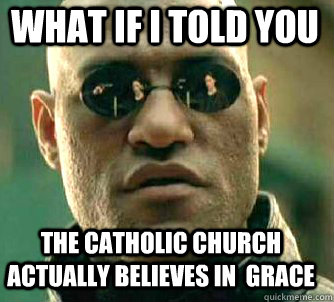

One area of disagreement between Catholics and Protestants that should actually be an area of agreement is the question of how a man is saved. Yet if you were to ask representatives from both sides of the issue, you would almost inevitably come away with a very different impression; "Catholics believe that men are saved by works, while Protestants believe that we are saved by faith alone." And this would seem to be an accurate characterization, but for one minor detail- it's not. Both Catholics and Protestants actually believe that a man is saved, first and foremost, by grace. What the dispute really comes down to is whether or not we as individuals have any role in that process, and if so, what is it? All the same, the mistake that most Catholics make when discussing the issue is that they actually accept the heretical doctrine that is imposed upon them. In other words, when a Protestant calls him a heretic for claiming that men are saved by works, he actually defends that position saying; "Well, there's a good reason we believe that men are saved by works…" Ironically, Catholics have an even more compelling reason (than Protestants) to oppose "works righteousness." For it was the Catholic Church, long before the Protestant Reformation, that condemned that position in 431 A.D. at the Council of Ephesus.


4. If the Church is really "pro idolatry," then why does the Church condemn idolatry?

Many of the accusations that fall upon the Catholic Church are things that the she herself actually rejects. Idolatry is one of them. From the Catholic perspective, if you worship Mary, then you are practicing idolatry, and that's clearly wrong. If you use a saint's medal like some sort of talisman, or rabbit's foot, you are practicing superstition. Obviously there are some forms of idolatry which are much worse than others. For example, if you immolate a child on an altar in the name of Baal, then that's a serious issue. If, however, you bury a statue of St. Joseph upside down in order to sell your house (depending on your intention), then you may be bordering on a much milder form of it. The problem isn't that Catholics worship statues (which they don't), or even that they worship men. The problem is that we really do take seriously the implications of the Incarnation, and we really do believe that as a result of Christ coming in the flesh, the world of matter has been redeemed by God. Baptism has literally drawn us into one giant family of faith, and so by honoring any one member of that family, we are no more worshipping those figures than we are worshipping our older siblings by looking up to them. In fact, to honor our spiritual fathers and mothers is a genuine act of faith, a powerful affirmation that Baptism actually accomplishes what it claims to, and that the following statement from the Gospel of Mark is anything but a form of empty rhetoric; "Whoever does God's will is my brother, sister, and mother." (Mark 3:35)


5. If there is only one Mediator between God and man, then why did God give us guardian angels?

One of the major concerns that Evangelicals express regarding the Catholic doctrine of "intercession" is that it appears to threaten the absolute sovereignty of God, or at minimum, rob Him of the honor that he is due. They contend that if you say that something other than Jesus can assist you on the road to salvation, then you are robbing God of his glory. First, it should be pointed out that Catholics also believe (as is consistent with the words of Scripture) that Jesus Christ is the sole Mediator between God and man. We also believe that there is no other Savior besides Jesus Christ. And we also believe that God is God, and man is man, and that without God we are nothing. Assuming that all of this true, should this therefore lead us to the conclusion that God rides solo in his work of Redemption? Everything in the Bible cries out against this position. Even our Lord, during his terrible agony in the garden, was assisted by an angel, who was sent from the Father in order to "strengthen" him. God initiates everything of course, but he nevertheless invites all of his creatures to share in His marvelous plan. Presumably God could effect the same outcome without giving us a guardian angel to assist us, but for whatever reason he chooses to invite all of his creatures (not just angels) to share in his saving power.  


6. If the plain words of Scripture are so obvious, then why are there so many denominations in existence today?


The unity that seems to exist among Protestant denominations is less about doctrinal unity than it is about a shared rejection of papal authority. For most non-Catholic Christians, Scripture is the sole source of authority, and while this may seem like an expedient measure to create a consensus among Christians, in truth it has only served to exacerbate and proliferate the divisions. If there is no one who is infallible, then everyone is. This would seem to be in direct opposition to our Lord's will, when he prayed to the Father; "that they may all be one" (John 17:21).
   
   
7. The majority of Evangelical Christians subscribe to five "solas" (i.e. Scripture alone, Grace alone, Christ alone, Faith alone, and glory to God alone). How is this not a logical contradiction?

A nifty and concise summary of the Faith is a great thing, but there is always a danger whenever you attempt to reduce something that is intellectually rich and complex to something which is little more than a clever catch phrase (see TULIP). Originally there were only three "solas" (not to be confused with the three tenors), then two more were added to the mix in the past century… which is why it is unwise to create a neat and tidy formula for something which defies a simple explanation. You start with one "sola" and the next thing you know you have five, and then everyone's wondering why you are still calling it "sola".


8. Where in the Bible does it teach Sola Scriptura? I thought we were supposed to believe in "Christ alone"?


It is interesting to note that among the five "solas", only one actually mentions the Lord by name (and that wasn't introduced until the 20th century). Thus, even the Bible can become a form of idolatry, especially when an individual separates it from the One about whom it is written. Yes, if you love the Bible (i.e. Scripture alone) more than you love Jesus Christ, then you too are an idolater.


9. Where in Scripture does Christ actually command his apostles to write Scripture?


I'll give you a hint... he doesn't. However, what Christ does command (other than the Eucharist) is this; a) that we make disciples of all nations; b) that we baptize them in the name of the Father and the Son and the Holy Spirit and; c) that we teach them to obey everything that Christ has commanded" (Matthew 28:19-20). This is of course not to diminish the weight of the infallible word of God, but rather to point out that it is the teaching, and not merely the writing itself, that leads us to salvation.


10. Many Evangelicals claim that the doctrine of the Holy Trinity is easily discernible by reading Sacred Scripture. If this is the case then why did it take in excess of four hundred years to define it?     
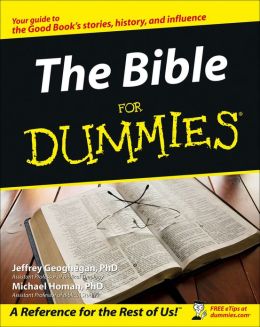

The Blessed Trinity is the central mystery of the Christian Faith, and yet it was not fully defined (as far as it can be "fully defined") until several centuries after the resurrection of Christ. This doesn't even include the fact that the Creed, which sought to clarify the Church's teaching on the divinity of Christ, was also not fully formulated until some three hundred years after the resurrection. And we haven't even begun to discuss how long it took to determine the canon of Scripture. If you consider the fact that some of the greatest minds (as well as believers) that the Church has ever known tried their best to tackle these great mysteries (with the help of the Holy Spirit), and it took them this long to do it, then how reasonable is it to conclude that the Bible is some self-explanatory textbook? The Bible for Dummies, really? The Church is rather like a seed that is continually developing, all while maintaining its original integrity. It is not merely some dusty antiquated archeological exhibit, but rather a living breathing growing reality capable of speaking to, and bringing about the transformation of, every age and culture. This interpretation of the Faith would in any case seem inevitable if you study the historical development of Christian doctrine.


11. Why do so many Protestants have a problem with priestly celibacy- especially considering the fact that Our Lord so clearly taught it?


In keeping with the remarkable and revolutionary words of the Gospel, St. Paul seemed equally adamant about the value of priestly celibacy. In fact, not only was he himself a celibate, but he recommended it (while not disparaging the good of marriage) as the preferred way to follow Jesus with an undivided heart (see 1 Corinthians 7:8). Yet, as suggested before, this recommendation was not merely some Pauline idiosyncrasy, by rather an extension of what Jesus had already said in the Gospel of St. Matthew; "For there are eunuchs that are born that way from their mother; and there are eunuchs that are made that way by other men; and there are also eunuchs that made themselves that way for the sake of the kingdom. He who is able to accept this, should accept this"(Matthew 19:12). Agreed.


12. Jesus states that those who divorce and remarry (with a few notable exceptions) enter into an adulterous relationship. Why is it that so many Evangelicals essentially ignore this clear injunction?


This is a difficult teaching by anyone's standards, but it is also something that Jesus undeniably said, which begs the question: why is this clear teaching of the Bible so roundly ignored by many Protestants?    


13. If two Protestants come to a contradictory position on some essential teaching of the Faith, how do they determine which position is correct?


No this is not the beginning of some barroom joke, but rather a dilemma which is no doubt rife with countless ironies. For example, in the Gospel of John it says; "Truly, truly I say to you, that unless one is born of water and the Holy Spirit, one cannot enter the kingdom of God." Whatever you believe about the significance of this passage, getting the interpretation correct would seem to be imperative. Some Christians say that the larger context reveals the necessity of sacramental Baptism, while others claim that the physical act itself in the end is unnecessary. Presuming that both parties are sincere and well intentioned, how does one determine the right course of action without a definitive authority? Do we simply assume that the "road to heaven is paved with good intentions?"


14. If the Eucharist is purely a symbolic gesture, then why does St. Paul issue such a stern warning; "So then, whoever eats the bread or drinks the cup in an unworthy manner will be guilty of sinning against the body and blood of the Lord... That is why many of you are weak and sick and some among you have even died."   


In John Chapter 6 we discover that some of Jesus' disciples decide to "return to their former way of life" because they would prefer not to "gnaw" on Jesus' flesh and drink his blood. In other words, those who listen to Him are fundamentalists, for they take everything that he is saying literally. However, most fundamentalists today choose not to take him literally, even though it is patently obvious that everyone in that Gospel passage did (including the apostles). Lending further credence to this interpretation is the fact that Jesus does nothing to correct it. Yet even if you believe there is some interpretative wiggle room here, simply consider the words that St. Paul spoke to the early Church about it (see above). Thus, if the Eucharist were purely a symbol, and Jesus were simply being metaphorical here, then why, as St. Paul so forcefully puts it, would someone be guilty of desecrating the very flesh and blood of God- if in truth they were only receiving a glorified cracker in the wrong manner?


15. If the first letter to the Corinthians says that the greatest of virtues is love, and Matthew 25 tells us that we will be judged based primarily on our charitable deeds (or lack thereof), then how can one argue convincingly that faith alone, and not both faith and works, is at the core of what saves us?


As stated before, what ultimately saves us is God's grace, but then the next question arises: what is our part in the salvation process? Well, unless you believe that men are a little more than a bunch of glorified robots without any discernible free will, then you must acknowledge that we have a part in our own salvation… by the grace of God. The only question then becomes how does that process shake out. Is it a one-off acceptance of Christ, or is it more like a wedding vow, which requires continual care and effort so that the initial vow continues to deepen and grow as opposed to withering? Scripture certainly trumpets faith, but it also clearly celebrates faith in action. Faith precedes a "faithful action" in the order of things, but that nevertheless does not mean that the only important thing to emphasize is faith, as if it could exist as a solitary thing. Can you find plenty of passages that discuss the importance of faith? Of course! Can you find plenty of passages that emphasize the value of works. Of course! Hence, why pit them against each other as if two Biblical virtues could be enemies? Indeed, these two virtues are no more meant to be at odds than are two book ends, two arms of a body, or two wings of a bird.


16. Apart from St. Peter in the Gospels, where else in Scripture does God change someone's name?


Many individuals mistakenly believe that God changed Saul's name to "Paul" after his conversion, but there is a very practical reason for his "name change" (and it has little to do with a divine mandate). Paul was preaching primarily to Gentiles, and so he used the Romanized version of his name in order to set them at ease in his presence (Paul was a Roman citizen as well as a Jew). It is quite possible that the Zebedee brothers, James and John, may have received a nickname from our Lord (viz. the sons of thunder), but that was more of a humorous description of their "thunderous" nature. In any case, having a nickname isn't equivalent to a name change, for a nickname is generally meant to be (more than anything else) a playful descriptor. In truth, the only time we see such an exceptional intervention in the Old Testament is with the Patriarchs. The first such name change occurred with our "Father in Faith", Abraham, whose name was formally Abram. This change had nothing to do with God's personal taste in names, but was rather about God revealing Abram's vocation. Names are in a certain sense related to our identity. Thus, in this singular act, God was revealing, not only the destiny of Abram, but the destiny of a people which would one day come to be known as Israel. He who was formerly childless, now, according to God's promise (as expressed through his new name), was to become the "father of many nations". In a similar fashion, the apostle Simon had his name changed as well. And he, like Abraham, was promised an enduring legacy. Certainly at that moment, neither one of them could have suspected what all this could mean, and yet, in spite of their limited understanding, and spite of their personal failings, God's incredible promise still seems manifestly alive in the person of the successor to St. Peter (who himself is the truly the father/papa of many nations).

      
17. If Christ wasn't truly intending to establish the papacy by changing Simon's name to Peter and giving him the keys to the kingdom, then what in fact was he doing there?

The modern consequence of Biblical fundamentalism is not greater fidelity to Scripture, but a temptation to reduce everything in Scripture to the broadest and vaguest kind of symbolism. "Who is Jesus speaking to here? Oh, he really means this passage for all Christians. That whole rock thing is a reference to Jesus being our Rock like in the Old Testament, and the 'keys to the kingdom' are meant to suggest that Christians are being given the keys to all of the mysteries of the Faith." Of course there is certain truth to all of these statements (and many like them), but there is also the more immediate meaning and context of a passage. Whatever else you believe about Simon's name, one thing is undeniable, his name, and no one else's is changed to "rock". Some claim that Jesus really changed Simon's name to "pebble" to indicate how insignificant Peter was and that's why he did it. Ouch! The question is why would he do this right after he had just praised Simon for recognizing his divinity. "Wow, great job Simon! No human has revealed this to you, but my heavenly Father! You worthless useless shaving of sediment, you! Yes, it is possible to twist and turn your way out of the former explanation. It is possible to claim that the rock and the keys are just pleasant little metaphors, which ultimately amount to nothing. But if we take Scripture seriously, and if we examine both Old and New Testament together, and if we acknowledge the remarkable resiliency of the papacy, it would seem that the most rational course for us to take would be to recognize that Peter was given a special role/office among the apostles. Yes, the other apostle have authority as well, but Matthew 16 seems to impute something special to Peter, while taking nothing away from the others.


18. If Scripture tells us that Mary is "most blessed among women", and that she is "the mother of our Lord", and that she is a woman that all generations will call "blessed", then who is being unbiblical by not honoring her in these ways?

Clearly there is more to the debate than these particular passages. However, what is also clear is that Marian devotion, or at least the seeds of it, are rooted in Scripture. In other words, if even the angel Gabriel can say the Hail Mary, then I think it's OK for us too. The truth is Marian devotion can be better understood by the instincts of the heart rather than from a forensic reading of Scripture. Anyhow, even from a strictly manualistic point of view, there is plenty of justification for a rudimentary devotion to her. In the order of time, as clearly articulated by the joyful greeting of Elizabeth, Mary really is the Mother of God/the Lord. To say that Mary is only the mother of Jesus' humanity is to fall into an old heresy concerning the nature of Christ (i.e. Jesus does not have a split personality and he is not Sybil). Of all the woman that have walked the earth, she is the greatest, and should be honored as such by all. We honor our own mothers as great- well Mary is the Mother of all mothers. In the Gospel of Luke, she even prophecies that all generations will call her "blessed". Now an evangelical Christian may not want to direct their prayers to Mary, but they should at least be willing to fulfill this Biblical prophecy by calling her; "The Blessed Mother", or at least, "Blessed Mary". We give people titles all the time who are far less worthy, and we can't give the mother of our Lord one that is right out of the Bible?      
       

19. If everyone in heaven is destined to receive the gifts of redemption (i.e. destined to be without sin, assumed into heaven, and in complete communion with God), then why should it be so difficult to imagine that the woman who bore the Redeemer, would be the first to receive them? 

                     
Because Mary was the first in whom the Lord was born, she was naturally the first one to be born into Him. Redemption, as it were, was woven into her DNA from the first; a truth fully evidenced by the fact that our Redeemer received His DNA directly from her! You can deny it of course, but then what you are denying is the full implications of the Incarnation. Biology is, at least in this case, theology. Indeed, the two were woven of the same cloth. Thus, if God ultimately wipes away everything that separates us from him, then are not the doctrines of Mary ultimately a living sign (in the person of Mary) of what our reconciliation looks like. Indeed, She is the perfect image of a humanity reconciled to God.


20. Where in Scripture does it say that God's judgment (for good or ill) involves no amount of suffering or punishment on our part?

When Catholics and Protestants debate purgatory, they often assume (on both sides I might add) that purgatory is a lot like a middle ground between heaven and hell- or at best some bland waiting room at the doctor's office. I would argue that it is more like going to the doctor- who then gives you your rehabilitation assignment (think football player recovering from an ACL/MCL tear). Rather than some murky middle ground between heaven and hell, purgatory is more like the experience of God's purifying love/judgment. And whatever you think about the evidence for it in Scripture, what there is absolutely no evidence for in Scripture is a vision of judgment that has you sitting back and enjoying a replay of your life, all while consuming a giant bag of popcorn and receiving a pat on the back. There is plenty of Scriptural evidence, however, for something like a "refiner's fire" turning the dross of our sins into the pure gold of the spirit. Perhaps that "fire" successfully refines you in this life, but whatever the case, Scripture offers no evidence that when you meet God face to face, that that experience will simply involve God either smiling or frowning and yelling "NEXT!" Does one really believe that they will suffer nothing on judgment day upon seeing the real effects that our personal sins have had on the fate of others?


21. Where in the Bible does it state that our sins should be confessed only to ourselves?


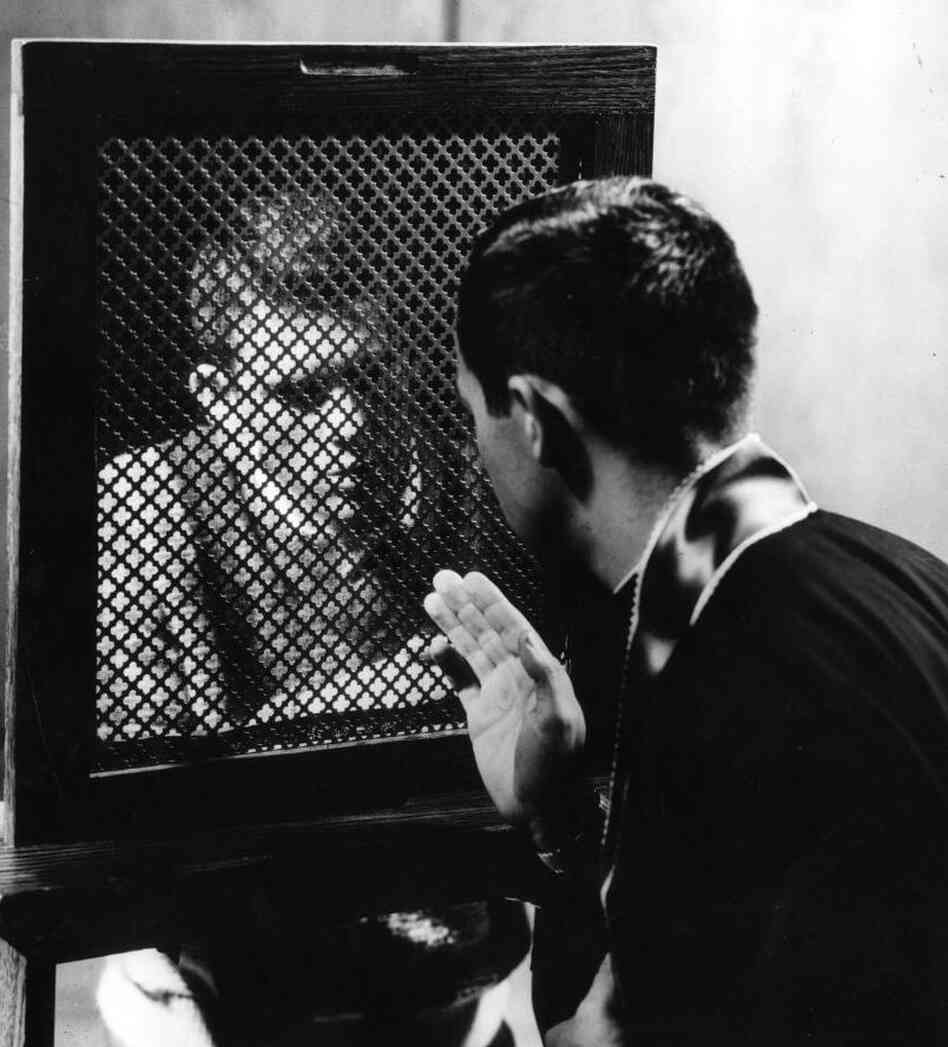
The usual question goes something like this; "Where in the Bible does it say that you need to go to a priest to confess your sins?" And then you go around and around because the other individual isn't satisfied by your response. Yet ironically there is far more evidence in Scripture for the latter than the former. Pretty much every aspect of the faith involves some kind of confession, and the early Church's witness bears this out. Whether it was people going to the Jordan to confess their sins to St. John the Baptist, or it was St. Paul talking about believing in your heart and proclaiming with your lips. As with most things in these Scriptural debates it is not an issue of either/or but both/and. It is the external as well as the internal, the human as well as the spiritual. In the letter of St. James, the writer declares "confess your sins to one another" (James 5:16). "Confession" is everywhere in the New Testament. Of course one can experience all of this in the recess of their hearts, but of its nature, confessing is clearly an action of the lips, and not just a movement of the heart. The proclamation of the lips brings to completion the action that was initiated in the heart. Even if you read these texts on confession in the most minimalistic fashion, you should still come away recognizing that an outward manifestation of repentance is absolutely imperative. Yet, Scripturally speaking, when it comes to the more serious sins, there is necessarily a greater demand on our part. After all, God knows just how dishonest we can be when we are the arbiters of our own absolution. How much more humility is required for a man to go to the Church and call himself out in front of God's minister (who is both God's representative and the representative of the faithful)? Biblically speaking, the most obvious instance of Christ instituting this sacrament comes to us from the upper room after he is raised from the dead; "Whose sins you forgive are forgiven. Whose sins you retain are retained." Apart from the usual arguments for why this passage seems convincing- is what I would be inclined to call the genuinely odd second part of the statement. Indeed, if this weren't Christ instituting the sacrament of Reconciliation, then why would he even mention "retaining sins" (i.e. withholding forgiveness)? Indeed, where else in Scripture does Christ tell an individual that he or she can withhold mercy or forgiveness (only God can do that right)? "How many times should we forgive sins? 70X7."


22. Where in Scripture does it condemn praying for the dead?      


It is a clear violation of Scripture to engage in necromancy. Consequently, one may never seek to conjure up the dead as a means of speaking to them or attaining occult information directly from them. This is not to be compared with an apparition of a blessed soul who visits you on some heavenly assignment. In this case, God is initiating the encounter, in the prior case it is you who are attempting to reach into the grab bag of the spiritual world and pull out what have you. But is there anything in Scripture at all prohibiting human beings from actually offering blessings for our deceased loved ones? St. Thomas Aquinas was once asked by a woman whether or not there was a literal "Book of Life" in heaven with the names of all the blessed written inside. He responded to her question by saying that he did not think that such a literal book existed, but that he saw no harm in thinking so. In a similar sense, what harm could come from wishing our deceased brothers and sisters special blessings in the next life? A young relative of mine recently prayed for the "soul" of his deceased bunny. Of course his theology is a bit shaky, but is it not a pious thought (and at worst, excusable) for him to express gratitude and hope for someone (or in this case something) that had brought him great joy? Can an expression of genuine affection and love for another, especially when it involves praying for the happiness of a particular soul, ever be raised to the level of a sin? My point is we pray for those who have gone before us out of a natural instinct of love and affection. We are not engaging here some kind of twisted necromancy, or spirit conjuring (this also explains the pious practice on the part people from all persuasions who say R.I.P. when someone has died… is this not a prayer also?). We are praying that God's face shines upon them. And if they have it already, then so be it, what is the harm of sending a spiritual bouquet to the ones we love? The Jews developed this practice (see 2 Maccabees 12:46-58) centuries before the birth of Christ, and they still do it today (they call it the Kaddish). St. Paul apparently expressed this same desire when he sought God's mercy for his deceased friend Onesimus (2 Timothy 1:18). The 2nd century Christians expressed this hope when they carved intercessory prayers on the walls of the Roman catacombs. Is it really a sin against faith in God to pray that His mercy would fall like the dew upon the souls of our deceased loved ones? St. Paul didn't seem to think so.


23. Where does the phrase "once saved always saved" appear in Scripture?


As far as I am aware this phrase does not appear in Scripture. Rather this belief is deduced from a series of passages like the following; "My sheep hear my voice… and I give them eternal life… and no one will snatch them our of my hand" (John 10:28-29). What we have here- once again- is a false dichotomy; Scripture pitted against Scripture, when they should be in concert with one another. It is a little like a scene from the movie Liar Liar, where Jim Carrey beats himself up in order to avoid having to stand trial. Are there passages in Scripture that suggest salvation happens at a definitive point in time? Yes; "Today salvation has come to your house…" Are there passages that suggest that it is process, and that one must persevere and "run the race, so as to win... lest we find ourselves "disqualified"? Absolutely. Therefore, how do you best express this paradox? How do you explain to someone that Baptism is the gift of being saved by God, while also explaining that, like any gift, you can abuse it and thus lose it. That is what free will is in a nutshell. Free will doesn't cease to be the moment that you accept Jesus into your heart anymore than the challenge of marriage ends the moment you decide to take the plunge.


24. How do you prove that a man is saved?


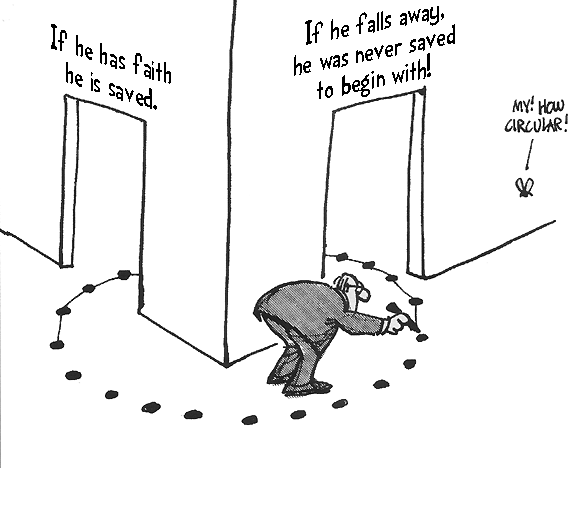
How does someone know incontrovertibly if they are saved or not? Now we have truly come full circle, both literally and figuratively. We began this list of questions with circular logic and thus we will conclude with it. When you ask an evangelical how someone can tell if they are saved, they usually point to some sort of profession of faith that they made at their church, or else some particular moment that they remember where they "accepted Jesus into their heart and professed him with their lips." By this standard I too can point to a moment wherein I accepted Jesus into my heart and professed him with my lips. However, a problem arises when you ask many evangelicals about the phenomena wherein  someone appears to be saved, but then they inexplicably go on a killing spree (or some other horrible thing). At this point, they will in all likelihood take one of two possible positions. Either they will still with Luther's original line of thinking; "No sin can separate us from Him, even if we were to kill or commit adultery thousands of times each day", or they will take up the more popular (though circular) position, that the person, even while appearing so, was probably never saved in the first place. Yet if they argue the latter, then what you have is a bit of a merry-go-round type argument, which, in the irony of ironies, seems a little Pelagian. How do you know that a man is saved? Because he has accepted Christ into his heart. What if after accepting Christ he becomes an adulterer or a serial killer? Well then, he wasn't sincere in coming to Christ. Then how do you know if he was sincere or not? His life will reflect that sincerity… Repeat and rinse.


25. Where is the Scriptural basis for serving grape juice instead of wine at communion?


I am not sure how many churches still do this, but there is a practice among some evangelicals Christians (particularly Baptists) wherein their custom is to serve grape juice instead of wine at communion. This is certainly a perplexing practice, especially when you consider it in light of the overwhelming evidence for the holy consumption of wine in Scripture. After all, why was Jesus accused of being a "glutton and a drunkard" if he was simply drinking Juicy-Juice at dinner? And if Jesus was truly a teetotaler, does that mean that his first miracle at Cana involved changing water into Welch's (how disappointed the guests must have been)? And then what about the cup of wine at the Last Supper, shall we assume here that Jesus changed the wine, not into his own blood, but back into a more reputable drink? All of this to say- I can find no evidence in Scripture that Jesus Himself was averse to fermented beverages.



Saturday, July 26, 2014

Metal with a Message? The 10 Best Hair Metal Songs for a Cause


People do not ordinarily associate heavy metal with deep thinking, much less with compassion. Folks tend to get into it for more "primal" reasons- you know, sex, drugs, and rock n' roll- with a side of aggression, man! This is the stereotype, at least. But there is a softer side to the metal genre. Yes, sex, drugs, and rock n' roll, but also, "caring, compassion, and concern?" That's right, many in the 80's metal scene dared briefly to venture into the land of meaning, often doing so via the backdoor of the power ballad. As a matter of fact, just about every metal band (at least hair metal band) saw it as their official duty to reveal, if only for the briefest of moments, their bleeding hearts.


1. The Scorpions - Wind of Change

This treasure from the German band the Scorpions came out at a time when the Soviet Union had just disbanded, the Wall separating East from West Germany had come down, and furthermore it seemed that with the "winds of change" blowing, just about anything was possible. Whether or not this is still a viable dream, the song nevertheless still brings a tear to the eye of every dog collar wearing, leather ensemble having, rocker who dreams of a better world (including myself, minus the collar and the leather). Though if peace and harmony were to break out right now, how easy would it be to write an album of good angry metal songs? Clearly a metal conundrum.


2. White Lion -When the Children Cry

Rock n' roll for the good of the children? Yes, at least in this case, or at minimum "when the children cry". White Lion put this glorious glam metal classic on their second album, Pride, and in doing so put a silvery metal tear in our eye at the same time. Along with the song Wait, this power ballad propelled the band, albeit briefly, to rock n' roll stardom. The lyrics offer a heart rending tale which reads a little like an apology note to all the children of the world on behalf of the adults; "No more presidents and all the wars will end. One united world under God." Mentioning God in a purely positive sense in a metal song is a real "no-no", however, because the ballad genre allows greater latitude in many respects, you can get away with it. All the same, White Lion does go a little further than most metal bands in this regard, suggesting that religion could actually provide a positive solution to the world's woes- and in particular to the woes of children. 


3. Poison - Give Me Something to Believe In

On a scale of 1 to weep, this song should at least have you shielding your face from any stoney hearted onlookers; "My best friend died a lonely man in some Palm Springs hotel room. I got the call last Christmas eve and they told me the news. I tried all night not to break down and cry as the tears rolled down my face. I felt so cold and empty like a soul out of place… Give me something to believe in, if there's a Lord above. Give something to believe in, oh Lord arise." This song isn't so much about saving anything as it is about petitioning God. Later in the song Bret Michaels wonders at those who are living in such terrible poverty that they look like "bodies in open grave". Yes, he who sang the song "Don't Need Nothing But a Good Time", and "Unskinny Bop" (a euphemism for sex), ponders the great inequities that plague the world in our day and age... at least for a moment or two. In fairness, Mr. Michaels does not pretend to know everything, nor does he take a superior tone, he merely pleads for the good Lord to "arise", and provide some answers to these burning questions. Bret Michaels as Job with a bandana, a perm, and some guy-liner? Hmmm.


4. Van Halen - Right Now

At #5 I feature another band known very little for its pursuit of anything consequential. Throughout the history of Van Halen (which has included at least three vocalists), perhaps the closest thing to any global awareness exhibited by the band would be a song called "Panama." Now, granted, the song is primarily about a stripper and a fast car (which were simultaneously the inspiration for the song), but hey, a least the title suggests something a little more international. In any case, it wasn't until the song "Right Now", that the band, thanks in large part to the lyrics of Sammy Hagar (who was the vocalist at the time), began to consider some of life's deeper questions. What is Mr. Hagar's philosophy on life? Well, in this instance, he argues is his own particular brand of "carpe diem"; "Miss the beat, you lose the rhythm/ And nothing falls into place. Only missed by a fraction/ Slipped a little off your pace… Right now. Hey, it's your tomorrow. Right now, it means everything. Right now, catch that magic moment, do it right here and now." It's not Shakespeare, but as far as good old fashioned day to day advice, it could be worse. So many people live in the horribly depressing gray realm of worrying about everything, while simultaneously failing to act. OK. Mr. Hagar is obviously very neutral about what one should be accomplishing "right now," but nevertheless I hope we can at least assume that his motivational advice does not (and should not) extend to procrastinating rapists and serial killers. Ironically, the unfocused nature of the video does demonstrate just how good advice in the wrong hands is virtually meaningless, or worse.        


5. Pat Benatar - Hell is for Children

The only woman to appear on this list, what inspired Ms. Benatar to write this song was an article about physical abuse in the New York Times. Because of the provocative title (which was taken from the name of the article), some initially presumed that the song was a sick sadistic tune about sending kids to hell. Of course if you simply read a line or two of the song you can see almost immediately how ridiculous such an accusation would seem to be; "They cry in the dark so you can't see their tears. They hide in the light, so you won't see their fear. Forgive and forget, all the while love and pain become one and the same in the eyes of a wounded child. Because hell, hell is for children…" Ms. Benatar spent a good portion of her early career being at the forefront of the grrrrlll power movement (particularly in the early 80s). With songs like "Hit Me With Your Best Shot" and "Treat Me Right", she demonstrated a fierce and defiant side which seemed to inspire and inform a good deal of her song writing. It may not be accurate call the music of Ms. Benatar "metal" per se, but she no doubt had her metal moments. And the song Hell is for Children is an excellent example of metal sounds like when it actually has a conscience.


6. L.A. Guns - The Ballad of Jayne

There are many ballads from hair metal bands which emphasis finding the "love of a lifetime" (sorry Firehouse, you didn't make the list), even while these same artists spend the majority of their time "scamming" on woman. But this song- in a most interesting way- takes a slightly different angle. Indeed, this is about as close as any Perm Metal band gets to delving deep into history. L.A. Guns' song The Ballad of Jayne is about model Jayne Mansfield, who reached the peak of her success in the late 1950s, that is until a tragic car accident took her life. What makes this piece particularly unique is that it is a song about a pinup model sung in an earnest fashion (or at least as earnest as they could muster). It differs from Elton John's "Norma Jean" in that the lead singer here sings about her as if he knows her on a deeply personal; "She was always something special/ A diamond shining bright in my mind. Everyone dreams of angels. No one will ever know how much I loved you so… What a shame, what happened to Jayne." What tremendous irony- to take someone who would ordinarily be treated like a sexual object (especially by a rock star), and turn her into your chaste beloved. Many a hair metal band has imagined, at least for a song, enduring fidelity with the right type of woman, but in this song you actually have a pure presentation of the wrong type of woman. Whereas Elton John (and Bernie Taupin) imagined Marilyn Monroe as just a regular human being, L.A. Guns imagines Jayne Mansfield as some kind of religious sister. Consequently, this song makes the list because it combines a remarkably heart felt attempt to speak about higher love, while maintaining that fundamentally metal (and adolescent) mentality of trying to find it with the type of woman that you would find in Playboy.


7. Areosmith - Janie's Got a Gun

Speaking of guns… After decades of singing about the usual things rock stars tend to sing about, this metal outfit dared to wade into a particularly sensitive area. While Pat Benatar chose to focus on physical abuse, Areosmith opted to take it in a different direction. Tyler said that he wrote this song after watching an episode of 48 Hours (a journalistic show), which highlighted the amount of sexual abuse that goes on in families. Horrified by the statistics, he set to writing a song about it. The video itself is equally dramatic, and this is not surprising, especially considering it was filmed by the same director responsible for the movies Se7en and The Panic Room. Yet in that classic weird metal style- where everything is overly sexualized, the video itself seems more concerned with making the actors look glossy and attractive, than it does with communicating how abhorrent such behavior is. In fact, when I first watched the video, I couldn't help but to be a little creeped out by- what seemed to me- an exercise in pure sensationalism.


8. Queensryche -Silent Lucidity

Yes, Metal gave us Enter Sandman, but it also gave us Silent Lucidity. When you go to sleep at night, there may be an evil creature lurking under your bed, in your closet, in your head, but then again, there may also be Geoff Tate of Queensryche who's "watching over you" and "smiling next to you in silent lucidity". Actually, I prefer the Sandman to the latter. In all seriousness though, the band Queensryche is well respected in the pantheon of metal acts. However, at some point in the late 1980s, lead singer Geoff Tate became extremely fascinated with what he called "dream control", and so wrote this ballad as a means to help young people "system their efforts" and thus navigate their dreams. Metal often prides itself on its fascination with dark images and the occult. Well, in this instance, Mr. Tate introduces us to the softer side of the occult, the occult with bath oils and scented candles. I wonder if their next song (assuming they ever reunite) will be about the magnificent power of crystals? By the way, did I mention that I prefer the "Sandman" to this creepy surveillance dream guide? I'm smiling next to you…. Yikes!


9. Faster Pussycat - House of Pain

I decided to add this track to the list, in part because of this group's fabulously fantastic glam metal name, but also because the song is one that is genuinely poignant and serious. As should seem obvious from the music video itself, the track is about growing up in a broken home. And as has been said repeatedly in this post, earnestness and vulnerability are not ordinarily the characteristic features of this genre. Thus, anytime I see a river of mascara running down the face of one of these metal musicians, the kind who ordinarily pride themselves on being tough (seems ironic), I take particular notice. I suspect if one were to scratch the surface a little with these groups, one might discover quite a few more of these types of stories.


10. Hear 'n Aid - Stars

By far this final entry is the most magnificent in a list of what I like to call humanitarian metal. Apparently wishing to be a part of the "We are the World" generation, this group of rockers, calling themselves Hear 'n Aid, go together to fight world hunger. Henceforward, we will always have this metal classic appropriately known as "Stars". Beyond having just about every imaginable figure associated with metal and hair in the video, right out of the box the song delivers the lyrical (and vocal) stylings of the late great Ronnie James Dio; "Sometime in the night when you're feeling cold/ Take a look at the sky above you/ Those are faces in the light/ If their story were told/ They are calling you, calling you. We are magic in the night/ We are shadow we are light. We are forever you and I/ We are stars/ We are stars." In classic Dio style, we get a shadowy tale, a vague twilight region between good nor evil, the place where werewolves and Robert Pattinson seem to reign. I'll give them this, at least they stayed true to their genre. Nevertheless, I am not so sure how much it inspires the poor, or those who are inclined to help them, to mention that it's going to be OK because "we are magic in the night", or "we are shadow we are light". After hearing that, I feel more like howling at the moon than I do getting out my check book. In any case, I should not begrudge this metal effort (I think they raised $1 million dollars), even if it does sound more like a game of D 'n D than a real call for charity. And besides, Ronnie James frickin' Dio... Need I say more?!                


11. (Bonus) Midnight Oil - Beds are Burning

Midnight Oil is not a Hair Metal band. In fact, it would be more accurate to call them a hairless metal band. Nevertheless, they are a serious rock outfit who, on this particular occasion, speaks rather eloquently on behalf of a tribe of Australian aborigines known as the Pintupi. The song Beds are Burning is an attempt to compel the Australian government to acknowledge the mistreatment and injustice endured by this particular tribe, and so as a consequence make appropriate reparations; "The time has come, to say fair's fair/ To pay the rent, to pay our share… How can we dance while the world is turning? How can we sleep while our beds are burning." In fairness to Midnight Oil, though, of all the bands on this list, they have the most activistic tendencies in them, and some might even describe as more alternative in their leanings than anything else. Consequently, while I would still place them among the "metallers" who are inclined to offer their occasional two cents about what's wrong with the world, they do bring a little more credibility than the rest.


Thursday, July 17, 2014

Humble Pie: The 7 Harshest Moments of My Life That Actually Changed Me for the Better


One cannot truly advance in the spiritual life unless one is willing to allow God access to the most sensitive and intimate aspects of our being. Until that happens, we will inevitably remain spiritual children guarding those areas of our lives most in need of genuine transformation. Sometimes God even sends the shock troops in (i.e. our enemies), in order to expose those areas of pride which we are least likely to expose on our own. Yet even if their motivation isn't absolutely pure, these enemies of ours may serve as tremendous allies in the larger framework of our salvation. And of course, on occasion, even our loved ones are charged to do the same. Yes, perhaps especially the ones who love us the most will be tasked by God to scourge us in a way that we never expected. This may not seem like love or growth at first blush, but recognizing the value of this kind of painful experience can ultimately be the difference between wisdom and ignorance, between progress and a spiritual lacunae. It is interesting that people tend to think of angels as innocuous little creatures, or at best spirits that intervene to save us from something extremely unpleasant, but if you observe their role in Scripture, you discover quickly just how terrifying and harsh they can be. In fact, nowhere in Scripture do we see the appearance of anything like those dreadful "Hallmark angels," or even that sweet and ineffectual Clarence from It's a Wonderful Life. The truth is some of God's "angels" do seem to be very kind, but then again there is another type, or at least the same type on another kind of mission. Indeed, sometimes God sends his angels out to whack us in the face with a plank of wood, which from a heavenly perspective may simply amount to a gentle caress. Even so, if we were to somehow see things from God's perspective, we too might be tempted to react as George Bailey once did in It's a Wonderful Life, hugging everyone and everything in the landscape, including those most responsible for his initial decent into despair; "Thank you, Mr. Bank Examiner! Isn't it wonderful! I'm going to jail!" Below are seven "glorious" examples from my own life in which my pride was completely eviscerated. I offer my gratitude to each and every one of the following individuals for the role they have played in my sanctification… really!


1. "That's the stupidest thing I've ever heard in my life"  - in the illustrious words of my good friend Marc after I told him what I believed about God and the Universe


Call him an "ass" if you like (I know I often do), but had my friend Marc never spoken these words to me when he did, I would have continued to walk around in a sea of spiritual piffle for who knows how long. To provide a little context, I was about twenty one years old at the time, and absolutely certain that I was completely enlightened and in no need of any spiritual guidance whatsoever. I was a religion unto myself. Hence, when I finished relaying to Marc one night- by a warm and wizened fire- what it was I believed and why, I firmly expected him to stand up and applaud and tell me how brilliant I was. To this day I cannot remember exactly what it was that I said, but I do remember feeling a sense of self-satisfaction flowing through my veins when I finished my speech. And then came those famous words like a shot out of the dark; "that's the stupidest thing I've ever heard in my life!" What a tremendous blow that was to my ego- but it was exactly what I needed to hear at that moment. He made me doubt myself, precisely when I was so sure that I was a genius. As I was happily marching myself over the cliffs of oblivion, he drop-kicked me in the teeth and left me reeling back on solid ground. The truth is I never would have questioned my own self-serving view of the universe had he not given me that rhetorical slap in the face. Indeed, had he not challenged me so directly on that evening, I cannot say for certain that today I wouldn't be in some groovy New Age cult, speaking in a creepy placid tone, with my eyes unnaturally wide.


2. "You will never be a great basketball player, because you have no heart!" - uttered by one of the assistant basketball coaches to me at UNC basketball camp


If I remember correctly, I was goofing around during one of the drills he was conducting, when he looked me square in the face, with what I remember to be a look of contempt, and spoke those words to me. And the worst part about it… he was right! I had a decent amount of talent, but I had no drive or heart. He wanted to push me, and more importantly, he wanted me to push myself, but I just wanted play around. Like I said, I do not remember exactly what it was that I did to annoy him so much, but I can surmise what my attitude must have been. "Here's this little rich punk, who's never had to work hard or push himself for anything in whole his life, and he has the nerve to come in here to my camp and d*** around during one of my drills. I don't care if his precious little mommy and daddy pay for every damn thing from now until eternity, he's not going to come in here and pull that crap with me." Now that I am a tennis coach, I encounter some of that same mentality, especially when I coach kids that grew up in a similar way that I did. The real question is how do you teach a kid to be hungry for something, when he has never experienced any real "hunger" in his whole life? How do you teach a kid to play with real urgency, when he knows that there will always be someone there to bail him out? Perhaps it is something of an ironic penance for me then to have to inculcate in young athletes the very thing that was lacking in myself at their age. At any rate, I often hear that particular coach's voice in my head, especially when I myself am out doing exercise on my own, be it running or some other strenuous activity. St. Francis referred to his uncooperative body as Brother Ass, as for myself, I have my own inner drill sergeant whose name I cannot recall, but whose direct challenge to my gustiness (or lack thereof) is always a great source of motivation.


3. The (one and only) time my father ever slapped me


To be spanked is one thing, but nothing really compares to the level of shock and humiliation that one feels when one is slapped across the face. My dad was not much of a disciplinarian when I was growing up, though on occasion he did apply a modest spanking. He would do it if he had to, especially if  prompted by my mother, but otherwise this was not something that was particularly feared by me or my siblings. So imagine my surprise when I felt his hand firmly swack me across the face! "Completely stunned" are the only words I can use to describe it. What was it that provoked this solitary and unique incident? I was in fourth grade at the time and had become quite obsessed with talking on the phone for excessive amounts of time with my "girlfriends". In any case, I was caught in some sort of web of lies by my mother regarding (I think) video games. As a consequence, my mother told me that I couldn't speak on the phone for two weeks. I completely lost it. I went wild with rage and got into my mother's face, yelling and screaming about how unfair this was and "how she couldn't do this to me!" Then all of a sudden, I felt a giant whack come out of no where, and it completely stunned me. It's not that it physically hurt me. Frankly, it didn't (he got me on the bony part of my cheek), but it was so unexpected that I think it actually knocked me back into reality. When I realized all that had transpired, I immediately broke down in tears of embarrassment. I know there are those out there who think that there is never a just cause to slap a child, but I tell you, I am grateful to my father for this divine slap. First of all, I am grateful because he showed me just how unacceptable it was to get in my mother's face like that. Secondly, I am grateful because it gave me greater respect for him, for though he was standing right there, I simply ignored him and went straight after my mother's verdict, in essence demonstrating how little regard I had for his authority. There are some things worse than a parent slapping you, and one of those things is showing contempt for your parents authority. I had lost my mind and my perspective, and maybe I could have used a timeout with Barney, but I thank God to this very day that instead of receiving the latter, I received the slap heard round the world, or at least the slap that I will remember with gratitude for the rest of my life.


4. The time my aunt Amanda said this to me; "You like talking about yourself quite a bit, don't you? How about asking others how they're doing for a change?"


Ouch! In my teen years I really enjoyed talking to my aunt about spiritual matters. Consequently, on the rare occasions I would see her (she lived in New Jersey and I in North Carolina), I would immediately run up to her and start talking about the latest book I had read and what I thought about it. However, during one of these encounters, my aunt abruptly interrupted me, and made the above inquiry. I can still remember how brusque her statement sounded, and how much it stung me to the core. Here I was rushing to tell her my thoughts on my latest reading, and here she was giving the coldest rhetorical stiff arm I had received to date. Could she have said this in a kinder way and more charitable way? Probably. Would I have remembered it to this day if she had? Probably not. Ever since she spoke those words to me, I have been ever cognizant of making sure that I ask others how they are doing before getting into details about myself. I am most grateful to her for saying this to me, not just because it taught me to get outside of myself and consider the thoughts and feelings of others, but because, whether intending to or not, she taught me that the key to real intellectual curiosity begins with interest in the lives and experiences of others.


5. The time I had my butt handed to me by a kid named Adam Johnson                                        


From about third grade to sixth grade I was a bit of a bully. Just about everyone I got into a fight with I defeated. When sixth grade rolled around, I was so cocky that I was practically picking fights just for the fun of it. Enter the new kid Adam Johnson. Adam was what we would call in North Carolina a country boy (some would even use the derisive term "redneck"). He was so country that he even used to brag about the fact that he drank Tequila with his "diddy" in the the woods. But none of this made much difference to me. He was new territory to conquer, and that alone made him interesting to me. The rest of the guys picked up on this rather quickly, and so one day they decided to instigate a fight. Subsequently, one of them (I still am not sure which one), threw my books on the ground and said it was him. I knew it wasn't his doing, but I didn't care, for I was that type of bully that really does enjoy his circular brand of argumentation; "Why you wanna throw my books on the ground, huh?" "I didn't throw your books on the ground." "I think you did! Why you wanna throw my books on the ground?" And so on. From there it quickly escalated to the point that we were soon firmly engaged in a brawl… Check that, he was firmly engaged in turning my head into a punching bag. I had never encountered anyone who punched that rapidly in my life. I literally could not even lay a glove on him. And as if that weren't bad enough, at one point I happened to slip and fall on the floor (on my own books, how's that for irony?), after which he proceeded to kick me while I was down. Finally, I got up, and like a fighter who's trying to slow down his opponent, I simply hugged him and called the fight. Needless to say, I was humiliated, and from that period forward no one was at all intimidated by me. In fact, for three years going forward I lost all the previous clout that I had accrued on account of my previous nastiness. I was reduced to a bottom feeder on the social scale. Even some of the unpopular kids were embarrassed to be seen with me. Yet as terrible as all this seems on the surface, like the symbolic hug of mercy that I gave to Adam, I could genuinely give him that same hug today. I deserved everything I got, but what I got was more than mere humiliation and misery. In the end I learned humility and empathy. By being brought low, I discovered what it felt like to stand with the outcast, because I was one. Indeed, as a result of the bully getting bullied, I learned how to laugh at myself, and most importantly of all, I learned how to see in such difficulties, God's providence stealthily chiseling out the man he wanted me to be, as opposed to the little monster I was.          
     

6. The time I broke up with my girlfriend in college and she wouldn't take me back


My first year of college I met a really nice girl who cared for me quite a bit. In fact, I think she loved me. However, for some reason or other, I wasn't well-equipped to be loved at that point. In part, I think it was because prior to that I was so used to chasing girls who couldn't be caught that it almost seemed boring that a girl would be willing to give her heart to me right off the bat. At any rate, in spite of the fact that she was attractive, had an interesting personality, and was so disposed to love me, I was indifferent to her. Finally, after about six months I got sufficiently bored with the relationship, and I broke it off with her at the end of the first year of college. It is difficult to remember what happened in the ensuing months, but at some point I realized with great horror what an ingrate I had been. In desperation, I came up with a romantic plan to win her back. I even wrote her a poem (it was terrible, but thankfully, I lost it), and I met up with her at the beginning of our Sophomore year. What was her response? Was she angry? No, that would have been much better. Rather, she received everything that I said quite graciously, as a generous celebrity might receive the greeting of their "biggest fan". You know, the one where the fan feels like they know the celebrity, but the celebrity (for obvious reasons) doesn't share the same sentiment. That's what it felt like. She was as nice as she could be to someone she had never met before in her entire life. It was as if we were meeting for the first time again, but this time there was absolutely connection, or even a hint of the possibility of one. So why in retrospect was this a good thing? I really grieved the loss of her. It was the first time in my entire in which I had lost someone, and it was completely my fault. But more importantly, it created an indelible mark within me, a deep and abiding awareness that it really is possible to lose something precious, and I never wanted to experience that kind of heartache again. Today, I credit this mistake and my subsequent repentance for it as the key to a happy marriage. I do not say I had to hurt anyone to learn my lesson (as if Alice were some sort of convenient doormat for my personal evolution), but rather that by the grace God, this mortal flaw in my character was turned into a holy ache. That self-inflicted wound now is a constant reminder in my own marriage that I must never take for granted my wife's love for me, lest I repeat that mistake to an even worse effect.            


7. The time I had a dream about Jesus and he looked at me like he didn't know me


Before writing this post, I had never associated the above event with the relationship I had with Alice. Now I can see an interesting correlation. Both happened within a few years of one another, and both seem to relate to a kind of profound experience of unrequited love. The first one relates to losing the love and commitment of a girl who was certainly worthy of the same, while the second relates to losing (or at least the appearance of losing) the love and commitment of my Lord and God. We live in an edge where nothing can be lost, and so everything is expendable. Consequently, the disease that afflicted my soul at the time reflected this kind of "throw away" mentality. I was passionate about my own feelings on things, but indifferent to everyone and everything else. And so in spite of feeling a tremendous sense of dis-ease within my soul, I didn't at all want to go to the real Doctor because I realized His cure might cost me a great deal. So I turned and ran from the cure, worshipping my own will, while simultaneously despising God's will. I created my own Build-A-Bear God, and tried to convince myself that that would be enough for me. Eventually I did come to recognize that Jesus was God, and that I couldn't just believe whatever I wanted. Nevertheless, while I recognized this intellectually, I didn't want to change my life accordingly. Then one night I dreamt that I was in a giant banquet hall immediately following some important feast. Twenty feet in front of me were people in rags marching out the door, as if they were going out to battle. Standing right in front of me to my immediate left was the Mother of God. I looked back at this strange procession of weaponless soldiers. All of a sudden, the line stopped. Standing directly in front of me, a man turned his head and looked straight at me. It was Jesus. He looked straight through me. I do not mean that he "looked straight through me" as one does when they know someone intimately, but rather, He looked at me the way I would look at a blank canvas. He turned back and the line continued to process out. I looked back at Mary, as if to say; "What the heck does that mean?" She said nothing, yet her eyes seemed to implore me; "Are you coming?! Are you coming?!" Then I woke up. Immediately I got up out of bed and went to get some water muttering to myself (and to God) "I get the point… I get the point". Whether or not the words of Matthew 10:32-32 were being played out in this dream for me, I cannot say, but what I do know is that in that instance God was not using a mediator to give me a slap in the face- He was the Mediator, and He was the one telling me in essence, "The train is leaving kid, and if you don't get on now, I can't promise you there'll be another chance." As a matter of fact, it was something a bit harsher than that. If I am to take the dream literally, God was saying in effect; "I don't even know who you are, but my mother seems to have a special place in her heart for you… Oh well, whatever." The point is things can be lost irrevocably, even those things which are most priceless. And never have I received a more blissful and magnificent kick in my head than this one from God. Yes Sean, you too can lose God… f-o-r-ever! God in his mercy was showing me what a future without Him would look like. Oh God, now I know the truth. The only thing more terrible and horrifying than a look of indifference from You, is a look of indifference from your dear Mother. Thank You for shielding me from that terrible death blow! Twenty years later, I am still reaping the benefits of God's harshness, which when looked at in the proper light looks suspiciously like His mercy.          


Thursday, July 10, 2014

Part II: 11 Songs That Confirm My General Reservations About the Legalization of Marijuana (Songs 6-11)


This is the second part of my two-part post on why I have serious reservations about the legalization of marijuana. I received some criticisms after my first post, especially because some thought that I put too much emphasis on the negative effects of the drug, while ignoring all the positives. One individual outlined the positives in this way; "Here we have a plant that brings serenity and clarity to the mind, relaxation and appetite to the body, which makes music, movies, games, food, sex, and experiences better, which can be eaten as food, or built into a shelter, but we react to it by banning it. We're foolish and future generations will judge us because of it." To clarify, I in no one way meant to indict the right use of hemp or marijuana for any good purpose (note: "Hemp" is also in the Cannabis family, but is not used so much to smoke as for industrial purposes), whether it be for shoe laces, building houses, or even when it is used to give to people who are dealing with debilitating diseases. Indeed, I would regard it as a good thing- the manner in which this drug can at once help individuals cope with serious pain, while simultaneously helping them maintain an appetite (which is frequently a problem for those in these circumstances). Consequently, as opposed to people sitting around idly devouring a bag of Lays Potato Chips, we can see the true purpose behind the existence of these "pot munchies".

Another criticism I received comes down to the idea that my arguments are purely subjective, and that one could simply refute them by pointing to a different experience of smoking pot (i.e. it brings me serenity and clarity of mind). This is precisely why I chose the format that I did in criticizing recreational marijuana. I chose one of the most universal things known to man (viz. music). And in choosing it, I did not look to a bunch of religious moralists to present my critique of drugs, but rather to a bunch of secular moralists. Anybody can endorse anything for any reason, but the endorsement of an artist, coupled with the general populace who evidently find a particular message compelling, is far more of a convincing case than any that I could make myself, no matter how reasonable the claim. Where are the pot songs that celebrate the "clarity of mind" that it apparently brings? Where are those fabulous "pot songs" that make as virtuous a case as did the man who criticized my post? There are not many positive songs out there about marijuana, and the ones that are tend to be profoundly childish and self-serving. However, what you do tend to see (on this particular subject) is a litany of examples which inevitably re-enforce, not how harmless and insignificant the drug is, but rather how dangerous and fundamentally threatening it is to one's own personal development.


Because we all know that marijuana is what put him over the top


The final criticism (against my criticism) involves the inevitable comparison between beer, wine, whiskey, and smoking marijuana. The argument goes something like this: alcohol is actually far more destructive than marijuana (exhibit A: Michael Phelps and that sad "bag lady"). The truth is I could give just as much of a scathing critique about alcohol abuse as I could about smoking marijuana. That said, abuse is the key word here. I would not defend beer bonging, anymore than I would defend smoking a bong. Ironically, as my critic himself points out, you can use this type of argumentation with just about anything in creation. His example involved using a fork as a means to hurt someone. After all, forks are great for food, but one can inflict horrific damage simply by misusing them. I would argue that a more serious example would involve sexual intercourse. I am not sure about the kind of carnage that dinner forks have wrought throughout history, but I am almost certain of the psychological, emotional, and physical damage of those who have misused the gift of sex. This doesn't negate my point, but only further validates it. Yes, if the world consists only of Puritans and anarchists, then these are your best options (legalize everything or ban it). I'm arguing that things exist for a definite purpose, and our job is to figure out what that purpose is. Everything can be abused, of course! The question is, does it have a proper use? Hence, for the reasons outlined in this post, as well as the previous one, I have argued based on the general observation that even while there are plenty of abuses that accompany the consumption of beer (for example), beer can genuinely serve a positive function in society, whereas marijuana consumed in social settings ultimately winds up leading to anti-social behavior. Laws concerning alcohol exist to curb abuse which presumably are meant to lead to more responsible usage, while laws in Colorado exist now only to delay abuse, which is inevitable by virtue of what the drug does. Obviously much more could be said about the dysfunctional use of alcohol in our culture. The truth is we do consume it like a drug all too often. But rather than ban it, I would argue that we would be better served to see it not as some dirty secret, only to be enjoyed after you turn twenty one (like "Adult Entertainment"), but more in the European spirit. The abominable Frat model is to be condemned, while the communal/familial European model is to be commended. We have a positive model for drinking wine and beer, while we do not have the equivalent on the other side.


6. What I Got - Sublime (The Argument From Marijuana as a Gateway Drug)


Let's face it- there are not too many tales of triumph surrounding the use of drugs in music, though there are plenty of tragedies. About the best you can say concerning the use of recreational drugs is that you survived them, or that you saw "some interesting sh*t" while you were under their influence. The worst case scenario obviously involves some kind of drug overdose; "It all comes back to you, you're bound to get what you deserve. Try and test that, you're bound to get served." Just before the band found success, the lead singer overdosed on heroin, which makes the words to this song all the more tragic, and all the more ironic. Nevertheless, whenever someone "dabbles" in drugs, somewhere in the back of their mind they certainly have a sense that they are playing a bit of Russian roulette with their lives. And try as they might, people who defend drugs can really only do so in the negative sense. For example, the dabblers and devotees often say things along the lines of "alcohol causes far more problems than pot," or the "psychological effects of marijuana use are in the end inconclusive", or better still, "there is no direct evidence that marijuana serves as a gateway drug." Many reject the idea that marijuana is a "gateway" drug because, as they say, immediate causation cannot be proven based on the "slippery slope" form of argumentation. Yet making this claim is a little bit like saying that since foreplay doesn't always lead to sex, it is therefore proven that there is no direct link between the two. It may be true to say that there are some out there who have gone straight from never smoking anything, to smoking crack, but how much more likely do you think it is that someone might begin with dipping their little toes in the shallow end of drugs, to subsequently submerging their entire body in the deep end? Does it seem more likely that one would try a "mild" hallucinogen before trying a major one, or vice versa? Things happening in a vacuum seems to militate against everything that the social sciences teach (or the natural sciences for that matter). Obviously on one level it is circular to point out that using marijuana leads to using LSD (or some other drug), but it is not circular to argue that when once someone is willing to try drugs in the first place, they are certainly more likely to up the dosage afterwards. To put it another way, one does not ordinarily go from the ground level to the high dive- they build up the courage as they progress upwards to the various platforms. However, before we conclude that marijuana is simply a kinder, gentler version of the real stuff, we should remember that it is a psychotropic drug, that is, it capable of altering the psychological make-up of your mind in ways that can be quite terrifying. New York Times reporter Maureen Dowd found this out the hard way when she went to Colorado in order to do some "investigative" reporting on the issue. As a result of her "investigation", she wound up having something equivalent to a bad trip. According to Ms. Dowd, she consumed a chocolate pot bar, after which she was firmly convinced she had died (not in the good sense). I am not arguing that this happens to everyone (it doesn't), but any drug that has the capacity to convince you that you're dead is probably not something to play around with. The song What I Got by Sublime is a not so subtle reminder that once you take on a drug mindset, you ultimately shed that healthy sense of fear and trepidation that initially surrounds it; "I've got a dalmatian, but I can get still get high…" There is something frighteningly capricious about the way he regards his life; "Life is short so love the one you've got, 'cause you might get run over or you might get shot…"; it's almost as if he has no expectation of living very long, but neither has he the capacity to take it terribly seriously either (YOLO man). "I don't cry when my dog runs away. I don't get angry at the bills I have to pay. I don't get angry when my mom smokes pot/ Hits the bottle and goes right to the rock… f***ing, fighting, it's all the same. To live with Louie dog (his dalmatian) is the only way to stay sane. Let the lovin' come back to me." The larger point is this: the gateway drug hypothesis is not simply about individual experimentation, but about the gateway culture in the larger sense. If the people closest to you are going down that road, even if you yourself despise their behavior (indeed, who would ever want to see their mother stoned), then how much more of a temptation might it be for you to fall into that same trap?  When once you enter into the front door of drugs, the difference between moving onto the next option (as is clearly the case here) is a far smaller leap than the original step of going from never using anything at all to using even the most "minor" of hallucinogens.


7. Because I Got High - Afro Man (The Argument From Pot Smokers Are Not So Hilarious When You Get Right Down To it)


"I was gonna clean my room, until I got high… I was gonna go to class, but then I got high. I was gonna go to work… but then I got high... I was gonna make love, but then I got high. I lost my kids and wife, because I got high. Now I'm sleeping on the sidewalk and I know why…" You can tell a lot about a drug from the sort of humor associated with it. As far as "pot humor" goes, it's pretty consistent (even among those who defend its use). According to this humor, pot makes you stupid, causes memory loss, leads to laziness, lack of motivation, narcissism, munchies, and not infrequently can turn you into a slack-jawed laughing idiot. But before you get angry at this "unfair characterization", remember that it is all too frequently the people who smoke pot who are most inclined to make these jokes. What makes this song by Afro Man so interesting is that it incorporates all of the aforementioned light-hearted humor with just how "unfunny" some of the consequences can be. Tragically, I can think of a few friends from high school who fit this description perfectly. And whenever I think about them and where they are today, laughter is the last thing that comes to mind. At any rate, the video for this song is a prime example of just how people tend to laugh at the ridiculousness of the stoner, while failing to acknowledge how sad it is when people throw away their lives in the name of something so meaningless.


8. Gin and Juice - Snoop Dogg (The Argument From Not Everyone Who Smokes Pot Is All About Peace and Love)


Of all the reoccurring themes that appear in Snoop Dogg's music, the "Chronic" is probably the most common; "Rolling down the street smoking Indo, sippin' on Gin and Juice. Laid back (with my mind on my money and my money on my mind)." Boy, that sounds legal. In any case, if he does choose to get "crunk" and drive, I would prefer that he did it with his mind on the road, as opposed to "on his money." Yet the reason I selected this song was not just as a means to state the obvious (i.e. that as a society we tend to glamorize these awful people, along with their abhorrent behavior), but rather I selected it to briefly examine the so called "gangsta" side of marijuana use. People spend a lot of time arguing that marijuana is basically the key to people becoming more peaceful and loving. Is that so? Because we all know that Snoop Lion and Dr. Dre were all about peacefully unloading their GAT into the chest and/or mouth of their enemies, notwithstanding their plan to go "187 on the undercover cop"; who, God forbid, may have actually been suspicious about that ounce of Indo they were planning to smoke. There is a darker side to this psychotropic drug, and depending on your psychological makeup, it may operate as a sedative, or it may not. In some people it can provoke a sense of agitation and paranoia that can be quite dangerous (as should be apparent here), potentially even leading one to act in a hyper-aggressive and violent manner.


9. Long Haired Country Boy - Charlie Daniels (The Argument From Hedonism)               


"People say I'm no good and crazy as a loon, cause I get stoned in the morning, I get drunk in the afternoon. Kind of like my old blue tick hound, I like to lay around in the shade. And I ain't got no money, but I damn sure got it made… A poor girl wants to marry/ A rich girl wants to flirt. A rich man goes to college/ And a poor man goes to work. A drunkard wants another drink of wine/ And a politician wants a vote. I don't want much of nothing at all, but I will take another toke… 'Cause ain't asking nobody for nothing, if I can't get it on my own. If you don't like the way I'm living, you just leave this long haired country boy alone." You certainly can't accuse Mr. Daniels of being a mooch in this song (a common stereotype of the unmotivated pot smoking figure that lays around all day). Interestingly, the type of smoker that Mr. Daniels describes here is not one who lacks commitment. To the contrary, he seems passionately devoted to this wayward endeavor. Hedonism is his game, and if you don't like it, well, you know what you can go do. The idea behind smoking a joint is nothing like a short lunch break with a friend, or stopping by the pub after work for a pint or two, rather it's more like watching TV for several hours, while never watching anything in particular, or perhaps like watching a channel intently after it's gone off the air. The goal of getting high is mindlessness for mindlessness sake. The reason for this foray into the "nothing box"? It's fun to get high. Consequently, it is easy to see why some try to make a lifestyle out of it if they can, just as some might want to be on the golf course all day if possible. However, in defense of golf, at least there is some kind of larger aim to it (however minimal)... being perpetually stoned and drunk involves little more than making inebriation and self-stimulation your only purpose in life. Now some may point out that in the previous two songs, the artists include getting drunk as part of their regimen for "getting stoned". Ironically enough, this only further makes the case, for no one would think to mention having a nice "J" with a lovely glass of Cabernet, but they might mention smoking a blunt, alongside a "gang of Tanqueray" (as Snoop Lion so poetically put it). The people who talk about alcohol in these songs may as well be consuming hand sanitizer, for there is no other purpose to its consumption than to get smashed as quickly as possible.


10. Legalize It - Peter Tosh (The Argument From "Blah Blah Blah, the Health Benefits"… You Just Want To Get High)   


Released in 1976, this reggae classic from one of the founding members of The Wailers (which also included Bob Marley) is a straight forward attempt to argue that the legalization of marijuana is just common sense. The song in essence argues "everyone is doing it" so why don't you just "legalize it"? "Doctors smoke it, nurses smoke it, judges smoke it, and lawyers do too…. Birds eat it, ants eat it, fowls eat it…" According to Mr. Tosh quite literally all of creation is doing it. One wonders, if this is the case already, why legalizing it would even be necessary? Anyhow, it has always seemed to me to be a bit of flimsy argument to suggest that because something is so widespread, we should therefore have no suspicions about it. Bad weather can be widespread, sex trafficking is widespread. What about a measles outbreak, or hunger in Africa? Indeed, not everything that spreads spreads as a result of its inherent goodness. Mr. Tosh also argues for its legalization based on its purported health benefits; "it's good for the flu, good for asthma, good for tuberculosis, even umara composis (now he's just making stuff up)". In other words, I don't want it legalized simply because I like getting high, or even because everyone is doing it- my reasons are purely humanitarian! I want to save the world, the whales, the oceans, and this drug is really the key to all of it; it is the fountain of youth, the medicine of immortality, and the nectar of the gods. I want it legalized because it will end all wars, feed the hungry, and cure all diseases. Or, I just want to be stoned all the time, and this is the best way to justify my lifestyle.      


11. Who Says? - John Mayer (The Argument From John Mayer)


John Mayer is in many ways the narcissistic embodiment of what makes the culture of casual drug use repugnant. Mr Mayer is without a doubt a very talented and successful artist, but when it comes to actually having scruples, it is difficult to argue that he has too many; "Who says I can't get stoned/ Turn off the lights and the telephones/ Just me in my house alone/ Who says I can't get stoned? Who says I can't be free/ From all the things that I used to be/ Re-write my history/ Who says I can't be free. Who says I can't get stoned/ Call up a girl I used to know/ Fake love for an hour or so/ Who says I can't get stoned?" According to a recent interview, he wrote this song, not so much about smoking dope, as about "being in control of the pleasure in his life". Yet the message still speaks volumes; "Who says I can't do whatever the hell I want…" You tell 'em John! This hits directly at the heart of what is so galling about the growing cries to legalize pot. Smoking pot for recreational purposes is little more than a drug induced retreat into yourself. The central figure in the Captain Jack song (which appeared in the previous post on this subject) is actually described as "pleasuring himself" at one point in the song, as if masturbatory behavior were part and parcel of this self-serving mentality. I do not think it is an accident that Mr. Joel made this connection to drug use. In the same way, I think it is perfectly relevant here as it relates to Mr. Mayer. My body and my life belong to me alone, and however I choose to manipulate them so as to heighten my own pleasure, is my choice (me, me, me, me). And besides, if I'm not harming anyone, what's the danger in it all? Who cares what kind of mediocrity and meaninglessness I beget in the process, as long as I am not a mass murderer? Congratulations, you made it through your entire life without murdering a bunch of people! Indeed, you were a good person because you really didn't feel too much like being a bad one. Isn't that the definition of goodness? Of course marijuana has its upside; it was made to have an upside. Marijuana is designed to make you high and numb the pain (that's what anesthetics do). But there is also a trade off, as with most anesthetics; while making you high, it also makes you distant from yourself and your emotions- not to mention your loved ones. There is a reason people do not want to be stoned at the most essential times in their lives, because however wonderful it may be to feel high, or even how terrible it is to feel pain, no one wants to be distant from a loved one- much less the very senses that would put you in contact with them. Getting stoned may allow you to "be high on yourself", but in most cases it only makes you lukewarm to everything else.


Perhaps it is true to say that the legalization of marijuana would take some of the exaggerated appeal out of it, thereby encouraging people to use it in a more disciplined and circumscribed manner. Nevertheless, I cannot help but to feel a sense of trepidation, especially when considering just how detached and disinterested we have already become as a society. How much worse will this disconnect become when we legalize a drug that is actually quite effective at encourage a sense of mental hibernation. We are not meant to be perpetually cut off from the world (we are communitarian beings after all), and if the rule of law exists for the purpose of serving the common good (not just the individual's pleasure), in what sense is there anything communally good about its recreational use? In other words, what exactly is being "re-created" here anyway? The face of the stoner speaks volumes as to the vacuity of the practice. If man is defined and distinguished by his reason and will, and both of these are compromised when one is stoned, then why would you make getting blitzed a viable practice. It would be the equivalent of telling a man- not that it is legal to drink beer (which of course it is)- but rather that it is legal to be wasted. Even if it is in a certain sense, then why would you sign that into law? You might as well legalize drinking bottles of NyQuil?

This "man-cave mentality" is already firmly entrenched in our society, why give further credence to it by enshrining it into law; a law that would inevitably invite people to say; "Why not make other drugs legal?" At one point in the Far East, "opium dens" were all the rage. Now in this new age of technology and recreational drugs, we might well be in for a new kind of "den"; the marijuana man cave. Let people find it on their own if they wish, but let us not go out of our way to become a kinder and gentler- more apathetic version- of the type of drug dealer that we were always warned to stay away from as kids.


Tuesday, July 1, 2014

My Problem with Mary Jane: 11 Songs That Confirm My General Reservations About the Legalization of Marijuana (Part 1)


First of all, let me just say that I have absolutely no objection to the idea of marijuana being used for legitimate medical purposes. To use marijuana as a drug (with all the requisite concerns about its misuse), would seem to me consistent with the very reason we have drugs at our disposal in the first place. However, I do think that it is probably wise to provide these medications in such a way that avoids turning them into a cigarette, a Debbie snack, or some sort of Toll House cookie. In this way we can help limit the potential glamorization of a drug that has in many ways already become quite fashionable. But whatever the case, my gripe here is mainly with so-called "recreational" usage. Marijuana is classified, among other things, as an hallucinogen (though it is admittedly milder than LSD). Thus, if a potent drug like this can be taken without prescription, then what is the rationalization for prohibiting the use of "recreational morphine", or why not argue in favor of "recreational Robitussin," (which was popular to take when I was in college). We recognize how wasteful and detrimental the behavior is in the latter case, but for some reason we simply shrug our shoulders in the case of the former. I would argue that the distinction here is an arbitrary one.

From a Libertarian point of view, this is not an issue at all, for one might just as well declare, "Go ahead, legalize everything! At least if we do that we can get rid of all of the seedy underbelly, and then tax the hell out of it. And besides, who wants a nanny state anyway?" Well, I can certainly agree with the latter sentiment! All the same, unless we prefer complete anarchy, the purpose of having laws in the first place is to safeguard virtue and protect the common good (which is necessary for any healthy society). Freedom is wonderful, but if freedom simply amounts to license to do whatever you want, then you will not have liberty for long. Consequently, certain (limited) social restraints are necessary in order to promote the common good and to discourage social rot. This does not mean that I think it is worthwhile to track down people who smoke pot, or to treat pot heads like a bunch of crack dealers, but I do think it makes good sense not to enshrine "pot cookies" as something worthy of the average citizen.  


Whenever this subject comes up, marijuana advocates often compare it favorably with alcohol, as if abuse proved use. I do not know if it is the best argument to suggest that because some people abuse the gift of wine and beer, we should therefore abuse drugs like marijuana. This either leads to the legalization of everything, or the prohibition of everything. Part of life involves making distinctions (sometimes even subtle ones) between vice and virtue. There is always some danger that comes with anything good. The larger point is this: marijuana is a drug (in both the positive and negative sense) and can never be used for anything else, while alcohol is only one ingredient in a substance which can serve multiple purposes. One exists simply to "stone" you (see above photo), while the other, if used virtuously, can actually be a means of communion with others. You can have a thoughtful conversation about weed over a glass of wine, you cannot have a thoughtful conversation about Pinot Noir over a blunt. Yes, if we were sitting around consuming rubbing alcohol or Robitussin for the fun of it, then we would just be drinking alcohol, and it would be as useless as sitting around getting stoned. However, we are not simply sniffing glue when we enjoy a beer with an old friend. In this sense beer and wine augment/add contribute to the experience- they do not, like "weed", take center stage. One is the sacrament of Cheech and Chong, while the other is the sacrament of weddings. If keg stands or frat bingeing were the only ways to consume alcohol, I would then agree that there is no virtue in drinking. But with discipline and self-control, one can enjoy wine, whisky, or beer without becoming some kind of walking-dead zombie. Recreational marijuana is always smoked in the spirit of the keg stand (or the glue sniffer). All drugs are meant to take effect immediately. And if this is the case, then what value or virtue could it possibly have for the community as a whole? Indeed, what virtue could possibly be derived from the activity of staring listlessly at a blank wall for three to five hours at a time as if your frontal lobe had just been unceremoniously removed?

The connection made here between gaming and pot smoking really does make sense

Ultimately, my reason for writing this blog post is not so much to compare the potential virtues of beer and wine with the risks of recreational marijuana use, but rather to discuss in a very particular way the music from my youth, and how that music lends insight to my general reservations about the legalization of this drug. Hence, my argument is primarily an aesthetic one- not one based on statistical models which can be endlessly disputed. But whatever your disposition on this issue, the one thing that cannot be disputed is the honesty with which many of the following artists have written on the subject. I have split this post up into two separate entries- mainly because it is worthy of a lengthy reflection, and also because I wanted to use a broad swathe of musical styles in order to make my case as clearly as possible.


1. Captain Jack - Billy Joel (The Argument From Arrested Development) 


No one would mistake Billy Joel for some kind of Puritan. Nevertheless, in his song "Captain Jack", he is not only criticizing pot use, but he is condemning a particular type of individual who ceases to develop as a human being in part because he spends so much time getting high. Does the drug alter the brain in such a way so as to promote this kind of "arrested development", or is it simply the personality of the user (or is it both)? In interviews, Mr. Joel has stated that this song was meant as a sort of composite sketch of a certain kind of suburban kid that he grew up with who, in spite of all of his affluence and wealth, felt the need to behave like a degenerate. What makes the lyrics so compelling is just how perfectly he describes this particular brand of narcissism; "So you decide to take a holiday. You've got your tape deck and your brand new Chevrolet. Ah, but there ain't no place to go anyway, and what for? And you got everything, awww, but nothing's cool. They just found your father in the swimming pool, and you guess you won't be going back to school anymore." As someone who grew up in a relatively affluent area, this description of a certain set could not be any more accurate. They stayed around town too long, going to high school parties and preying on girls far too young for them. The pot was part of their posture, not to mention their prop. It was representative of everything associated with their unwillingness to grow up and become real men. To quote Matthew McConaughey in Dazed and Confused "That's what I love about these high school girls, man. I get older, and they stay the same age…" They were tragic figures, stuck, and stoned in a perpetual state of going nowhere, reeking of bad cologne, likable in a certain way, but inevitably remote; "So you play your albums and you smoke your pot, and you meet your girlfriend in the parking lot. But still you're aching for the things you haven't got, what went wrong? And if you can't understand why your world is so dead. And why you've got keep in style, and feed your head. Well, you're twenty-one and still your mother makes your bed. And that's too long… But Captain Jack will get you high tonight, and take you too you're special island… just a little push and you'll be smiling."        


2. Sex and Candy - Marcy Playground (The Argument From Apathy) 


While not technically a song about marijuana use, this piece captures some of the atmosphere of that world; "Hangin' round, downtown by myself and I've had so much time to sit and think about myself, and then there she was -like double cherry pie, and then there she was- like disco super fly. I smell sex and candy here. Who's that lounging in my chair? Who's that casting devious stares in my direction? Mama, this surely is a dream." There is an air of mediocrity and apathy that permeates- not just the lyrics of this song- but even the lead vocals. It is as if he can barely muster up enough energy to express his dream-like perception of reality. What is abundantly clear, however, is the fact that he has been spending far too long inside his own mind. And of course what happens to a man who spends too long locked inside himself? You guessed it; he becomes paranoid and irrational (think I Am Legend and Cast Away); "Who's that casting devious stares in my direction…" Many individuals, especially in this age of screens, already tend to spend an exorbitant amount of time in their own world, why would we want to chemically proliferate that tendency. As suggested before, there is no direct mention of any drug use in this song (though the album cover is probably a good start). However, it is not too much of an intellectual leap to recognize in the song's central figure many of the characteristic features of a stoner; lack of motivation, lack of purpose, moral mediocrity, shallow and lengthy musing about one's own thoughts, a vague and impressionistic interpretation of the surrounding reality, along with a paranoid interpretation of them, and last but not least, a dream-like detachment from everyone and everything. "Yes mama, this must be my dream".


3. Brain Damage - Pink Floyd (The Argument from "Brain Damage")


As anyone who has read a sufficient number of my blog posts knows, I am huge Pink Floyd fan- both on a musical and philosophical level. One of the things that has always fascinated me about them is the leitmotif of insanity that runs consistently throughout their music. All of this goes back to the fact that one of their founding members, Syd Barrett, who subsequently lost his mind shortly after the band experienced its initial success. This happened due in large part to his Cobain like discomfort with success, along with his excessive drug use (particularly LSD). As a consequence of these events, those who remained in the band (along with new member David Gilmour) spent a good deal of their time reflecting on their friend's descent into madness. The song Brain Damage from the album Dark Side of the Moon, provides perhaps the clearest example of this. During the making of the album, bassist Roger Waters, decided to interview a variety of people on a whole host of morbid topics (such as death, violence, and insanity). He would later use those interviews as background on the album itself. During one of the interviews, the interviewees was apparently quite stoned, and it is from this interview that we get the famous line; "I've been mad for f***ing years, absolutely years", followed by the now famous "stoned laughter" that appears in at least a couple of places on the album. Adding to the intrigue of the background voices, are the lyrics of the song itself; "The lunatic is on the grass. The lunatic is on the grass. Remembering games, daisy chains, and laughs, got to keep the loonies on the path…. The lunatic is in my head, the lunatic is in my head. You raise the blade/ You make the change/ You re-arrange me till I'm sane. You lock the door, and throw away the key. And there's someone in my head but it's not me." While lyricist Roger Waters denies that the "grass" reference has any connection to smoking marijuana, the connection is difficult to deny, especially when you consider the fact that the "stoned laughter" in the background (as it is commonly referred to), looms so heavily in the song, and on the album in general. Whatever you think about the meaning of the song, what is undeniable is the fact that Roger Waters felt the need to make the connection between the laughter of a stoned man, and the laughter of a madman. For him, their unsettling "levity" seem to mimic one another. If stoned laughter has nothing whatsoever in common with the laughter of a lunatic, then why do they seem so interchangeable? And if abusing hallucinogenic drugs like LSD can potentially lead to permanent psychological "brain damage" (as it did with Syd), then why would anyone want to experiment with a drug that is a little like "LSD on training wheels?" Just as shock treatments tend to dull certain parts of the brain in order to diminish psychosis and pain, so also when people choose to fry/bake their brain on marijuana, there is a similar kind of process of anesthetization. Indeed, compare the facial expression of a man who is high on pot with the man in a mental institution, and then ask yourself if there is any considerable difference between the two.


4. Ripple - The Grateful Dead (The Argument From the Type of Culture it Engenders)


I do not mean to step on the toes of any Deadheads, but here goes.  I went to a Grateful Dead show when I was in high school. I really tried to force myself to like them. But even during my college days, wherein I was most open to listening to that kind of music, I just couldn't stomach it. While I was able to pull off the look (part grunge, part hippie, part hipster), I was not able to contort my spirit enough to embrace it in earnest. However, in case you question my credibility and knowledge on these matters, let me demonstrate an adequate understanding of the music and the culture. First of all, I know this much: it would annoy any devoted follower of the Grateful Dead that I selected the song Ripple as something indicative of the spirit of the band. Why? Because this song is the closest thing to a mainstream hit for them (aside from a song like Touch of Grey). And secondly, my selection would displease them because it is not the type of song that lends itself so easily to a "jam", which is the classical litmus when discussing their music. Yes, I can appreciate this concern, but there is method to my selection. While I have greater respect for the Dead than I do their more whimsical counterpart, Phish, a song like Ripple embodies everything that is frustrating and ultimately impotent about what they represent. Like the superficial attraction that people have to impressionistic art (like Monet), there is something very pleasing about their style up to a point. Yet much like impressionism, there is a stage at which you realize that it is all style and no substance. It might be appealing as a background, or as an occasional atmosphere, but when you get a little closer, you discover that there is a whole lot of nothing behind that elaborate veneer. Indeed, as you pay closer attention, you start to realize that this atmosphere of fluttery pleasantness is simply that: an atmosphere consisting of vapor and insubstantiality. The Grateful Dead is the musical equivalent of the smiley face at Walmart, the Mean People Suck bumper sticker, the nice people who after you get to know them for a while reveal that there's really not whole lot them, except for perhaps a few sunny aphorisms. It is no wonder then that other than their remarkable talent for adorning corpses with rose petals, their representative insignia includes pink, purple, and green teddy bears (Barney on acid, anyone?). "Well, that's wonderful," you may be thinking, "but what does that have to do with the smoking marijuana..." Everything. In a lyrical sense Ripple embodies this spirit of insubstantiality in a nutshell. As a song itself, it is pleasant enough to listen to, but as a larger commentary of how their music- and accompanying lifestyle- ultimately goes no where- provides a devastating critique. I know, I know, it means "this, that, and the other thing" to you, but that's precisely my point- it says whatever you want it to say. I understand the song is sweet, and that it feels as if it is taking you somewhere better, but it isn't (which the song itself essentially admits to the audience). It is a  search without a destination. Read the lyrics again; and notice how little they say; all while pretending to say everything:

http://www.azlyrics.com/lyrics/gratefuldead/ripple.html

And so you come away feeling like you actually made it to a higher ground, but you didn't. It is a placebo, or the blue pill of Morpheus, allowing you to passively stare at existence, all while convincing yourself that you are virtuous simply because you did so in a pleasant state of mind. That is the very definition of what it means to be virtuous from a stoner's point of view (or a Taoist's); "Ripple on still water. When there is no pebble tossed, no wind to blow." Indeed, "what a long strange trip its been," especially when you've never even left your couch. All of these disciples of the "Fat Man", are not some group of revolutionary neo-Franciscan hippies witnessing to a higher love. They are an entire race of pot-zombies, treating their lives as if it were a lab experiment, believing that because they feel good, they are good. When evaluating the worthiness of endeavor, how can you not evaluate the subsequent culture that attends it? Does the culture that surrounds it not say something about the drug itself? Yes, it is true that very few of these individuals actually commit heinous crimes (intentionally), but this would be true of anyone who happened to be under heavy sedation. Docility and meekness are wonderful things, but I am not so sure about the kind that results from being a burn-out, or the kind that stems from losing any clear sense of purpose or direction in life.


5. Sleepyhouse - Blind Melon (The Argument From Self-Medicating) 


One of my favorite bands from high school was Blind Melon. Sleepyhouse was the first song I ever heard from them (long before "No Rain" was out), and soon afterwards I bought their album. From start to finish it is still one of my favorite albums. Anyhow, the title of the song comes from the fact that the band wrote the album in a "sleepy" little neighborhood home in Durham, NC; "No time frame for what I need to do today, here at the yellow house. I think that I'm gonna play with some free livin' lads down the street aways away." As is often the case with musicians, unless they are very disciplined, there is a certain lack of structure to their work day. "OK, so we have to write some songs for this album, but there is certainly no '9 to 5' time frame to it. After all, you can't force art..." This may be one of the reasons artists tend to experience so much melancholia, for as human beings we are made for "time frames", and so it is understandable then that a lack of one might provoke a feeling of aimlessness. However, what Mr. Hoon cites as his reason for "getting high" has nothing to do with combatting artistic melancholia, rather what he seeks to do (via the medium of drugs) is to return to a more innocent time in his life; "And in my head I sometimes pray... I'll be feeling fine, as I was as little child. And I'm feeling better when I'm high…" Yes, whatever convoluted reasons people cite in their effort to legalize recreational marijuana, the motivation is probably much simpler than all that. We want heaven on the cheap. Feeling emotional and psychological pain is unpleasant, feeling good is nice. The end. Or as Ryan Adams once put it; "When you're young you get sad, and then you get high". When everything in your world seems to be falling apart, it is more than a little tempting to go down a self-medicating route, not only with something like alcohol, but also with something a little stronger and mind altering, something that might help to permanently (and more effortlessly) numb the pain. It is true that marijuana is not physically addictive in the same way that something like cocaine is. Yet what is fundamentally addictive is the prospect of feeling high on a permanent basis, particularly when a good portion of your life is spent feeling low. For this reason, it is dangerous to smoke pot even once, for if you successfully find a way to become "comfortably numb", as it were, why would you not want to return to that place ceaselessly?


To be continued...