Friday, June 22, 2012

The 10 Saddest Songs Ever Written


When I say "saddest" pop song I do not mean the most depressing, for there are a lot of sulky songs  out there; "'Cause I'm dying inside and nobody knows it but me..." Nor does this list consist of the most nihilistic songs, of which "Death Metal" and "Grunge" have kindly obliged; "The world is a vampire, sent to drain..." Thank you for that master stroke of wisdom, Mellon Collie and the Infinite Corgan. For some such a list may seem depressing, and indeed it is in some ways- but the aim of this post has not been to point out depressing things (which is easy enough). Rather it is to highlight certain songs that, poetically speaking, capture some of life's most tragic moments- which are beautiful even if they are sad. In any case, wherever one can still sing their pain, hope remains. Just ask that Maroon 5 dude who sings the words "I am in misery" as if he were the happiest man alive.                    


10. I Can't Make You Love Me - Bonnie Raitt


A beautifully written song, this ballad, cowritten and performed by the blues artist Bonnie Raitt, is in many ways self explanatory. The verse details the story of a woman who is trying to come to terms with the fact that her partner (presumably) does not share the same affection for her that she has for him. In the process, she compromises herself by virtue of the fact that she still wants to be with him physically; "Lay down with me, tell me no lies, just hold me close, don't patronize... I'll close my eyes, then I won't see the love you don't have when you're holding me. Morning will come, then I'll do what's right, just give me 'till then to give up this fight... and I will give up this fight..." But what makes this song so unbearably sad is that universally relatable human experience wherein we love someone (or at least believe that we do) and we realize that this person feels nothing for us in return. Indeed, perhaps they even wish that they did feel the same, but the the truth is that one just can't manufacture those type of feelings- no matter how hard they try; "'Cause I can't make you love me if you don't. You can't make your heart feel something it won't. Here in the dark, in these final hours, I will lay down my heart, and I'll feel the power, but you won't." So there you are on the outside looking in, pouring your heart out to a person who looks back at you with eyes as disinterested as a stranger's. If you are interested in another beautifully tragic song performed by Raitt, I highly recommend the song "Angel of Montgomery".


9. The Boys of Summer - Don Henley


If the Cars' "Magic" is the epitome of a happy summer song, then this song by former Eagles drummer Don Henley is its ultimate antidote. It expresses everything that we hate about the summer, namely the feeling we had in our youth when it was coming to an end; "Nobody on the road. Nobody on the beach. I feel it in the air, the summer's out of reach. Empty lake, empty street, the sun goes down alone. I'm driving by your house, though I know you're not home." If summer is all about the atmosphere and the people, then this image reveals that sinking feeling we get when all of the drama and romance once again goes back into hiding. But this song is more than just some seasonal instruction guide, it is about the doubt, sorrow, and ambivalence one experiences as they leave their childhood and come face to face with the reality that those people and places are no longer really there in the way they were; "I'm driving by your house, though I know that you're not home." Perhaps she hasn't been at "home" in that house in quite a long time. However, the chorus reveals a last attempt to recapture those days of old; "I can see you, your brown skin shining in the sun, you got your hair combed back and your sunglasses on, baby. I can tell you my love for you will still be strong, after the boys of summer have gone." It is as if he is still fighting some old battle in his head between his love interest and those "boys" that seem to have a different agenda for the summer. At any rate, the video lends itself to such an atmosphere, for it is shot in black and white, and features the central figure at different stages in his life. This seems to be an attempt to play up the nostalgia angle. The last verse is the most tragic of all, perhaps because it expresses the very essence of why the message is so sad; "Out on the road today I saw a Dead Head sticker on a Cadillac, a little voice inside my head said don't look back, you should never look back." In the video, when he utters this line, the central character- at every stage in his life- turns around a looks behind him. And with a look of tired resignation, the last image you see is of Henley looking forward again into the grey autumn streets.


8. Angel of the Morning - Juice Newton


Originally written in the 1960s by Chip Taylor, the version I grew up with is the one by Juice Newton. It seems to detail the story of a young woman who is so enamored with an older man that she is willing to give away the whole farm for (along with the milk) in return for nothing; "There'll be no strings to bind your hands, not if my love can't bind your heart. And there's no need to take a stand, for it was I who chose to start. I see no need to take me home. I'm old enough to face the dawn." There's a lot to say here, but I suppose the line that reveals the most is the girl's hope that she can "bind his heart" through physical intimacy. How often does it happen that a young girl thinks that she can keep a man if she will only sell out physically to him? Far too often to mention. Such behavior, more often than not, actually provokes the opposite reaction in a man (fair or not). But what's even more tragic is the fact that this woman seems more than a little prepared to get used. In fact, she has practically resigned herself to this terrible fact; "Just call me angel of the morning, angel. Just touch my cheek before you leave me." 'Blessed is he (or she) that expecteth nothing, for he shall not be disappointed!' I suppose what makes the lyrics so poignant, however, are the startling descriptions of the awkward and pitiful circumstances that surround the one that has made this devil's deal; "Maybe the sun's light will be dim and it won't matter anyhow. If morning's echo says we've sinned, well it was what I wanted now. And if we're victims of the night, I won't be blinded by the light." One can almost feel the sting of the morning sunlight, making its way into the room, as this guy avoids any eye contact with the girl, only to shuffle away to the land of "anywhere but here".


7. Diary - Bread


This song is like a lesson in why one should never read the diary of another, or eavesdrop on a conversation that is about you but is not meant for you. The benefit of the knowledge gained is not equal to the amount of anxiety and sorrow that usually accompanies it. We hear enough negative things out there. The last thing we need to do is to go around scouting for bad (or even good) things. Besides all that, we may not even understand the entire nature of the conversation we overhear. In any case, this is an example of how reading something that is not your business, delivers more sorrow than good. One of the reasons it is particularly tragic is because the words that this girl wrote in her diary were extremely positive. As a matter of fact, much to his surprise, the object of his affection, who seemed previously indifferent to him, now has seemingly expressed her profound affection for him. And so in the first chorus he talks about all the things that he will give to her; "And as I go through my life, I will give to her, my wife, all the sweet things I can find". But as he confronts her about these feelings, she behaves in her usual cold and indifferent way- at which point he realizes, much to his embarrassment, the love that she expressed in the diary was for someone else. It is tragic enough not to be loved by someone whom you love (as was the case with Bonnie Raitt), but it is even worse to have laid your heart on the line thinking that that person has the same affinity for you, only to discover that it lies elsewhere. And as if that weren't enough, he ends the song in bittersweet fashion, changing the original chorus to reflect this new awareness, wishing them both the happiness that he had once wished for he and his beloved; "And as I go through my life, I will wish her, his wife, all the sweet things they can find." The moral of the story is... Do not read someone else's diary!    


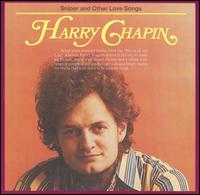
6. Cat's in the Cradle - Harry Chapin


This particular song is the epitome of a classical tragedy, for there is a great deal of irony, not to mention a certain painful lesson that is learned by the father in this tale. This tale of a broken father-son   relationship begins by foreshadowing in the first verse all that is to come; "And he was talking before I knew it, and as he grew he said 'I'm gonna be like you dad, you know I'm gonna be like you." The old expression; "like father, like son", has both a positive and a negative connotation. On the one hand, a child might imitate the virtues of his father, but if he does, he may very well imitate his vices as well. In this case, the prodigal father is breezing through life, setting as his first priority his own wordily success, but in the meantime he leaves little time for his son; "...But there were planes to catch and bills to pay; he learned to walk while I was away." In the next verse he continues this theme; "My son turned ten just yesterday, he said thanks for the ball, dad come on let's play. Can you teach me how to throw? I said not today, I've got a lot to do." The chorus consists of a loose array of nursery like images, culminating with a promise that apparently is never fulfilled; "When you comin' home dad, I don't know when, we'll get together then." The last two verses show the son doing the same thing as his father did (as he goes from college to having a family), and now he too cannot seem to "find the time" for his father. The tragic irony consists of the fulfillment of the son's words at the beginning of the song in a way that hits at the heart of the lesson. The story would be far less of a tragedy had not the father realized too late (presumably) that he had no one to blame but himself for this disconnect. Indeed, after his son gives him a laundry list of excuses as to why he can't see him, the father comes to a painful realization; "And as I hung up the phone it occurred to me, he'd grown up just like me; my boy was just like me."


5. Wish You Were Here - Pink Floyd


Many don't know the fascinating back story to this song. Indeed, most assume that it is about the mere physical absence of a loved one. But what the song is actually getting at is far more disturbing. One of two songs on this list about mental breakdown, Pink Floyd's, Wish You Were Here, concerns a former bandmate named Syd Barrett (he was originally the lead singer), who, due to excessive drug use and a profound disillusionment with the trappings of fame, fell into madness. From this perspective the words of the chorus "...wish you were here" take on a far more haunting tone; "Can you tell a green field from a cold steal rail, a smile from a veil, do you think you can tell... And did you exchange a walk on part in the war for a lead role in a cage." Sadly, the reality is even more tragic than the song suggests, for apparently when they were recording the album, he showed up to the studio unannounced- bald, overweight, and with his eyebrows completely shaved off. Initially no one recognized him. Eventually, however, someone queried as to whether or not this strange apparition was in fact "Syd". It is said that upon seeing him in this condition some in the band actually broke down and wept.


4. You Don't Bring Me Flowers - Neil Diamond and Barbara Streisand


You Don't Bring Me Flowers is a duet performed by Barbara Streisand and Neil Diamond about two spouses/lovers who can no longer communicate as they once did. The lyrics are written from both sides of the relationship, and express in heart rending fashion how each one knows that the other no longer loves them as they once did; "You don't bring me flowers. You don't sing me love songs. You hardly talk to me when you come through the door at the end of the day. I remember when you couldn't wait to love me, you used to hate to leave me." Like a married couple sitting across from one another at dinner- entrenched in an agonizing silence, so this song palpably communicates one of life's great tragedies; a love that has been permitted to die.


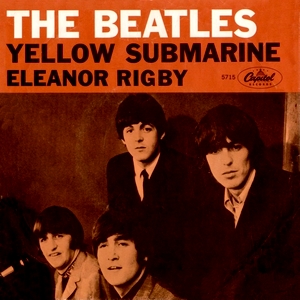
3. Eleanor Rigby - Beatles


A song penned mostly by Paul McCartney, this ode to "lonely people" is haunting if only for the fact that it is written about those people that no one writes songs about. The song revolves around a woman named Eleanor Rigby and a priest named Father McKenzie. What can be gleaned from the scant lyrical content is the fact that Eleanor Rigby is what they call a "church mouse", the sort of woman that haunts a church like a ghost. Oftentimes women like this are the de facto caretakers of a church and presumably "picking up the rice" was one of her many unnamed duties. The "rice" it would seem also represents the disparity between the loneliness of her life and the relative joy and comfort of the rest of us. But Eleanor is not alone in being alone, for there is also the celibate Father McKenzie who composes "sermons that no one will hear". There is not much depth in the lyric writing, but McCartney paints just enough of a picture to leave us pondering our own set of lonely people, and asking sorrowfully with him; "All the lonely people where do they all come from? All the lonely people where do they all belong?"      


2. Fire and Rain - James Taylor


Released in 1970, many have speculated about the meaning of this song. However, in several interviews Taylor has explained that the song was inspired by his personal struggle with depression as well as a close friend's suicide; "Just yesterday morning they let me know you were gone. Suzanne the plans they made put an end to you. I walked out this morning and I wrote down this song, I just can't remember who to send it to." Taylor had apparently been out on the road trying to make it in the music business, and his friends, out of a desire to prevent him from becoming too distracted, didn't tell him about her death for six months. What "plans put an end to her" one can only surmise, but if I had to guess I would say that  there were arrangements to send her away for some "treatment"; treatment that seemed to her, for whatever reason, worse than death. Speaking of treatment, another theme that is spelled out in this song is Taylor's own experience in a mental institution. According to an interview, the chorus is about his struggle with drug addiction, but more specifically about the shock treatments he received while institutionalized. Indeed, the "fire" that he describes in the song is not merely a poetical reference to one of his favorite elements, but rather a description of what it felt like to have electricity running through your body. The song itself is a haunting contrast to the spirit of the times, which sought to convince everyone that "free-living" and recreational drug use were the ultimate key to happiness. Mr. Taylor provides a tragic, but helpful, counterpoint.          


1. Same Old Lang Syne - Dan Fogelberg


If ever there were a sad song, this one is it. Whereas the "Boys of Summer" focuses on lost youth, this song is the icon of what lost youth looks like. Written by the recently deceased Dan Fogelberg (R.I.P.), this story is told with the frankness and straight forward lyric styling of a country song; "Met my old lover in the grocery store. The snow was falling Christmas Eve. I stole behind her in the frozen foods and I touched her on the sleeve." OK, it's not Shakespeare, but it makes the story far more believable. You have a girlfriend, you've got a little snow, you've got Christmas Eve, the only thing that's missing is a roaring fire. This could be the beginning of something good, right? "She didn't recognize the face at first, but then her eyes flew open wide. She went to hug me and she spilled her purse, then we laughed until we cried." So far so good. "We took her groceries to the checkout stand her food was totalled up and bagged. We stood there lost in our embarrassment as the conversation dragged." Hmm, sounds like the first sign of a problem. "We went to have ourselves a drink or two but couldn't find an open bar. We bought a six pack at the liquor store and we drank it in her car." This is the first clear evidence that something is amiss in this re-connection with his old girlfriend. There is a good reason that they "drink the beer in her car" (at least from her end)- the woman is married, so obviously she didn't feel comfortable going back to her house. Apart from the questions that could be raised about that, what sticks out most in my mind is how depressing the image of two older adults drinking a six pack in a car is. It is something a bunch of teenagers might do for lack of a better place to imbibe. At any rate, this is consistent with the disillusionment expressed by the woman surrounding her loveless marriage, as well as, he, the musician, who "never had the time to settle down." Nevertheless, as the chorus explains, they are both grasping and groping after some long forgotten sense of romance; "We drank a toast to innocence. we drank a toast to now. We drank to reach beyond the emptiness, but neither one knew how." There is something of the sorrow of all mankind in these words, that sense of life passing you by, that sense that you have lost something that you can never get back, that awareness that even reenacting those old times won't bring them back. Perhaps if one wants to see a glimmer of hope in all this, one should realize that what makes us ache when we experience something like this, is the very thing that suggests that the ache has an antidote- even if that antidote doesn't come in this life. And then as if to put the final dagger in the heart of the listener, Fogelberg writes this last devastating verse; "Our beer was empty and our tongues were tired, and running out of things to say. She gave a kiss to me as I got out, and I watched her drive away. Just for a moment I was back at school, and felt that old familiar pain, and as I turned to make my way back home, the snow turned into rain..." Each line of this last verse could be discussed in detail, but for me the line that is most characteristic of this feeling of loss, is the last one. As a child I loved snow, probably in part because it happened so rarely in the south. Nevertheless, whenever it snowed it was to me like little flakes of manna falling from heaven; it was miraculous. By contrast, the ultimate image of my childhood dreams being dashed was that terrible, almost apocalyptic moment, when the snow, due to rising temperatures, would change back over to rain.


Honorable mention goes to Simon and Garfunkel for "The Boxer," Tracy Chapman for "Fast Car," Billy Joel for "Captain Jack," Mike and the Mechanics for "The Living Years", Phil Collins for "Against All Odds," Skid Row's "I Remember You", and "Circle" by Edie Brickell and the New Bohemians. 


Thursday, June 14, 2012

How MTV (Music Television) Ruined Music on Television


The first video ever to be played on Music Television (a.k.a. MTV) was called Video Killed the Radio Star. Though somewhat prophetic, this illustrious Buggles classic was ultimately wrong. Video did not “kill the radio star;” video killed music. What began as an avenue for bands to successfully promote their music, and on occasion even the music’s content, eventually turned into one long music video without the added benefit of music. In its infancy, the music video was relatively innocuous, showcasing bands with ridiculous hair, silly song lyrics, and sets that resembled a Jackson Pollock canvas. At its best, the video even augmented the music, using the images as a means to further explicate the song.

Soon, however, the music took a backseat to the visual spectacle- serving merely as a convenient tool to showcase the artist’s latest provocative pose. This allowed the musician to take a two-pronged sales approach. Whereas the song may have been about nothing, you could still fill the video with a bunch of scantily clad women romping around looking sufficiently purposeful. Thus, if it doesn't sell for the quality of the music, you can at least grab them for the sex. This division in the soul of music could only mean that the music itself would ultimately be forgotten in the endless flood of images.

The pop star Madonna is most indicative of this paradigm. Throughout the 1980s, no other singer/songwriter - save Michael Jackson - drew more attention than she. One of the reasons for this attention was her clear insight that one need not depend on the genuine content of the music in order to sell the product.Yet it was not her music style alone that garnered her the majority of the attention. Indeed, it was also her penchant for being “shocking” and “provocative.”

Ironically, if one were only to read her song lyrics (with a few notable exceptions) one might get the impression that she was nothing more than a relatively wholesome pop star. However, “wholesome” is the last thing that comes to mind when one considers her musical repertoire. What does come to mind is her proclivity for using Catholic symbols as sexually suggestive props; what does come to mind is her use of St. Martin de Porres, a Gospel choir, and lingerie to say God knows what; and what does come to mind is a seemingly innocent love song that devolves into a story about a young boy trying to sneak into a finely choreographed peep show. At any rate, she did accomplish one thing that few other artists can claim; she managed to turn a name that was formerly associated with holiness into something that can only be classified as blasphemy.   

Based on the success of Madonna and other video provocateurs, MTV unveiled in the early 1990s a new concept in video entertainment, a concept that it hoped would introduce new life into a format that had grown increasingly stale. This “fresh format” consisted of removing all of the unessential elements of the music video (i.e. the music), while at the same time maintaining all of the essential elements (i.e. the voyeurism). The Real World, as it came to be called, not only proved to be a success in its own right, but would ultimately usher in the age of so-called “reality television.” In an ironic twist, however, it would be this innovation, appearing on Music Television, that would ultimately mean the end for music on television. As a matter of fact, if you were to turn on MTV today (or VH1) you would discover very quickly just how rarely music is played. It was for this reason that the producers of MTV created MTV2, which then proceeded to do the same thing that the former did. Both channels now consist of shows that either feature some adolescent prankster (who is not adolescent), or some series glorifying teenagers doing everything that we wished they wouldn't.         
             
But to focus on music videos alone would be to miss the whole point. The truth is the eyes hold a disproportionate place in the hierarchy of man's senses, and unless men learn to shut them, they will never learn the virtue of the other four. Perhaps this is why God has given us eyelids, for without them, our mind, heart, and body would never be able to rest properly- either via the physical rest of the body, or the spiritual rest of prayer.

Thursday, June 7, 2012

11 Steps to Success at College


The university system today has, in many respects, lost its head. Consequently, the goal of this post is to explain to soon-to-be college students just how to avoid losing their own. Since the dawn of the university in the High Middle Ages (such a backward time) there have been students who were more interested in partying than academic rigor. Not much has changed since then. However, what has changed is the part that the universities are playing in this behavior. Whereas in former times the student had to use creative means to break the rules, today's university practically holds the students' legs as they do a keg stand. The freedom that college affords is a challenge to any young man or woman's previously held moral values. This of course is not a bad thing in and of itself because every child must eventually learn how to govern their own life. What is not good is that our universities, which receive so much of our money, should serve as such a stumbling block, not only to our child's moral development, but even to their intellectual growth- which, I thought, was the reason for its existence in the first place. From condom distribution, to co-ed rooms and bathrooms, to on campus parties involving drug and alcohol abuse; it would appear that, far from discouraging such behavior, our universities have actually gone out of their way to make it easier. If the student is so bent on getting intoxicated, let him or her do it off campus, but as it is they are not even forced to leave the confines of their own rooms to get lit. "Well at least they're safe on campus." Are they? What is most vexing about this trend is why it would behoove these universities to facilitate such behavior when they are precisely the type of situations which beg for some sort of lawsuit. Oh well, my ranting is probably lost on administrators, but hopefully it is not lost on students who do desire some degree of sanity amidst the Animal House-like world that awaits them at college. For those who have ears to hear, below I have listed what I deem to be the most essential ways to thrive at college. Please do not assume because I have failed to mention everything I could (i.e. not cheating, getting enough sleep, eating well, etc.) that I deem them unimportant. Clearly all of those things are necessary for obtaining a good education, nevertheless I have chosen these specific examples in order to highlight certain personal insights I gained while doing undergraduate work at UNC-Greensboro and UNC-Chapel Hill. Incidentally, I am presenting this from a Catholic point of view, so some of these may need to be adjusted according to your own frame of reference.


11. Go To Class

I remember my first year at college- a friend of mine used to tell me to wake him up for class in the morning (we both had the same class). He went about fifty percent of the time, and on one occasion he even missed a test because he decided to sleep in instead (they don't do make up tests in college). This guy was decidedly smarter than I was, but by the end of the first year he had a 1.7 GPA. The truth is he was smart enough to get away with it in high school, but at college, without a mommy to get him up in the morning, write him an excuse, and wipe his little chin, he had not the wherewithal to do the minimum on his own. At college, I viewed attending class as a kind of lowest common denominator path to success. If I did nothing else, I promised myself, no matter how late I stayed up, that I would not miss class the next day. If I wanted to succeed at all, I had to be at least disciplined enough to show up for my classes. That is at least half of the battle when no one is there to force you to do anything. Indeed, not only is it worthwhile from a practical standpoint (99% percent of what's on the test generally comes from the notes in class), but it is the simplest and most basic way to keep your mind and body disciplined and oriented towards goal of getting a good education.


10. Introduce Yourself To Your Professors

Of all the practical advice I can give, this little nugget is in some ways the most mundane and superficial of them all. Nevertheless, it is an important lesson for distinguishing yourself in a crowd of nameless faces. Do not underestimate the value of your professor putting a name with a face. Beyond introducing yourself, be sure to ask him or her a question about the material. This will establish two things: the teacher will be flattered that you took the time to further inquire into what they were teaching, and secondly, it alleviates some of the alienation that can occur between both student and teacher in some of those large freshman 100 courses. My general experience was that anytime I was active in class, coupled with the professor knowing who I was, this made a notable difference in my grade. Even in the  classes where I had disagreements with the professor, my grade was usually about a letter grade higher than my test scores suggested. That doesn't mean that you should be overbearing, or appear to be stalking them; it only means that in a very basic way it is good to let them know who you are.    


9. Remember Who's Paying For It And Why

The key to any real happiness in this life is gratitude. If you want to be miserable instead, become an ingrate. Presumably most people want to possess the former. In any case, gratitude is not merely some vague sentiment of thankfulness- it involves a real response- a desire to in some way make a return to the one whom you claim to be grateful to. You may claim to be grateful that your parents have spent all of this money to send you to college, but what evidence is there for that? If you get to college and behave like a slack sloth, it doesn't matter how grateful you feel, you are in truth an ingrate. There is however an easy way to remedy this. You can show gratitude to your parents by working hard and excelling, not merely at the art of napping, but in striving for academic and personal excellence.


8. Set Clear Ground Rules With Your Roommate

Whether or not you are rooming with someone you know or not, you will both need to lay some ground rules the first few days. Do not believe that because you are friends with a roommate beforehand that you are absolved of this duty. Much can happen in a year at college that can quickly work against this presumed harmony. Whether their values change (or yours do), and you/they start hanging out with a different crowd, there are any number of ways this can go afoul- from boyfriends or girlfriends always hanging around the room, to bad hygiene, to alcohol and/or drug use. Indeed, such communication is indispensable. The room must be a place of common ground, not a place where rage and anger build (and they do). Set up some clear ground rules. Devise a system wherein you can discuss, not passive-aggressively, what is eating at you. I am not saying this because I succeeded in this regard, I am saying this because I failed at it. My roommate my first year of college used to wake up in the morning and smoke pot. My second roommate that year (because I thought I could solve the problem by changing roommates) was an athlete who, when I awoke in the morning, would be lying in bed with some random girl that he met the night before. Later I roomed with a friend of mine from high school, who I foolishly believed would be better than previous roommates because we were friends in high school. He was not. He spent most of his time smoking pot, snorting Ritalin, and when he wasn't doing that he was obsessing over a girl, and creatively and quickly turning our kitchen into a disaster area. Whenever it was his turn to take out the garbage, he often let it pile up in the kitchen until I couldn't take it any more and was forced to do it myself. About half way through the year we tried to agree on some ground rules, but by then it was too late. So I know what it means to avoid conflict, I also know what it means to suffer the consequences of that avoidance.


7. Don't Measure Your Behavior On Those Around You

It is incredibly easy to start canonizing yourself when you compare your own behavior to that of others. However, you should resist this temptation at all costs. I can still remember trying to appeal to one of my friends in college about her rather "loose" behavior, to which she responded; "... but I'm a good person". First of all, compliments are generally better served when they come from other people, nevertheless I suppose what she meant by the statement was that she was generally nice to people and that she hadn't murdered anyone lately. That mistake is understandable, especially when one compares one's self to a drug addict or a death row inmate. The question she didn't ask herself was why she would have any reason to be anything but nice to people that are friendly to her (as are the pagans). In other words, why would she have any reason to steal, when her parents provided her everything, and why would she have any reason to kill, when no one threatened her life. God does not measure us on the standards of our neighbor, because we are not our neighbor. Do not pat yourself on the back because "at least you go to church once a month" when everyone else doesn't go at all. In your case God may count the two as equivalent. And do not pat yourself on the back because everyone else is promiscuous, while you at least only have one sexual partner. God knows it is easy to do this, especially when it seems that there are so few around you that even consider the value of chastity. I remember struggling with the same question amidst the miasma of my early college days- when a friend of mine, who incidentally was the same young woman that I mentioned previously, asked me why I was making such a big deal about sex. It was, in her opinion, a pleasant, if meaningless, transaction between two consenting parties. The point is- it is very difficult to measure yourself when what surrounds you is so fundamentally incommensurate with your Catholic Faith. In such an environment it is quite natural to begin to wonder whether truth is indeed relative after all. Am I the one who is crazy, or are they? Is there any such thing as Truth? It is for this reason specifically that Christ has left us an immutable standard- a rock- amidst the shifting sand of college.


6. You Need Solid Friends In Order To Remain Solid Yourself

When you get to college you experience a form of insecurity you haven't experienced in years. Consequently, you may be tempted to present a version of yourself that is not exactly consistent with who you really are. As for myself, I tried to cast myself somewhere between the grunge movement and the Grateful Dead. I even avoided washing my hair for days on end in the hope of giving it that really wonderful oily/grimy look. But whatever the situation, there is a major difference between trying to  figure out your identity and looking to change it. Without a doubt the friends that you choose to associate with will define whether or not you grow in your years at college, or whether you stagnate. If you choose the better portion, then you need to prepare yourself, especially early on, for some feelings of isolation and loneliness. It may initially be difficult to meet other individuals who share similar values. This can be a real source of temptation for one who is trying to stay on the right path. Obviously, the degree of difficulty here will depend largely on the type of school you attend. At any rate, presuming that you are trying to meet the right people, it may require some real fortitude and patience. All the same, do not believe that you can somehow keep your faith and your friends separate, especially where there are profound contradictions. Eventually both allegiances will demand a decision, wherein you give one or the other the place of greatest prominence in your life. The easiest thing to do (though not the easiest morally) is to try not to lead a double life, but rather to stay true to what you know to be right, and if anything should pull you from that, get rid of it. This does not mean that you need only hang out with some puritanical, tea totalling, Bob Jonesian, dream killer. But it does mean that your relationships should have a distinct character to them. First, they should be centered around mutual interests that go well beyond the party scene. If you base your friendships primarily on your mutual affinity for parties, you can be assured that your friendships will be shallow and fleeting. Base them on things that really matter to you.  Secondly, as much as possible, find individuals, groups, and/or organizations (i.e. the "Newman" Center) that are like-minded. There is plenty of opportunity for "diversity" at college. What you will need in order to sustain you is some real solidarity. Simply put, if you try to maintain your faith and values at college without this kind of companionship you will most assuredly fail.


5. Develop Interests Outside The Dorm Room

One of the most dangerous vices that one is tempted to cultivate at college is the sin of sloth. Now immediately when I say this, one may be led to think of academic laziness, which is true enough, but in this particular instance the emphasis is on a general inactivity. Much like a high schooler who is the beneficiary of a tremendous amount of leisure wealth, too much free time spent inside the walls of a dorm can start to turn the mind towards unsavory things. In such a circumstance an individual knows that he must give his mind, body, and soul a little fresh air. Either a man (or woman) will transcend those walls in a literal sense, or they will seek to fly through them with some sort of intoxicant (for some that "intoxicant" may include pornography). For obvious reasons, the latter expedient can quickly become the most popular alternative. The best and healthiest way to get some fresh air for the mind is to develop some real and substantive interests. One can develop these interests in any number of ways. Perhaps the simplest and most basic way is to look at the things that you are already interested in- exercise, movies, art, faith, music, friends, etc. You need not reinvent the wheel here. Maybe there is something you always wanted to learn about, but formerly never had the time or opportunity to explore. Now is the perfect time. The more that you have something real going on beyond those dorm walls, the less apt you will be to reduce yourself to a mindless- inebriated- coach sitting- lemming.


4. Resist The "Binge" Mentality

If you find yourself bragging about the amount of alcohol you have consumed, or declaring shamelessly to everyone just how "wasted" you are, then you can be assured you are going in the wrong direction. It is one of life's great mysteries that some feel it necessary to publish their shame, or at minimum, publish the fact that they have a consumed alcohol in large quantities as if they were accomplishing something. You sir have climbed the heights of inebriation and have returned to tell us the harrowing details. Now we wish to reward you with a great medal of honor for sacrificing your body for so noble a cause. Well done sir! You are truly a real man of genius! Any idiot can drink alcohol, so don't go around patting yourself on the back for standing/sitting around drinking all night. What would be a real achievement is if you actually did something with your time as opposed to high fiving yourself for getting loaded. This is not to say I am against alcohol altogether, what I am against is the worshipping of the silver keg like it's a golden calf, and the substituting of real friendships for nights and people that you can hardly remember (nor care to). In such a superficial setting, the people are generally interchangeable, and the memories like an impressionistic painting, are pleasant at a distance, but up close are vague and formless. Moreover, in this world of strange gods, one finds one's self considerably less inhibited when it comes to compromising one's ideals. To those who wish to be truly great, do not descend into the bowels of this kind of abyss, for the exit can be remarkably hard to find. Once you go down this road, it is more than a little difficult to return to the days and nights that (however falsely) seem drab and boring by comparison. I do not mention drugs in this particular example because the advice I offer is based on managing your life at college, and drugs are not manageable at all. If in this way you choose to turn your body into some living lab experiment, then you are not only jeopardizing your life, but your soul as well.


3. Avoid The "Hook Up" Culture          

By "hook up" here I do not mean sexual intercourse per se, but rather the general act of "making out" or "fooling around", which I suppose would involve just about everything else. There is an obvious connection between this and the previous one (viz. alcohol) because they oftentimes work hand in hand. Alcohol serves as a useful tool for anyone trying to lower their standards. In fact, what alcohol does is to essentially tie up and bind your conscience, so that it dare not interrupt you while you are engaged in the act. It can scream, but since you've consigned it to the basement of your being (where a little muffled screaming isn't going to wake up the neighbors) you can go about your pillaging without too much distraction. What concerns me the most about alcohol is not so much that it inebriates those who drink it, but the peril that generally accompanies that inebriation. Like sex, when alcohol is misused, it is highly flammable. If one is drinking a glass of wine with their family at a Thanksgiving dinner that is one thing, but it is quite another to get schnockered at a fraternity party and then stumble around aimlessly until you ultimately pass out in some stranger's room. I say this especially to girls, for they are the ones that usually put themselves in the gravest danger by doing this. You could fill volumes of books with stories of sorrow and dismay on the part of women who wake up only to discover, much to their horror, that some stranger is there beside them, or even worse, that some stranger (or acquaintance) has violated them. In either case, the woman is violated. If you go into a house with strangers, the last thing you should do is to chemically deactivate your good senses. Strangely enough, there are some who do want their good senses deactivated. They do this in order to give themselves a pretext for their bad behavior. Of these I can only say, if you can't bear to do the same thing while sober, then let that be a sign that you shouldn't be doing it at all. Indeed, how will you ever learn what true love is if you go about treating people like disposable napkins. Be assured that such behavior will not only render you incapable of intimacy in the short term, but it may in fact turn you into an emotional cripple for the rest of your life. Once a man or a woman begins to degrade themselves and others in such a way, it is incredibly difficult, if not impossible, to simply flip the switch of love and intimacy back on again. As for those who require no anesthetic for their behavior, I can only lament that they have already gone so far down that road that they no longer even require being in an altered state in order to degrade themselves.


2. Commit Yourself To Chastity

This particular bit of advice is more positive than the previous, for it involves not just discussing the "hook up" culture at college, but the question of how and why one should maintain their integrity and purity amidst all of this moral anarchy. First of all, chastity involves far more than simply "not doing it". It refers to the right and proper ordering of our sexuality, including avoidance of images or situations that only lend fuel to the fire of our lust. But chastity is not merely good from a religious standpoint, but it is likewise practical when it comes to navigating the often disorienting and strange world of college relationships. When one commits to this way of life, things become instantly more clear in relationships. When sex and hooking up are all a part of the equation, the truth of the matter can quickly become muddled. By contrast, when one commits themselves to chastity there is far less ambiguity. For instance, when you look at  romantic relationships as primarily oriented towards marriage, you no longer are willing to dally around with those meaningless flings. I don't care how attractive someone is, if they are dull, the relationship will get old pretty fast. Secondly, these type of sexual relationships are the perfect way to get yourself stuck in one those long meandering relationships  that can steal the best years of your life from you (if not all of it). Indeed, you may wind up stuck with someone you would have broken up with long ago were you not involved in a sexual relationship with them. Sex, after all, is not inert, nor is it disinterested, it unites the flesh of two individuals in such a way that their respective bodies actually believe themselves to be bound to the other. Do not believe that you can unite yourself with someone in this manner and then just walk away. Those who can do so are only capable because they have so abused it that they have stripped the adhesive lining endemic to this kind of relationship. The result? They can no longer experience real intimacy, for they can no longer "adhere" to another. On the other hand, the man that does not allow himself to get dragged down into this pit of mediocrity, can see much clearer to know if a relationship is lasting or not. He is free to come and go from the relationship without any further implications. After all, he does presumably desire sex (among other things), therefore he is certainly not going to waste his time on a relationship that is not potentially headed for marriage. If he is chaste, he will know very quickly whether or not there is more to the relationship than just physical attraction. When sex is taken out of the equation the emphasis then  shifts towards more lasting concerns. Indeed, when sex is not an option, the question then becomes can I stand being in the same room alone with this person. For a woman it is the simplest way to test the mettle of a man, because unless he is truly interested in you for you, he is not going to wait around too long. This may seem cold, but it is true nevertheless. And last of all, chastity is of course a good idea because no one who is chaste has the additional worry about pregnancy and diseases- both of which can profoundly shape your destiny. As a side note, I am not suggesting that a child is similar to a disease, only that these two consequences of sex represent the greatest sources of fear for the two tangoing parties. Some may suggest, as do the universities that a healthy diet of contraception will solve this problem. Contraception as solution is like providing a bullet proof vest to someone who is [for the fun of it] engaging in a gun battle (which seems an appropriate metaphor considering all of the bellicose language that "protection" advocates employ). In some respects you may in truth be more "protected," but the question is: why have we allowed ourselves to be placed in harms way in the first place, when with less effort, we could have avoided the conflict altogether? How is it that those who are supposed to be concerned for our health, have practically lead us by the hand out onto the front-lines of the battle? You may have on a bullet proof vest, but you can still be shot in the head.


1. Never Stop Praying

Even if you were to ignore all of the previous suggestions, do not ignore this one. Rather than offer some vague commendation about praying at college, I would like to offer a specific regimen. Just as it is important to make rules for yourself about going to class and studying- so the same can be said for the spiritual life. The first day you are on campus (or preferably before that) find out the location and the times of the Masses. I once had a former student tell me, I have no way to get there. I said to him "if it is important enough to you, you will find a way." Soon after telling him this, by the grace of God, he found a ride. Even at the most secular college there will inevitably be other Catholics that can help you in this regard. Just take the initiative and ask. Do not miss Sunday Mass at any cost. Suppose you have behaved in a way that renders you unable to receive communion that day; still go. Let this practice be a rock of stability amidst the shifting sands of college life. Secondly, establish a time of the day (one that doesn't change) wherein you say some traditional prayer of the Church. You might say the Angelus at noon, or the Divine Mercy at 3:00, or it could be a decade of the rosary (at bottom, at least say the prayer at some point during the day). It need not be any more than a minute, but it must never be neglected. And lastly, wherever you go, keep some significant religious object in your pocket. This may sound strange, but in college it was my way of bringing Christ with me wherever I went. The object that I brought was a rosary and whenever I felt tempted by a particular situation, I would hold the rosary in my pocket and pray Hail Mary's to myself until I received the grace and strength I needed to do the right thing. On one occasion, I made plans to see an old grade school flame that I hadn't seen in years (it was a one shot deal), and when I saw her she was even more attractive than I remembered. At the same time, three things became immediately apparent to me: she was interested in me, she didn't have too many moral inhibitions, and I was rather tempted by the situation. At any rate, I started clutching my rosary and praying Hail Mary's to myself in any free moments that I had. The next thing I knew, as if from some unknown reservoir of grace, I found the strength, not only resist the temptation, but to gracefully shift the conversation to more meaningful things. This is not to say that one should purposely go into the lion's den as long as you bring your rosary. No, by all means, if you know that you will be severely tempted by a given situation, do not put yourself in that situation in the first place. If you do so and something happens, you are certainly guilty for what happens, you cannot claim innocence because you didn't specifically plan for it to happen; "... we were lying there on the bed talking and then one thing led to another, I really didn't mean for it to happen." Maybe, but you certainly provided the perfect conditions for it to happen. In theological terms this is called the "near occasion of sin", or as I like to call it the N.O.O.S. (because it is a little like putting your head in a "noose" and wondering why something bad happened). It is like a man wandering out into the battlefield, who is then surprised that he gets shot. Nevertheless, if you do find yourself in these situations through no fault of your own, or even if it is your fault, don't give up, ask God for his help. You will be surprised at just how talented our Lord is at saving us humans in such dire situations; that is if we want to be saved. But no matter how many times you fall, do not shut God out, do not think that you are somehow beating the system by pushing Him away. Even if communicating with God only means fighting with him, or saying "I can't even look at you right now," never let go of this line of communication. Hold onto it as if your very life depends upon it... because it does.


This post is dedicated to St. Joseph's Class of 2012                        


Friday, May 25, 2012

6 Songs On The Topic Of Atheism


The writer G.K Chesterton once commented that the saddest moment for the atheist is when he is thankful but has no one to thank. Yet in a very odd way their desire to "thank" in itself is a sign of the existence of God. In other words, is it really possible for a man to desire to do something which is utterly impossible? Can a man desire a thing (or even dream about something) that is beyond the realm of all possibility? Does this cosmic orphan (who is man) long for a Father which, as it turns out, does not in truth exist? And if there is a God, then why is there so much evil in the world? These are some of the interesting questions I will explore as we look at songs which possess atheistic themes. One thing is certain, the individuals highlighted in this survey certainly possess strong opinions about "Nothing":


6. What If God Was One Of Us - Joan Osbourne


As with most of the songs on the list, it is not atheistic per se (after all, a song about nothingness is not very enticing, if such a thing is even possible). What you have here instead is a rather populist push against His general way of doing things (or not doing things); "What if God was one of us? Just a slob like one of us? Just a stranger on the bus trying to make his way home." Has anyone told Joan about the Incarnation, or the fact that Jesus was indeed lower than any "slob on the bus", seeing as he began his life homeless? Nevertheless, some may counter that Joan is simply asking important questions, and not intending to be sarcastic. I cannot read her mind on these matters, but I can read her lyrics (as well as her superior preening in the video); "Yeah, yeah, God is good. Yeah, yeah, God is great!" This might make me the cynical one, but the mocking tone that she uses for these phrases would seem to suggest to me that she means it ironically. Probably the silliest and most awkward line in the song is when she tries to weave the Church into the discussion; "Nobodies callin' on the phone, except for the pope maybe in Rome." I am no grammar expert, but I am pretty sure that don't work. Apart from that silliness, there is a critical question that she does raise. Indeed, it may be the most interesting thing in the whole song; "If God had a face, what would it look like? And would you want to see, if seeing meant that you would have to believe, in things like heaven and in Jesus and the saints and all the prophets?" Fair enough, some people don't know if they would want to believe, particularly if believing means accepting what the Church teaches. Now whether or not we think this a good thing, there is a real question here. What is being described is an individual looking over the great divide between belief, and not so much atheism, but rather the deeper question of whether or not one desires to know the answers, especially if those answers are something in retrospect we would prefer not to have learned.        


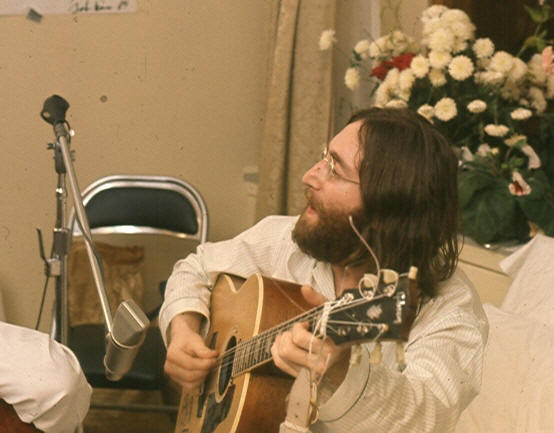
5. God - John Lennon


Whether Lennon intends it or not, a number of his songs reveal in a nutshell what happens to an individual when they cease to believe in something. Lennon is the poster boy for modernity in this song. Whereas "Imagine" comes at the subject from a more Buddhist/Marxist perspective (an interesting combination), this song approaches the subject from a purely Cartesian perspective. In the chorus (if you can call it that), he pronounces all of the things that he doesn't believe in; from the Beatles, to Kennedy, to Jesus. He then concludes by declaring that the only thing he does believes in is "me". And then as if recognizing just how utterly selfish and solipsistic this sounds, he adds, "Me and Yoko". In the beginning of the song, he similarly highlights this Cartesian notion by declaring "God is a concept by which we measure our pain." Once again, according to Mr. Lennon really the only thing that exists are concepts like God- that incidentally have no reality- and concepts like John and Yoko, which apparently do. Besides a genuine sense of skepticism at everything that he had apparently once believed in, there is also a very palpable sense of anger and bitterness in his voice. This supposed nothing feels a lot like something. Indeed, he seems more passionate about the nothing than the something. It reminds me a little of a child who in the midst of a fight with his parents either holds his breath, or averts his gaze so as not to even look in the direction of his parents. Certainly in this case no one would concede that such a child does not believe in his father or mother.


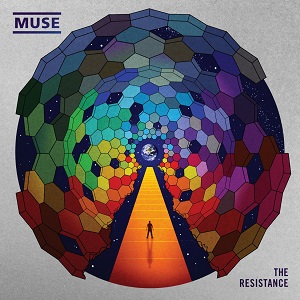
4. Thoughts Of A Dying Atheist - Muse


What puts this song on the list, other than the title, is its straightforward storytelling. In the narrative, there is no attempt to convince the listener that this individual is seeking some greater meaning, or praying indirectly for some kind of divine intervention. Rather, as the title suggests, these are the final thoughts of a dying atheist- not from the perspective of some well-meaning Christian, but from the atheist himself. The songwriter lets the atheist's own experience speak for itself rather than turning it into an occasion to be preachy; "Eerie whispers trapped beneath my pillow won't let me sleep, your memories... scares the hell out of me, and the end is all I can see... Looking through a faithless eye, are you afraid to die?" Frankly, there is not a whole lot here to draw from lyrically, however, what I most appreciate about this song is the gloomy feel of it, along with its artful attempt to place us in the room of a dying atheist. The listener is ultimately left with the only real question that is worth asking, namely; "Does the dying atheist wish that there was a God?" And "what are the final thoughts of an individual who believes that there is nothing beyond death?" A great question, and I'm glad the songwriter only gives us a hint of what that might be.


3. One - Metallica


This song is not technically about unbelief, but it, along with the subsequent video, do seem to provide the necessary conditions whereby some might naturally argue that there is no God. I can still recall seeing the video in my early teens and being more terrified by it than I was by most horror movies. The video uses excerpts from a movie released in the early 1970s called Johnny Got His Gun, detailing a young man who goes to war inspired by patriotism, but returns home horribly maimed. As a matter of fact, he is so maimed that he has lost his arms, legs, eyes, ears, and mouth- leaving only his functioning mind; "I can't remember anything. I can't tell if this is true or a dream. But deep down inside I feel this scream. This terrible silence stops me... Fed through the tube that sticks in me. Just like a wartime novelty. Tied to machines that make me be. Cut this life off from me... Hold my breath as I wish for death, oh God please wake me." As fatalistic as this may seem, the listener cannot help but to ask himself two important questions;  a) should any man be forced to live under such conditions (he is so incapacitated he is not even capable of taking his own life) and;  b) if God does exist, then how could he allow anyone to endure something like this. I cannot say whether or not what is depicted in the song and video are based on any actual events, but even if they are a little exagerrated, they do inspire a sentiment that is popular in atheistic circles; "God doesn't exist, but even if he did, he has a lot to answer for". The so called problem of evil may be an occasion for questioning the ways of God, but as popular as it is for atheists to criticize the God that they don't believe in, it is not really an effective argument against His actual existence. There are two errors of logic in this assumption; the first involves an invective against a non-existent being, and the second involves a moral argument (i.e. calling God wicked) when they themselves deny the very basis for calling anything moral in the first place. I do not deny that the song raises some serious questions about why God would permit such things, but nevertheless if we do go so far as to apply a moral term like "wicked" or "evil" to something, we must also acknowledge that we are implicitly recognizing that God exists. Indeed, our mere outrage at the apparent injustice described above in itself suggests the reality of a a higher Justice.


2. Blasphemous Rumors - Depeche Mode


For the atheist there are really only two arguments against the existence of God. The argument that science and rationality can answer everything we need to know, and the equally common idea that if by some chance there is a God we should demand an account of His actions. The problem with atheism from this standpoint is that it attempts to deny that there is a reason for existence by using reason. Indeed, they deny that there is morality by arguing that God is immoral. Thus the outrage of the atheist comes off as a little disingenuous. This Depeche Mode song is no exception; "Girl of sixteen whole life ahead of her. Slashed her wrists, bored with life. Didn't succeed, thank the Lord for small mercies." Like the former song there seems to be a question about whether the singer truly believe in God and rejects him, or is cynically rejecting certain pious sentiments that stand in the way of the reality of the situation; "Fighting back the tears, her mother reads the note again. She takes the blame it's always the same she gets on her knees to pray." As is likely apparent to most, there is an incredible amount of cynicism in these words. He thanks the Lord for "small mercies", implying in an almost sinister fashion, that God was responsible for this girl's boredom as well as keeping her alive (who incidentally would be better off dead). After that, he points to the mother who is obviously shattered by her daughters attempted suicide, and then comments dismissively that it's "always the same," and that she "gets on her knees to pray." Once again, there is mention of God and religion here, but not in order to suggest hope, but rather as a means to suggest that there is no hope, and even if there is- one should not fall for that predictable pathology of turning to God for his so called "mercies". The chorus confirms this previous suspicion; "I don't mean to start any blasphemous rumors, but I think that God has a sick sense of humor. And when I die I expect to find him laughing." The first line is the musical equivalent of beginning a sentence with the phrase "With all due respect...". We know that whatever follows can't be good... and indeed we are not disappointed. We are told in essence that all of this is part of God's wicked plan and- to make matters worse- he is actually in stitches over all of this misery. In the second verse, she appears to have "given her life to Jesus Christ" but that does nothing for her because she gets in a car accident and is put on life support. It is difficult to tell whether this song is a passive-aggressive attempt to get under God's skin, or just a clever way to dismiss the human tendency to look to God for an explanation for our pain. My guess is it's probably a little of both.


1. Dear God - XTC


Of all the songs on the list, this one is most telling in regard to where the atheist is coming from. What makes this song particularly sinister (even though we know that evil doesn't exist... right?) is the fact that the piece begins and ends with a child singing; "Dear God, hope you get the letter and I pray that you can make it better down here... But all the people made in your image see them starving on their feet, 'cause they don't get enough to eat from God. I can't believe in you..." Part of the video and the song are played in reverse, which increases the creepy factor. One expects a child's voice to embody innocence and trust, what you get from this child is neither one nor the other. At any rate, the first verse really does reveal everything that you need to know about the designs of these so called atheists. As a result of this song, and the others before it, I am led to a stunning conclusion: atheists do not in truth exist. In fact, I should write a song called "Dear Atheist... I don't believe in you". Why do I say this? In short, could there be any greater irony that someone writing a song about how they don't believe in God, while spending the entire song ranting about that God. I take that back, actually- there is a greater irony. It is the song "Ironic" by Alanis Morissette about ironic things that are not ironic at all- but I digress. It is relatively obvious that this songwriter does believe in God simply by virtue of his blatant bitterness towards Him. But more than that, there is a very subtle, but clear, statement that is made in this song; a distinction which seems to highlight the difference between not believing in the existence of a God and not "believing in him." More to the point, how can someone declare to a non-existent being- while addressing them directly- that you don't believe in them. Technically you can't, but you can if what you mean by this "I don't believe in you" has less to do with a being's existence, and everything to do with a rejection of what that being stands for. In other words, I can tell someone that I don't believe in them without denying their literal existence. As Scripture says; "Even the devil believes in God" (James 2:19), though obviously that doesn't imply that he actually "believes in him".  


In a certain sense this list reveals a kind of Pascal's Wager. The question is does one follow their misery all the way down into the pit of despair, or does one fight like Job against all that seems unjust and unfair in this world. Of course, we cannot merely be complainers along the way (like Judas), we must do something to mitigate the injustice that we see around us. Interestingly enough, it is not usually those who devote their lives to service and charity that find that life has no meaning, rather it is those who tend to do nothing but complain about it.  


Sunday, May 20, 2012

The Book of Job Set to Popular Music


The problem of evil can be stated in this way: if God is all powerful and all good, then how can evil exist? This must mean that either God is not all-powerful, not all-good, or some combination of both. I would not dare presume that I could answer something so profound and ineffable as the mystery of why "bad things happen to go people" (only the cross can begin to do that), but what I do offer here is a list of songs which, in different ways, address the problem in the only way that it can be done without it coming off as trite or simplistic; with stories and images that embody the strange manner in which we encounter God in our suffering and doubt. The fact is the cross did not take away death and suffering, what it did was change the significance of death and suffering. And so the songs below explore the paradox of why God chooses what is most inglorious to reveal his glory, and why our greatest source of doubt often becomes an invitation to the beatific vision.            


5. Show Me How To Live - Audioslave


What makes this song so interesting is the fact that it combines a heavy sound with lyrics that possess a Job-like desperation. The lyrics fit the style of music. In this piece, Chris Cornell has found God, but he doesn't sound all that pleased with what he has found. However, the gist of the song is not one of complaint so much as a demand for action from his Creator; "Nail in my hand from my Creator, you gave me a life, now show me how to live!" He is obviously not agnostic in his sentiments, and is in fact imploring God to show him what his vocation is, though he probably wouldn't use that kind of language to describe it. "And in the early dawn moving right along couldn't buy an eyeful of sleep. Built with stolen parts, a telephone in my heart, someone get me a priest. To put my mind to bed, this ringing in my head, is this the cure or is this the disease." This isn't the poem the "Hound of heaven", but it certainly has a similar theme. God is like that hound, that telephone, spurring us on, and sometimes it is really annoying, and sometimes we are not necessarily keen on what He seems to be saying to us. In point of fact, the anxiety comes precisely from the idea of being called and not knowing what we're being called to. In the case of Chris Cornell, he finds himself considering that a priest might be able to help him with this, though in classic rock n' roll style is somewhat skeptical about this kind of solution.


4. Solsbury Hill - Peter Gabriel


Occasionally Peter Gabriel will write a song that is at its heart religious- if not explicitly so. Two other examples of this include Mercy Street and Here Comes the Flood. He did record the soundtrack to The Last Temptation of Christ, but I am speaking here about his main body of work. According to Gabriel, the lyrics of the song describe some sort of mystical experience he had on "Solsbury Hill." But because musicians tend to be quite shy when it comes to revealing the the specific meaning of their songs, Gabriel has said precious little about what he means by what he means. In fact, God is never actually mentioned in the song. However, in the first verse he does allude to this mystical experience on "Solsbury Hill", whereon he hears "a voice" that he cannot ignore, one that has apparently "come to take him home". The closest thing to an obvious religious reference in the song occurs in the second verse; "To keeping silence I resigned, my friends would think I was a nut. Changing water into wine, open doors would soon be shut." As in the previous song, there appears to be some ambivalence on the part of the songwriter about this mysterious pounding in his chest; "My heart going boom boom boom!" Not to mention a kind of reticence when it comes to revealing this message to others. I wouldn't say that he is a prophet, but I will suggest that the sentiments he describes are frequently echoed by those who encounter God in the Bible. Should he say something? Should he not? What seems to be relatively clear is that as a result of keeping this message inside, he feels that his life is "in a rut". The song is also about him leaving his former band Genesis  (an ironic name for the subject matter), though this fact in no way militates against the former theme. To the contrary, it actually gives it context. In the end the song suggests that once Gabriel reveals all that is weighing on him, he ultimately feels a sense of liberty; "Today I don't need a replacement. I'll tell them what the smile on my face meant... you can keep my things they've come to take me home".


 3. Laughing With - Regina Spektor


This ambitious song written by the Russian born pianist Regina Spektor, is quite unique in its attempt to  discuss humor in a divine context. "No one's laughin' at God in a hospital, no one's laughin' at God in a war. No one's laughin' at God when their starving or freezing or poor." Right away in the song she strikes at the heart of an important truth. Indeed, she is not the first to say, in essence; "there are no atheists in a fox hole",  but what makes this sentiment so original is that she brings the question into larger focus. In other words, in the face of suffering not only is man not laughing at God, but he is in fact in desperate aching need of his consolation. The only one who can really laugh at God is the one who has the luxury of leisure, not to mention a healthy dose of cynicism; "It is not the healthy who need a doctor, but the sick" (Luke 5:31). As the song goes forward, she continues to describe numerous unpleasant scenarios in which man does not have the luxury nor the desire to laugh at God. To the contrary, they would in these situations most certainly want to call out to Him for help; "No one's laughin' at God when it's late and your kids not back from that party yet. No one's laughin' at God when their airplane starts to uncontrollably shake." Even more fascinating is the route she takes in the chorus; "But God could be funny, at a cocktail party when listening to a good God-themed joke. Or when the crazies say he hates us and they get so red in the head you think they're 'bout to choke. God could be funny, when told he'll give you money if you pray the right way. And when presented like a genie who does magic like Houdini, or grants wishes like Jiminy Cricket and Santa Claus. God can be so hilarious". It might have been predictable if Ms. Spektor had just started talking about God's sense of humor in the chorus, but what she does instead is something a little more subtle than that. Whereas in the verse she makes it clear who isn't laughing at God, in the chorus she seems to be mocking those who, for various reasons, are making a mockery of God. According to Ms. Spektor, the reason people don't take God as seriously as they should, is because oftentimes they only see a caricature of Him. It is their faith, or the frivolity thereof, that makes a mockery of God, not the very idea of God. To conclude the song, Ms. Spektor once again turns the tables; "No one's laughing at God... we're all laughing with God" as if to make one final distinction between the mockery of "laughing at", and the more divine orientation of "laughing with".


2. God Shuffled His Feet - Crash Test Dummies


Known mostly for their "Mmm Mmm Mmm" song, this little gem off the same album also explores, albeit less directly, the humor of God. In a kind of ironically epic fashion, this piece begins with the sound of a skipping record player- as if to suggest that the song and the subject matter are of an "ancient" nature. As the vocals break in, the listener knows right away that this song is meant to take on a kind of Biblical tone; "After seven days, he was quite tired, so God said; 'Let there be a day just for picnics with wine and bread.' Gathered up some people he had made, created blankets and laid back in the shade." As the verse moves forward, a dramatic tension develops when the people start asking God questions; "The people sipped their wine, and what with God there they asked him questions like; 'do you have to eat or get your hair cut in heaven. And if your eye got poked out in this life, would it be waiting up in heaven with your wife.'" The question is how do you explain matters of the spirit to the children of flesh? According to the lead singer, therein lies the crux of the problem; "God shuffled his feet and glanced around at them. The people cleared their throats and stared right back at him". As revealed by the chorus, God is unable to answer their question in a way that the people understand. This is not a blasphemous idea. To the contrary, it is quite Biblical. From the Israelites in the desert, to Jeremiah, to the apostles; needless to say man doesn't always get God, and frankly, God doesn't always get man. In the second verse, God attempts to tell the people a parable as a means to facilitate the conversation. However, as is often the case in the Gospels, the parable seems to be on a different wave length than the people who ask the question. The final verse concludes with a particular sentiment that epitomizes this troubling chasm between God's revelation and man's subsequent misunderstanding of it; "The people sat waiting out on their blankets in the garden, but God said nothing- so someone asked him 'beg your pardon. Not quite clear about what you just spoke was that parable or a very subtle joke". Ultimately the song ends on a comical note, with God pacing around, man clearing his throat, and neither one achieving the desired results.


1. Hallelujah - Leonard Cohen


Originally released in 1984, this Cohen classic has been covered on numerous occasions, and undoubtedly is the most recognizable on this list. Nevertheless, I have not selected it because it is recognizable, I have selected it because it captures something about the divine that few can express, much less understand. Not unlike the popular Advent song O' Come O' Come Emmanuel, it combines two sentiments that are not ordinarily associated with one another: sorrow and joy. "Well your faith was strong but you needed proof. You saw her bathing on the roof. Her beauty and the moonlight overthrew ya. She tied you to a kitchen, she broke your thrown and she cut your hair. And from your lips she drew the Hallelujah." Combining the story of David and Samson, this verse not only reveals the tragic tale of some great figure who has fallen from grace, but oddly enough it reveals that this "fall" has led to something that implies rejoicing. Before these events he was simply the golden boy who could do no wrong (particularly in the case of David), now as consequence of his fall and subsequent repentence he recognizes God as his Rock and his merciful Savior. Yet there is another significance as well, for the Hallelujah chorus is not sung with a tremendous amount of exuberance, rather it is sung in a very melancholy way. What this suggests is that this knowledge, this Hallelujah, has come at an incredibly great price. But more than that it suggests that perhaps not every Hallelujah- not every epiphany- is one that is necessarily the immediate cause for rejoicing. In O' Come O' Come Emmanuel, the words "rejoice" offer a brief, if muted, enthusiasm about the coming freedom; a freedom that is not yet realized. In the verses that follow he declares; that "love is not a victory march, but it's a cold and it's a broken Hallelujah" and "it's not a cry that you hear at night, it's not somebody who's seen the light, it's a cold and it's a broken Hallelujah". What this song brilliantly recognizes, is that Hallelujah (that untranslatable Hebrew word), has many different shades to it. Therefore, we should never fail to realize that our Hosannas come, not from a manufactured gaping grim, but as a result of a crucible wherein our sins are transformed in the purifying fire of redemptive suffering.      


Sunday, May 13, 2012

Can You Win An Argument With God?


Perhaps the most distinguishing characteristic of the Judeo-Christian worldview is the conception of a God who is incredibly down-to-earth (maybe too much so). It is quite reasonable to envision a God who tells mankind what to do. What is difficult to imagine is a God with whom we can debate successfully. Indeed, it is most reasonable to posit a divine being who believes that man should effectively be "seen and not heard". What strains credulity is the notion that God not only wants to hear from us, but that he actually alters his decisions based on the words we speak to him.

One of the earliest examples of this divine condescension involves the patriarch Abraham. As God prepares to destroy a wicked Sodom and Gomorrah, he tells Abraham that he plans to send fire and brimstone upon the city because "their sins cry out to heaven." What follows is a most unusual event. During this exchange Abraham actually begins to negotiate with God; " 'Suppose there were fifty innocent people in the city, would you wipe out the place, rather than spare it for the sake of fifty innocent people?'...The Lord replied "If I find fifty, I will spare it." (Genesis 18:24-26). After this initial request, Abraham continues to negotiate, and he is eventually able to wheedle that number down to "ten innocent men." Apparently the bar was not set nearly low enough, for the two cities were ultimately destroyed.

Later on in Genesis, there is another unusual scene in which Abraham's grandson Jacob wrestles with "the angel of the Lord." Whenever this term is used, it generally implies more than the idea that God has sent a simple messenger to speak to man. Rather, it means that God Himself, under the appearance of a human being, is speaking to man. However, not only does Jacob wind up "wrestling with the angel" but, according to the Scriptures, he is even victorious in the battle; "Then some man wrestled with him until the dawn. When the man saw that he could not prevail over him, he struck Jacob's hip at its socket... The man then said let me go for it is daybreak. But Jacob said, I will not let you go until you bless me...Then the man said, 'You shall no longer be spoken of as Jacob, but as Israel, because you have contended with divine and human beings and have prevailed.'" (Gen. 32:25-29). Whatever else can be said of this divine WWE, one thing is certain: Jacob wrestled with God and won. Not only does he reign victorious over the almighty, but God actually blesses him for his efforts, and then places him among the pantheon of great patriarchs.

In Exodus, when God tells Moses that he wants him to be His spokesman to His people, Moses protests claiming: "I have never been a man of words... For I am heavy of speech and heavy of tongue" (Exodus 4:10). According to scholars, this passages suggests that Moses was in all likelihood a bit of a stutterer. God responds by telling him to trust in His power, but as Moses continues to protest, the Lord eventually concedes and says in essence; 'Fine. I will ask Aaron to help you, but I am not pleased with your lack of trust.' Once again, God has a specific idea for how he wants things to go, but as a consequence of the objections of one of his servants, he modifies those plans. In point of fact, there are any number of occasions in which God changes his mind in the Old Testament. His reasons for doing this are generally two-fold: repentance and/or intercession. 

There are other examples in the Old Testament of prophets and patriarchs debating with God, but not all of these end in victory. For example, Jonah wants the Ninevites to suffer, while God wants them to be saved. Point goes to God. Or when Job gets reprimanded by God for ceaselessly questioning His motives (though God also compliments Job for his willingness to ask the difficult questions, and then ultimately give him back everything he lost, so...). At any rate, this is not a post about arguments men lose to God- which is pedestrian enough- but rather those arguments that are won.

In the New Testament, Jesus wins many debates against the Pharisees, but there also numerous occasions where he concedes the point. Perhaps the most notable example of this is at the Wedding Feast of Cana. At some point during the celebration, the wedding party apparently runs out of wine, and so Mary brings this to the attention of Jesus; "They have no wine." Based solely on Jesus' response, one might be under the impression that he will ultimately reject her request; "How does your concern effect me? My hour has not yet come" (John 2:3). As a matter of fact, it is difficult to see anything but a sense of annoyance from this exchange (a sentiment not terribly foreign to a son). Yet as if to affirm his own words in the Gospel of Matthew about a son who first says "no", and then says "yes", he too responds affirmatively to her request in the end. Interestingly, there is no moment in this passage that says he changed his mind and consented to his mother's wishes, though he ultimately does. All we hear from Mary after the exchange, are the words; "Do whatever he tells you" (John 2:5). I do not know what happened in the intervening moments between the rejection and the fulfillment of the request, what is inarguable are the results. The jugs were all filled with wine by Jesus, and the wine, according to the Gospel, was nothing short of vintage. As for myself, I can't help but to think of all the times that my mother (or wife) has asked me to do something that I was not particularly inclined to do, and how often my "no" became a "yes" after further consideration. But whatever the case, this mother seems particularly un-phased by what seems to the rest of us to be nothing short of a solemn rebuke. She calmly tells the servers with what I imagine to be a wry smile, 'his bark is worse than his bite.' Subsequently, he fulfills her request [to the brim] despite the fact that this clearly was not the day nor the time in which he intended to begin his ministry.

In this last example I would like to focus on an incident which I believe expresses the underlying reason why God not only is willing to argue with us, but more importantly, why he sometimes even agrees to act in accordance with our will. When Joseph and Mary took Jesus up to Jerusalem for the feast of Passover, they stayed for about a week. While there, Jesus gets separated from his parents who think that he is with some other family members. But when they haven't seen him for three days, they look frantically around him for him thinking that something terrible may have happened to the boy. In the end, they find him in the temple talking with the teachers about the law of God.

Yet as interesting as the story is what comes next is even more so. First he tells Mary and Joseph that they were silly to worry about him in the first place because, of course, he was about his "father's" business (namely God the Father's). But as noteworthy as this exchange is, what comes next is nothing short of mind-blowing; "But he went back down to Nazareth with them and remained subject to them... growing in wisdom and stature and in favor with God and men" (Luke 2:51) According to this passage, God Himself was obedient to his earthly parents and as a result grew in "wisdom and stature". Hebrews declares; "Son though he was, he learned obedience from what he suffered" (Hebrews 5:8). Stunningly, what this passage suggests is that "obedience" is the very virtue by which Jesus is made perfect (how a perfect being can be made perfect after he already is perfect is question I will leave to my readers). Far from being incidental, this notion of obeying and being subject to the will of human beings, even wicked ones, is fundamental to the life, death, and resurrection of Jesus; "For though he was in the form of God, he did not deem equality with God something to exploit, rather he emptied himself taking the form of a slave, coming in human likeness; and found human in appearance, he humbled himself becoming obedient to death, even death on a cross" (Phil. 2:6-11). Now this doesn't mean that God is indecisive, or that he doesn't have a specific plan for human beings. What it means is that God is so humble that he doesn't even act like he's God. In other words, he doesn't have (from what I can tell) any divine swagger, nor is he likely to declare with scorn, "Don't you know who I Am?" (pun intended). Rather, he is so humble and respectful of our free-will that, far from crushing us in a debate, which he could most certainly do, he ultimately allows us to quite literally crush him.