Monday, February 11, 2013

What a Girl Wants: 8 Songs on the Feminist's Dilemma


In the consistent push for the equality of women in society, there have obviously been any number of significant changes in the way that the fairer sex is treated. But the question that no one seems to ask is whether "equality" is really the right word for what we should be trying to accomplish on behalf of women. In other words, should the goal of the feminist be to convince society that- except for that pesky burden of fertility- women are really just men in woman's clothing (we used to call this something different, but I digress). What I am getting at is that the problem of equality involves more than just pretending that women are men. The real question is does a woman have a distinct vocation from a man, or are her anatomical differences little more than skin deep. To be clear, I am not speaking here about the kind of vocation that is imposed from the outside by societal norms, but rather the kind that is imposed from the inside by the individual's conscience. My intention is not to debate whether or not women should be at home or at the office all day, but instead to observe the complexity of this issue through the vehicle of music. What I found most fascinating about the songs I selected (the majority of which were written by women), was that they seemed to express in a most eloquent fashion the genuine ambivalence that seems to haunt the footsteps of the liberated woman. The "prison bars" of traditional family life have finally been dissolved, and now you might expect pure and unadulterated joy on the part of this woman- but what these artists describe is something a little more complicated.


Restless - Alison Kraus and Union Station


Alison Krauss is probably the furthest thing from Gloria Steinem when it comes to music, but Ms. Krauss may nevertheless have something to teach us all about what it means to live the life of an independent woman. Women are naturally independent. By virtue of their femininity, they possess a sense of identity within their very being, whereas men seem to struggle a bit more when it comes to finding their voice. Yet this does not mean that women have no need of men. Indeed, it may be a great mystery to us all as to why any women could need the help or aid of a man, but plain observation confirms this instinct. I could have chosen one of any number of songs by Alison Krauss because there seems to be a relatively constant theme in her music (which is the struggle between her desire for romance and her personal ambition). Musicians are in some ways like Franciscan monks. They are troubadours who are trying to woo the world. The problem from a musician's standpoint is that they often try to maintain some kind of monogamous relationship alongside this other form of romance. In this sense the Franciscan is much smarter, for he recognizes the impossibility of holding the two in balance. Thus, it is no wonder that there are so many stories of infidelity when it comes to musicians on the road. As for a woman, the dynamic takes on an even more complex form. Being on the road away from family and friends may allow one to fulfill their desire for personal success, but there is in any case a simultaneous kind of loneliness which accompanies that success; "I just can't stand being alone, I'm going to have to change that someday. There's a restless feeling in my bones and I know at times it just won't go away..." Here you can see clearly the dilemma. It's not just a "feeling", it is- as she describes it- "in her bones." She wants to share a life with somebody, but she has another lover to whom she feels even more obligated. Consequently, it seems she is stuck in a whole series of romantic relationships that can't ever really go anywhere. This provokes her to say in essence "I've got to change myself so that I don't need to be with someone." Notice that she doesn't say that she is going to have to change her career to suit a relationship. "The one thing I know is when I turn out the light, visions of you dance in the night..." No doubt she's "restless" because she's committed to two lovers, though it is clear in the end which one she's more committed to. It must be particularly lonely when a woman is on the road by herself, for generally speaking (to her credit) she doesn't seem to seek the same kind of hedonistic consolations that many male artists do. The larger point is not that Ms. Krauss is wrong for being conflicted, but only that she reveals what is at the heart of the feminine struggle. With her mouth she can declare all day long that she is an independent woman, but a woman is more than an ideology or a philosophy, she is also a biology and a psychology. And so if she chooses not to settle down that is undeniably her choice, and may she ever have it. However, it should at least be acknowledged that in spite of all this talk of liberation, a woman cannot wish away her need or desire for real companionship, nor can she completely annihilate her urge to be united to a husband. We are not made for complete autonomy. In fact, it is apostasy to the soul to demand it. In any case, Ms. Krauss offers a frank and honest testimony of this need, not by explicitly telling anyone her political views, but by speaking from the heart. She is simply and honestly acknowledging what the Gloria Steinem's and the Madeleine O'Hares of the world will only say when no one else is around; "It is not good for woman to be alone."


No Scrubs - TLC


Ironically, one of the unintended consequences of the liberation of women is their subsequent degradation. One of the staples of women's liberation is the availability of contraception and abortion. From the perspective of a feminist, this leaves her career/life options open; from the perspective of a man who is simply looking to hookup, this means she's open for business. The comedian Chris Rock once put it even more impolitely than that. He said essentially that men like women who are pro-abortion because we know that they are probably easy (I cleaned it up). In the olden days a father might have said to his son; "If you're ready to have sex, then you better be ready to be a father." Today, a father and mother simply say, "if you're going to do it, make sure you're protected." The pill may have given a woman more "options", but it certainly hasn't made men respect her more. With the advent of the contraceptive pill, the burden is no less on women than it was before, the only difference is now the man can simply wash their hands of the whole incident. Indeed, he is practically free to say "I didn't intend for that to happen," or (at best) "here's some money for an abortion." Unfortunately, this contraceptive mentality has given rise to a whole generation of "scrubs:"; that is, men whose only aim it is, not to start a family, but rather to hook up with women. Or as the lecherous 20-something Matthew McConaughey said in Dazed and Confused; "Great thing about this town is I keep gettin' older, but the girls stay the same age..." This is not to say that the scrub has not always existed, but who can deny that this self-serving creature has proliferated of late? Anyhow, the scrub comes in many forms, but a common characteristic can be seen in how he perceives women. He sees them not as an equal or as a companion, but as a tool for his satisfaction (hence the express "to objectify"). She is a sport, and he a playboy, which may explain why Sports Illustrated has a swimsuit issue. The band TLC details in rather amusing fashion the behavior of this perpetual adolescent, describing him as someone who lives with his mother and is "hanging out the passenger side of his best friends ride, tryin' to holla at me." If the pill keeps a woman "autonomous", than the unfortunate side effect of this freedom must certainly be that it keeps men from growing into responsible men. Hence, by failing to demand greater respect from men, women ultimately find themselves more dissatisfied with their relationships than they ever were before. Why? because (surprise) they don't feel as respected. Without the demands placed on a man by a woman's chastity, he will inevitably fall into the trap of seeing women, not as a beloved companion, but as an object to be used and degraded.


You're the One That I Want - John Travolta and Olivia Newton John


Early in the movie Grease there is a song called Summer Nights, which details  a summer romance that took place between a girl named Sandy and a boy named Danny. What the song also details is the profound difference between how a man views romance and how a woman does. Though Sandy is the furthest thing from a feminist, she nevertheless demonstrates why there is often such a communication breakdown between men and women. When Danny recounts their summer together, he seems to emphasize how far he went with her, while she emphasizes how he made her feel. He is interested in conquests (or so he pretends to his boys), and she emphasizes how well he treated her. Respect is important to men (especially coming from their peers), but unfortunately at the same time it often inspires a kind of machismo which creates tension in a relationship. And if a man is ruled by this mentality, he will often leave a trail of broken hearts with little regard for those who has hurt. Rizzo is a classic example of what happens when a girl is treated (and allows herself to be treated) this way. At some point she despairs and insists that "chivalry is dead" and that any talk of true romance "sounds like a drag." Anyhow, throughout the film there is a tremendous friction between these two ways of looking at things. Danny wants Sandy to "loosen up" a little, and Sandy wants Danny to show greater respect for her and her old fashioned values. Both are presented as two equally extreme positions. Danny is going too far because he is attempting to coerce Sandy into a sexual relationship, and Sandy is  going to far because she is too prudish and behaves a little bit too much like a high school version of June Cleaver. Sandy is black and white, and Danny is in color. In some ways this situation perfectly represents feminist's dilemma. On the one hand, she does not want to live in Pleasantville with Sandy- where she will probably wind up in the kitchen, barefoot and pregnant (or at least that is how she envisions it), nor does she want to have an ignorant ape like Danny use her for the purposes of bragging to his buddies. Fair enough. But the solution of the movie, as embodied by the song "You're the One That I Want", is a cold compromise indeed. For the solution is little more than a sleight of hand, a parlor trick perpetrated to give Danny what he wants, while pretending to do the same for Sandy. The lesson of this song and the movie is if Sandy will only put out, then Danny will respect her more; if she is more aggressive, like a man, then Danny will bow to her authority. This may be true up to a point, but not in the way that makes a woman really happy. Simply watch the video and see how Danny bows down to her new persona. It is not the bow of chivalry, rather it is the shameless prostration of a dog in heat. Yes, the sexualizing of Sandy may get him to "heel" for the time being, but it will not be long before he becomes a "dog" in another sense.


If I Were a Boy - Beyonce


In many ways this next song picks up where Grease left off. I call it the Rizzo effect. Indeed, once a woman compromises herself and loses herself sense of self-respect, she finds herself in a terrible position. Realizing that sleeping with a man does the opposite of what she hopes it will do, she is immediately confronted with two options. She can recognize the folly of her decision and re-commit herself to living her ideals, or she can harden her heart and resolve that there is no turning back. This is the problem oftentimes with feminism, would that it were an attempt to mimic what is most praiseworthy in men. To the contrary, it often mimics the worst that men have to offer. If men are callous and superficial about sex, then so should women. If men are corporate cutthroats, then women should be to. If men are cold and calculating, then women should follow suit. If I Were a Boy successfully illustrates this struggle in the heart of every women; the battle between feminine vulnerability and the desire to avoid being hurt; "If I were a boy, I think I could understand, how it feels to love a girl. I swear I'd be a better man. I'd listen to her. 'Cause I know how it hurts..." On the one hand, she muses that if she were "a boy" she would know exactly what it is a women needs. It is as if the lyricist is pleading; "Why don't you care enough to do these things. If you loved her you would try to 'be a better man'." In the next breath she takes a different approach; "If I were a boy, I'd turn off my phone, tell everyone it's broken so they'd think I was sleeping alone..." These words express a kind of despair, viz. "if I can't get you to hear me, then I will simply become what I hate." There seems some question in the song which approach she will settle on, but in the ends she concludes with something of a whimper; "But you're just a boy, you don't understand..." I would argue that that the lyrics of this song describe in painful detail at least one of the reasons some in the feminist camp develop a relative disdain for men, and in some cases even turn to relationships with women because they "do understand." I would never deign to argue that such disdain is acceptable, but considering the absolute failure on the part of some men in this regard, I "do understand" the temptation to despair on the part of these women. I suppose it is more than a little ironic that a woman must await the love and understanding of a creature that seems adept at neither one nor the other. For a happier conclusion to this story, I recommend watching Beauty and the Beast.


Modern Woman - Billy Joel


This song by Billy Joel rather effectively points out that it is not only women who feel a sense of uncertainty and ambivalence in this age. Men have always struggled when it comes to the question of how to behave around a woman- but now he really hasn't a clue. "Should I pay for the dinner, or will she think that I am being too presumptuous? Should I open the door for her, or will she think I am patronizing her?" If men didn't get it before, now they are really in for it. This fickle dictatorship of mixed signals not only leads to the complete neutering of men, it leaves them utterly confused as to what role they should play. The woman doesn't seem to want him to treat her in a special way- or maybe she does; "Do I look like some sort of cripple to you? I can pull out my own chair, thank you!" At least in the former state of affairs, women wanted to be treated as queens, and if you failed at it you at least knew what you failed at. Now not even she is sure exactly how she wants to be treated, only that if you get it wrong, you should be prepared to deal with the consequences. Billy Joel puts it this way; "She looks sleek and seems so professional. She's got a lot of confidence, it's easy to see. You want to make a move but you feel so inferior, 'cause under that exterior is someone who's free. She's got style and she's got her own money. So she's not another honey you can quickly disarm... You've got your plan of attack but that won't attract a modern woman. And you're an old-fashioned man she understands the things you're doin'. She's a modern woman." Obviously there is nothing wrong with the idea of a woman who isn't a doormat and knows exactly what she's looking for, but oftentimes this "modern woman" is not only confident, she's downright superior. Moreover, there seems to be in her too much of a readiness to be offended. "Her long cool stare", as Joel puts it, does not so much arise out of insecurity as it does from her Vasser education, the place where she first learned about the evils of patriarchy. Hence, this particular woman is not fueled by a history of bad relationships, rather what motivates her is a steady dose of self-serving ideology. Yet before she goes about burning all of her bras, and dancing on the grave of chivalry with delight, it might be instructive for her to know the original purpose of chivalry. What chivalry is not is a patronizing and paternalistic attempt to demonstrate that men are stronger and thus superior to women. To the contrary, this is precisely what Christian chivalry corrected in the pagan world. In fact, it was because of the Christian conception of women that so many of them converted in the early Church. No longer would a young woman be sold at 12 years old to some creepy old dude so that dear ol' dad could get paid (just to give one example). Chivalry is a way of recognizing the dignity of a woman without annihilating masculinity. It allows men to use their strength and vigor to elevate women, not to denigrate them. Thus, wherever you see men behaving like misogynists, do not consider this typical Christian behavior, for it was Christ who laid the groundwork for the end of all such despicable treatment. This is not to suggest that there is no tension between the sexes when it comes to their particular roles. But better a tension than a warmed-over androgyny.
               

That's the Way I Always Heard It Should Be - Carly Simon
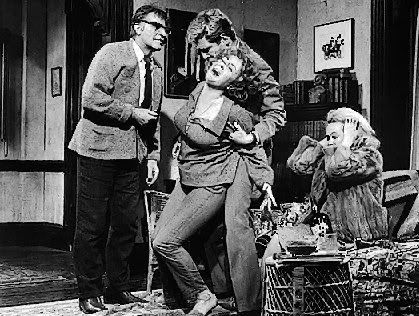

If Eternal Sunshine of the Spotless Mind were a song, this is what it would sound like. If it were a black and white movie it would be Who's Afraid of Virginia Wolfe. "That's the Way I Always Heard it Should Be" is a depressing slice of Americana, wherein all of the idealism which characterized the previous period (or so we were always told) gives way to a darker reality, one that was there the whole time, but went unspoken. Anyhow, this Carly Simon song really does reveal the practical disenchantment that so many have in this day and age when it comes to the ideal of marriage. With so many marriages "hanging on in quiet desperation" (if they even hang on at all), it is somewhat of a natural impulse to give up on the institution altogether. It is for this reason that so many have turned to cohabitation in order to compensate for the general loss of faith in that thing called the vow. Indeed, there is such a profound sense of distrust, not just in the idea of marriage, but between the sexes in general. The fact that 40% of children are born out of wedlock today shows what a profound reluctance there is on the part of couples to enter into any kind of permanent commitment. Such is the dilemma for Ms. Simon who looks around at the marriage fatalities of friends and family and questions whether this is the way things really ought to be. Adding to the melancholy of the song, is the fact that Ms. Simon's own romantic history is one that seems to echo all of her concerns. She sees a catalogue of reasons to run in the opposite direction from traditional family life, but her heart is resigned- despite the seeming inevitability of failure- to give itself to this godforsaken cause; "My friends from college their all married now; they have their houses and their lawns. They have their silent noons; tearful nights. Their children hate them for the things their not; they hate themselves for what they are... But you say its time to move in together. And raised a family of our own you and me. Well that's the way I've always heard it should be. You want to marry me. We'll marry." The saddest thing about this dark and pessimistic view of  marriage is that in her case it is almost a self-fulfilling prophecy. Yes, there is plenty of misery out there to channel, and if you want to feel vindicated by your own sour view of the world, then you will find plenty of examples. But the mistake of Ms. Simon, and all those who have given up on traditional romance, is that they have an entirely flawed view of what love and romance is in the first place. They forgot that the fairytale has tragedy as well as comedy. They thought happily ever after meant that a happy marriage would be something like a reflex. They accepted as dogma every single pop song and Hallmark card. But these sorts of good intentions alone will not translate into a good marriage. The best way to guarantee failure and disillusionment in marriage is to imagine that your spouse exists entirely for the sake of making you feel the way you did when you first met them. There is a lot of blame to go around on both sides of the gender isle on this one, but what is most certainly part of that blame, is the almost exclusively worldly and superficial understanding of what the marriage vow means. If you are not getting married in order to learn how to die for someone (namely your spouse), then you have mistaken marriage for something else. Without true sacrifice, love is a lot like a Lionel Ritchie song: pleasant-sounding, but about as binding as his marriages.


Where Have All the Cowboys Gone? - Paula Cole


The Lilith Fair festival, which reached the height of its success in the late 1990s, was meant to be a celebration of everything female. Its name comes from an apocryphal account of Creation, wherein Lilith, Adam's first wife, rebels against his authority. Thus she is regarded, from a the author's standpoint, as a sorceress and an enemy of God. Proudly bearing this standard, the ladies touting this tour (which included the likes of Sarah McLaughlin, Jewel, Meredith Brooks, and the Indigo Girls to name a few), used it as a platform to advances various feminist causes (one of them of course being abortion). Another one of the performers on the tour was a woman by the name of Paula Cole, who boasted hairy armpits, a classically trained voice, and a quirky style. Her breakout hit Where Have All the Cowboys Gone is a prime example of her unique delivery. I say this all by way of introduction so as to disavow anyone from saying that Ms. Cole is some sort of clandestine conservative. She is/was not. In any case, the song itself is a strange lament about the absence of what used to be called a "man's man". Today I suspect that phrase might have a slightly different connotation. In essence she argues that she would be glad to "do the dishes", "the laundry", "cook dinner", and "raise the children" if he will only go out there and put in a hard days work, which apparently includes "working on the tractor". One might even be tempted to call the lyrics misogynistic were it not for the fact that it was written by one of the Lilith ladies. Ironically, the very movement that demands that men stand down from their patriarchal post is the same one, at least in this case, who decries the Bieberization of all men (do you think that it is merely a coincidence that practically every other commercial today is about a man's failing testosterone?).


But let us not make light of what Ms. Cole is proposing here, because I believe that it possesses some real insight into how a man might find his way back into the heart of the ice princess. What she reveals is not so much that women do not want men to be men, but rather the problem as she sees it is that men aren't being men at all. The difference between the expression "be a man" and "boys will be boys" is as different as the difference between heaven and hell. It is the difference between Christ and Satan. One gives his entire being physically, emotionally, and spiritually for the good of his spouse, while the other is the immortal adolescent, too wrapped up in himself and his own personal pleasure to devote himself to anyone or anything. In the immortal words of Ms. Cole; "I will do the laundry if you pay all the bills..." If men will preoccupy themselves with trying to serve their lady in all that they do, the woman naturally wishes to do the same. What so often causes dissatisfaction in relationships is that men are either doormats, or serially inattentive. The truth is if men were genuinely chivalrous, then women would be much more inclined to serve, but as it is men often become more and more remote as the relationship progresses, which is the ultimate source of frustration for any woman. At one point in the song, she laments the fact that she is "wearing her new dress, but you don't even notice..." This may seem like an insignificant detail, but it further explains what foments the "battle of the sexes". A man must above all other things make his woman feel like his love for her is unlike any other affection he has. By contrast, a man can inspire despair in the heart of a woman if he makes her feel like just another face in the crowd, one who goes "unnoticed." The cheap compromise  is the Bieberized man. Because they can't have a man who will make them feel like a queen, they get a marionette-man to do it for them at their behest. But a woman's heart will betray her every time. And Ms. Cole is no exception, for she tells her audience in essence: "I just can't take this cold compromise anymore! If you go out there and break your back for me, show me a little concern, I will do all those things that women like me have sworn off since the dawn of feminism."


Simple Kind of Life - No Doubt


The first big hit from the band No Doubt was the song, "I'm Just a Girl". And if there were ever a "girl power" soundtrack, this would certainly be on it. Anyhow, the song expresses rather sarcastically how girls are often treated as if they are fragile little creatures. The video and the lyrics suggest that she wants to tear down this silly wall of conventions that stand between her and those "those little things she holds so dear". Fast Forward five years to the release of their second album, which included on it the hit single "Simple Kind of Life". This is notable because in some ways it expresses the exact opposite sentiment of the former song. In a short period of time she went from "girl power" to grieving the fact that she had gotten everything she wanted. She had received all the kingdoms of the world and all she really wanted was "to be a girl"; "And all I wanted were the simple things, a simple kind of life. And all I needed was a simple man, so I could be a wife..." It shouldn't surprise us too much that our ambitions often work to take us to the moon. But the problem with reaching the moon is a very practical one. The moon is much prettier from a distance. Being on the moon in reality, however, is a cold and lonely condition; "I always thought I'd be a mom. Sometimes I wish for a mistake. The longer that I wait, the more selfish that I get. You seem like you'd be a good dad." The modern woman is divided within herself. She wants to be able to go on living a life governed by her ambitions, but she also wants desperately to have a family. Thus, we get the Stefani solution. 'I want a baby, but the conditions on the ground don't seem optimal for this... at least not in the conventional way.' From nannies, to surrogacy, to IVF babies, to three parent scenarios, to pet children (the last one serves as substitute for children altogether), such is the mentality of the one who wishes to have it both ways. Whether or not this person can provide a stable and happy environment for their children is secondary to filling this need. Whether there is no father involved, or the father is only superficially involved in the process, is beside the point. The point is the woman got precisely what she wanted and satisfied that aching need in her heart. If she had to break a few eggs to do it, so be it. I would not be so presumptuous as to tell any woman not to pursue a noble career. What I would presume to say- as a psychological fact- is that if she divides her heart between her marriage her children and her career, she is likely to feel a deep sense of regret about the whole thing. This is not to suggest that men are off the hook by any means. Marriage is in itself a kind of submission for them, one that often brings an end to many a fancy he might have about himself. Add children into the mix, and now there are two parties that he must put before himself (which may include working a job that makes him completely miserable). In today's world we have practically made mandatory the regret about which Stefani speaks. We have said that a woman must have a heart divided, otherwise she might miss out on something. Yet if peace of mind and heart is really what a women wants (as opposed to running herself ragged trying to be all things to all people), then she must learn to defy the fickle fashions of the world. She must be in the truest sense an independent woman, rejecting the notion that she must live according to "all the latest trends." She must make a distinction between what she aches for in her heart of hearts, and what may be desirable to the touch, and pleasing to the eye, but which is nevertheless inessential. Such a decision may not include getting married or even having children, but what it most certainly should not include is a division of the soul wherein one never actually commits to anything, but rather continually finds themselves fluttering from one project to the next.              


Thursday, February 7, 2013

Armageddon It: 7 Films on the End of the World


Recently, I wrote a similar post about songs which address the topic of the end times. In this particular entry I will explore movies that do the same. However, the approach that I will be taking in this case will be slightly different. Instead of focusing on the various attitudes that surround such apocalyptic events, here I will focus more on how those catastrophic events offer insight into those aspects of human existence that are often overlooked or neglected because we presume that they will always be there (like our family). Thus, what we find in this type of cinema is just the opposite of our every day life: a world in which nothing can be taken for granted, and in which that which was presumed is taken away entirely. Yet my intention is not to focus on the misery of these circumstances so much as to observe how these films in various ways show us what is ultimately at the heart of man.


7. Batman Begins


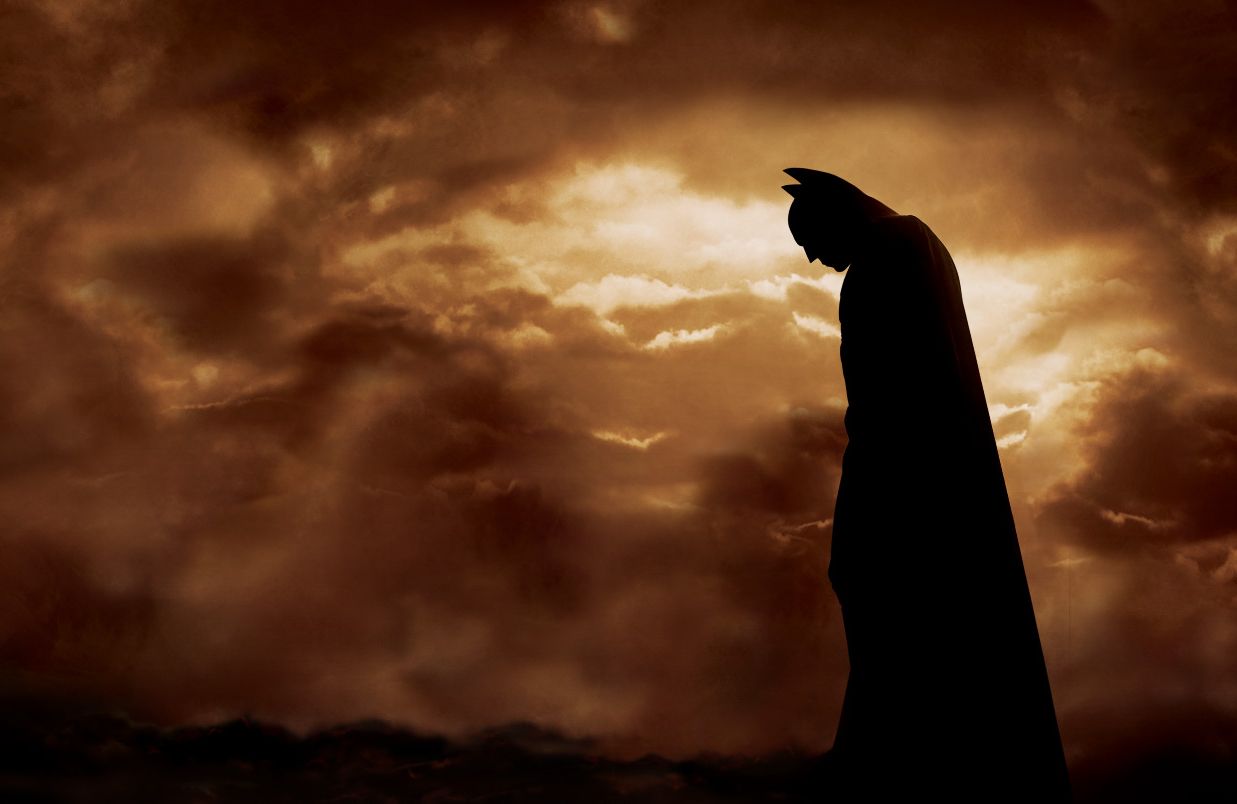
One might not necessarily think of Batman Begins as an end-of-the-world type film, but there are elements in it that are incredibly apocalyptic- if not Biblical in proportion. Gotham City is in essence a sort of futuristic version of every big city. Gotham embodies all of the glamour and wickedness that seems to accompany the reality of city life. Indeed, so bad has it gotten in this mythical city that it has practically become overrun with thugs, and no one has the will or courage to do anything about it. Even law enforcement has turned traitor and made a deal with the criminals. Probably the most interesting aspect of this scenario is not that there is some guy named Batman that wants to stop this, but that Batman- in stopping this- also has to stop another enemy. Ra's al Ghul is a mysterious figure who is part of what is called the League of Shadows. And what this so called "League" wishes to do is to demolish the city. Why? Because the city has grown too wicked to be saved, and so he and his organization feel as if the only solution is to raze it to the ground by inflicting chaos upon it. What is so fascinating about this scenario is that usually in such movies when an enemy wants to destroy something, he wants to do so for his own wicked purposes (whatever those may be), but in this story he wants to do so for the purposes of justice. I have never thought of Satan as just, but I suppose there is a kind of Satanic justice which is completely devoid of any mercy. This type of person (or spirit) never wants to loan you anything, but is always there to collect on your debts. In light of this, Batman Begins is like a combination of the story of Sodom and Gomorrah, combined with the angel of death scenario in the book of Exodus. And Ra's al Ghul is nothing if not an "angel of death", all too ready to deliver his own brand of indiscriminate justice without any regard for saving anyone or anything in the city. Batman, on the other hand, is the primary intercessor for Gotham (which sounds a little like Sodom), the one standing between a fiery form of justice and a city fallen into disrepute. Thus, not only is it necessary for him to hold off this apocalyptic angel of death, but also to help return the city to order. He's not exactly Abram, but he does try to hold in tension two competing virtues, namely mercy and justice.                       


6. Signs


The genius of this film is ironically the same thing that annoyed many viewers. At first blush, the movie seems to be about some sort of cosmic battle between aliens and humans, but in the end it really isn't about that at all. In fact, what seems to be the central plot is really ancillary to the larger point. I call this "genius" because it would have been all too easy to make it strictly about fighting aliens and saving the planet, but what the director did instead is something far more thought provoking. The aliens do make a brief appearance, and using shadows and reflections the director does manage to give them a menacing quality, but the truth is the extra-terrestrials are an afterthought. And the reason they are an afterthought has to do with the fact that it is the end of the world. What difference does it make what is bringing everything to an end? Death is death, whatever the catalyst/vehicle. Thus, surrounded by all of the high drama, the movie carefully interweaves another plot line, namely what do the characters believe about God. The father, who is played by Mel Gibson, is an Anglican priest who has lost his faith, but when confronted with these catastrophic events is forced to reconsider his position. The point is it is easy to be an atheist in theory, or when emotional luxury and/or affluence afford it. It is quite another thing to be one when the finality of death confronts you. The movie presents a kind of Pascal's Wager of sorts, for the father (Mel Gibson) asks rather pointedly whether his kid brother is the kind of person that sees "signs", or whether he is the type of person that believes "no one is looking out for them." Perhaps it is not the most noble reason to consider these matters, but regardless, it is the only thing that really matters in light of the circumstances. By taking everything away from the actors and the audience, all that is inessential passes away, and all that has ever mattered takes center stage.


5. Apocalypto


Directed by the oft-embattled Mel Gibson, this film addresses the end of the world from the perspective of a particular culture. However, this seemingly strange culture, namely that of the Mayans, does spell out in some sense the recipe for disaster in any culture. In the beginning of the story, we encounter a small tribe which is quite simple, but also quite happy. In fact, it is due in large part to this noble simplicity, and their profound sense of community, that they do begin to thrive as a people. Enter our dear friend irony. As a result of their success, their society becomes more and more advanced, and as their power and influence increases, all the things that brought them their success are slowly abandoned. Soon what you have is a society that is perhaps not exactly like Gotham, but not all that different, either. Observe how impressive monuments seem to be an essential element to the downfall of any great civilization. In the case of the Mayans, their decadence can be seen not just in their monuments to themselves, but also in the values that governed their daily lives. Even their physical appearance becomes more and more ostentatious and decadent as the movie wears. This is demonstrated by the fact that as the civilization progresses, so also the volume of tattoos and piercings. Replacing true creativity and useful innovation, you have crass commercialism; in place of self-sacrifice and the common good, you have vanity and self-centeredness; and in place of a more innocent brand of nature worship, you have the darker demons of human sacrifice. The latter is a true sign of the end for any society and/or civilization. Once a society has decided that it is permissible to sacrifice human beings as a means to preserve their own affluence and youth, you may as well be counting down the days to the end. The beginning of civilization is self-sacrifice, the end is human sacrifice.


4. Children of Men


The only way to recognize just how valuable something is is to take it away permanently, especially something that everybody presumes can't or won't ever be taken away. In Children of Men, what is taken away is humanity's ability to reproduce. Today we presume that we can alter and control life to such an extent that we can practically make it cater to whatever vision we have for our lives. If we want 2.3 children, then 2.3 children it is. If we want only one girl and one boy, then that is exactly what we get. But what about a world for which there is no possibility for any children at all? Such is the world created by the novelist P.D. James; a concept so simple and yet one that few have likely ever considered. Hence, this end of the world scenario comes as a tremendous surprise, for most would expect it to be an epidemic, or an some sort of cataclysmic event, while it is simply the inability to reproduce. The novelist (nor the movie director) ever explains why this has happened in the first place, but it certainly would be an understandable form of justice to take away this power from man considering how egregiously he has abused it. Anyhow, what makes this scenario so powerful is the questions it raises that otherwise would go unaddressed. For example, what would it be like if one hadn't heard a baby cry in eighteen years? It is most ironic that many who have grown to hate that sound, would probably weep for joy were they to hear it in the above situation, and even declare as did  a character in the movie; "Blessed is he who comes..." Children are not only pleasing accessories in some materialistic game of MASH (remember that game?), they are quite literally the Sacrament of tomorrow.


3. I Am Legend


Like the previous film, I Am Legend offers a "what if" scenario, but this time it is not just babies that are being jettisoned, but all human life. The first of two epidemic films on the list, this one imagines the death of the majority of the human population on account of a cure for cancer that has gone terribly wrong. For the majority of the film it appears that the only one who survives this plague is a doctor named Robert Neville. That, however, does not include the so called "dark seekers" who were at one time human, but then became infected by the virus and so became some combination of zombies and vampires (I call them zompires). In essence, Robert Neville has to do all of his work by day because at night these "dark seekers" are roaming around looking for flesh to consume. However interesting that aspect of the movie may be, there is another element of the story which in many ways propels it. Robert Neville is alone, and the only living thing that he is able to interact with is his dog Sam and the various mannequins he interacts with (they aren't living, but he treats them as such). Each day he tries to send a radio signal in the hopes of finding some other living being. What makes the movie particularly fascinating is how it artfully demonstrates the slow mental deterioration of the Neville character. In a most profound way this psychological dilapidation reveals the truth of the Genesis passage; "It is not good for man to be alone." It also is commensurate with the related passage about how God brought man every creature but none was capable of satisfying his real need for companionship. The truth is Sam (his dog) does in a certain sense help to keep him sane, but it is also true that Neville must impute human characteristics to the canine in order for this exercise to work. In some ways, Robert Neville is like a cross between Noah and Job. Like Noah, he is one of the few to survive a catastrophe of cosmic proportion, and likewise feels it his job to restore, and in some sense, reboot humanity. Yet by the same token, he is as well a little like Job in that by suffering such a tremendous calamity he is half-tempted to "curse God and die", or as in this case declare; "There is no God!" In the end, however, as the zompires are closing in, he ultimately chooses to wager in favor of such a Deity, and subsequently finds a way to preserve humanity (he finds an antidote), even while forefeiting his own life in process. This movie is worth seeing if only for its ability to communicate the profound loneliness a man would feel were he to experience such extreme isolation.


2. The Stand                           


The Stand (based on the novel of the same name by Stephen King) is not technically a movie in the sense that it was released in the theaters, rather it was a four-part TV mini-series. It certainly was not without its flaws (for example, they ran out of money at the end of filming and the "dramatic" climax is not so dramatic to say the least). Nevertheless, the movie does deliver in numerous ways. The second movie on the list about epidemics, this one involves a terrible strain of influenza which is accidentally released at a government laboratory, leading to the death of everyone in the lab. However, one man escapes with his family and unknowingly spreads it to the outside world, ultimately killing 99% of the worlds population. The power of the opening scenes lies not simply in telling the audience that so many died, but in giving a sense of how it happened by providing the audience with several vignettes. Consequently, the audience then is able to envision similar events on a universal scale. All the while in the background, you hear the eerie yet upbeat ode to the Grim Reaper, ironically titled "Don't Fear the Reaper". This particular song accompanies all of the opening scenes, giving a certain atmospheric momentum to all of these events. What I found most insightful about this scenario (beyond the atmospherics), was who Stephen King chose to represent the forces of good. Far from formidable, his heroes and heroes were the last people you might expect to be charged with winning a cosmic battle. In fact, the leader of the group, charged by God to be their shepherdess, is an elderly black lady named Mother Abigail who is going blind. Needless to to say, her great strength lies not so much in her biceps,  as in her towering faith. Among the group there's also a deaf man named Nick who is an atheist. When told his mission, he explains to Mother Abigail that he does not believe in God, to which she responds with full throated laughter; "That's OK honey because he believes in you..." Whether King was aware of just how Biblical this is I cannot say, but what is true in any case is that the Christian story is nothing if not a catalogue of rejects and nobodies elevated in ways that, considering their circumstances, seem inconceivable. God, it would seem, is most fond of calling the last people you would expect- to accomplish the last task you would expect them to be able accomplish (think Joan of Arc). Perhaps then Harry Houdini is a little more like God than one might suspect. Even the Gospels themselves seem to affirm that this is God's preferred method of bringing about salvation (actually pretty much all of Scripture affirms it); "The last will be first and the first last." If that statement doesn't keep you humble I'm not exactly sure what would. The Stand is like the Lord of the Rings of science fiction, for it possesses not only the urgency and intensity of an apocalyptic story, but it also possesses the keen insight that if you you are going to defeat evil, you might want to send last person that anyone would suspect.


1. The Road


Without question one of the most disturbing films I have ever watched. In most movies which explore apocalyptic themes, there is some degree of consolation, whether be in the companionship, a meal, or the prospect of a commune where there is some semblance of civilization. This movie has none of the above. The Road is to the apocalypse, what the first thirty minutes of Saving Private Ryan is to war, or better yet, what the Exorcist is to possession. In other words, in these films there is no romance associated with death and fear. To the contrary, fear is immediate. One who watches this film is not permitted- with a few exceptions- to enjoy any consolation. This is a movie that will test your faith, your hope, as well as your charity, and reminds you the type of mental and spiritual toughness that would be required to survive in such a world. Yet in some ways the end of history could not have been all that different from the beginning, for in man's historical childhood he must also have been confronted with the question concerning how one truly distinguishes humanity from savagery. Apart from the mysterious cataclysmic events that propels the story (a mystery which makes the story even more believable), at its core this film is simply a story about a father's love for his son; a father who would not have the will to persevere were it not for that love. But in spite of the terrible circumstances (perhaps even because of them), we learn a powerful lesson about what it means to raise a son and teach him what it means to be a man. For me the most poignant moment in the film is when the son asks the father, played by Viggo Mortensen, if they (he and his father) are the good guys or the bad guys? In this particular case, the bad guys are represented by those who eat people to survive, and the good guys are represented by the ones who are willing to starve rather than resort to such a level of human atrocity. It reveals a strangely eucharistic message. The difference between heaven and hell is the difference between those who devour others in order to preserve themselves, and those that allow themselves to be devoured (either symbolically or literally) if only to safeguard those entrusted to their care. Such a message is not for the weak in spirit, and I have to admit that were a similar set of circumstances to befall me, it would only be by the grace of God if I myself did not turn into a mindless flesh eating zombie.               


Wednesday, January 23, 2013

11 Things Every Husband Should Know When Buying His Wife a Birthday Present


Men don't like shopping, and if they do, well, that's another story altogether. At any rate, add to that the burden of finding something that makes your wife feel loved (which is as important as finding her something she likes) and it can be downright daunting. Thus, if I can do anything at all to make this process less painful for my married brothers out there in the trenches, I will. The following suggestions don't exactly provide a "how to" for what to buy a woman (after all, there is some variation there), but they do offer some hint as to what specifically to avoid in the process of trying to figure out what to get her, which is at least half of the battle. If you cannot see the comedy and irony in the relationship between the sexes I recommend that you avoid this post, for though it is meant to be helpful, it is also intended to be humorous.


11. Don't ever buy her a gift that is more for you than for her


On one episode of the Simpsons Homer buys his wife a bowling ball under the pretext that he wants her to learn the game. However, there is one small detail which makes Homer's intentions seem rather dubious: Homer's name is carved into the ball. Out of spite Marge takes up bowling, but only to get back at her husband who is patently displeased with the result. You might think that such a phenomenon is quite out of the ordinary, but do not underestimate your own powers of rationalization, especially involving some form of technology that you wish to possess. For example, I could easily envision a man buying himself (I mean his wife) an X-Box, fully convinced that he is doing it, not because he wants to play video games, but because now they can both watch movies together without the hassle of having to get them at Blockbuster, or order them by mail. Even if there is truth in such a scheme, if the gift smacks at all of you buying it for yourself, and only secondarily buying it for her, the temperature in the room will grow noticeably cooler.


10. Her birthday is not a moveable feast


Because of scheduling there may be an obstacle to celebrating her birthday as thoroughly as one would like on her actual date of birth. But do not make the terrible error of presuming that because you have moved the big celebration, that you need to do nothing on that specific day. Other than (of course) wishing her a happy birthday, at least do something on that day that makes her feel as if the day is not forgotten, otherwise she may act as if you had skipped it altogether no matter how you celebrate it later.  Just like you can't completely forget her birthday and then hope to celebrate it on some other random day (unless you REALLY outdo yourself), neither can you hope to bypass this day without giving it proper recognition.


9. Generally speaking, household appliances are a big "no no"


Your wife tells you she wants a new blender or vacuum cleaner, and so you run out and buy her the latest and greatest Hoover (or whatever). You are so proud of yourself because it is far better than the previous. However, when you present it to her she looks at you as if you had three heads. You were smart to take note of what she said she wanted- the problem is you misread the appropriate time in which to give it to her. The truth is when it comes to birthday and Christmas gifts women generally want impractical, romantic gifts. So when is it appropriate to buy said appliances? Ironically, women will regard the purchasing of a vacuum cleaner as romantic as long as you obtain them on practically any other day of the year except days specifically designated for gifts. Hence, if you come home on some arbitrary Tuesday with that new Hoover in hand, then indeed you will likely receive many brownie points. Come home with it on her birthday, and she will treat you as strangely as a cat. She will also think, fairly or not, "how stupid can my husband be? Doesn't he know the ancient law of gift-giving for women?"


8. Avoid Generic Cards


One thing that can be difficult for men to understand is just how important little things are to women. Cards are no exception. There are some occasions where she will not mind that you overlooked getting her a card. But on your anniversary, I do not recommend such an omission. In any case, when you do buy the card, do not buy one of those stupid cards wherein someone has already written a message of platitudinous schmaltz. First of all, most of those messages are pretty lame, and secondly, and perhaps more importantly, she will feel that anybody could have received and/or written the card, which is incidentally true. And furthermore, do not dare try to kill two birds with one stone, believing, rather naively, that you can get something at Hallmark that is gift-worthy. It is an understandable temptation, but resist it. She will not be deceived. Back to the card. Try and pick one that will make her feel as if it were chosen specifically for her. The biggest key to any and all gifts and cards is that they must, to whatever degree, make a woman feel as if you thought only of her while purchasing it. If she feels that that she is somehow set apart and loved uniquely as a result of receiving it, then you have accomplished your daunting task. But back to the writing. I know most men are not poets, so I am not saying that you should try to be one, but whatever sentiment is in the card, let it be particular to your relationship. Let it demonstrate that you know her like no other.


7. Don't Buy Her Religious Objects


Please do not misunderstand me. I am not declaring that it is a bad thing to get her something religious. What I am saying is that unless it is something that specifically demonstrates your love for her, she will regard it as if you had just given her a moon rock. Once again, this is not to say that she is in any way godless (unless she really is), only that there is a time and a place for such gifts, and this is not one of them. In all likelihood, when she receives it she will probably say something like "Oh, OK, well... hmm... thank you..." And all the while she will look as if she were sitting on an uncomfortable wooden bench. Once upon a time I bought my wife a beautiful crucifix for our home. You see, I had assumed that because we had formerly discussed how much we needed one that it made perfect sense to buy it. What I did not anticipate was just how awkwardly she would receive it, especially since it was she who had requested one in the first place. I can only compare it to the type of reaction I might have were I to receive a gift card from someone notifying me that they had just donated a llama to some family in subsaharan Africa in my honor. I want to stress it was not the gift itself that provoked her reaction, but my poor timing. As Scripture says, "to everything there is a season", and that sure wasn't the season. I cannot read minds, but my guess is gifts like this one in general fall under the category of things meant for the entire household, but not specifically for her. Therefore, you dare not use her birthday as a trojan horse for any item (including a religious one) which is beneficial to all, though not specifically designated for her.


6. Gift Requests


This is a tricky one because it is possible to get away with this on occasion, but you really have to pay attention to her body language in order to estimate just how much it is "gotten away with". Ask her what she wants, but be forewarned if you get a clear answer this is not permission to do this all the time. For some women there is almost never an occasion for such predictability, but for others there are exceptions. In any case, before proceeding there are a few things you should know about this indult. There is nothing more repugnant and unromantic to the female spirit than gifts that lack any element of surprise. As long as she doesn't know exactly what you are getting her, she will allow for a certain amount of questioning on your part. In other words, women are open to giving you general hints regarding what to get as long as those hints don't become too specific. But like I said, there are times when she might want something enough that she is willing to suspend this rule. Notice I said "suspend', not abolish. From a male standpoint, this "tell me what you want" approach is a predictable and an appealing trap. Men like surprises, but they also don't really have a problem with telling you what to get them. If it were up to men this would be the format of all gift-giving occassions, but alas, in God's wisdom he has demanded something more of us than a "honey-do list." The truth is buying your wife a present is a little like going to the grocery store and trying to discern what the grocery list is without her giving you the grocery list. Still, if men would like to find a subtle way of expanding this practice, I would recommend not asking your wife what she wants for her birthday, but rather listening to her throughout the year as she drops major hints concerning the desires of her heart. Don't be too proud to take notes. It can save you a lot of fear, pain, and anxiety.


5. Repeat Gifts


You finally hit the mother lode. You seem to have found a store that was practically made for your wife. Contain yourself, or you may just fall into the habit of thinking that you can just perpetually buy a bunch of things from that store and that will suffice. I am not suggesting it can't be a cornerstone of your gift-giving expedition, but it shouldn't be the only one. Yes, the gift must be her style, but if you only get them from one place, then it may seem to her like you are simply buying the same thing over and over. Trust me, I know what it feels like to discover a store that has the type of shoes my wife likes, or better yet, one that has a whole slew of indie purses that would make her feel totally original if she had them. Nevertheless, resist the temptation to buy her five alterna-purses, thinking that you can cover your bases for the next several years. This is not to suggest that she wouldn't like all of them, the problem is it smacks of laziness, which in a war between what she likes and what she wants you to do, loses. There are only a few gifts that one can repeat consistently without any punitive damage to your relationship. The primary one is flowers. When in doubt flowers. That isn't a license to buy them without making sure they aren't half-wilted, but nevertheless it is truly amazing that you really can just walk into the house with any number of roses at any time and she will greet you as if no one had ever received roses in the history of the world until that moment.


4. Wrapping the gift is important


If you are like me, then your wrapped gifts look a little like a five-year old had attempted (and failed) to do it. However, in this respect you cannot lose. In some sense the worse it looks the more her sweet feminine heart will regard you with pity and consider your effort valiant in the face of your utter incapability to perform a task which she could do in her sleep. I call it the stray dog effect. The truth is few women can fail to feel love and affection for what they perceive to be man's helplessness. One should be careful not to play this card too much, however, or you may just find that now you have two mothers instead of one. At any rate, the wrapping is almost as important as the gift, which is why she will accept just about any efforts on your part in this regard. It might seem arbitrary and irrational to some men, but it is utterly unacceptable, from a woman's standpoint, to just hand your wife the gift. It is also unacceptable to give it to her in that same chintzy little plastic bag that the store handed it to you in. You may as well hand it to her in a grocery bag. In other words, do not give her a DVD as a gift in a plastic Blockbuster bag, or hand her a blouse from Belk's in a Belk's bag. Remember this, even gifts of a low estate can be elevated by a little effort on your part to make them look important. But if wrapping is too difficult for you, or you lack the resources, get a nice bag (maybe even one that was left over from some other festivity, and put some tissue in it (I'm not talking about Kleenex here) and voila; its as good as if you had spent time wrapping it. Some men might be grumbling, asking "What difference does it make? It's the same gift". Ah yes, but remember, the element of surprise is not simply important to women, it is the very essence of her being. It is non-negotiable in romance, and if you if in the end you are unwilling to work by these unwritten rules, then you cannot hope to make her happy.


3. Never let her cook on her birthday


This may seem pretty obvious, but men are not always the sharpest tools when it comes to this. And in other cases, they are bright enough, but frankly too lazy to care. Obviously a night out at your favorite restaurant, or one that you have specially chosen with her in mind will make her happy. Add to that some special moment, usually around dessert time, and you are good to go. Unless she is a fan of all out drama where the whole staff serenades her with happy Birthday in ten languages all while doing a dance, all you really need to do is to ask the waiter to put a birthday candle in her favorite dessert and that will usually suffice. Indeed, in this case, less is more. However, if you prefer to stay home there is one other alternative, and it doesn't involve takeout (unless she specifically requests it). Obviously if you are capable of cooking you can cook dinner for her yourself (which, like flowers, never gets old). Or if you are as inept as I am in the kitchen, you can offer to plan and cook a meal together. Once again, you may be like that lab partner in high school who adds nothing to the group and only winds up copying the work of everyone else, but the fact that you are "in the group" at all in this case will seem romantic to her. You may only be doing the prep work, but it is nevertheless a form of romantic solidarity that brings you closer and makes her feel like you are true companions.


2. Gift Cards


Another big "no no" when it comes to the art of gift-giving is the bestowal of a gift card on your beloved. In your practical male mind you think to yourself "Hey, I've got a great idea! She clearly loves Charming Charlie's, so instead of me wandering around aimlessly trying to divine her thoughts, I'll just give her a gift card and let her run wild." It makes perfect sense, doesn't it? But it doesn't figure at all when it comes to making a women feel as if you know her like no one else. For example, my dad loves Starbucks, so I get him a Starbucks gift card and he's happy. Great! My wife also likes Starbucks. Could I pull off the same thing with her? Are you kidding me? So yes, you must deal with the doubly daunting task of getting her something that she really wants without the privilege of being told what she really wants. Call it a game if you like, but those are the rules. Call it unfair, but all is fair in love and war. Actually the problem with both "love" and "war" is that they do have certain rules of fairness, the problem is trying to figure out those rules is a little like (pardon the pun) sweeping a mine field.


1. Never forget her birthday


This one doesn't technically include anything about purchasing a gift, nevertheless, if you were to get this one wrong then all the previous advice would be useless.There are an endless amount of ironies when it comes to romantic love. For example, it is verboten to forget her birthday, but you can get her age delusionally wrong as long as you declare that she is younger than is. Anyhow, just below adultery on the list of things you never want to do in a marriage is "forgetting her birthday", which comes in a close second. In the Bible there is only one unforgivable sin, which is the sin against the Holy Spirit. In the Bible of marriage this particular "sin" may indeed rival the former. From a woman's perspective it is inconceivable that you should overlook this day. For her a keen awareness of such dates on the calendar are the simplest and most basic test of whether you love her or not. Not remembering her birthday seems to her the equivalent of not being able to count to ten or say your ABCs. Thus, there is only one of two possible explanations for why you forget- you don't love her, or you are incapable of loving her the way she needs to be loved. In either case, you will have to be a bit of a romantic Houdini to get yourself out of this bind. In fact, it is easier for a camel to go through the eye of a needle, than for you to make your wife forget about this mistake. But do not despair- remember that with God all things are possible. She may in time genuinely forgive you for this grave oversight, but know that she will never ever forget about it. Hence, you should prepare yourself to be reminded constantly of what you so carelessly forgot. I say this not to be a downer, but in order to prevent any man from making this same error. Indeed, you should remember that day as if your very life depended on it, because it does.


For my beautiful wife on her 29th Birthday


Sunday, January 13, 2013

Apocalypse Now... or Later: 8 Songs on the Theology of the End Times


I am not generally a very superstitious person, but I have to admit that when numerous individuals sought to have Mayan apocalypse end of the world parties last year, I was a little cautious about tempting and/or taunting fate. At any rate, the apocalypse didn't happen, nor did it happen when I was in 8th grade and some other failed prophet claimed it would end during my 3rd period study hall. For me, these non-events only lend greater credence to the words of Jesus Himself who said rather pragmatically, "No one knows the hour except my Father who is heaven." Perhaps one of the more interesting things to come out of this cultural fixation about the end times is that it is not only the religious folks who seem to be expressing a deep sense of foreboding about the not so distant future. Even those with primarily a secular world view sense that something is awry. Indeed, these days it is not only the hell-fire preacher who declares that there will be a day of atonement- now he is joined by the environmentalist, the Drudge report, and all of those young zombie enthusiast who seem almost to want to hasten it. Some see the times ahead with utter despair, perceiving only death and destruction in our future, while others see the coming times as period of painful purification, which will give way to a new era of peace. But whatever one's conception of the "end times", it is always helpful to look at such phenomena through the eyes of the artist, who has been kind enough to provide us with any number of perspectives on the issue.


1. The Cranberries - Zombie


Granted, this early 90's (light) grunge hit wasn't about zombies per se, but it nevertheless does lend a little insight into the mentality of said beasts (why else would she use the term)?). The song condemns the decades old political feud (and resulting violence) between Protestants and Catholics in Northern Ireland; "It's the same old theme since 1916, in your head, in your head, they're fighting. With their tanks, and their bombs, and their bombs and their guns. In your head, they're dying. In your head, in your head, Zombie, Zombie..." During the end times, one can certainly envision any number of scenarios wherein there might be individuals wandering about who have, in many respects, "left the building"; people so psychically traumatized by some cataclysmic event that they no longer resemble the person they once were. Or maybe the zombies are simply people like Adam Lanza who are so drugged up and detached that a mass shooting like the one in Connecticut doesn't phase them. All the same, the type of "zombie" that Dolores O'Riordan of the Cranberries is speaking about is not simply someone who is vacant, but someone who appears to be occupied by some ungodly force. Call it possession, call it a pathology if you like, but whatever it is the result can only be characterized as something bestial, something which is so metal minded that one wonders (like in the movie I Am Legend) if they can even be brought back.


2. Prince - 1999


Back in 1982 when this classic was released, the year 2000 and all of the drama surrounding it must have seemed  far away enough to be harmless. How else do you explain a song as brazen as this one? Sure, there are plenty of people out there who are down right terrified about the end of all things, but then again there are also those who seem quite unaffected. Count the artist presently known as Prince among those who fit into the latter group; "... When I woke up this morning could have sworn it was Judgment Day. The sky was all purple, there were people running everywhere. Tryin' to run from the destruction you know I didn't even care. They say 2000, 0 0, party over, oops, out of time. So tonight I'm gonna party like it's 1999." Some might respond to this eerie "purple" sky and all of the impending doom with a deep sense of shock and horror, but Prince simply responds with presently popular YOLO. In fact, he was YOLO before YOLO was fashionable. Indeed, some approach their impending death and judgment with a desire to repent and make amends, while others say, as did the Dave Matthews Band; "Eat, drink, and be merry, for tomorrow we die." This is not to say that one should not appreciate every moment that one has on this earth, but that's not what's going on here. The message is more like; 'you're gonna die anyway so you might as well just live it up, or as Prince so eloquently put it, "So if I gotta die, gonna listen to my body tonight..."


3. Soundgarden - Blow Up the Outside World


Occasionally in the world of rock n'roll, which is known primarily for its insatiable capacity to indulge itself, there are those that rebel against this kind of rebellion. Yet even this rebellion is ultimately no less destructive than the former. I suppose it is part of the metal spirit to always want stuff to be broken and/or blown up. Thus, even when a musician finds himself disillusioned with a world that has become too decadent and commercial, he doesn't want to fix it, or offer any solutions, he simply wants to annihilate it altogether; "I've given everything I could, to blow it to hell and gone. Burrow down and blow up the outside world..." In many ways this song is kind of a sequel to Black Hole Sun which states "Black Hole Sun won't you come... to wash away the rain." Such apocalyptic angst might go in one of two directions. As suggested in Black Hole Sun, it might entail something more positive; something that implies a hope that God will restore all that has been squandered; "Heaven send hell away, no one sings like you anymore...". On the other hand, one might see things more from the perspective of the song Blow Up the Outside World, where you become so disgusted with everything that you just wish it all away. If you choose the latter, then you perceive the world to be unsalvageable and therefore believe that the only solution is to end it all. According to this perspective, the world is rotten with decay- as exhibited above- and thus God (or something else) must bring it to a close.


4. Radiohead - No Surprises


One thing that must inevitably accompany the end times, at least according to most literature on the subject, is that much feared totalitarian state. Yet this terrible government is not like your grandfather's despotism. Indeed, these leaders cite benevolence for everything they do. And if they have to re-educate you in the process they will do so by hitting with velvet pillows until you lose your mind. They are truly the government that is good, not because God wills it, rather, they are good for goodness' sake. Sadly, their aim is not goodness, despite all the pleasant language they employ. Their aim is to alter the very definition of man, and to engineer him in such a way that the organ of his will has all but been demolished. Some might call this the destruction of humanity, while others may argue that in order to achieve true peace we must do away with man's inherent "willfulness." In any case, this particular song approaches this idea of "will-lessness" from the inside. If ever there were a band who embodies this dystopic nightmare, it would have to be Radiohead. Practically everything they write feels like it should be on the soundtrack to Brave New World, 1984, or Fahrenheit 451; "A heart that's full up like a landfill; a job that slowly kills you. You look so tired and unhappy. Bring down the government, they don't speak for us... I'll take a quiet life, a handshake, and carbon monoxide. No alarms and no surprises... Silent..." At the heart of the dystopic tale there is always that element of powerlessness in the face of an absolute power. In some cases their freedom may be lost because some terrible despot merely usurps it, while in others (as embodied in this song) it is forfeited, and even preferred, to freedom. Humanity is exhausted and has come to revile liberty, and so prefers the aforementioned regime as long they promise comfort and peace (in another age they called it "bread and circuses"). In these end times, if this scenario is correct, we should expect to see some kind of far reaching totalitarian state (or states), one that will no doubt require that every man, woman, and child in the name of peace and love must imbibe whatever Kool-Aid they are dishing out. Many will be deceived. Only the strongest in spirit will survive these trying times; "There will be great tribulation, such as has not been seen since the beginning of the world until now, nor ever will be. And if those days had not been shortened, no human being would be saved; but for the sake of the elect those days will be shortened" Matthew 24:21-22.  


5. Muse - Uprising


The song Uprising by the band Muse continues this dystopic theme; "Paranoia is in bloom, the PR transmissions will resume, They'll try to push drugs that keep us all dumbed down, and hope that
we will never see the truth around. Another promise, another scene, another packaged lie to keep us trapped in greed... and all the green belts wrapped around our minds. And endless red tape to keep the truth confined...They will not force us. They will stop degrading us. They will not control us. We will be victorious..." Unlike the previous song, this citizenry possesses a little more fight to them. In other words, yes, there are some that will simply go with the flow during these times, but there are also those who will attempt to resist. In the book of Revelation, there is a passage which declares that the "Beast" will demand that everyone receive his mark either on their hands or on their forehead; "It (the beast) forced all people, small and great, rich and poor, free and slave, to be given a stamped image on their hands or their foreheads, so that no one could buy or sell except one who had this stamped image of the beast name, or the number of his name" Revelation 13:16-17. One could no doubt envision this happening in any number of ways in this age of the "scanner". In any case, the focus of the song is one that suggests triumph in the face of systematic degradation. In fact, in the song Resistance from the same album, Muse suggests that guns are not the primary tool by which this battle is decided. Rather, according to them, "love is our resistance." It may perhaps be difficult for some to envision "love" as a powerful weapon, especially in the face of so menacing a force, but that is indeed the proposal of Muse, the proposal of the book of Revelation, and furthermore the proposal of the Song of Songs, which states; "Love is stronger than death; devotion as unyielding as the netherworld". Song of songs 8:6.


6. Peter Gabriel - Here Comes the Flood


Combine the Biblical image of the Flood with a songwriter's mystical dream and what you get is probably the most beautiful and poetic song on the list. For most of us the Flood simply invokes a cataclysmic event, combined with a divinely constructed life raft, a family, and some animals. But Peter Gabriel brings his own twist to the table. According to several accounts, he had a dream of an apocalypse, but it was not a flood of water that deluged man, rather a flood of messages and information coming over the airwaves. No thought was to be private anymore. And only those whose thoughts were true could withstand this "flood" of exposure. Written back in 1977, the song is nothing if not prophetic, especially considering how today practically nothing is really private anymore; "For whatsoever things you have spoken in darkness, will be published in the light. And that which you have whispered in the ear in the inner chambers, will be proclaimed from rooftops" Luke 12:23. Can anyone now doubt the veracity of such a statement, whether one is talking about Judgment day, or whether one is talking about the direction in which our culture and technology are headed?


When the night shows
the signals grow on radios
All the strange things
they come and go, as early warnings
Stranded starfish have no place to hide
still waiting for the swollen Easter tide
There's no point in direction we cannot
even choose a side.

I took the old track
the hollow shoulder, across the waters
On the tall cliffs
they were getting older, sons and daughters
The jaded underworld was riding high
Waves of steel hurled metal at the sky
and as the nail sunk in the cloud, the rain
was warm and soaked the crowd.

Lord, here comes the flood
We'll say goodbye to flesh and blood
If again the seas are silent
in any still alive
It'll be those who gave their island to survive
Drink up, dreamers, you're running dry.

When the flood calls
You have no home, you have no walls
In the thunder crash
You're a thousand minds, within a flash
Don't be afraid to cry at what you see
The actors gone, there's only you and me
And if we break before the dawn, they'll
use up what we used to be.

Lord, here comes the flood
We'll say goodbye to flesh and blood
If again the seas are silent
in any still alive
It'll be those who gave their island to survive
Drink up, dreamers, you're running dry.


In some sense you can argue that the apocalypse will be a series of events drawn out over an extended period of time, but there is also an immediate aspect; a shock that freezes the heart with a terror that is all too real; "In the thunder crash you're a thousand miles within flash." Jesus says something quite similar when he mentions the story of Noah in the Gospels "But as in the days of Noah, so shall also the coming of the Son of Man be. For as in the days that were before the flood, they were eating and drinking, marrying and giving in marriage, until the day that Noah entered into the ark, and they did not understand until the flood came and took them all away; so shall also the coming of the Son of Man be." Matthew 24:37-39.


7. Pink Floyd - Two Suns in the Sunset


There are actually several songs that correspond to the message of Two Suns in the Sunset. All concern some sort of nuclear holocaust, and all lament what they perceive to be a kind of stupidity that will/has led us up to this point. The 80's were  marked by that feeling that nuclear war was just around the corner (I used to have nightmares about it). 99 Red Balloons was about how World War III began as a result of 99 red balloons unleashed in the summer sky only to be mistaken for some sort of missile attack (sounds plausible). The Future is So Bright... is even more sardonic than the former, for the reason the future is bright has more to do with a nuclear fire than personal achievements. For Waters and Pink Floyd, the apocalypse is not only stupid and unnecessary, but it is also revelatory at the same time. When everything is about to be blown to smithereens, we really do see things as we should have seen them all along; "And you'll never see their faces, and you'll never hear their voices. You'll have no recourse to law anymore." Granted, the last bit is an odd detail, but it does point to something that we are far too likely to take for granted: law and order. We assume that everything will always run as it has our whole life, but when all of that breaks down, when lawless reigns, one may for the first time understand why the Israelites rejoiced over the law of the Lord being given to them, or why everyone was so happy when the real refs returned after having to endure their replacements. Rules were all of a sudden seen as valuable. "Finally I'll understand the feelings of the few; ashes and diamonds, foe and friend, we were all equal in the end." Death is the great equalizer, reminding us in a way that nothing else can, just how foolish it is to live life storing up treasures in a world where "moth and rust doth decay". Today a nuclear war is only one of many ways in which our technology has taken on an apocalyptic character. This is yet another reminder of our need for some intervening force to save us from our own Frankensteinian death wish; "People will die of fright in anticipation of what is coming upon the world. And then they will see the Son of Man coming in a cloud with great power and glory. But when these signs begin to happen, stand erect and raise your heads because your redemption is at hand." Luke 21:26-28                  


8. Enigma - The Return to Innocence


I chose this song as the lost one on the list in part because at least it is an apocalypse which offers us some hope. I also selected it because there is something incredibly primal and native about it. Most of the words are fluffy and forgettable (this is Enigma after all), but the opening line as well as the chorus give it a pleasing atmosphere; "That's not the beginning of the end. It's the return to yourself; the return to innocence." The video contributes to this feeling of innocence by shooting everything in reverse so that the end of the video is actually the beginning. The chorus, which appropriately has no words, is a chant, which gives it a distinctly tribal feel. Yet despite the fact that it has no words, it seems to express rather eloquently this feeling of longing, coupled with the desire return to a state of purity. In a sense tribal music is the perfect vehicle to express the feeling of not just the innocence of an individual, but the original innocence of mankind. I applaud this attempt to offer hope in the face of these uncertain, perhaps even apocalyptic times. It is far easier to write a song that only expresses the fear and dread of humanity. The only thing I would dispute is the idea that humanity can return to a kind of primordial childhood. In truth humanity can no more return to original innocence than an adult can become a baby again (as is implied in the video). As Christ suggests in the Gospels, a man cannot return to his mother's womb- he therefore must be "born again". The way in which this new birth comes about is not simply by going backwards, but rather enduring a period of trial and tribulation, so as to be utterly uninhibited by worldly attachment. Man will return to innocence again, not because he has no experience of evil, but because he has seen its full measure, and has finally come to the awareness of its complete and utter. Thus, no longer being divided within himself, he can finally and unreservedly choose the good; "Then I saw a new heaven and a new earth, for the first heaven had passed away, and there was no longer any sea. I saw the Holy City, the new Jerusalem, coming down out of heaven from God, prepared as a bride beautifully dressed for her husband. And I heard a loud voice from the throne saying, 'Now the dwelling of God is with men, and he will live with them. They will be his people, and God himself will be with them and be their God. He will wipe every tear from their eyes. There will be no more death or mourning or crying or pain, for the old order of things has passed away" Revelation 21:1-4.


Saturday, December 29, 2012

What I Learned from Cockroaches About Love (A Christmas Story)


I am often told by people that call themselves "spiritual" that Christianity is wrong because it associates fear with God. And while this is an understandable critique (especially for those who allow it to paralyze them), it is more than a little naive to regard fear as useless altogether. The world is a dangerous place and sometimes it is quite rational to be afraid of things. Cliffs, for example, should inspire a reasonable concern as to their whereabouts, lest one should find one's self falling over one. Hence, it should be abundantly clear that fear is not always and everywhere a bad thing. As a matter of fact, in the Old Testament we learn that "fear of the Lord" is the first stage of wisdom. Some may be inclined to dismiss such a "stifling" injunction in favor of John's more popular "God is love." But before we do so, let us first consider the value of each in their own right.

"What wisdom could there possibly be in fearing the Lord"? First of all, it should be noted that Scripture does not say that "fear of the Lord" has the last word on wisdom, only the first. In other words, fear is to be regarded as a necessary first step in the process of coming to know God and ourselves. It is the necessary recognition that God is God and we are not. For when someone or something is undeniably greater than you, common sense dictates that you acknowledge that fact. You don't have to like it- but you do have to deal with it. And if God is indeed all-powerful, then it is only rational to acknowledge that He holds all the cards, and we none. Call it humbling, call it a dictatorship if you like, but do not call it unreasonable for a man to tremble before so menacing a Force.

In Isaiah chapter 6, the prophet is caught up in a vision in which he finds himself standing before the throne of God. In the midst of this he exclaims: "Woe is me! For I am a doomed man; because I am a man of unclean lips, living among a people with unclean lips" Isaiah 6:5. If one of the greatest prophets in the Old Testament cannot stand in the presence of God without feeling as if his face is going to melt off (like the Nazi's in Raiders of the Lost Ark), then what chance do the rest of us have? Some might call it humility, others realism, but in either case it cannot be regarded as logically unsound to recognize one's vulnerability in such a position. It should also be pointed out that when people choose to humble themselves in Scripture, God tells them; "Be not afraid", but when they are patently full of themselves (e.g. the Pharisees) he tells them, in essence, 'Be afraid; be very afraid'.

Yet this is not an exhaustive explanation of Biblical fear. As suggested before, the New Testament introduces a new kind of divine trepidation, one that is even more terrifying than the former. The birth of Jesus Christ did not alter the definition of fear, but it did reveal a surprising new feature. Thanks to the Incarnation, fear now has the face of a child. It is easy enough to feel overwhelmed in the presence of a metaphysical giant, but who would have suspected this bizarre turn of events- the idea that men would come from east and west to fall prostrate before an infant child in the backwater of Bethlehem.

It was revolutionary in the truest sense of the word. Everything that had previously been considered upside down, was now right side up. Indeed, a new order had been established, a kingdom wherein powerlessness turns out to be mightier than power, and where God's foolishness turns out to be wiser than the wisdom of men. But the foolishness of God is vindicated. For what merit would it have been if God had simply crushed humanity with his giant hand (or a meteor)? Such a victory would have been even less impressive than Lebron James postering a five year old. What God did instead is the very definition of paradox- he won a great victory because he found a way to triumph even in defeat.


Before I married my wife I was a bit squeamish about cockroaches- especially the idea that one might be crawling over me in the middle of the night. Shortly after our wedding, I was awakened one night by a blood-curdling scream. I honestly thought someone had died. I leapt out of the bed and quickly discovered the horrible menace that had provoked her. I turns out she was traumatized because a cockroach had just crawled across her face and had disappeared somewhere underneath the covers. On that day I ceased to be afraid of cockroaches, and instead developed an even greater fear... fear of my wife's fear of cockroaches. To put it plainly, when one finds one's self sincerely in love, their greatest concern is not their own peace of mind, but rather that of their beloved. Granted, I also feared that those roaches might disturb my own domestic bliss, but that nevertheless doesn't diminish the fact that love inexorably changes the locus of one's concern.

The cross is a prime example of how love tends outward. Jesus was not the only one crucified on Good Friday. Apart from the two thieves, there were two others who were pierced through as a result of this event. Indeed, such is the nature of perfect love, that the greatest punishment is not to suffer personal malady. Rather, the greatest punishment is to watch the flesh of your own flesh in Godforsaken agony. Hence, a trinity of perfect love was crucified that day: God the Father, God the Son, and the Mother of Sorrows, Mary.

Which brings us back to the truth behind that "terrifying" child; that fundamental mark of God's revelation to humanity; that power even more intimidating than omnipotence. In the most unusual way, Christmas changes the significance and meaning of fear. Now when we tremble, it is not simply in the spirit of Isaiah before the throne of God, but rather with the awe and reverence of a mother who has just given birth to a child. And now when we cower our heads at the feet of some great mystery, we do not do it only in the spirit of Moses who begged to be shielded from the countenance of God, we do it with the fear of a father gazing into the face of his baby girl for the first time. Fear and love are now one in the Incarnation, and though heaven and earth may pass away, this will not. I cannot say exactly what caused Isaiah to despair in the presence of God, but the story of the Nativity convinces me that it involves more than a case of divine intimidation. Something tells me that the reason that those six-winged seraphs shielded their eyes from the glory of God, has much less to do with His overwhelming omnipotence, and everything to do with His unbearable beauty. And so we must marvel at so great a Christmas mystery, a dread that comes not principally from the fear of facing God, but from the fear of losing Him.