Wednesday, October 30, 2013

7 Proofs for the Existence of God... Set to Popular Music


Here I present seven proofs for the existence of God set to a musical soundtrack. When I say proofs for the existence of God, I do not mean that these proofs are irrefutable (technically, anyone can refute anything), what I am saying is that the evidence and logic appear to be overwhelmingly on the side of these particular arguments. Reason demands that we accept these proposals because the alternative requires far more of a leap of faith in the end. Obviously these songs were not written necessarily with these proofs in mind, though the questions they raise are inevitable. Therefore, in spite of the fact that Aquinas and others were initially the ones who formulated them, they are in no way foreign to our natural instinct. Indeed, whenever I ask my students what for them is the most convincing proof of God's existence, their response almost inevitably falls under one of these respective categories.


Pascal's Wager - Roll the Bones (Rush)


Known as a bit of a arm-chair philosopher, the drummer for the band Rush, Neil Pert, has often infused interesting themes into the bands songs. This early 1990s song, off the album of the same title, is no different. In essence the song is about fate and how everyone in one way or another is a prisoner of it. Yet in spite of one's temptation to live in a fatalistic fashion, it is wiser, or so argues Pert, to "roll the bones", or to "wager" in favor of a meaningful existence. Is it possible to know whether God is benevolent, or if he even exists at all? Perhaps not. But then again, what do we really have to lose if we live as if our actions did matter? If we play it safe and do nothing, we may avoid some danger and safeguard certain worldly goods, but we will also miss out on those things which are more dramatic and beautiful. In the end even if we were wrong about the meaning of life, what difference will it make... we're dead? "Why doesn't it happen? Because it happens. Roll the bones, roll the bones. Why are we here? Because we're here. Roll the bones. Roll the bones". In a song by Rush called "Free Will", this idea is further explicated; "If you choose not to decide you still have made a choice." Pert is not speaking specifically about belief in God here, but his message still applies in either case. The best way to sum up this "wager" is by recounting the story of Flight 93. For those unfamiliar, the plane was highjacked on 9/11, and was destined to be used as part of the terroristic plot (much like the other planes were used). Nevertheless, a few people on the flight huddled together and decided that they would foil the plot. They reasoned that they were going to die anyway, so they should do everything in their power to prevent any further carnage. Consequently, instead of cowering in fear they we are able to marshal enough courage to give themselves to the greater cause of saving the lives of others. Technically, Pascal's Wager is not really a proof for the existence of God, but it is a lowest common denominator argument for belief. No one can prove that there is a God absolutely, but doesn't everything in us (including the beauty that we recognize in self-sacrifice) scream to us that it is worth the risk? The truth is in some sense we are all on board of Flight 93, and so we all must "roll the bones" and make a decision about what is the highest good. Death is fast approaching, and whether we like it or not, a decision must be made. Will we wager on the greatest good, or will we choose in fear to go down in flames as a self-serving coward. The choice is ours.


The Argument from Design - Heaven (Live)


The argument from design is a relatively simple one. Wherever we recognize some kind of design (i.e. a watch), we presume there is also a designer who constructed it. According to the argument, this idea also extends to nature as well. Now some may argue that what holds true from a human standpoint doesn't necessarily apply in the context of the larger development of the cosmos. And on the surface this would seem to be a good argument, for analogies always tend to limp a bit. However, the problem with this rebuttal is that one of the primary principles of physics is that an effect cannot be greater than its cause. Hence, if we as human are "hard-wired" in such a way as to recognize design, and are likewise inclined to design things from the materials themselves that are presumably capable of the same, then what kind of argument is it to say that the cosmos has not been made in such a way so as to facilitate the aforementioned design? The cosmos possesses all of the material to do precisely that, so doesn't it make sense that if the materials to make an engine exist (not to mention a human mind to conceive of it), that this presupposes the concept of design. The song "Heaven" by the band Live is not quite as specific as all that, but nevertheless lays out the basic premise of the argument. The song in essence is a push back against a form of rationalism and empiricism that is used in the service of undermining faith. In fact, what the lead singer Ed Kowalczyk preaches is a form of fideism that seems to suggest practically the other extreme; "You don't need no friends, to get back your faith again. You have the power to perceive... I'll believe it when I see it for myself.." For the moment we will set aside what sounds like a kind of Cartesian fideism, and focus instead on the part of the song that is suggestive of the argument from design; "I don't need no one to tell me about heaven, I look at my daughter and I believe. I don't need no proof, when it comes to God and truth, I can see the sunset and I perceive." The experience of awe, and the capacity to recognize beauty in the cosmos, in itself suggests that man perceives in creation something more than just chance, much less an "un-directed processes". Certainly the argument from design cannot of itself prove God's existence, but it does demand some serious answers from the one who would believes that our universe involves some sort of gigantic game of evolutionary Plinko. The question could be phrased like this: what requires more faith; to believe in a Designer, or to accept a series of coincidences so large that any fairytale would seem mundane by comparison?


The First Cause - I Must Have Done Something Good (The Sound of Music)


The brilliant scientist Stephen Hawking has gone back and forth during his lifetime regarding the existence of God. However, more recently he has become increasingly atheistic. In some of his latest writings he has argued that the universe could have "created itself", and that due to the fact that "nothingness is unstable", there is no need to posit a Creator. In most ways Mr. Hawking is my intellectual superior, and maybe I am not bright enough to understand his reasoning, but I would simply love for him to explain to me how it is that he is not begging the question when he makes this argument (viz. if it is nothing, then it cannot be unstable, and if it is unstable, then it cannot strictly be 'nothing'). Others have tried to get around the problem of the need for a First Cause by positing a multiple universe theory. Yet that simply serves as another form of cosmological "kick the can". In the material universe (as we know it) every effect must have a cause. Therefore, it is only rational that there must have been a First Cause (or an Uncaused Cause) to initiate the whole process. If that were not the case, the causes and effects would go back infinitely, and would ultimately lead to what has been called "infinite regress." This conclusion is logical, but nevertheless serves as another form of begging the question. Over the past century, scientists have come to the realization that the universe did in fact have a beginning to it. This was confirmed by Einstein in the mid 1930s, when he joined forces with a Belgian priest named Father Geaorges Lemaitre. Interestingly enough, Einstein was originally reticent to accept the priest's findings, primarily because they sounded a little too much like the book of Genesis. The song "I Must Have Done Something Good" addresses this issue in a more poetic way; "Perhaps I had a wicked childhood. Perhaps I had a miserable youth. But somewhere in my wicked miserable past, there must have been a moment of truth. For here you are standing there loving me, whether or not you should. So somewhere in my youth or childhood, I must have done something good. Nothing comes from nothing, and nothing ever could. So somewhere in my youth or childhood, I must have done something good." Now I cannot judge the veracity of this statement about Maria's "miserable" childhood, but what I can say for certain is that her instincts about goodness and love are correct (the only detail I would quibble with is the idea that she herself is the source of her good fortune). Just as Bruce Springsteen once commented that "you can't start a fire without a spark", so also Maria is correct in pointing out that "nothing comes from nothing, and nothing ever could". Indeed, you must inevitably have the #1 if you are to have any subsequent numbers. If we are to apply this particular principle to the song "I Must Have Done Something Good", we should first ask this question; "What is the origin of this love about which she speaks, and from whence does it comes, especially when you consider how much misery she has encountered?" Destruction is predictable, but love amidst the ruins is a revolution so unexpected it demands an explanation. The goal of the First Cause argument is not to dispose of the mystery of God's existence, but rather to point out that because there is something (especially something good) as opposed to nothing, logic demands that Something put it there, even if that something (like the author of a book), is not bound by the laws and necessities of the material universe.


The Argument from Conscience - Tempted (Squeeze)
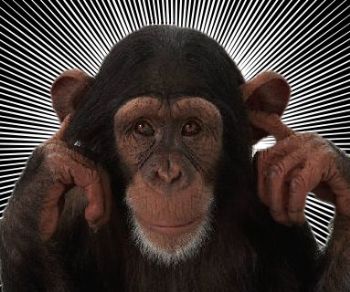


Of all the proof-related songs this one required the most judiciousness, for there are quite a few out there that point to man's struggle with his conscience. From Ben Folds Five's, "Brick", to the Verve Pipe's, "Freshman", to Crowded House's "Into Temptation", to Wham's "Careless Whisper" ("guilty feet have got no rhythm"), each one offers a different perspective on this primordial struggle. Yet what most impressed me about this particular one (viz. "Tempted") was the fact that it details, not the after effect of bad behavior, but rather that sick feeling that one sometimes gets prior to it. It is one thing to feel bad after some transgression, and quite another to go through that excruciating process of trying to get around your conscience when it is begging you to cease and desist; "I bought a toothbrush, some toothpaste, some flannel for my skin, pajamas, hairbrush, new shoes and case. I said to my reflection let's get out of this place... Tempted by the fruit of another. Tempted, but the truth is discovered..." The specifics of the lyrics are a bit hazy and impressionistic, but it is relatively clear that the subject is acting with the intent to be unfaithful. And from the standpoint of human desire all would be well and good were it not for that pesky little thing that we call a conscience; "At my bedside an empty pocket, a foot without sock. Your body gets much closer, I fumble for the clock. Alarmed by the seduction, I wish it would stop." Obviously he wouldn't be in the situation without some kind of willful intent, but all of that being said, he seems more than a little ambivalent about this set of circumstances. Later in the song, he even goes so far as to deny he has a troubled conscience, which begs the question; "Why does he feel the need to tell us that his conscience is perfectly fine, assuming that it is? And if it is, then what is provoking him to feel guilty if not his conscience? One objection to the argument from conscience runs something like this; "If I feel guilty, it's got to be because society (or my parents) has told me to feel that way." However, one might respond to this objection asking another question. Why would society place these reservations in us in the first place? And even if "society" did, what is guilt? Did society invent that too? And furthermore, declaring that some bad thing was invented long ago without then providing some logical basis for it (other than declaring that our ancestors are stupid and superstitious), is not really making an argument at all. The truth is our conscience is not simply some supernatural figment of our imagination, but as is the case with all essential empirically unverifiable truths (i.e. "love", "dignity", "free will), they are verified in a different, though no less substantive with. People without a conscience or any kind of empathy (another empirically unverifiable reality), are referred to as sociopaths, and sometimes if they are really gifted in this area, they even became serial killers. People who do live by their conscience, and who do have a deep sense of empathy, tend to be the most humane people we know. If this is an "accident", then it is a universally applicable one, and I highly recommend it to everyone.


The Argument from History - Viva La Vida (Coldplay)


The argument from history is a broader one, but in my opinion no less potent. The argument (or at least part of it) is a little like the argument from design, but applied to history in this instance. In other words, what is the greater miracle; that the twelve apostles- many of whom were relatively uneducated- spread a religion about a man that has on every level of existence changed the world philosophically and morally for the better; inspiring hospitals, universities, architecture, literature, art, music, morality, science, culture, etc., thus providing sufficient evidence to substantiate the fact that Jesus is who he says he was, or that bunch of average Joe's, some might call them yokels, invented this unparalleled institution. All this and I still haven't even mentioned the fact that the "institution of the fishermen" is still up and running today, inspiring individuals across the globe not only to live for Him, but more importantly those who are willing sacrifice their lives for him, not by blowing themselves and others up, but rather by courageously professing Christ, even while losing all worldly comforts in the process. If you believe this is an accident, then you have far greater faith than I! In any case, how does this argument manifest itself in popular music today? It does so in a couple ways. For example, Leonard Cohen who is a professed Buddhist (though he is originally of Jewish descent), has written several songs about saints (Joan of Arc and Bernadette of Lourdes). Hence, even for one who does not profess the faith explicitly, the courage and mission of some of the great saints still manages to capture their imaginations, even hundreds of years after their death. Yet even when popular artists criticize the Church as power hungry and/or anachronistic, they tend to do so in such a way that highlights the distinctiveness of the Church, even while trying to condescend her (e.g. Sting's "All This Time"). Yet if the Church is really as outmoded and anachronistic as these artists seem to think, then in what sense would it be impressive or fashionable to criticize it. In other words, if the Church weren't a real force in the world, then criticizing it would sound as dumb and redundant as offering a full-throated rebuke of the Visigoths or the Magyars. By contrast, the song "Viva La Vida" does not fall under this category of condescension, but rather offers a sweeping endorsement (at least poetically speaking), of the power and beauty swirling around the history of the Church. What I mean to say is that the lyrics (as well as the soaring music) demonstrates on many levels that the Church, as well as the Scriptures, provide imagery that transcends time and culture; "I hear Jerusalem bells are ringing, Roman Cavalry choirs are singing. Be my mirror, my sword, and shield; my missionaries in a foreign field. For some reason I can't explain. I know St. Peter won't call my name. Never an honest word. But that was when I ruled the world". Lead singer Chris Martin has revealed on several occasions that this song concerns his bad behavior as a young man. He doesn't necessarily mention anything about penance in these interviews, but he really doesn't have to. In essence the entire song is a quintessential ode to to Christian Redemption, not to mention a very solemn recognition of one of the quintessential Biblical paradoxes; "What good is it for a man to gain the whole world, and to lose his soul in the process". And how does he express this sentiment? By providing a lyrical barrage, if not a collage, of Christian imagery; "I used to rule the world, seas would rise when I gave the word... now I discovered that my castles stand upon pillars of salt, pillars of sand. Revolutionaries wait for a my head on a silver plate..." The true artist goes with images that work best, and if these images didn't still speak to the poets soul (even in the negative sense as with Sting), they would scarcely be used.


The Argument from Degree of Perfection - Human (The Killers)
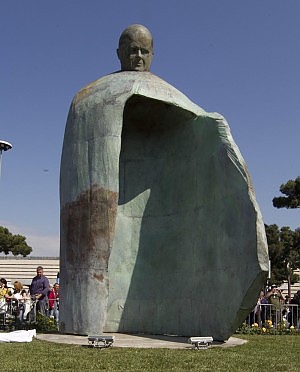

Technically this is part of the "First Cause" argument, but I would argue that it deserves its own category. The proof essentially goes like this: in order to give something a value, there has to be some perfect Value by which you measure it. So if I call something "beautiful", "perfect", good, or even bad, I am implying by these statements that there is a standard by which I can make this assertion. If there is not such a standard then such valuations are meaningless. Some may argue that this terminology is used purely for practical purposes. However, if this objection were genuinely true, then how can you declare with any real force and substance that someone like Hitler is a bad man? Or how would you be able to say that the behavior of a child molester is objectively wrong? If there is no reality behind the standards we set, then it is just as valid to regard a piece of "ugly" modern art (like the one above), in the same way you regard the Pieta, or the murals in the Sistine Chapel. The point isn't that there are not discrepancies when it comes to these basic questions, but if we truly believe there is no ultimate standard that can be debated, then does this not mean that all of our attitudes and convictions are arbitrary and meaningless? Are we not then simply a race of animals imputing meaning where there is none at all? In any event, some may be in complete agreement with this assessment, saying in essence, "I'm OK with that. What's it to you?" The song "Human", written and performed by the Killers, deftly points out the price that we would all pay for failing to acknowledge the higher Standard behind the human one; "Pay my respects to grace and virtue. Give my condolences to good. Give my regards to soul and romance, they always did the best they could. And so long to devotion, you taught me everything I know. Wave goodbye, wish me well. You've gotta let me go. Are we human? Or are we dancer? My sign is vital, my hands are cold. And I'm on my knees looking for the answer. Are we human? Or are we dancer?" Setting aside the debate on the exact meaning of the word "dancer" here, the lyrics are otherwise relatively transparent. If our humanity is not in some way ultimately grounded in the idea of an Absolute, then every virtue we propose (which would include "love", "hope", "freedom", "free-will", "dignity", "beauty", etc.) is utterly meaningless and without substance. Indeed, if you truly want to "wave goodbye" to these standards, then you must also say goodbye to everything that makes us truly human. If, on the other hand, you wish to preserve these principles, while simultaneously rejecting the larger Principle behind them, then you are little more than a delusional animal, an absurd "dancer", who inexplicably imagines himself to be divine, when in fact he is little more than dust.


The Ontological Argument - I Don't Want to Miss a Thing (Aerosmith)


The argument St. Anselm made famous goes something like this; "That than which nothing greater can be conceived". Translated for "earth people" it can be understand in this way: To whatever extent something can be conceived of, it has existence by virtue of the fact that it can be conceived (even if only conceptually). And indeed this is an interesting exercise. Simply try to envision (or imagine) something that doesn't currently exists. You cannot. Well, you say, I can imagine an elephant that flies with its tail, and that doesn't exist. Nevertheless, all you are doing in this instance is simply reconfiguring (like Mr. Potato Head) parts and ideas that already do exist. Perhaps next you will point to the fact that there are no such things as dragons and unicorns. Yet even as it relates to these "non-existent" things, they may very well simply be a conglomeration of pre-existent ideas which have been mythologized. In the case of a unicorn, we actually do see the appearance of this word already Scripture. However, in the case of Scripture it appears to be referring to a Rhinoceros (which of course has one horn). All the same, is it so difficult to envision a horse with one horn? In the case of the dragon, there has been much speculation as to the origin of this idea. Nevertheless, when you consider the existence of dinosaur fossils (the word suffix "saur" is suggestive of lizard), it is not surprising that one might develop a mythology which surrounds these creatures. In fact, there are many things in nature which might unleash the imagination of both young and old alike. From gigantic human eating snakes, to mysterious Leviathan-like sea monsters, the potential for a creature that represents a Mr. Potato Head version of the sum of all fears is not beyond the realm of possibility. But even if that were not the case, to me what is  even more of a mystery is why there are so few of these "non-existent" creatures in the first place. Indeed, the fact that there are so few of them makes me all the more curious about their origins. The second part of the ontological argument points out that if it is possible to envision this absolutely Perfect Being, then not only must it exist as a concept, but it must also exist as a reality. For the most perfect form of existence is not simply to exist as an idea, but rather fully and completely. A poem about love can be moving, it may perhaps even move you to tears, but a poem about love is nothing compared to being in love itself. In other words, the poem about love implies the existence of Lovers, yet if there is no truth to love, then why would you conceive of it in the first place? Far from being a good thing then, if love is merely a product of our collective imaginations, then it would seem to be a kind of torturous delusion. Yet how can one account for such a universally held "delusion" by simply dismissing it as a delusion? Such logic would seem to be rather circular. Hunger implies food; love implies a beloved; but the idea of God is nothing more than an invention of the mind? Some may argue that God is a sort of personification of man's highest ideals and virtues, but that nevertheless still begs the question about the source of those Ideals (see the "Argument from Perfection"). Anyhow, I think Aerosmith captures it best in the song "I Don't Want to Miss a Thing" from the movie soundtrack to the film Armageddon; "Don't want to close my eyes/ Don't want to fall asleep/ 'Cause I'd miss you babe/ And I don't want to miss a thing/ 'Cause even when I dream of you/ The sweetest dream would never do/ I'd still miss you baby/ And I don't want to miss a thing." As the world is careening towards chaos/ Armageddon, what matters most to the Ben Affleck character is not some pleasant dream about his beloved (for apparently even the "sweetest dream" will not suffice). No, the reason he is willing to forego sleep, is because love in the concrete sense is always preferable to love in the abstract. Even a blissful dream about heaven is nothing compared to the reality.               


Sunday, October 13, 2013

The 20 People You "Meet" On Facebook


I have been on Facebook now for about a year and a half, and what continues to fascinate me is the way in which individuals, those whom I know and do not know, express themselves on the so called social network. What is of particular interest to me is the odd way in which Facebook tends to expose and/or inspire people to communicate in ways that they would not necessarily communicate if you were in a typical conversation with them. As I have come to experience these alter-egos (or an exaggerated version of the original ego), it is has occurred to me that most of these people can be categorized with a certain degree of precision. I might even regard this post as the Myers-Briggs of Facebook. And while some individuals (including myself) might find themselves fitting into more than one of the following categories, I am willing to bet that very few will be able to say that their own Facebook "persona" is not in some way represented here. Warning: be careful not to be too offended by any these, or you may just be admitting that you are perfectly represented, and that furthermore you are incapable of laughing at yourself.


1. Mr. "I Only Use Facebook to Post My Own Opinion Blog" Guy


I figured if I was going to have a little fun at the expense of others on Facebook, I should probably start with lampooning myself. On the one hand, Mr. "I only post my own blog..." says that he is too humble and busy with important things to update his status by describing what he thinks and/or feels. But apparently he is not so humble and soft-spoken that he is unafraid of posting his opinions on sex, politics, and religion. Yes, this "shy guy," really recoils from posting something as shocking as "Hey, what a beautiful fall day this is...", but when it comes to those more non-controversial issues like abortion, homosexuality, religion and politics; why not blah blah about anything and everything? After all, I'm sure you would agree this is the best way to gently and humbly introduce people into your world of ideas.


2. Ironic Observation Dude


Ironic observation guy (or girl) never needs a lead in, or even someone to invite you to say anything. Reality invites them. Wherever something- ANYTHING- happens in the world, especially something that is painfully mundane or uninteresting, there they are, quick to scoop it up and give it a delightfully sardonic twist. Indeed, there is nothing on the scrap heap of reality that is off-limits to their magnificent, if quite frequently self-indulgent, wit.


3. Mr. "Comment On My Own Post/Status" Guy


As is frequently the case on Facebook, the unholy trinity of me, myself, and I is frequently at work. Thus, coming from the mysterious font of solipsism is the individual who seems quite content with posting something they happened to find interesting,  then proceeding to have a conversation with themselves about their original post. Much like Mr. "like" my own comment guy, he is more than willing to ROTFL at some point he has made, but it just seems that no one else is quite as interesting as he, so it is best to cut out the middle man (he figures) and simply enjoy a stimulating "convo" with all three of "me".


4. "Inspirational Thought of the Day" Lady


This individual probably had that "hang in there" cat poster in their room when they were in high school. And as they grew older they probably switched it out with some sort of poster from Hallmark with those innocuous, chubby little angels. These individuals are less interested in deep wisdom as they are in having their spiritual pillow fluffed by a nameless force as insubstantial as a cloud. If I were to offer someone like this an idea for the perfect profile picture, it would be a gigantic fortune cookie cracked open, with an oversized piece of paper, and message that reads; "The only thing more stale than this fortune cookie is the message inside". Now with Facebook being so universal, they can spread their fortune cookie theology to the ends of the earth, hoping beyond hope that their billowy clouds of optimism will tickle the little cheeks of every Barney and Elmo fan, thus giving them a reason to go on living.   


5. Vague (Though Suggestive) Status Person


This individual, it would seem, wants a little attention, but they are at least thankfully old-school about it, leaving at least a little room for the imagination. On the other hand, maybe if they came right out and told you everything that was going on with them, you wouldn't care quite as much. For example, this individual may have had a conversation with a cop in the street today because they needed to ask directions to some restaurant. But instead of just saying nothing about it, or giving context to the situation, being the diva that they are, they say something like; "Man, when I see people carrying loaded weapons in the streets it really freaks me out..." For those who read this status, please, whatever you do, don't take the bait! It's a trick. Nothing to see here, move along... On the other hand, if you want to play the game, go right ahead, ask them; "Really? What happened?? Please, please, tell me!" But just know that you are only perpetuating the drama.


6. "This Is My Child (or Pet) Doing Something Else" Person


Before half of the people I know get mad at me for this, remember, I made fun of myself first! At any rate, for this person practically any occasion is suitable for said display. Oh look, my child is holding a ball; oh look, my dog is sniffing another dog's rear end and swimming at the same time; behold, my son drooling on his bib, or rubbing chocolate cake into his newly displayed human pumpkin outfit. The fun never begins ends, does it? I know what you're saying- if you had a baby boy or girl, you too would be doing the same! And maybe you're right- but have you ever had a moment that could just be a moment, natural and free, without it becoming another pose? I mean, who needs the Truman Show when you've got a camera in your face all of the time. In fact, for some this  way of operating is so perpetual that if you search their pictures you begin to wonder if they exist anymore, or if somehow they've replaced their head with one that has a baby doll. OK, I'm sorry, I know that's a little Twilight Zoney, but when I see all of these pictures I half expect to hear the music. I mean if this wasn't their kid (or pet), they would probably be accused of stalking. And frankly, if they don't watch it, one day their child will accuse them of it. But if they are so obsessed with displaying every picture, why don't they just abandon their own page and make one dedicated to showing only cutesy wootsy pictures of their beloved baby or pet. What's that? People already do that? Oh, never mind then.


7. "Guess Where I Just Checked-In" Person?


When "Big Brother" is referenced in movies, novels, or just in plain conversation, the people who make this reference usually envision a government who seeks to surveil its people without their permission. However, this Facebook person ultimately seeks to beat Big Brother to the punch. This person is like the responsible child who is always sure to let mom and dad know precisely where they are and/or what their doing (or planning to do in the near future) by indicating on Facebook their exact locale. In fact, these folks may be the first people to actually beg the government to implant a computer chip under their skin so that their movements can always be tracked. Why would they do this? Either because they think that technology is cool, or because they want their "older brother" to constantly know where to find them at any given moment. Who needs Big Brother when Little Brother is so keen on providing the information without it even being demanded?


8. Stream of Consciousness Status Update Guy


I'll say this for "ironic observation guy", at least he attempts to interweave something amusing with his/her out-of-nowhere commentary. This person does not even offer that. "I just looked out my window"; "I felt funny when I woke this morning"; "What matters the most is that I'm trying". OK, listen very carefully: we call this stream of consciousness, and when it's part of a good book, we tolerate it (barely), but when it's part of a series of unrelated thoughts that begin and end in your head, then that really is something that needs to stay there. If you need to say it out loud rather than keep it in (like a belch), then feel free to either go to a psychiatrist, or simply mumble it to yourself in private- otherwise it just comes off as a form of mumbling in public, which really borders on a kind of insanity.


9. Mr. "Hipster Poster" Person


On some level it's hard not to like this particular Facebook personality. For wherever they are, it feels like the party is always happening in part because they are there. And whatever they are into, it seems as if they are always just a step ahead of you in the coolness department. When one encounters such an individual, it practically seems as if they have been hired by some anonymous source to be the model of what is "current", and that someone must be paying them for all of the time devoted to the concerts, restaurants, and random events that they seem privy to long before you. They are like the kid in school that was the first to sense that Jams or Birkenstocks were trending before they were trending, and you are you and me (mostly me) are like kid who buys the Birkenstocks two years later, only to look around and find that everyone now is wearing Tevas. The danger for this individual, as it is with many today, is that perhaps it can be said that wherever they are, they are not actually there. That is, in order to stay ahead of the game, so to speak, they are alone. Why? Because they are ahead of the game. They are so busy posting and looking to the next opportunity, they rarely get a chance to exhale and enjoy the life that is presently in front of them.


10. "Me, My Selfie, and I" Queen


One of the strangest phenomena I have experienced since diving into the world of Facebook is encountering this odd race of people who seem obsessed with capturing some sort beatific iconic image of themselves. Leaving aside those profoundly shameful people whose profile picture appears to some sort of tramp-tacular attempt to catch the attention eye at the editors of Maxim magazine, there are those who though, fully clothed, nevertheless seem to batting their eyelashes at the camera, themselves, and just about everyone else. It is difficult to know precisely who they are enamored with, but whoever it is, they seem to be in love. It reminds of that old SNL sketch called the Continental, where Christopher Walken would follow the camera around, in an attempt to woo it. Perhaps the most surprising thing about this person is that it is not always who you suspect. As a matter of fact, sometimes Facebook brings out the inner Selfie-diva in someone that you might regard as the last person on earth who would take a mirror selfie. Ah, the secret vanity of the soul all on display. Thank you Facebook!


11. "Friender for the Sake of Friending" Dude


Of all of the great mysteries of life that have been unlocked by the phenomenon known as Facebook, this must be the greatest.  How does one explain the person that makes a friend request and yet has absolutely no desire to do anything more than that? There are several manifestations of this individual. The first is the friend (or semi-friend) from high school or college who simply, I suppose, wants to say; "Hey, I knew you once upon a time, and I regard you as significant enough to make a friend request. Mind you, I don't want to have any actual communication with you, but I will give you a cyber what's up... and give you the illustrious honor of inviting myself into your news feed (and perhaps inviting you to follow some other personal page I have created)". Then there are those who simply make a friend request, who you barely know, and perhaps even have to ask your wife (or someone else) who this person is that wants to be your "friend". But whatever the circumstance, the one thing you can guarantee about this person is that once you have agreed (if you do, of course) to be their friends on Facebook, you will never again so much as hear a peep from them, which is of course the definition of a friend.


12. Mr. and Mrs. TMI


When you think of people who tell you a little more about themselves than you would really like to know, what generally comes to mind is that guy at the party that you're meeting for the first time, who, out of the blue, feels the need to tell you about his addiction to pain medication, or that woman who feels the need to inform you that her father abused her as a child. But what makes this so special as it relates to Facebook is that the TMI person doesn't have to resort to one person at a time, or even a group of people- they can announce with a giant bullhorn to everyone in their news feed the sordid details of every scandal and private matter which they should either be telling only a few trusted friends, or confessing to a priest. With Facebook, they publish both their shame as well as their most intimate thoughts and they can do it by word and/or Instagram.


13. "Scary Alter-Ego on Facebook" Guy


Back in the 1970s Billy Joel wrote a song called the Stranger about being in a relationship with someone, thinking that you know them well, only to encounter a side of the their personality that may be regarded as the darker side. Well, apparently Facebook not only has the ability to unleash the Stranger, but it practically allows the "stranger" to live in perpetuity. However, if you are like me and actually prefer your friends to be who you thought they were, as opposed to some sort of Sybil version of themselves with multi-personalities, then the Stranger may not be such a cute addition. Now if the stranger were a milder version of that individual, or if this stranger demonstrated a more virtuous side of the person, that would be one thing. But this is not the case. To the contrary, the stranger on Facebook usually reveals a side of that person that would generally not exposed in decent company. However, for some reason, on Facebook all bets are off. You would think that because so many more people may read or see what you put on the network you would be less apt to reveal the "stranger," but generally the reverse turns out to be the case. When they are with a group of friends they are relatively modest and soft spoken, when they are with a group of "friends" who are quite often more like strangers, they reveal the secret store of their hearts.


14. "Ask You To 'Like' My Random Things" Person


I am all for supporting a cause if supporting it actually accomplishes something, but when someone on Facebook asks me to click 'like' if I "think puppies are cute", or to do so if I prefer peace to war; I have to ask myself whether or not the zombocalypse is upon us. Look, I like peace and puppies as much as the next guy, but I'm sorry- I am not going to help someone get to a million likes in order affirm what I, they, and practically all of humanity, already know. I suppose in some way this practice can be seen as a positive attempt to encourage people to live a more virtuous existence; however, clicking "like" on a laptop for even good things (like oxygen, food, rainbows, and puppies) may have all the effect of making us feel good, without any of the effect of actually making the world a better place. People acting virtuously is the only way to make society more virtuous, not merely liking things that are impossible to dislike.


15. The Political Dead-horser                         


Ah, Mr. Political Dead-horser. What can we say about you? A few things, to be exact. First of all, you certainly are not afraid to express your opinions about particular candidates or issues. But that is not the problem, for obviously we all have our own convictions. What sets you apart is your apparent willingness to be painfully repetitious about how much you dislike a particular politician, or how you can find six degrees of Kevin Bacon in every cause that you push. In other words, no connection is too remote for you to make some sort of association between your issue of today and anything else in the world that goes wrong. If there are children starving in Somalia, then you can somehow trace it to global warming. If China engages in forced abortion, then you can somehow trace it back to the evil of gun control. And if a Republican voted against nominating a particular ambassador to Papua New Guinea, then you can always manage to connect it to the Republican "war on women." Spending time with you on Facebook is a little bit like watching Russell Crowe in A Beautiful Mind uncovering numerous FBI conspiracies in the newspaper based on several unrelated articles. Indeed, there is never a bad moment for you to grind that axe one more time, even when the connection that you are making is more than a little questionable.


16. "Business Promoter" Person      


There are obviously many uses for Facebook, but before I was on it and was questioning its value, I was told that it was a good way to get your business out there beyond the usual circle of acquaintances. And now having been on it for a while I cannot help but notice how true this that comment was. Yet what I have also come to notice is just how quickly using it for such things can quickly spin out of control. Let's face it (no pun intended), Facebook already feeds our little inner narcissistic beast to some extent, so then add our business ventures to it and now we have narcissism on steroids. And of course it is difficult sometimes to draw line between promoting something that you feel compelled to, and becoming a "self-promoter". Thus creating an exhausting persona that is constantly running the rat race of getting another man's attention. Experiencing this person is a little bit like being on the phone with your cable, internet, cellular provider and having to fend them off for ten minutes because they keep ignoring the fact that you said you just wanted the basic package and not an upgrade.


17. Mr. " 'Like' for the Sake of 'Liking'" Guy


You might think that this individual has a kind natural penchant for affirming others, or that by clicking "like" (or at most, commenting "haha" or "lol") for every little verbal burp, they just want to spread a little cyber-sunshine, and maybe you're right about this. However, another keen possibility is that they simply want to store up for themselves in the easiest possible manner some positive computer karma. In every day conversation this is the same person that will probably "yes" you to death, and ultimately make you feel like they are listening to you; that is until you make the unfortunate error of asking their opinion on these matters, at which point they get that deer in the headlights look and ask you to repeat yourself. But whatever their reasons for doing so, there is usually nothing too inane, too confusing, too sad, or even too un'like'able, to preclude or prevent them from clicking that magical 'like' option- making you all the more suspicious that they are really aren't paying any attention at all to what your post actually said.


18. Mr. or Mrs. "Friendly on Facebook but Aloof in Person" Person


You've just accepted the latest friend request from a person that is barely an acquaintance, thinking that this may mean that perhaps they are interested in becoming more acquainted with you. Guess again. Heaven knows why they friended you, but it certainly has in no way solidified any kind of bond, for the next time you see them they are as aloof and awkward as you formerly remembered. It reminds me of the song Diary by the group Bread, where he reads it and thinks that she is writing about him, leading him to believe that she is simply playing hard to get. Alas, she is not, and the contents of the diary are about someone else. Well, Facebook is even weirder than that, for in this case they did request your friendship- they just happen to not be interested in it. Such encounters are the very essence of what makes Facebook so bizarre.


19. Mr. Person Who's Gone M.I.A.


So you think you have a bond with someone on Facebook, or at least you've established some kind of connection, and then what do you know- they put on Frodo's magic ring and they disappear for months at a time. Or better still, someone friends you that you really would like to reconnect with, only to find out they don't actually use Facebook much, and that the only time they do is to "friend" people and "like" things like Subway and Walmart. What can we say about this person other than that they appear to be  little more than what one might call a fair-weather Facebook friend (which seems a bit of a redundancy). But more than anything, it reminds me of how crestfallen I used to feel when I would get a Valentines card from a girl in middle school- only to realize that her mother made her give me (and everyone else one in the class) and that I really wasn't that special to her after all.


20. Mr. "Look at What Food I'm Eating Right Now" Person


I like a good meal as much as the next guy, but when an individual deigns it necessary to take a picture every time they eat something that they find delectable, I cannot decide whether they are doing it in order to share the experience with me, or if it is some kind of culinary taunt; "I'm eating at a fancy restaurant and you're not" (insert taunting voice). Yet even if there is no taunting involved, I cannot help to wonder why anyone would want to take their phone out during a nice dinner conversation and provide a close-up of a plate of food. It feels a little like when you were a kid and your friend would open up his mouth and show you his food. The truth is the food may be spectacular, but a zoomed picture of a brownish gray piece of meat with some sort of hard to make out fatigue-colored green vegetable, doesn't exactly get the mouth watering. But hey, if it makes you feel good to torment some poor starving man who is not as fortunate to eat Chez Morfraire (or whatever), then knock yourself out.    


Sunday, September 29, 2013

What I Learned from Tarzan (and The Who) about the Holy Trinity


When one thinks of Tarzan, perhaps the last thing that comes to mind is the Blessed Trinity. Nevertheless, there is something quite profound when you get right down to it about the manner in which Tarzan speaks. Tarzan is what one might call a feral child, and what we mean by that is that he was "raised" in the wild, not by a pack of wolves, by rather by monkeys. And considering the type of environment in which he was reared, it should come as little surprise that his grammar was more than a little bit lacking (viz. "I Tarzan. You Jane!"). But why is that a significant detail? And in what sense does it have anything to do with the Holy Trinity? 

In recent decades psychologists and doctors have gained a greater and greater understanding of childhood development. For example, there have been any number of studies that dwell on the importance of human touch- along with the manner and age at which a child develops the capacity to speak. The latter may seem less significant than the former, but apparently they are both intimately connected. In point of fact, not only do such insights tell us a great deal about the nature and importance of "childhood development", but they also (I would suggest) lend insight into our identity as children who are made in the image and likeness of the one Triune God.


Some years back there was a TLC documentary on a little girl name Genie Wiley who had been kept isolated in one room for the first thirteen years of her life. Her father ordered the mother and the rest of the children not to touch her or talk to her. When the authorities finally discovered the child, she was, not surprisingly, malnourished and psychologically traumatized. So terrible was her treatment that she behaved more like an animal than a human being. According to the doctors report, in spite of the fact that she was chronologically aged thirteen, she appeared to be physically more like the age of six. Initially the doctors were optimistic about her progress, but as time went on they quickly came to realization that some of the damage was irreparable. Indeed much like the mythical figure Tarzan, no matter how hard her teachers tried, they could not seem to get her to speak in grammar. Mind you, she could use certain words as indicators, she just couldn't in any way seem to connect different ideas to one another.


If like me you too hated diagramming sentences as a child, it might be difficult to appreciate the significance of this deficiency. Yet one need not appreciate the academic exercise in order to comprehend the significance. At our core, human beings are physically, psychologically, and emotionally oriented towards others. Observe how the arms naturally reach out to embrace others, or how each man is marked by that indelible belly button which reminds us of our immortal connectedness. Consider how our sexual organs are specially designed to work in concert with members of the opposite sex. The point is when we deny this communitarian aspect of ourselves, we find that we are somehow less than ourselves. "It is not good for man to be alone." If there were ever an understatement in Scriptures, this would be it! This does not mean that our time by ourselves is bad (for life is filled with such healthy retreats); what it means is that even our time alone should ultimately be at the service our time together.


If Tarzan and the story of Genie do not convince you of this trinitarian truth, simply consider what too much time alone can do with our own equilibrium. Being in your own head (or on this computer) too much can make anyone feel a little bit unbalanced. Just look at the behavior of some of those responsible for the mass shootings in recent years. How many of those situations were exacerbated by the fact that those men spent an inordinate amount of time locked up in their rooms? I think most of us would agree that a little more time in the company of others wouldn't have been the worst thing in the world for any of them.

And then of course there are a few notable examples from the popular culture; like I Am Legend and Cast Away. In the first movie, the main character is completely alone because practically everyone on the planet has died due to a plague. As a consequence, all he has left is his dog Sam. Prompted by these circumstances, he naturally feels compelled to anthropomorphize his dog and engage in conversations with adult mannequins. Then there's Cast Away, a story in which a man, played by Tom Hanks, is shipwrecked on a deserted island. As an expedient for finding someone to talk to, he paints a face on a Volleyball; names it Wilson (after the brand name), and starts yelling at it. Thus, even when a man lacks someone with whom to communicate, he still feels compelled to invent some form of replacement. There is an old expression; "If God didn't exist, we would have to invent him." Well in this instance I think we might just as well say; "If the Trinity didn't exist, this too we would have to invent."                        


At this point you may still be saying; "How does the fact that abject loneliness drives us nuts point to the fact that God is a Trinity?" Good question. It is a deduction arrived at from the simple Biblical notion that "God is love." For if God is love itself, and we are "made in his image and likeness" (those for whom it is "not good to be alone"), then why would it make sense that there is a different standard for God? If it is insanity for man to be in utter isolation, then imagine what sort of madness would take shape if you had to live that way for all of eternity (actually don't- that might mess with your mind). In order for God to be love itself, he must possess within his own Being all that love entails, otherwise he could potentially love something beyond himself, but would be incapable of being Love.


If we accept the notion that God is love, then there are only two options that seem logical to entertain about his nature. The first possibility is to envision a concept of God which resembles something like the Christian notion of a divine "Tri-Unity". The second idea would be to conceive of a God who is completely and utterly full of Himself. Indeed, if there is no Other in this equation, then it would logically follow that Selfish Love would be the defining characteristic of this Being. This would then affirm (God help us all) the modern instinct that we should make it our vocation to pamper ourselves with spas, incense, flowers, poems and self proposals. Instead of self sacrifice we would all be worshipping at the altar of the Holy Selfie, praying incessantly in the name of Me, Myself, and I. But if God is in fact Trinitarian in nature, then it seems only appropriate that the highest form of love would be to lay down one's life for one's friend, and/or to vow one's self to another so completely that a third person miraculously springs from the wellspring of that love.


Perhaps this explains why some of the most satisfying love songs ever written are not anything like those bad Catholic hymns wherein we must sing about how wonderful we are, or those terrible hip-hop songs where the artist speaks of himself in third person and feels the need to repeat over and over again why he deserves respect. To the contrary, love always diminishes the self in favor of the beloved. Yet there is one love song that does this better than just about any other. Known primarily for their anarchic spirit, the band The Who is not generally associated with something so "banal" as a love song. However, the song "Bargain" may in truth be the most rebellious song they ever wrote (if only for the fact that it preaches supernatural love in an age which would have been the least tolerant of it). The idea is an ancient one, the notion that the lover should go to every length possible, including a humiliating death, in the name of the beloved; "To win you I'd stand naked, stoned, and stabbed..." Making this sentiment even more beautiful and original, Townshend gives his sacrifice a chivalric twist; "I'd call that a bargain, the best I have ever had." The lover is not only brave, but humble, for he sees his effort as a "bargain" in comparison to good of love.


The first thing we should know about the nature of perfect love is that it finds perfection in the complete and utter gift of self to another- not so much because it is demanded by the beloved- but rather because it is demanded by the lover of himself. The love between lover and the beloved is never stagnate or presumptuous, but rather is constantly seeking to embody and express that spirit. Perhaps the most paradoxical part of the song comes towards the end; "I look at my face in the mirror. I know I'm worth nothing without you. In life one and one don't make two; one and one make one. And I'm looking for my free ride to me... I'm looking for you." Love in this sense is unintelligible without the beloved. In order for one to truly know one's self, one must give one's self entirely to another, holding nothing back. To whatever extent we are capable of such an expression, we are divine, and to whatever extent it is withheld, we are practically indistinguishable from the animals.

A recent study of the brain by neuroscientists upholds this trinitarian instinct. One of the most interesting details to come out of the survey was the fact that more endorphins are released in an act of charity than in almost any other activity. In fact, the only thing comparable to this charitable "high" was the brain's reaction to ingesting narcotics or winning the lottery (both of which seem to me a rather temporary expedient). In any case, who would have ever thought that science would ultimately help vindicate such a sublime doctrine, who would have imagined that it would come to the aid of such a paradoxical idea, the pious notion that; "...it is better to give than to receive"?


Saturday, September 21, 2013

The Best Argument For Atheism... and a Response


There are any number of arguments which attempt to disprove, or at least call into question, the existence of God. But the best atheistic/skeptical argument I have ever heard runs like this:

(Disclaimer) First of all, if I have failed in any way to frame this objection as fairly and as accurately as would please an atheist or skeptic, I would invite someone who shares this view to re-phrase it in a way that is more in keeping with the objector. My intention here is not to create a "straw-man" with which I can easily dispose (for I genuinely find this to be a challenging objection), but rather to tackle the argument at its most challenging. Otherwise, what would be the point of presenting it? Secondly, I am approaching the argument point by point, from most general, like, can one have a general belief in a Deity; to most specific, like whether or not a deep devotion to God is even possible.


Objection:
As a purely rational human being (i.e. as a materialist) I demand evidence for things, which is why science seems more practical to me. In other words, I put my trust in things which can be verified and tested empirically, not in things which lie beyond it. Thus, it seems wholly irrational and impractical to base your life on something or someone that you have never met, nor are likely to meet.

Response:
First Point: To trust in the work of science is already to admit to a design and a pattern to things, the only real question is who or what is ultimately responsible for that mysterious "pattern". Whether you believe that the order itself is a consequence of a Creator, or that it comes from nothing at all, you nevertheless must have full faith that the method is logical, trustworthy, and consistent. In either case, we come to trust in it for a very simple and practical reason... it works.


Second point: Presumably at their best, both religion and science (if we must separate them in this way) seek to come to the knowledge of what is true and real. Neither one would suggest that they are absolutely able to exhaust all that can be known about the physical universe and beyond. Nevertheless, they both embark on this particular journey in order to uncover clues and hints that further illuminate this mysterious engine that propels everything in the universe. In light of this, it should be noted that the scientist and the religionist both base their belief in things visible upon those which are not visible (i.e. wherever there's smoke, we naturally deduce there's fire). In other words, the things that we do see, provoke immediate interest or speculation in the things which cannot be seen.


Third point: The materialist contends that life can be lived on purely materialist grounds. I would argue that not only is this impossible to live for those who wish to live in a humane world, but equally for those who simply wish to continue to practice science. Indeed, everything that makes life worth living (not to mention livable) is empirically unverifiable. From the thoughts we think, to the virtues that we practice, to the conscience that atheists prize, to our free will, to love, to dignity, freedom; even the scientific formulas and mathematical equations necessary to justify a materialist world-view cannot technically be observed unless humans represent them. Thus, for every bit of science that we do (or anything else which is important in this world), we must inevitably presuppose/admit to some sort of immaterial reality in order to draw successful conclusions about what is in fact material.

Fourth point: This part of the objection is- in my opinion- the most potent and certainly requires our fullest attention. Whereas the first part of the argument concerns itself with the question of science vs. religion (of which, again, there need not be opposition) the latter raises the question of whether or not we can really have a deep and abiding relationship with a personal being whom we have never met. The only way to answer this part of the objection is to see if we can observe instances of this in the world around us.


First of all, we are certainly not privileged enough to have met every single ancestor that is responsible for us being on this planet (including the first one), nevertheless we know logically without that "first cause" there would have been no effect (namely us). So in this one sense it is irrelevant whether or not we have met them. Even if we only knew this much about God, it should be enough to inspire some sort of reverence and gratitude (if only in a Deist manner), just as it is appropriate in the case of honoring our own ancestry, many of whom we have never met.


Secondly, it is also possible to compare this remote kind of devotion to the "celebrities" that we venerate in our culture. Once again, we may never have been blessed enough to meet them personally, but simply by reading their words, hearing their music, listening to tales about them, etc., we nevertheless feel that they have touched our lives in ways that perhaps even those closest to us have not. In all walks of life there are these heroes (dead and alive) that, for whatever reason, we seem hard-wired, or at least generally inclined, to venerate.


And then lastly, I offer the following analogy in an attempt to offer a rational justification for having a deep and profound devotion, nay a communion, with one whom we have never technically met. A child need not remember his father in order to know that he longs for his embrace. In the case of an orphan, the child is often haunted by questions surrounding the nature of  his conception and birth, especially as it relates to his parents identity, as well as why they left him in the first place. So even in the absence of this parent, the child still finds himself affected by this person (even if it is only in the negative sense). This does not simply hold true in the human sense, but also spiritually. Where is God? And why did he abandon me? Am I an accident? Or was I conceived in love? From a Christian point of view (and to some extent a Jewish), we have an answer to this question; "Can a mother forget the child at her breast, even so I will never forget you" (Isaiah 49:15); "Even if my father and mother forsake me, the Lord will gather me in" (Psalm 27:10). This promise in the Hebrew Scriptures is fulfilled in Jesus Christ, for in the Incarnation we find out that the father's absence is not the result of abandonment, as was true in the case of his first parent (viz. the sin of Adam), but rather the result of heroism. It might likened to a father who dies in the process of saving his baby boy. And though the child remembers nothing of these events, the mother (i.e. the Church), consoles the boy as he grows up, telling him stories about his father's incomparable goodness. She also presents to him a diary addressed specifically to the child, which chronicles the events of his life, expressing, among other things, the father's deep and abiding love for the boy, along with advice on what it means to be a virtuous man. The "diary" ultimately ends with a promise, albeit one that requires tremendous faith, one that ensures a reunion of the two as long as the child follows in the father's footsteps.

Whether or not one believes that this story is true, it is nevertheless difficult to argue that a son in such a position would not feel a deep sense of obligation and commitment to a father who would do this for him (heck, sometimes kids feel it for fathers who wouldn't do it). And though the child would only have an assortment of relics and second hand accounts of these tremendous events, he would nevertheless feel a deep sense of responsibility to live in such a way so as to honor his father's life. As a matter of fact, it might even be argued that this child would be so committed to honoring his father's memory, that he would make his entire life a memorial to him, one in which he dutifully and meticulously carried out his father's final wish; "Do this in memory of me."          


Saturday, September 14, 2013

What Wayne's World Taught Me About Divine Worship...


A few years back a family member of mine who is also Catholic once challenged me about all of the emphasis in the Catholic liturgy on the unworthiness of man. She pointed to the prayer that we say right before receiving communion; "Lord, I am not worthy to receive you, but only say the word and I shall be healed". Since then the Church has returned the prayer to its more Biblical roots, which places it in the context of the Centurion's recognition of Christ's "dignus" (or elevated status), nevertheless, I must confess at the time her criticism did catch me a little off-guard. In other words, what she was saying was: why all of the emphasis on man being a sinner, and in particular, the excessive focus on his unworthiness? Well, I guess the simple answer can be found right in Scripture, which is to say, perhaps the best approach is to ask the people in Scripture the reason they responded to Jesus in such a manner.

I already mentioned one instance of this "groveling" expedition, but let's look at another. Early in the Gospels Jesus is out preaching to the crowds when he asks permission to borrow Peter's boat (Peter has a small fishing business). He does this because the crowds are closing in on him and he needs a little space to be able to address them. When he's done speaking to the crowds he turns to Peter and the rest of the fishermen and tells them to cast their nets into the deep. They respond with incredulity because they have been fishing all night and have caught nothing. However, in spite of their skepticism, they ultimately choose to honor his request, and subsequently catch so many fish that they can hardly haul them into the boat.


Spontaneously reacting to this miraculous event, Peter immediately falls down before Jesus and declares; "Lord, depart from me, for I am a sinful man!" (Matthew 5:5). Hearing this for the first time, our initial inclination might be to wonder why he would have such a strange reaction. Indeed, one should not be groveling at such beneficence, but rather expressing pleasure with the results; "Thank you kind sir for your help- would you be so generous as to accompany us on all future fishing expeditions?" Yet therein lies the problem with how we interpret the story, and even more importantly, how we interpret worship. To see this scene only as some sort of miracle for miracle's sake is to miss the whole point, not only of this story, but of the Gospel in general. Likewise, to analyze Peter's reaction as a kind of low level serendipity is equally near-sighted.


Enter Wayne's World. Who better to show us from whence comes this desire to fall prostrate than Wayne and Garth? The scene at the bottom of this post tells you everything you need to know about why Peter reacted the way he did in the presence of Jesus. Now, I have no idea whether or not Wayne and Garth believe in God, but regardless of their beliefs, they do demonstrate orthodox behavior, especially as it relates to divine worship. As a matter of fact, if you asked them the same question that my relative asked me- but applied it to the band Aerosmith, they might look at you like you had two heads. "Why do we fall down in worship before them? Well duh, because they are in the pantheon of 'rock gods' and the appropriate behavior in the presence of something so immeasurably great is not to act like it is nothing, but rather to hide your face from the glory."


Yet as important as it is to bow down before something greater than yourself, there is another reason that Wayne and Garth (as well as Christians) bow down. They bow down out of love and reverence in the same spirit as a man lowers himself in proposing marriage. Familiarity may be great, but when it comes to love, nothing beats the sensation that you have just won the lottery because you can't believe you have been chosen. And so it is that Peter, Wayne, and Garth (the latter two not apostles) receive back stage passes to "come and see" how their heroes (and Lord) spend their time away from the crowds. Incidentally, as each one remains prostrates, so also they are told not to be afraid, to arise and get up, and that in essence they "are worthy" to share in an audience with their respective God/gods.

All of us are made for worship, but not merely to worship something that is- to a terrifying degree- greater than ourselves (though there is that as well), but to recognize that in the truest sense we fall prostrate because we are invited to participate in a love so great and so wonderful that our hearts are compelled to cry out "I am not worthy." Does this diminish us in any way? To the contrary, when it comes to love, it is gratitude, not self-hatred, that makes us declare our unworthiness. Indeed, unworthiness in this sense only amplifies the experience of joy in the presence of God.

The scene ends with an equally Biblical moment, wherein Wayne and Garth receive a high-five from the band, and then look at their hand as if something magical has touched them. Here we are reminded as well of the power and sublimity of the touch of Christ. When they do eventually arrive back stage with the band, one can also see the pattern of the Gospels at play here as well, though one does not assume that any of the prostitutes (or groupies in this case) are encouraged to repent. Even so, in some odd way I suppose they too are motivated, however misguidedly, by the same thing as Wayne, Garth, and Peter.


To stretch this metaphor alarmingly too far (though I still think it fits), the conclusion of this lesson of divine worship and Wayne's World, comes when these metal boys actually join their heroes on stage for a performance. This would seem to me the culmination of Christian worship, the notion that awe and reverence in the Christian sense is not simply a passive thing, but rather a participation in the divine life. Just as in Gospels the apostles eventually take up the ministry of Christ and perform miracles in his name, so in a similar way God invites us up on stage to join him in this dramatic symphony of salvation. All the same, just because we are invited one stage to play with the band, doesn't mean that we do not still consider ourselves, like Wayne and Garth, to be in a magnificent dream, one that seems far too good to be true.