Friday, April 3, 2015

Whisperings from the Cross: 11 Insights I've Gleaned from Contemplating the Crucifix


It is said that when St. Thomas Aquinas "submitted" his writings on the Eucharist before the crucifix one day, our Lord actually came down from the cross and expressed his approval of his writings; "Thomas, you have written well on the Mystery of my Body and Blood." I am not quite sure how that event might have looked from the perspective of those who witnessed it (apparently some of his Dominican brothers were the ones that testified to these events), but what I can most certainly say is that it wasn't the first or last time that a crucifix spoke to a devotee. Now I am not suggesting that these kinds of miraculous exchanges happen all the time- rather what I am saying is that the crucifix is a most eloquent instructor (St. Augustine called it a pulpit) that speaks even when it says nothing at all. Below I present, in brief, eleven things I myself have learned from this unusual, though occasionally chatty, pedagogue.


1. The Cross as a "Garden Stake" in a Graveyard


In a certain sense the cross can be seen in just about everything, however, there are some things that are more poetically apropos than others. For example, I see the cross in every power line, but that doesn't mean that I draw some deeper connection there. However, when I look at the cross plunged into the earth like a garden stake, I do see a poetic, ironic, and undeniably powerful image of life and love amidst ruins.


2. The Crucifix as a Gestalt Switch


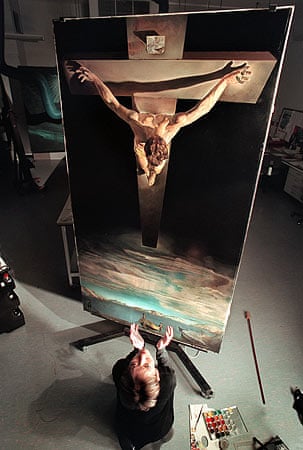
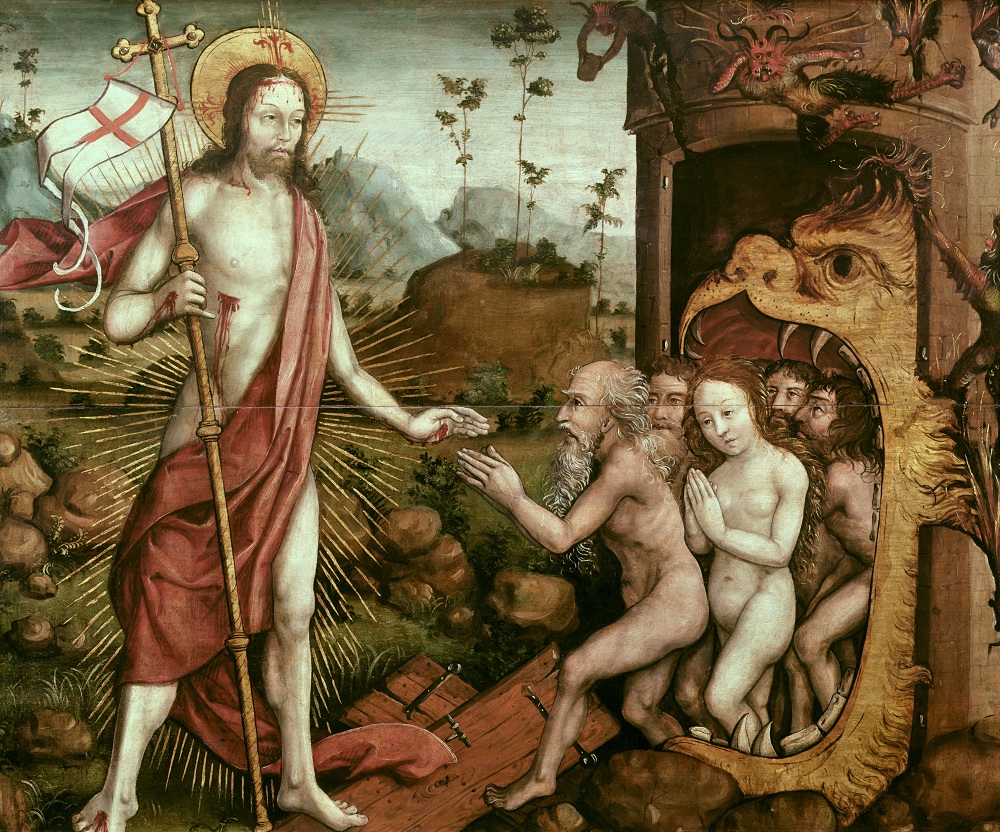
Some crucifixes present Jesus as if he is some kind of "holy diver" about ready to plunge into the abyss of death in order to fish man out of his hellish prison. On other crucifixes the cross seems to me to be a vehicle for flight. In this particular vision, instead of a piece of dead wood, I see the wood of the cross as a pair of wings, and Jesus frozen for a moment in time before he soars through the roof of the night. Which of these visions is correct? Yes.


3. The Crucifix as the Ultimate "Shape" of Paradox


Obviously there is no greater paradox than the belief that we should receive eternal life in exchange for killing God. The cross boasts numerous paradoxes in connection with the subsequent death and resurrection of Jesus Christ, but even more than that, the shape of the cross itself actually provides a visual definition of what we mean when we say that the cross is a paradox. What is a paradox? It is an apparent contradiction that when considered more closely actually reveals the answer to a riddle. In other words, the deepest truths seem contradictory and absurd at first glance (i.e. they "cross" or contradict one another). However, when you look more closely at them you realize that while ordinarily there is nothing in common between them (i.e. life and death), yet in one unusual instance they really do "intersect" and do have something in common.


4. The Cross and Jesus Barring the Way to the Tree of the Knowledge of Good and Evil


In the garden of Eden, Adam was blatantly derelict of his duties to Eve. In fact, apparently he just stood there and watched as Eve destroyed herself, and then politely and quietly endorsed the project… only to blame both Eve and God when confronted with his cowardice. By contrast, the Second Adam shows the first one (me) how it's done. Indeed, this second "Adam" is so horrified by the prospect of the New Eve "tasting" death he himself bars the way to the tree of death, preferring instead his own crucifixion, to her demise. In this "still life" of the New Adam's passion, we see his love for his bride immortalized.


5. The Crucifix and the Priestly Orans


Just as each priest holds his hands differently when he is praying the prayers of the mass, so each crucifix is unique in the same way. If the priest wants a simple definition of who he is to be, let him understand that the reason he is to hold his hands so often in this manner is because he is to lead a cruciform existence. There is no more priestly moment in Christ's life than when his arms are stretched wide open and nailed for all of eternity in the orans position on the cross.


6. Jesus and the Piece of Dead Wood that Is Me
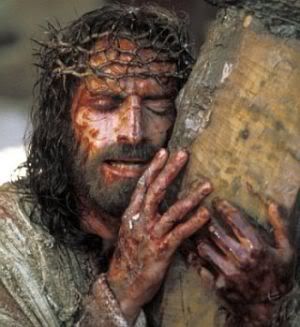

The cross is not incidental to the story of Jesus' life, death, and resurrection. Imagine if Jesus had simply died on the road to Calvary- how inspiring would a statue of a man dead on the ground be? No, in order for him to draw all men to himself, he had to be exalted on this most unusual of thrones. However, another way to see this burden is not only in the spirit of obligation, but strangely enough as an embrace. To my eyes this piece of dead wood represents the Bride of Christ, and Jesus carrying her to Calvary, not only to exalt her, but in order to implicate himself so closely to her that the two become one. What a bizarre fairy tale- the wedding of the Prince of Peace and the Princess, who, because of an ancient curse, had been reduced to little more than a piece of splintering driftwood. This must be the explanation for why this great prince seems to embrace it with such passion and affection.


7. The Cross as the Hilt of a Sword


In days of yore when one conquered a particular territory, it was customary to lodge one's sword into the soil so that only the hilt of the sword was seen. In the case of the cross we have a strange declaration of victory indeed. For the sword hilt in this particular instance appears to be the sign of the devil's victory, and not the Lord's. Yet in a strange twist of fate that no one could have envisioned (especially the devil), this sign of failure turns out to be the ultimate symbol of triumph. Yes, by defeating God, the devil himself actually sealed redemption for man. And by the devil marking his territory with the hilt of the cross, he actually assisted in the re-dedication all of humanity, along with the earth, to God.    


8. The Crucifix as the Abiding Connection between Theology and Morality              


Just as on the cross Christ is suspended between heaven and earth, so also we recognize in that self same cross a bridge between heaven and earth. Yet this bridge not only symbolizes the pathway that God reforged from earth to heaven, but (among other things) the bridge between the theology surrounding the nature of God and that which shows the highest virtue of men. More often than not, Christians fail to see the connection between the Creed and morality. What does believing in God have to do with what I do with my body? And yet there it is at the cross explained in full, the marriage of who God is, and the explanation of who we were/are supposed to be. Who is God? Look at the cross. How are we supposed to live? Look at the Cross. "This is my body given up for you. Do this in memory of me." This is not only a liturgical command, but a moral command.


9. The Cross and the Basic Architecture of Everything


I thought it was more than a little ironic that some folks didn't want the "ground zero cross" to be included in the 9/11 memorial. In a sense they were not only protesting the Christian religion, but even the very element of the Christian Faith that is most necessary for this world to survive (viz. sacrificial love). Hence, these protesters really were anarchists of the worst order, for even a simple architectural shape that is the most necessary building block for building anything at all seemed a threat to them. Why? Because it reminded some people of Christian hope. Apparently these individuals dislike religion so much that they would prefer absolute rubble and destruction than having to lay eyes on that oh so terrible shape that reminds them of Christ. In addition, since I last posted this, there was the catastrophe at Notre Dame Cathedral which also managed to leave a similar glimmer of hope. As officials made their way into the cathedral post-fire, they were stunned to find that the glorious crucifix and the accompanying Pieta remained relatively untouched by the terrible blaze. This, and stories like it (and there are others), remind us how Christ, and the symbol of his cross, present a slightly happier conclusion to a story like Samson's, where a strong man provides our metaphysical homes with structural stability and endurance, preventing them with his sacrificial arms and strength from being thrown into catastrophe.  


10. The Cross and the Rise of the Everlasting Phoenix


The Sunday before Good Friday is, depending on your point of emphasis, either Passion Sunday or Palm Sunday. The most obvious reason for referring to it as "Palm Sunday" might seem obvious enough. Jesus came into Jerusalem and the inhabitants of the city celebrated his arrival by waving palm branches in the air, presumably because they believed, at least on some level, that he was the long awaited Messiah. Interestingly, in the Mediterranean world, palms represent a sign of victory, of peace, and even of immortality. Another interesting detail that emerges from the exploration of this ancient symbolism actually comes from science. "Phoenix"is the category of plant (more specifically, the genus) under which the palm is frequently identified. Coincidence? Apparently not- the Greek myth surrounding the story of this mythical bird holds that every five hundred years (at the end of its life span), it flies to the Heliopolis in Egypt, makes a nest atop a palm tree, dies, then  rises from the very same body that perished. Another version suggests that the bird (likewise at the end of its life), is immolated on an altar, only to rise again from that very same altar of sacrifice. The point here is not so much to get lost in the myth (though it is a cool one for many reasons), but to realize the fascinating association one can make between the waving of something so simple as a palm branch, and the down right combustible image of Christ's arms outstretched like an immortal Firebird, sacrificed atop a sacred tree, and promising to rise again in perpetuity.          


11. The Shadow of the Cross and the "Overshadowing" at the Annunciation      


When Mary is visited by the Archangel Gabriel and told of her special election, she inquires as to how this will all come about, being that she is a virgin. The angel explains; "The Holy Spirit will come upon you, and the power of the Most High will overshadow you."(Luke 1:35) Most notably, in the Old Testament this "overshadowing" generally took place whenever God wanted to verbally communicate with the Israelites. The Ark (as well as the Meeting Tent) would be "overshadowed" with a sacred cloud, which, in a wholly unique way, indicated that God's power and Presence was proximately among them. Consequently, when similar language is used in the Gospel of Luke to indicate that Christ (the Word of God) would ultimately be made present in the womb of Mary (much like the Ark), the goal of the Gospel writer was demonstrate the continuity and fulfillment of God's plan with regard to the New Covenant. In any case, there is another fascinating parallel here, one that I had not considered until today. If Jesus was hung upon the cross in infamy in the shape of a soaring bird, then might we also envision what those "overshadowing" wings would have looked like from Mary's perspective. Indeed, imagine for a moment, the Real Presence of God speaking the words of life from that exalted pulpit on Calvary, brooding over her like some Holy Bird from heaven, inaugurating a kind of second-wave Annunciation with these words; "Then he said to His mother, “Woman, behold your son!” and to his disciple, “Behold your mother!” John 19:26-27                  


Saturday, March 21, 2015

In Defense of Catholic Guilt...


One of my favorite non-sequiturs concerning the Catholic Faith involves certain unsolicited (and arbitrary) allusions to "Catholic guilt." You could be talking about the work of the Missionaries of Charity in outer Mongolia, and someone, out of nowhere, will feel it necessary to interject this into the conversation. Indeed, whether it is some fallen away Catholic who gleefully tells you that they are a "recovering", or some cultural Episcopalian who wants you to know that they too are [basically] Catholic... but "without all the guilt," there seems no end to the hilarity of impenitence. In fact, as a Catholic you practically feel the need to offer a mea culpa every time you offer a "mea culpa"!

At any rate, what got me thinking about this (other than Lent), was this interesting little story that recently appeared on NPR (it is well worth the listen). The story is about a father who leaves his religious order (he was a Franciscan monk) in order to marry a woman, who herself happened to be in a religious order (she worked in a hospital in Africa with lepers).

Why is this story notable? I suppose it has something to do with the tantalizing combination of religious vows and forbidden love (sounds already like a Spanish soap opera). For those unfamiliar with religious vows, the one who enters into the "consecrated" life does so as an offering to God. The decision to forego marriage in this case is seen, not as a prohibition, but rather as an opportunity to serve without limitation. Each of these individuals could have chosen to be Catholic social workers and married, but instead they vowed themselves to God and placed themselves in this service of the "least of their brethren".


Why does this matter? Because if you notice, my emphasis is very different than theirs. NPR tells this story as if this couple had escaped like Romeo and Juliet from a cage fashioned by some cruel tyrant. And so the audience is supposed to sop it up like a giant helping of biscuits and gravy, while never once considering what exactly they are sopping up. To show you what I mean, let's flip the script a little bit. What if- instead of a religious order- this man had left his first wife for no apparent reason other than the fact that he fell in love with another woman… and then, as the story goes, lived happily ever after. OK, perhaps you may have no problem with infidelity as long as it leads to happiness, but if the story were told that way, would it be given its own segment on NPR?


There is no reason to tell this story other than to rebuke the Church for its practice of celibacy. The implication here is that these poor unfortunate souls escaped from some unjust imprisonment, and as a result finally find true happiness. Yet here's the other side of the "romantic" coin that you will not hear in a story like this. What about all of those poor lepers who will never know the gentle touch of an avowed religious sister because she abandoned her post? What about all of the poor and disenfranchised who will never experience the consolation of God's mercy because a Franciscan monk broke his promise to God? The real question is why is this a story of triumph, while the story of men like the one featured below (thank you Father Pat) often goes unsung?


At this point, you may be saying "aha- there it is; this is why we talk about the unpleasantness of Catholic guilt! This is why people are so relieved when they remove themselves from it. However, interestingly enough it is the narrator in this piece (the son of this marital union), and not any Catholic curmudgeon, who brings up the subject of guilt. Notice, no one in the story itself "guilts" anyone into being religious, not even the head of the religious order ("if you love her, then marry her"). Thus, I have to wonder, who is the one feeling/imposing guilt here? Could it be the son, who must now carry the weight and responsibility of knowing that his own life may have come at the expense of others? Is this the reason he felt the need to tell us all his own private confession in so sentimental a fashion; "look now- I'm a father... See, it was all worth it?" I say this not to lay further burdens on this individual, but only to once again ask the question; "What is the motivation for this story?" For if a priest and a nun hadn't abandoned their religious vows, this tale would have inspired little more than a yawn.

But whatever the motivation here, it is essential to note that guilt exists, not because there is a thing called the Catholic Church, but because there is a thing called a conscience. The only real question is- what should we feel guilty about? Do we want a race of wide-eyed sociopaths echoing that popular meme "I have no regrets" (Thank you, Ted Bundy and John Wayne Gacy, but I will keep my "guilt") We must stop engaging in this stupid reductio ad absurdum that suggests it's all or nothing. Guilt, much like fear, should not exist beyond its reason for existence in the first place. It is good to have a healthy fear of cliffs and criminals, but if you see cliffs and criminals everywhere (assuming you are not in the land of cliffs and criminals), then you may have an unhealthy phobia of cliffs and criminals.


The same can be applied when it comes to guilt. If you feel guilty as a result of harming another person, then you may just be a healthy human being. If you fear that every thought that comes into your head is like a dagger that mortally wounds everyone, then you may just want to get yourself to a psychiatrist or a priest (whichever you prefer). This is simply common sense, and Catholics actually have a long standing tradition of cautioning anyone against this exaggerated sense of culpability (we call it "scrupulosity", which is like a kind of spiritual OCD). Nevertheless it is true (I know) that there are people out there (in our homes, churches, and everywhere else) that might want to play on our guilt for their own purposes. However, it is always essential to remember that abuse does not disprove use.

So yes, in the end, I am grateful for a thing called "Catholic guilt"; I am grateful for that little tocsin inside my head, warning me against the dangers of moral anarchy, warning me against the evil of treating myself, as well as others, as if they were nothing more than a raw material to be used. Once again, I do not deny that there are people out there who may try to play you like a fiddle, but as for someone like me, who, for a time in my youth, rejected any notion of sin and guilt, I can only say that "guilt" genuinely saved my life (not to mention my soul). Indeed, were it not for that horrible hound relentlessly pounding in my chest, there is little doubt in my mind that my life would have been forfeit, and my talents tossed with utter scorn on the smoldering ash heap of mediocrity.


Sunday, February 15, 2015

25 Rules of Chivalry for the Aspiring Gentleman… Set to Music


When people say that chivalry is dead today, I can certainly sympathize with them, especially with all of the weird the fetishes, porn, and movies that seem to celebrate and simulate rape (the one that I am thinking will go unnamed, for it has already been named too much). And those cynics may be right on some level. But the truth is chivalry is just too damn heroic to stay dead for too long. Indeed, no matter how many times this romantic ideal seems to get killed, it just keeps coming back from the dead over and over again. Hence, in an attempt to celebrate this deathless virtue, I thought that while everyone spends their time focusing on chivalry's demise, I would spend my time celebrating all of the virtues of chivalric love and then set it to a soundtrack (or maybe vice-versa.) In any case, be forewarned, I cannot promise the absence of some element of "cheese" here (there may be a Hallmark moment or two), but what I can promise is a list of attributes that any man worthy of being called one must possess, and any woman looking for true happiness, must demand.


1. When in Rome - The Promise


"I'm sorry but I'm just thinking of the right words to say, I know they don't sound the way I planned them to be, but if you wait around for me I'll make you fall for me, I promise you, I promise you I will. I'm sorry but I'm just thinking of the right words to say, I know they don't sound the way I planned them to be. And if I had to walk the world, I'd make you fall for me, I promise you, I promise you I will."

Rule #1: The chivalrous man is always willing to go to heroic lengths in the hope of winning over the heart of his beloved.


2. Just Breathe - Pearl Jam


"Yeah, I'm a lucky man, to count on both hands the ones I love. Some folks they have one. Yeah, others they've none, uh huh... Did I say that I need you? Did I say that I love you? Oh. if I didn't I'm a fool you see, no one knows this more than me. As I come clean…"

Rule #2: The chivalrous man is capable of "coming clean" and admitting when he's wrong, especially when he fails to show the proper gratitude for all that he has.


3. Alive and Kicking - Simple Minds


"What you gonna do when things go wrong? What you gonna do when the flames go up? Who is gonna come and turn the tide? What's it gonna take to make a dream survive? Who's got the touch to calm the storm inside? Alive and kicking! Stay until your love is, alive and kicking!"

Rule #3: The chivalrous man is willing to work diligently, and stay emotionally connected, if only to guarantee that the most essential relationships in his life are still "alive and kicking".


4. Bargain - The Who 

 
"I'd do anything just get you/Surrender my good life for bad/To win you, I'd stand naked, stoned, and stabbed. I'd call that a bargain, the best I ever had."

Rule #4: The chivalrous man is willing to suffer any manner of trials for the sake of his beloved… while still declaring it a "bargain" in comparison to the great good it is to "win" her.


5. When We Dance - Sting


"If he loved you, like I love you/ I would walk away in shame/ I'd move town, I'd change my name… He won't love you, like I love you/ He won't care for you this way/ He'll mistreat you if you stay. Come and live me with me, we'll have children of our own/ I would love you more than life, if you'll come and be my wife."

Rule #5: The chivalrous man loves his Lady more than his own mortal existence.


6. Harvest Moon - Neil Young


"Because I'm still in love with you/ I want to see you dance again. Because I'm still in love with you/ On this harvest moon."

Rule #6: The chivalrous man seeks (and celebrates) enduring love


7. I Just Haven't Met You Yet - Michael Buble


"I know that we can be so amazing/ And being in your life is gonna change me/ And now I can see every single possibility... And someday I know it will all turn out/ And I'll work to work it out. Promise you kid, I'll give more than I get…"

Rule #7: The chivalrous man sees in his beloved the inspiration and opportunity to become the heroic and generous man he always wanted to be


8. Lady in Red - Chris de Burgh

"Lady in red is dancing with me, cheek to cheek. There's nobody here, it's just you and me, that's where I want to be. And I hardly know, this beauty by side. I'll never forget the way you look to tonight"

Rule #8: As the songwriter suggests here, the chivalric man can still look upon his wife with awe and wonder even after years of marriage


9. Come to Me - The Goo Goo Dolls


"Come to me my sweetest friend/ Can you feel my heart again/ I'll take you back where you belong, and this will be our favorite song. Come to me with secrets bare/ I'll love you more so don't be scared/ When we're old and near the end/ We'll go home and start again"

Rule #9: The chivalric man sees in his beloved wife a true companion, not one who is inferior, but rather one who is flesh of his flesh and bone of his bone.


10. The Glory of Love - Peter Cetera


"I am a man who will fight for your honor/ I'll be the hero that you're dreaming of. We'll live forever/ Knowing together that we did it all for the glory of love."

Rule #10: The chivalric man is willing to defend a woman's honor from insults and abuse, even at the risk of his own physical safety.


11. Angel Eyes - Jeff Healey


"So tonight I'll ask the stars above/ How did I ever win your love/ What did I say/ What did I do/ To turn your angel eyes my way?"


Rule #11: The chivalrous man sings joyfully of his unworthiness, particularly as it relates to his beloved 


12. 16 Days - Whiskey town


St. Francis' betrothal to Lady Poverty
"I've got sixteen days/ One for every time I've gone away/ One for every time I should have stayed/ You should have worn my wedding ring… I've got sixteen days/ Got a bottle and a rosary/ God I wish you were close to me/ I guess I owe you an apology"

Rule #12: The chivalrous man dreams about his beloved "wearing his wedding ring", a ring whereby she professes publicly that she "belongs to him"


13. You Are - Lionel Ritchie

" You are the sun/ You are the rain/ That makes my life this foolish game/ You need to know/ I love you so/ And I'll do it all again and again…"

Rule #13: The chivalrous man is willing to make a fool of himself (over and over), as long as it means that the "foolish game" of love continues.


14. Head over Heels - Tears for Fears


"I wanted to be with you alone and talk about the weather…"

Rule #14: The chivalric man is really interested in what you think about things, even if what you discuss at times borders on the inane.


15. Your Man - Josh Turner


"So lock the door and turn the lights down low/ Put some music on that's soft and slow/ Baby we ain't got no place to go/ I hope you understand. I've been thinking 'bout this all day long/ Never felt a feeling quite this strong/ I can't believe how much it turns me on/ Just to be your man… There's no hurry/ Don't you worry/ We can take our time/ Come a little closer/ Let's go over/ What I have in mind."

Rule #15: The chivalrous man understands that all good things, including sexual love, require time and patience.


16. My Little Girl - Tim McGraw


"Some day some boy will come and ask me for your hand/ But I won't say yes to him unless I know he he's the half that makes you whole/ He has a poet's soul/ And the heart of a man's man. I know he'll say that he's in love/ But between you and me… He won't be good enough!"

Rule# 16: The chivalrous man is invested emotionally in the lives of his children... enough to put the fear of God into any pretender who might want to come along and ask for his daughter's hand.


17. Making Memories of Us - Keith Urban


"I want to honor your mother/ And I want to learn from your pa"

Rule #17: The chivalrous man shows deference and respect to your family.


18. Everything is Different Now - Don Henley


"I hate to tell you this but I'm very very happy/ I know that's not what you would expect from me at all/ I'm not the kind to smile and bow out gracefully/ I always wanted to take it to the wall. But I found somebody with a heart as big as Texas/ I found somebody with the golden wings. She saw me down in the dark somehow/ And everything is different now"  

Rule #18: The chivalrous man sees in his woman a kind of savior figure, a divine intercessor sent to help him find his way back from the valley of despair.


19. Working My Way Back to You - The Spinners


"Oh, I used to love to make you cry/ It made me feel like a man inside/ If I had been a man in reality/ You'd be here baby loving me"

Rule #19: The chivalrous man rejects false machismo, and instead prefers the type of manliness that treasures the one who (for some mysterious reason) loves him.


20. Summertime - The Sundays


"And its you and me in the summertime/ We'll be hand in hand down in the park/ With a squeeze and sigh and twinkle in your eye/ And all the sunshine banishes the dark… Or have I read to much fiction?"

Rule #20: The man of chivalry delights in small tokens of affection (e.g. opening doors, holding hands, and buying flowers), for he recognizes that these romantic gestures are just as integral to intimacy as anything else.   


21. Faithfully - Journey


"And being apart ain't easy on this love affair/ Two strangers learn to fall in love of again/ I get the joy of rediscovering you/ Oh girl, you stand by me... I'm forever yours, faithfully"

Rule #21: Far from taking delight in the games of the "player", the chivalrous man sees fidelity and devotion  as a badge of honor.


22. Change the World - Eric Clapton

"If I could reach the stars and pull one down for you/ And shine it on my heart so you could see the truth… If I could be king, even for a day/ I'd have you as my queen/ I'd have it no other way. Then our love would rule, this kingdom we had made/ 'Till then I'd be a fool, wishing for the day. But I can change the world/ I would be the sunlight in your universe..."

Rule #22: The chivalrous man wants to stand out in a crowd for you, but even more importantly, he wants to move heaven and earth just so that you know how special you are to him.


23. Have You Ever Really Loved a Woman - Bryan Adams


"… And when you see your unborn children in her eyes, you know you really love a woman…"

Rule #23: Anyone can have sexual intercourse, but the chivalrous man sees sex in connection with marriage, family, and spending the rest of his life with you.


24. Phillip Phillips - Gone Gone Gone


"When enemies are at your door/ I'll carry you away from war/ If you need help, if you need help. Your hope dangling by a string/ I'll share in your suffering/ To make you well, to make you well"

Rule #24: The chivalrous man does not simply want to benefit from the more pleasant aspects of love, but rather wants to be there for his beloved, especially when her hope seems to be "dangling by a string".


25. Have I Told You Lately That I Love You - Van Morrison


 "There's a love that's divine, and it's yours and its mine, like sun/ And at the end of the day, we should give thanks and pray to the One"

Rule #25: The chivalrous man does not simply chalk up his good fortune to fate, or some other kind of vague force, but rather recognizes that without "the One" there would be nothing good at all.  


26. Bonus: My Eyes Adored You - Frankie Valli


"My eyes adored you, though I never laid a hand on you, my eyes adored you [...] So close… so close and yet so far"

Rule #26: The chivalrous man understands what few others do, that a chaste love can be just as powerful (and romantic) as any other kind of love. 


For my Valentine (Heidi Chapman): February 14, 2015


Saturday, January 31, 2015

Protestants Should Be More Catholic, But Catholics Should Be More Protestant… Here's What I Mean


One of the most tragic things about the divisions within the Christian Faith is just how much it weakens the witness of individual Christians. The common complaint (and understandably so) among those who are not Christian is to point out how these divisions undermine the general veracity of the Christian message (chalk it up to another confused myth, right?). What's worse, when it comes to religious extremism, there really is no unified front to offer a rational/positive alternative to the crazy behavior, in part because Christians themselves are going in a hundred different directions.

Thus, in a spirit of Christian Unity, I would like to offer a few suggestions as to how we might all draw closer to one another. Jesus, on the night he was betrayed, prayed to the Father "that they (his disciples) might all be one". Yet what he said after that was even more telling. He prayed for their unity, not simply because unity is a wonderful thing, but in order that "others might come to believe that you have sent me". In other words, unity = credibility/believability of said message.

And if that weren't important enough, he then went on to point out that he wanted all of this to transpire so that everyone would "know that you (the Father) love them, even as you love me". Hence, why is this Christian unity so essential, not simply for our own pleasure, not simply so the world would believe the message, but most importantly, that the 'world may know how much God loves them.' Consequently, to not work towards Christian unity is to prevent the love of God from entering the lives of countless individuals. In light of this, we have no choice but to look at ourselves and be as self-critical as is warranted, and furthermore to find ways to draw closer to one another, without compromising what we believe to be essential to being a Christian.


Below I present five ways that we can look across the divide and find something that we may previously have considered an obstacle to unity, but instead should perceive as a kind of bridge. Disclaimer: this post applies in a general way, Protestantism is obviously not monolithic, but I do nevertheless attempt here to address those things which divide Catholics and those who identify themselves with the Reform traditions.


5 Ways Catholics Should Be More "Protestant"

1. Yes, I know we believe that the "netherworld" will never prevail against our Church, but we must take greater ownership of our parish/church. Let us not behave like spoiled children whose parents will always be there to wipe our little noses. Protestants tend to be truly involved in their church communities because they realize their indifference does not mean status quo, but rather death. It is true the Church as a whole may always be there, but if Catholics do not involve themselves more deeply in parish life, that church, along with the faith of those parishioners, will not.

2. We must stop exhibiting an embarrassing degree of Biblical illiteracy. Ignorance does not equal hilarity (there are those who see this as humorous). Some will even go so far as to make fun of Protestants for knowing their Bible, as if it were a badge of honor to know nothing about the Word of God. This is shameful. In this regard "protesting" is correct. If Catholics do not know their Bible they can hardly be good Christians. St. Jerome put it best; "Ignorance of the Scriptures is ignorance of Christ."

3. We must stop acting like it is only the priest's job to be holy, and that everyone else may go about their lives without the slightest thought about what it means to live their own vocation. Everyone is called to live the priesthood of Jesus Christ according to their own unique "call". Priests have a "vocation", yes- but so also does every baptized Christian. In this regard Luther was right to place an  extra emphasis on the "priesthood of all believers," and not simply focus on the ministerial priesthood.

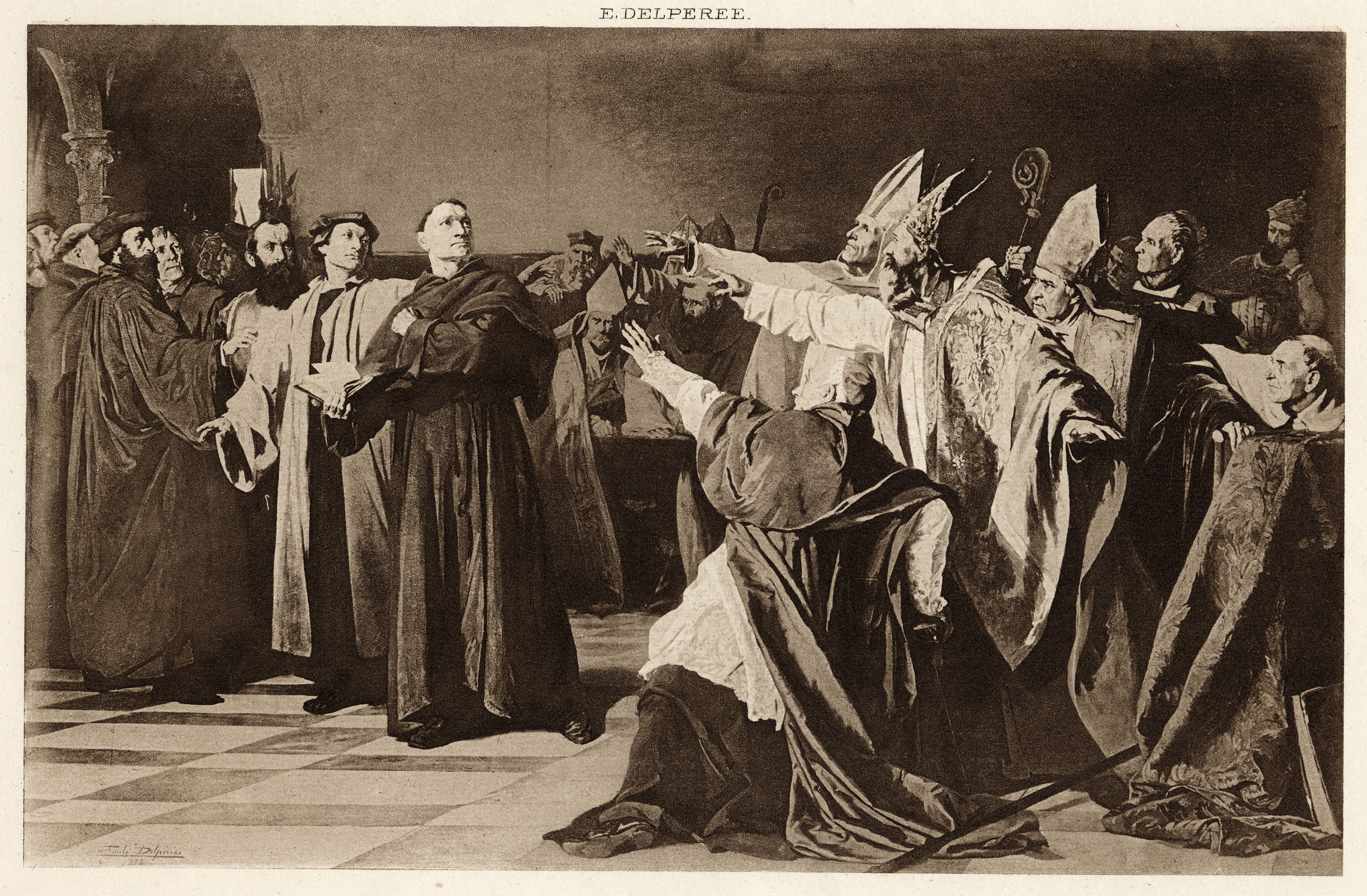
4. A student of mine once asked me whether or not I agreed with Martin Luther when he criticized the practice of selling indulgences. I said "Yes, absolutely. To whatever extent there is abuse in the Church it is to be condemned, regardless of who is responsible, and regardless of who is doing the criticizing." When it comes to scandal, abuse, and the need for genuine reform, Catholics should be more "Protestant" than anyone; that is, they should protest the lack of holiness in the Church, and press for reform wherever it is truly warranted. Catholics should reject the kind of clericalism that would seek to excuse sinful behavior in a misguided attempt to protect the reputation of the Church. That being said, they should also avoid exaggerating the extent of the bad behavior. As much as possible the criticism should be proportional to the degree scandalous behavior.

5. Because there is a set form of worship in the Catholic Church, there is also the potential for a lemming mentality, a kind of mindless zombie-like approach to worship. By contrast, because Protestantism tends to be more individualistic, it naturally tends to lend itself to a greater degree of self-involvement and participation. While there are some aspects of worship that are non-negotiable for Catholics, it might be advisable to provide a greater space in the life of the parish for those other expressions (i.e. a community within the larger community of worshippers). This is not completely foreign to the Catholic Faith (the Anglican Ordinariate, private devotions, and 3rd Order religious immediately come to mind), for in times past the Church was often at the center of the social life of the community. Perhaps there is too much either/or when it should be both/and. Is there not room for a more individualistic spirit, without compromising the integrity of the universal? The particular focuses of each Protestant denomination could ideally work within a Catholic milieu in this way. I sometimes fancy that that is precisely why certain gifts are lacking in the Church today, not because they are not there, and not because they do not belong within the Church, but rather because they are like an appendage of the Body of Christ wandering about imagining that they are completely autonomous to it.        


5 Ways That Protestants Should Be More Catholic:

1. Individual expression is essential, but individual expression alone can/will ultimately turn into a form of idolatry and self-worship. Thus, it is important not only to consider how we may want to worship God according to our own preference, but also consider how God Himself might like us to worship him. The romance of religion is not a one way street, but rather implies the prerogative of two. Hence, on the night he was betrayed, he did have a request as to how he might want us to worship him, and God forbid we should fail to "do this in memory of him".

2. It is of essence to do everything in our power to make sure that the Faith is relevant and "up to date", but we dare not do so at the expense of the Gospel itself. If there is no immutable truth to preserve, and truth is merely a matter of conformity to the spirit of the age, then we are not believing in the Gospel, but rather the age. Hence, the Faith must be more than a reflection of the times, it must in some sense be indifferent to them. God is immutable, and thus our communion with him (i.e. our worship and belief) should reflect that reality. Subsequently, Protestants must re-discover Tradition, that is, they must take under consideration the aspects of the Catholic Faith that really are trans historical, and really can trace their roots all the way back to the beginning. Part of this would involve reading the great thinkers of the Church, not to mention the early Church Fathers (viz. those who wrote in the generations following the apostles).

2a. We should not be an either/or Church, but a both/and Church. Should we be a contemporary church, or one that learns from its spiritual fathers and mothers throughout history? Yes. Should we look at Scripture and interpret it for our times, or should observe what the Church has said throughout the ages? Yes. Should we be a local church with unique characteristics which distinguish it from others, or one that is universal and united in the essentials of Faith? Yes? Should the Church be more individualistic or communal? Yes. One should never "petrify" the faith, nor should they simply see at something in constant flux. The Faith is, in a metaphorical sense, the Tree of Life, ever ancient and ever new, ever growing and developing, and ever rooted in its apostolic origins.

3. If you are Protestant it should be a positive Protestantism, let it not be a negative one. In other words, if you are Presbyterian, be the best Presbyterian you can be and know why you are what you are. There is a dreadful trend out there, which seeks to discourage Christians from holding real convictions about the Faith. What we are seeing today is a kind of Christian relativism that essentially has no regard for real Christian convictions. What is the consequence of catering Christ to our own personal whims??? Well, the most obvious result of this is reducing Christ to a kind of "Build-a-Bear". What we get is a complete genericization of the Gospels in a misguided attempt to accommodate everyone. This would seem a clever compromise in light of all the divisions, until you realize you have reduced the Christian Gospels to a book of sayings and parables. Be a Protestant, but know why you are, and more importantly "believe what you believe." If you don't believe it, do not despise those that do have conviction, rather find something that you do believe with conviction.

4. The world has enough noise and entertainment simply for entertainments sake. Silence and contemplation are the proud heritage of the Catholic Church and her saints. The notion that we ourselves must develop our spiritual muscles, not simply through sensual stimulation, but through prayer and meditation, is essential to growth in the spirit. Possessing the capacity to sit in silence before God, or to worship at a liturgy without all the frills of modern technology is- in my opinion- the very essence of divine intimacy. How impressive is it when a couple sits in silence at dinner, but only does so as a consequence of having nothing to say, or as a result of staring at their smartphones? By contrast, how beautiful is it when a couple sits in silence, but not for the aforementioned reasons, but rather because they staring lovingly into one another's eyes. This would seem to be the difference between the noise that sometimes masquerades as worship, and something that is akin to true worship and praise of God.            

5. One of the best things about having a liturgical calendar is that it not only brings variety to one's spiritual life, but it aids contemplation of the various mysteries of God. Yet there is always some scoundrel out there that will argue that Christmas or Valentine's Day should be every day, and that we shouldn't need a special day on the calendar to be romantic or generous. Perhaps this is true in some other-worldly sense, but as for those (like me) who still live in the world, I need prompting and liturgical space to consider the mysteries of God. In this regard the Church understands the natural rhythms of life, striking the right balance between feasting and fasting, between triumph and tragedy, between waiting and enjoying, between romance and sacrifice. If humans are thus inclined to devise secular calendars on this account, wouldn't it make sense, given our spiritual nature, to do the same for the divine?


It might go without saying, but the truth is some of the most faithful Christians I know are not Catholic, so this blog post is certainly not about indiscriminately celebrating one group of Christians while criticizing another. What it is about, however, is getting to the heart of the dispute and encouraging both sides to heal the rift where it can be immediately healed. What it is also about is remembering what the point of emphasis should always be in any ecumenical discussion. Whoever this person Jesus Christ is, it is imperative for us to know and worship him as fully as we can. Therefore, if this debate is to go anywhere, we must avoid shallow bickering, and instead see it as an opportunity to love God (and each other) more convincingly. When I disagree with my wife on anything, wishing away the disagreement in silence or in shouting only exacerbates the problem, but attempting to understand where the primary concern lies usually leads to some kind of reconciliation. If that can be our focus, then greater unity, by the grace of Jesus Christ, seems all the more possible.