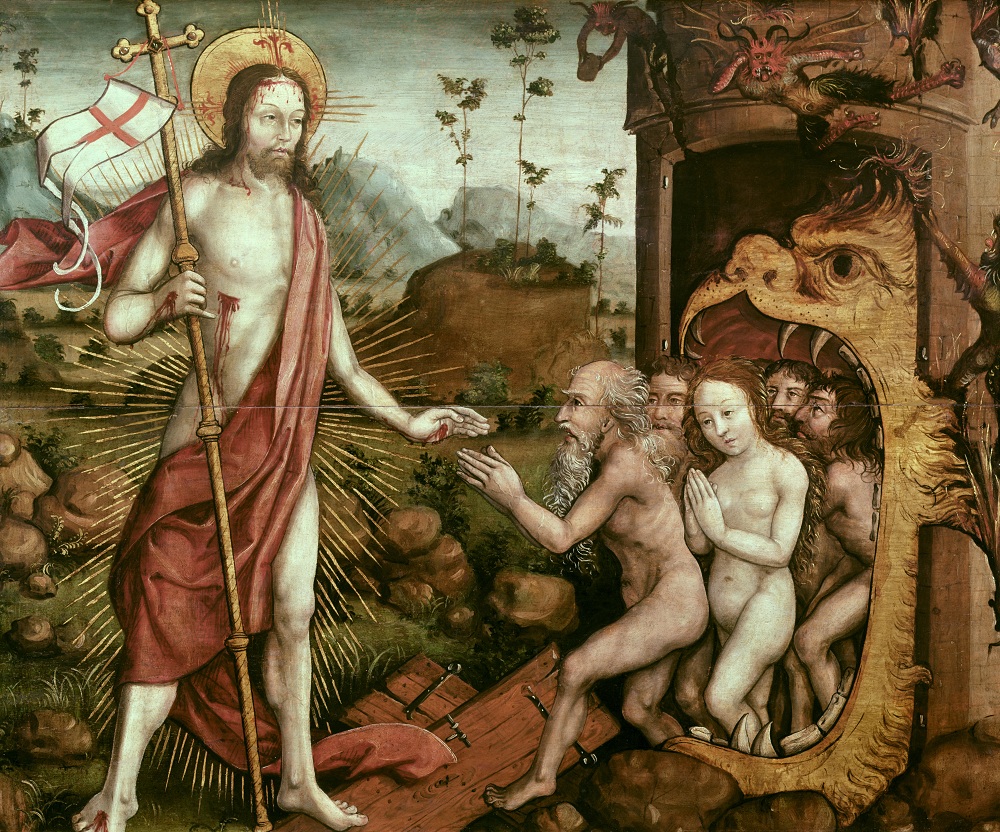
With all of this talk about "transitioning", and people "identifying" as this, that, and the other, I thought it only right that I too should "come out" and admit that I myself am in the "transitioning" process. However, before I share any more intimate details on this front, I thought it best that I explain how I came to this life-altering decision.
I was reading (and writing) about all of the hoopla surrounding individuals like Bruce Jenner and Rachel Dolezal (see: Thank you Caitlin, Miley, NAACP Woman, and Dog Boy!), when I realized that there was something about this whole drama that I forgot to consider. We've spent a lot of time discussing whether or not a man can identify as a woman, or whether a woman of Caucasian decent can identify as an African, but what about whether or not someone can/should identify as a higher being (i.e. like a god or a superhero)? I mean if there really is a "Hero" trapped inside of all of us (as Mariah Carey and everyone at Comicon might attest), then why can't this be an option for everyone as well?
If you were to ask me what I envisioned to be the next frontier of cosmetic surgery, I would probably suggest something like super-sensory enhancement. And yes, there's an actual term for this already: trans-humanism. Forget a nose job, breast augmentation, or the possibility of changing genders- what about the ability to see something a mile away like an osprey, or a built-in GPS system like a bee, or perhaps even the gift of "Spidey senses" like, well, Spider Man? This form of surgery would not merely involve enhancement of your current appearance, it would also involve elevating every imaginable human perception to the level of a super hero/god.
In any case, I'm sure you can imagine what the critique might be of all this so called "progress". You know how it goes; "If we play Frankenstein with the world, the world is more than likely to return the favor." Fair enough. The inevitable down-side is obvious, but what, if anything, is potentially redeeming about a world which seems so bent on some sort of radical transformation? I propose the following.
Now when I say redeeming, I do not mean that we are going in the right direction by seeking to live out our personal fantasies via advanced cosmetics and/or technology. What I am proposing is that this desire to "transition" into something different/better is not only an understandable desire, but when applied correctly, is in fact Godly.
Indeed, just as the preposition "trans" has become a kind of by word in the world of gender ideology, so also in Catholic circles it possesses tremendous power and significance.
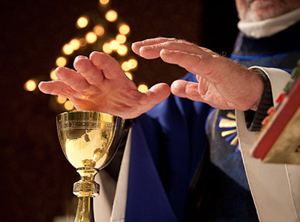
The philosophical terminology for the action of changing bread and wine into the body, blood, soul and divinity of Christ is referred to as transubstantiation. And while it's connection to our current topic may seem tangential at best, the logic most certainly is not. Indeed, so much of our modern technology is geared- not only towards changing the artifice of things- but actually changing the underlying substance of them as well. The problem isn't so much that we are attempting to repair what is broken in the world (a perfectly commendable enterprise), but that we are carelessly going about trying to redefine and re-interpet life itself. If life has no meaning in itself, then this is not a problem, but if it does, then we are doing unimaginable violence to nature.
Obviously today we are experiencing this kind of existential identity crisis in a profound way, for not only are we attempting to warp Mother Nature, but I think it's safe to say that we are going so far as to warp "mother's nature". Were this not the case, would we really be pumping people with all of these artificial hormones, removing their sexual organs, and obsessing over which pronoun to use for them (or anyone for that matter)? With so much emphasis on all things organic these days, one would think that such behavior would be regarded as counter-productive.
…Which brings me to my own personal confession, my own personal "coming out party"; the revelation of my new identity. I too feel at times a profound impulse to jump out of my own skin, and "transition" into someone else. However, if/when I do make this transition, I fully intend to do so without the aid of any kind of drugs and/or self-inflicted wounds. For my hunger is not to become a feline, a woman, or even Tony Stark (though that is admittedly tempting).
According to the Christian narrative, we are all guilty of suppressing something deep within ourselves; something that inspires us to lie about who we really are. Consequently, God is waiting for us, not only to liberate us from this lie and change our names, but to share with us His own immortal identity. Yet as is the case with most superheroes, the goal here is not to erase the former self, but rather to fulfill our ultimate destiny (remember, grace builds on nature-it doesn't destroy it).
When St. Thomas Aquinas was offered the gift of anything in the world, his response was quite stunning, he said to God; "I will have Thyself". And as bold and shocking as this request may seem, it is in many ways the summary of the Christian vocation.
It is possible that one day men may of their own efforts be able to create their own kind of Über Brot; a bread which infuses tremendous strength and energy in us- and perhaps even longer life. However, in the end it can only be a counterfeit, a placebo, a chintzy plagiarism of what God has accomplished already. For if God is able to cause a tiny sliver of bread to "transition" into Himself, how much more then will he do the same for us? So let us set aside all of these colorful counterfeits, and instead take up our true identity. Let us put on Christ, and find out what it really means to be at home in our own skin.
"I am woman- hear me roar!" was a popular mantra in the early 70s, thanks (in large part) to Helen Reddy's popular song of the same title. It was a kind of feminist credo meant to draw the attention of society and announce the arrival of a new type of woman, one that was far less docile and submissive than the former. Nevertheless, as I was watching Marvel's Incredible Hulk the other night I discovered (at least became more aware of) another kind of feminine power, a power that in some ways is far more terrible and revolutionary than the kind which was championed by Reddy.
There may be a kind of woman out there who can roar like a lion, or at least like Katie Perry, but there is another kind of power which is, from my perspective, far more impressive. This kind of feminine force does not simply roar like a lion, but rather enchants like a lion tamer. This type of woman is not simply capable of striking like a snake, but is rather a snake charmer.
As I watched the Hulk, it dawned on me what a strange and nameless power Woman is. Indeed, she is practically the only thing in God's creation capable of "taming" the gamma ray poisoned Hulk. But equally as impressive, she is the only one capable of inspiring him to fight, especially when he might otherwise give up. In the movie, just when you think he is about ready to lay down in despair, he sees his beloved Betty Ross, and all of sudden that flash of green comes into his eyes and he's back in business.
However, even while this power is extraordinary, there is nothing particularly rare about it. As a matter of fact, you can observe this mysterious power/saving grace in just about every story about a monster and a girl. From King Kong to Beauty and the Beast to Tarzan (OK, so he's only a knuckle-dragging savage… but it's the same idea), there is really only one thing capable of curing, taming, and in some cases, bringing the monster down. Think about how bizarre and unbelievable it is to suggest that a sky scraper sized ape could be so soundly defeated by a tiny woman. Yet this phenomena isn't just true in the movies. Indeed, the power of the feminine to inspire and/or subvert is universal, which perhaps explains why some societies have done their best to muffle it.
Apparently even a woman's face can "launch a thousand ships". According to Chris Isaac, a woman is akin of savior figure; "The world was on fire and no one could save me but you". And yet this mysterious force is not without its complicating factors; "What a wicked game to play, to make me feel this way. What a wicked thing to do to make dream of you… No, I don't want to fall in love… with you." Clearly the threat she poses is unlike any other one may encounter, for in war the fear is extremely one-dimensional, while the feminine ferocity is almost other-worldly and confounding, which may shed light on Mr. Isaacs strange ambivalence towards it, and may explain that 1980s Cutting Crew classic; "I Just Died in Your Arms."
A thousand other examples from art, music, and cinema could demonstrate the juggernaut which is woman. Woman is a plot twist if ever there was one. She is the paradox which causes a brute's knees to bend and buckle even while his upper body is a mountain of strength. A woman is the very definition of subversive for this reason. But let it not be said that this is merely a silly kind of power (though irony certainly accompanies it), for in truth it may be the only thing standing between man and his own self-destruction, or as John Mayer once put it (who himself is a beacon of women's dignity); "the world would be gone without the love of a woman".
And of course John Mayer's words are true in the double sense of their meaning, for yes, a woman makes a man want to live for more than just himself and his appetites, but it is also in the most basic biological sense as well. For there is only one thing more terrifying and revolutionary than the power of a woman, and that is the power of the Mother and Child. Yes, such is the inscrutable nature of this force that the entire world has practically been conquered on account of it. The following scene comes from the film Children of Men. In the film no child has been born in over eighteen years, hence there is an incredible despair that sets in among the general populace. Nevertheless, this scene exquisitely depicts how people would react if they saw a mother and child, especially if there were none.
In the Pink Floyd song "Keep Talking" there is a sound bite from famous scientist and theoretical physicist Stephen Hawking, which states; "For millions of years mankind lived just like the animals. Then something happened that unleashed the power of our imagination… We learned to talk." Of all the "something happened" declarations in the history of the mankind this must be the largest. It reminds me a little of that "Yadda Yadda" episode on Seinfeld. The rest of the statement, frankly, is little more than window dressing around the "Yadda Yadda something" that appears almost unassumingly at the end; "Millions of years ago mankind lived just like the animals, then yadda yadda, we learned to talk". For the time being let us leave aside other glaring questions, like how did man get in the picture in the first place, and where did this strange magic we call imagination come from, and instead focus on the central point, which is how this whole business of talking (may have) started.
Point being, "something" no doubt did happen, and whatever that something was it most certainly involved the action of a higher creature. One does not need religion to make this assertion. Simply look at the phenomenon of feral children (i.e. those cases where a child is neglected to the point that they really do behave more like animals than human beings). Indeed, it is only in the presence of a higher, more developed being (especially a being that treats a human with with love and respect), that the human himself develops the capacity to do the same. Without that encounter humans and animals are difficult to distinguish, especially in terms of their behavior. Even animals themselves, when encountering the affection of human beings, begin to exhibit higher functions. This explains the behavior of domesticated animals.
Thus, when movies like 2001: A Space Odyssey introduce a "mysterious monolith of musicality" as an explanation for man's evolution, there is no doubt some truth in that. And when Richard Dawkins suggests that aliens of a higher intelligence "seeded" themselves onto our planet, he is no doubt speaking within the realm of logic. After all, from his perspective God is not only an "other-wordly" reality, but he is in fact an "alien" and a "stranger". From a Christian perspective this higher being is simply called Abba/Father, and the more we share in His divine friendship the more we ourselves resemble that higher being.
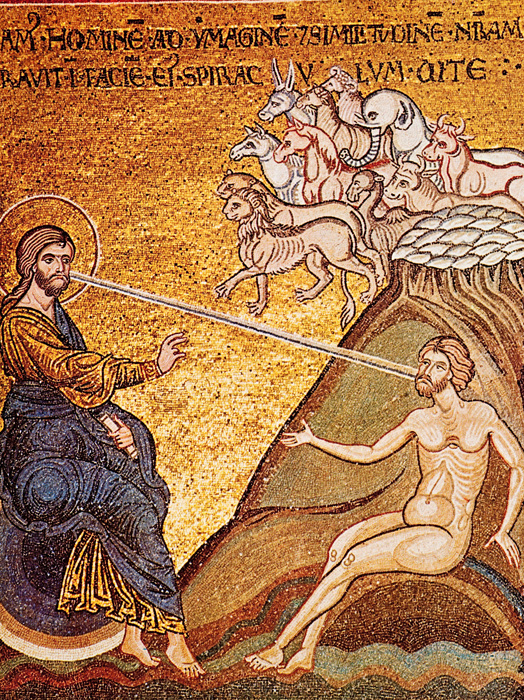
So "something" really did happen millions of years ago, something which gives us the ability to talk, to tell jokes, to exult in beauty, and to build breath-taking cathedrals. The only difference between a Christian view and a purely scientific one, is that while a scientist may hypothesize "something", "aliens", and/or "a musical monolith", and then offer that as an explanation for man's evolution, we, having no particular beef with the former, go a little further, suggesting that the reason man has reason at all, comes down to the fact that "Something" must have possessed it from the beginning.
One of my least favorite moral excuses of all time for engaging pre-marital sex involves arguing for low standards based on the fact that the standards are already low (i.e. "people are already going to do it anyway"). The despair card works on multiple levels with people, not only because failure does seem inevitable in any case in society, but on a personal level as well. In other words, "Oh well, I guess since we are all going to hell in a hand basket, there's no reason for me not to do the same." However, what is most depressing about this fatalistic mentality is not only that people have a hard time believing that we can do better than this, but for the simple fact that we are pushing despair mainly to rationalize our own behavior. For example, in the following song by Bon Jovi you hear the story of a young man who seeks to rationalize his motivation for "living in sin", even while admitting that his level of commitment leaves something to be desired...
Chastity is not merely a quaint old fashioned term for the naive and up tight. To the contrary, understood properly, it is the practical (and moral) means by which we marshal and employ our sexual energy towards a future that is ultimately constructive as opposed to destructive. This has nothing to do with "sexual repression", or being puritanical, and everything to do with making us as "potent" as possible in all the right ways. Human passion can be as destructive as a wild fire, but it can also serve (when utilized properly) as the very engine of progress in a civilization. Below I provide twenty practical examples of why Christian chastity makes sense on a number levels, and why if we are really going to reign in the moral mess that is out there, we must realize that the moral life begins with this simple phrase; "This is my body…" Now how we finish that sentence is entirely up to us.
Song #1- Human by The Human League: because you need to learn self-control before marriage in order to live it within marriage.
Taking vows does not magically remove temptation, nor does it make other people less attractive to you. Thus, if you are not learning how to say no to your appetites before marriage (especially when it's most difficult), then why would you assume that it would come naturally after the wedding. Fidelity can be a challenge anyhow, one does not need to make this challenge more difficult. There will be times in marriage where sexual intimacy is not possible- even when it is greatly desired, better to learn self control and discipline now than hope that it magically appears afterwards.
Song # 2-Need You Now by Lady Antebellum: because how much do you really have in common with this person apart from your physical chemistry?
What I mean to suggest here is that sexual chemistry can be a very powerful part of our decision making process, and if one is engaging in premarital sex, that said chemistry can skew our whole perception of that relationship. In other words, you may be tempted to overvalue this aspect of your relationship, and undervalue the fact that you may have less in common than you might like to think. Take sex out of the equation (and/or alcohol), and sit in a room and have a conversation with that person. At some point in your relationship that sexual fire will wane (or at least become less the central focus of your the relationship), is this still someone you want to be with? What about in twenty years? You will never know the answer to that question while sex is part of the decision making process.
Song # 3-Feed the Tree by Belly: because chastity tests the "mettle" of the person you're dating.
Being valued for your own sake (as opposed to what you can give a person physically) is an important test in any relationship. This basic "test" separates the men from the boys, the bops from the ladies, the sheep from the goats, the pretenders from the contenders, etc. Anyone worthy of a long term relationship with you will not balk at this suggestion. However, it is important to know just where that other person stands on this issue, for even if they respect your decision to wait, they may not exactly be inclined to help you if you are struggling with temptation. It is difficult enough to resist temptation when both parties are committed, but try doing it when only one is invested.
Song # 4-Blank Space by Taylor Swift: because chastity makes the dating process far more focused and intentional.
In other words, "if your options are always open", you may just find yourself dating/hooking up with the wrong people for the wrong reasons. That is not to suggest that we should go about sizing everyone up and constantly evaluating them based on whether they are "marriage material" or not, but chastity of this sort really does work to help bypass a good deal of time that might be otherwise wasted in a variety of tumultuous love affairs that ultimately go no where and siphon off the best years of your life. Speaking of which…
Song # 5-Go Your Own Way by Fleetwood Mac: because sex before marriage can lead to meandering and pointless relationships.
Shows about zombies can be quite entertaining, but I hardly think that we want our relationships to resemble them. Unfortunately this is not an uncommon phenomenon when people get stuck in relationships for far too long. In any case, there may be a biological explanation for this. Apparently that old "platitude" about the "two becoming one flesh" is not merely a metaphor after all, but rather a biological fact. Indeed, scientists have discovered that humans have a bonding chemical known as oxytocin, that is released into the body during intercourse and breastfeeding. And this physiological "adhesive" would be great were we not attaching ourselves to the wrong people in the wrong ways at the wrong times. At worst we destroy that emotional adhesive altogether, rendering ourselves in capable of healthy relationships. At best we damage that adhesive in such a way that we find true intimacy extremely difficult. But whatever the case, this chemical "bond" threatens to draw us (and keep us) in relationships that might never have lingered otherwise. We might want to leave, but that feeling nevertheless persists that we are part of them and they us.
Song # 6-Keep Your Hands to Yourself by the Georgia Satellites: because sex before marriage makes the wedding (and the wedding night) "anti-climactic".
Obviously there is a play on words here, but it is a "play" that is incredibly apropos. The climax of a love story to a certain extent really should deliver a climax, and not simply a repeat of what has already gone before. It is for this reason that no one likes the guy who takes great pleasure in ruining the end of a movie for us. That is not to say that sex is the only thing to wait for, but everyone knows that a proper denouement is more satisfying than one which is "premature". When my wife and I attended a marriage preparation classes (as per the requirement of the Church), many people in the class were living together at the time, and had been doing so for any number of years. Frankly, many of them looked weary, and not terribly thrilled to have to jump through this particular hoop. As for my wife and I, we were incredibly enthusiastic, even though the classes took place after a long day of work. My point is when you're already living together, and have, in a certain sense, already had your wedding night many times over, it is hard to be terribly excited about taking a marriage class, much less attempting to learn how to continue to do something you have already been doing for a long time.
Song # 7-Everything Is Different Now by Don Henley: because it is important that you first learn other signs of affection before you learn the ultimate sign.
Intimacy includes far more than sexual intercourse. Indeed, the surest way to destroy intimacy is to reduce it to that. By removing it from the list of possibilities in a budding relationship, all of that passion can instead be devoted to other forms of affection (i.e. holding hands, opening doors, buying flowers, planning romantic outings, etc.). Sex in a sense is the easy part- the natural outgrowth of romantic chemistry and desire- but the abiding fuel for that chemistry, if it is to be enduring, must be built upon the day to day signs of affection that fall outside of the specific act of intercourse. If one only learns a narrow kind of physical affection, they will never really learn true affection at all. Below Don Henley describes quite eloquently just how difficult it can be to move from the "Hotel California" to something far more divine.
Song # 8- My Eyes Adored You by Frankie Valli: because a couple must learn to revere one another before they learn to touch one another.
One of the biggest threats to respect in any relationship is the reduction of the sexual act to a form of extraneous entertainment. In other words, when sex is not seen as a natural outgrowth of affection and love it can easily be reduced to a form of selfish pleasure. When this happens there are any number of indignities that rush in to replace a healthy form of affection (pornography, objectification, sexual violence, etc.). Before you can touch your partner, you must learn that they are, in a certain sense, untouchable; that is to say that they are of infinite worth. From this kind of awareness springs a natural form of reverence, a sense of wonder and awe that this person would even let you touch them at all. Perhaps this sounds like a bit of a stretch, but I would argue that it is just such a sense of reverence (and gratitude) that charges ones sex life with potency; a little "I'm not worthy" is much better for your sex life than the diabolical "you're so lucky".
Song # 9- Only the Good Die Young by Billy Joel: because "experience" is not all its cracked up to be.
When I was in high school I remember feeling peer pressure, not simply from the guys in my class, but from the magazine rack as well. There was always a sense in these magazines that in order to have a healthy and happy sex life you really did need to get in as much practice as possible. What if I have sex and I don't know what I'm doing? What if I don't it right and she laughs at me? Or worse, what if she tells her friends? Such a foreboding fear can only be completely understood in a culture of Cosmo. Yet if experience were the only requirement for young people, then promiscuity would seem to be the primary goal, and judging from the above "headlines", there are any number of reasons that this logic would seem to be flawed. The other side of "experience" really is quite unseemly when you think of it. Do you really want to think of your beloved intimately with countless (or any) other men/women? Do you want them comparing that person to you? Do you like the fact that their "expertise" comes to you because they learned it while practicing it on others? On the other hand, when neither party has any "practice", or expectation, there is a simple gratitude for the grace of seeing/being with a woman. Whatever the learning curve, there is nothing to compare it to, so no one is thinking "Boy, I wish you would do what so and so did." I bet Adam and Eve had a great time, for I am quite sure that in the Garden of this kind of innocence, part of the pleasure was that of discovery.
Song # 10- Will You Still Love Me Tomorrow by the Shirelles: because sex before marriage comes with too much fear and emotional baggage.
No matter what the circumstances, there is always a certain level of danger that comes with sexual intercourse. Why? Sex is cosmic. For it has the capacity to introduce a new being into the material universe. Sex is also a bit like an earthquake, so earthshaking that it has the capacity to change your very identity. Thus, marriage was given to as a stable foundation to be able to handle the aftershocks. To take sex lightly is to play Russian Roulette with your future, and the future of that other person. Women obviously bear the greater burden in this regard. Within the bond of marriage there is a far greater serenity concerning the consequences of sex, for the relationship is designed to be permanent. When sex is not tied to a vow, the ambiguities of the situation inspire not only human fear and anxiety, but supernatural anxiety. On the other hand, within marriage you can generally relax and actually enjoy yourself scruple free.
Song #11-Better Man by Pearl Jam: because sex outside of marriage both solemnizes and sacramentalizes the spirit of indecisiveness.
When a couple is cohabiting, and is in many respects living like a married couple, their situation does bear much of the symbolism of marriage; for they are living together, sleeping together, and usually sharing most of the finances. The only thing keeping this from being a real marriage is… well… a real marriage. Deep down everyone knows that cohabitation is a counterfeit of a real commitment. It has all of the external appearance of the commitment, but without the actual commitment itself. Yet the larger problem comes down to intention, for quite frequently neither party knows precisely what the other is thinking. Indeed, it is possible that even the parties themselves aren't quite sure what they want from their own future. And so these types of relationships can keep us in a tragic holding pattern for years, with one person hoping to receive a dramatic proposal, and the other hoping to maintain the status quo.
Song # 12-One Slip by Pink Floyd: because are you ready to be a father?
Perhaps the best kept secret in this age of contraception and abortion is that, biologically speaking, sex exists to make babies. Indeed, even one simple sexual indiscretion can change your identity forever (viz. turn you into a parent).
Song # 13-Picture by Kid Rock ft. Sheryl Crow: because diseases happen… a lot.
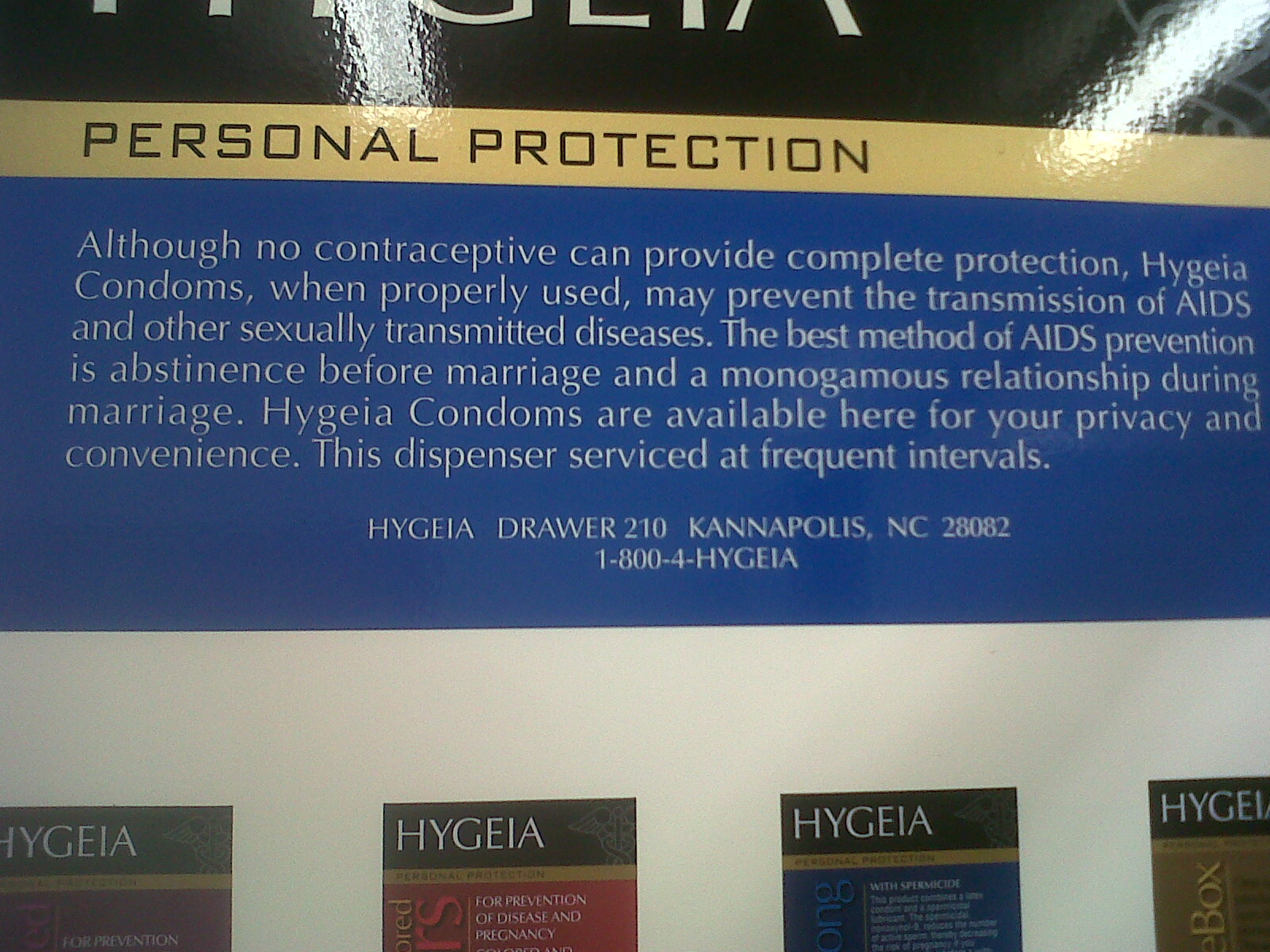
Those who intend to wait until they are married are often told that waiting may in fact be unhealthy. Interesting that the same people who tell you this seem strangely aloof to all of the unnatural things that can follow from expressing all of those "natural" desires. For some reason we have come to believe (and are lead to believe) that contraceptives will protect us from many of these bad choices… and they might… but they also might not (see above the many qualifiers surrounding "protection"). The truth is many of the arguments that I have outlined in this post would be obsolete were it not for artificial birth control. Indeed, ABC provides the very basis and ground by which we suppose we can get away with this game of Russian roulette. Without said "protection" the cons easily outweigh the pros. We have created this mess ourselves and have claimed foolishly that we can resolve it by doing more of the very thing that got us into this mess in the first place. Why? Because we prefer our license to self control, we prefer the permutation of the lie to conversion of life. We are in essence sending our children out into the battlefield, under the pretext that we have generously provided them with a bullet proof vest. And all of this to protect our collective lie. People will do what they will in any case, but how is it helpful for us to place, for example, a condom machine above a urinal, or a bowl of them in a nurses office at some university (as per my experience). A condom may (or may not) prevent a disease in one particular case, but what it most certainly will not do, is discourage the type of reckless behavior (and promiscuity) that is most likely to bring you into contact with the very disease you are (apparently) trying to avoid. See below for further details.
Song # 14-Genie in a Bottle by Christina Aguilera: because arbitrary timelines are a bad idea.
"You'll "just know when the time is right". I'm not sure if this magic (some might call it gnostic) moment involves Jiminy Cricket speaking to your heart, or if some little angel comes and whispers it into your ears or not, but one wonders whether this mystical insight also frees you from all of the consequences that go along with sex. Can one still get pregnant when one is "ready", or does the condom fairy bring you infallible protection. In any case, this gnostic nonsense about "readiness" (or lack thereof) is quite seductive, for it justifies itself based on the authority of your own will and conscience. The question is what does it mean when a sixteen year old says he/she is "ready"? Ready for what? Perhaps the most diabolical example of this arbitrary timeline involves some combination of the following words; "Well, if you're going to marry that person anyway..." One may wonder what sort of divine guarantee this couple has received in order to know beyond a shadow of a doubt that they will in fact be married, and why "almost married" is as good a reason to have sex as "real married". I suppose an almost license to be a doctor is just as good as a real one. The bigger issue that needs to be raised is whether or not marriage and sex are really connected at all? If not, what are you waiting for? Have at it. And stop using marriage as a lame cover for the fact that you're really not serious about waiting at all. But if sex and marriage are indeed inextricably bound, then one should do everything in their power to wait until both parties have truly become "one" before behaving as if they already were.
Song # 15-When We Dance by Sting: because only when you're married can you say "yes" to the full implications of sex.
When it comes to all of the reasons that people use in order justify premarital sex, the one that is most difficult to argue is the notion that one is choosing this in the name of "love". Yet the problem isn't so much with the word love, but rather depth and trajectory of its meaning in a given situation. Having amorous feelings for a person is great, but that is not love in the highest sense. In order for sexual love to truly mean anything it must involve some kind of permanence. It's nice to know that someone out there likes us enough to have sex with us, but that level of affection and commitment is not necessarily meaningful unless there is something deeper attached. Yet even if we do love someone with whom we are having sex, if there is no vow there, we are ultimately impotent in this regard. After all, simply exchanging pleasure with someone is not exactly what one might call a lasting commitment. When you're in high school can you really give yourself to someone completely? Can you really say that your life belongs to them? Perhaps in the abstract, but not in reality. And what about when you're simply cohabiting with a person and having sex but not married? I think the question about commitment answers itself. In fact, only when you're married and open to life is the full meaning of the "yes" of sex able to be expressed. "I love so much that I want to create a new life with you, and to live a lifetime with you, and for you, and for the sake our children. Any other notion of sexual intimacy pales in comparison to this one.
Song # 16-I Just Died in Your Arms by Cutting Crew: because the consequences of sex are far too grave for the fleeting pleasure that comes with it.
Sex is wonderful, but the action itself is quite fleeting, while the effects can last a lifetime. In other words, is sex with this person really worth potentially mortgaging your future dreams and derailing all of your big plans. When sex takes place within marriage there is so much about it that works towards the unity of the couple, but when it takes place outside, "unity" can actually create a volatile situation. Why? Because in most cases both parties do not desire the full consequences of that unity. Consequently, there can be a kind of annoying three-legged race that goes on where both individuals are tied to one another, though they might prefer otherwise. When one is in throes of passion it always seems like it's worth it, but perhaps in this instance before we "throw" ourselves into it, we should first consider the consequences.
Song # 17-Angel of the Morning by Juice Newton: because you can quickly lose self respect, not to mention your ideals, when you give in to sex.
When people lose their virginity before marriage, particularly when their goal was to preserve it, they can quickly determine "Oh well, now that it's gone there's no point in trying anymore." And however understandable such a despair might be, the personal consequences are even more tragic in some cases than the actual loss of virginity, for oftentimes the person will go from setting the bar high, to playing the game of moral limbo. It's one thing to make a mistake and quite another to accept moral failure as the norm. What's worse, instead of demanding others see you and your worth, you systematically allow them to use you, and you do the same to them. In such an environment, how can you value sexual intimacy, much less respect yourself when you're treating one of the most precious gifts you have as if it were purely a biological function, or as some kind of bait to get someone to love you? Incidentally, this will not work, the guy may suggest that it will, but what is far more likely to occur is that this decision will bring an unceremonious and awkward end to that relationship. And as unfair as that may seem, the one who wanted you to sleep with them, will lose respect for you because you allowed yourself to be exploited by them (this is the weird "schizophrenia of sin" talking). Get up and re-commit yourself to chastity, the worst disgrace is not the reality of "falling", the worst disgrace is wallowing in the muck of immorality.
Song # 18-Just a Kiss by Lady Antebellum: because the power of sex is such that it can destabilize (and even ruin) a budding relationship.
Sex is designed to change you in ways that are life altering. It is designed to create a profound bond between you and the one with whom you choose to be intimate. But it can also shake you up, and make you bound in unexpected ways. Indeed, a relationship that involves sex can become volatile, precisely because new demands impose themselves upon you (biologically, psychologically, and physically). Thus, a tectonic shift like this interjected into a newly developing relationship at such a tender stage, can permanently damage a relationship that would otherwise have been healthy. And so here you are, not vowed to each other, but united in the flesh in a way that you are not totally prepared to be. Ironically what tempts you to take this step in the relationship (viz. the fact that it's a budding relationship), can actually the cause of its demise.
Song # 19-Strut by Sheena Easton: because "50 Shades of Grey"
One of the greatest dangers of pornography is not simply how it impersonalizes sex, but how it invites us to to be aroused by things that we have no business being aroused by. For example, when it comes reading about- or indulging in- something like BDSM, whether we realize it or not, we are allowing ourselves to be turned on by something that is akin to performance rape. Simply put, if this is what "turns us on" then we are in big trouble. Once again, the problem isn't simply that we are getting turned on by messed up things (though obviously that's creepy enough), the bigger issue is what's not turning us on. When one loves somebody in a sacrificial way, the great "turn on" is the fact that we are able to love, serve, and give pleasure to the one whom we cherish. But when sex turns a little "shady", it is less about genuine intimacy, and more than anything else about pleasuring one's self (whatever the means). Perhaps this is why we hear so much about ED and sado-masochism these day. We are so messed up from the lack of true intimacy that they can't even get turned on by the ordinary means anymore. So one might ask what does this have to do with premarital sex? Simple: this pornographic culture that surrounds us has created such a distorted view of sex that by the time men and women reach a suitable age for marriage (if they do at all) they are so screwed up by this "iceberg of filth" that they can't even imagine what a healthy sexual relationship looks like.
Song # 20- Goodbye Stranger by Supertramp: because it can easily become empty and exploitative.
Presumably people make such a big deal about sex because it is a big deal. I have always found it quite fascinating that in one instance an individual will argue that sex is little more than a biological function, and in another a profound act of love. On many occasions, I have been very grateful to be able to relieve myself, but never have I regarded it as a profound (and enduring) act of love. And that's the point, there is no riddle here, people want it both ways. They want it to mean nothing when they want it to mean nothing, and they want it to mean everything when they want it to mean everything (see children in the womb). We all want heaven on the cheap and it's as simple as that. Heaven may be, in any case, priceless, but it ain't cheap, nor is it worthless. Treating sex as if it were meaningless, doesn't destroy sex, but it may destroy it for those who treat it as such. Hence, if you treat sex in an empty and exploitative way, you will get get back what you put in. The same can be said on a collective level. If we as a society treat sex like it's nothing, and we exploit one another in the name of it, we shouldn't be surprised that the healthy fruits of sexuality are destroyed along with it (e.g. children, pleasure, intimacy, true affection, and marriage).
Now for the female version (Never Say Never by Romeo Void):
Song # 21-Just One of the Guys by Jenny Lewis: because it can steal the best years of your life and leave you with little to show for it.
While you are spending the best years of your youth in the pursuit of pleasure and ambition, you may just be robbing yourself of true happiness. Hedonism may offer a generous reward up front, but it robs you on the back end. And for this reason, so many men and women find themselves in their mid to late 30s, waking from some kind of deep existential slumber, only to realize- in a fit of desperation- that the clock is running down, and that they may just have permanently deferred their one chance at happiness. In the following two songs, Jennifer Lewis and Gwen Stefani express the profound implications of this dilemma. Our culture would love to ignore such biological exigencies, but like the Tell-Tale Heart, their truth can only be buried for so long.
A bonus video with a similar lament (Simple Kind of Life by No Doubt):
It is said that when St. Thomas Aquinas "submitted" his writings on the Eucharist before the crucifix one day, our Lord actually came down from the cross and expressed his approval of his writings; "Thomas, you have written well on the Mystery of my Body and Blood." I am not quite sure how that event might have looked from the perspective of those who witnessed it (apparently some of his Dominican brothers were the ones that testified to these events), but what I can most certainly say is that it wasn't the first or last time that a crucifix spoke to a devotee. Now I am not suggesting that these kinds of miraculous exchanges happen all the time- rather what I am saying is that the crucifix is a most eloquent instructor (St. Augustine called it a pulpit) that speaks even when it says nothing at all. Below I present, in brief, eleven things I myself have learned from this unusual, though occasionally chatty, pedagogue.
1. The Cross as a "Garden Stake" in a Graveyard
In a certain sense the cross can be seen in just about everything, however, there are some things that are more poetically apropos than others. For example, I see the cross in every power line, but that doesn't mean that I draw some deeper connection there. However, when I look at the cross plunged into the earth like a garden stake, I do see a poetic, ironic, and undeniably powerful image of life and love amidst ruins.
2. The Crucifix as a Gestalt Switch
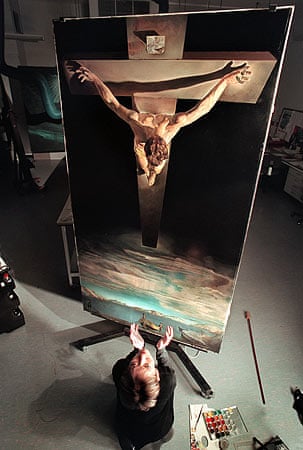
Some crucifixes present Jesus as if he is some kind of "holy diver" about ready to plunge into the abyss of death in order to fish man out of his hellish prison. On other crucifixes the cross seems to me to be a vehicle for flight. In this particular vision, instead of a piece of dead wood, I see the wood of the cross as a pair of wings, and Jesus frozen for a moment in time before he soars through the roof of the night. Which of these visions is correct? Yes.
3. The Crucifix as the Ultimate "Shape" of Paradox
Obviously there is no greater paradox than the belief that we should receive eternal life in exchange for killing God. The cross boasts numerous paradoxes in connection with the subsequent death and resurrection of Jesus Christ, but even more than that, the shape of the cross itself actually provides a visual definition of what we mean when we say that the cross is a paradox. What is a paradox? It is an apparent contradiction that when considered more closely actually reveals the answer to a riddle. In other words, the deepest truths seem contradictory and absurd at first glance (i.e. they "cross" or contradict one another). However, when you look more closely at them you realize that while ordinarily there is nothing in common between them (i.e. life and death), yet in one unusual instance they really do "intersect" and do have something in common.
4. The Cross and Jesus Barring the Way to the Tree of the Knowledge of Good and Evil
In the garden of Eden, Adam was blatantly derelict of his duties to Eve. In fact, apparently he just stood there and watched as Eve destroyed herself, and then politely and quietly endorsed the project… only to blame both Eve and God when confronted with his cowardice. By contrast, the Second Adam shows the first one (me) how it's done. Indeed, this second "Adam" is so horrified by the prospect of the New Eve "tasting" death he himself bars the way to the tree of death, preferring instead his own crucifixion, to her demise. In this "still life" of the New Adam's passion, we see his love for his bride immortalized.
5. The Crucifix and the Priestly Orans
Just as each priest holds his hands differently when he is praying the prayers of the mass, so each crucifix is unique in the same way. If the priest wants a simple definition of who he is to be, let him understand that the reason he is to hold his hands so often in this manner is because he is to lead a cruciform existence. There is no more priestly moment in Christ's life than when his arms are stretched wide open and nailed for all of eternity in the orans position on the cross.
6. Jesus and the Piece of Dead Wood that Is Me
The cross is not incidental to the story of Jesus' life, death, and resurrection. Imagine if Jesus had simply died on the road to Calvary- how inspiring would a statue of a man dead on the ground be? No, in order for him to draw all men to himself, he had to be exalted on this most unusual of thrones. However, another way to see this burden is not only in the spirit of obligation, but strangely enough as an embrace. To my eyes this piece of dead wood represents the Bride of Christ, and Jesus carrying her to Calvary, not only to exalt her, but in order to implicate himself so closely to her that the two become one. What a bizarre fairy tale- the wedding of the Prince of Peace and the Princess, who, because of an ancient curse, had been reduced to little more than a piece of splintering driftwood. This must be the explanation for why this great prince seems to embrace it with such passion and affection.
7. The Cross as the Hilt of a Sword
In days of yore when one conquered a particular territory, it was customary to lodge one's sword into the soil so that only the hilt of the sword was seen. In the case of the cross we have a strange declaration of victory indeed. For the sword hilt in this particular instance appears to be the sign of the devil's victory, and not the Lord's. Yet in a strange twist of fate that no one could have envisioned (especially the devil), this sign of failure turns out to be the ultimate symbol of triumph. Yes, by defeating God, the devil himself actually sealed redemption for man. And by the devil marking his territory with the hilt of the cross, he actually assisted in the re-dedication all of humanity, along with the earth, to God.
8. The Crucifix as the Abiding Connection between Theology and Morality
Just as on the cross Christ is suspended between heaven and earth, so also we recognize in that self same cross a bridge between heaven and earth. Yet this bridge not only symbolizes the pathway that God reforged from earth to heaven, but (among other things) the bridge between the theology surrounding the nature of God and that which shows the highest virtue of men. More often than not, Christians fail to see the connection between the Creed and morality. What does believing in God have to do with what I do with my body? And yet there it is at the cross explained in full, the marriage of who God is, and the explanation of who we were/are supposed to be. Who is God? Look at the cross. How are we supposed to live? Look at the Cross. "This is my body given up for you. Do this in memory of me." This is not only a liturgical command, but a moral command.
9. The Cross and the Basic Architecture of Everything
I thought it was more than a little ironic that some folks didn't want the "ground zero cross" to be included in the 9/11 memorial. In a sense they were not only protesting the Christian religion, but even the very element of the Christian Faith that is most necessary for this world to survive (viz. sacrificial love). Hence, these protesters really were anarchists of the worst order, for even a simple architectural shape that is the most necessary building block for building anything at all seemed a threat to them. Why? Because it reminded some people of Christian hope. Apparently these individuals dislike religion so much that they would prefer absolute rubble and destruction than having to lay eyes on that oh so terrible shape that reminds them of Christ. In addition, since I last posted this, there was the catastrophe at Notre Dame Cathedral which also managed to leave a similar glimmer of hope. As officials made their way into the cathedral post-fire, they were stunned to find that the glorious crucifix and the accompanying Pieta remained relatively untouched by the terrible blaze. This, and stories like it (and there are others), remind us how Christ, and the symbol of his cross, present a slightly happier conclusion to a story like Samson's, where a strong man provides our metaphysical homes with structural stability and endurance, preventing them with his sacrificial arms and strength from being thrown into catastrophe.
10.The Cross and the Rise of the Everlasting Phoenix
The Sunday before Good Friday is, depending on your point of emphasis, either Passion Sunday or Palm Sunday. The most obvious reason for referring to it as "Palm Sunday" might seem obvious enough. Jesus came into Jerusalem and the inhabitants of the city celebrated his arrival by waving palm branches in the air, presumably because they believed, at least on some level, that he was the long awaited Messiah. Interestingly, in the Mediterranean world, palms represent a sign of victory, of peace, and even of immortality. Another interesting detail that emerges from the exploration of this ancient symbolism actually comes from science. "Phoenix"is the category of plant (more specifically, the genus) under which the palm is frequently identified. Coincidence? Apparently not- the Greek myth surrounding the story of this mythical bird holds that every five hundred years (at the end of its life span), it flies to the Heliopolis in Egypt, makes a nest atop a palm tree, dies, then rises from the very same body that perished. Another version suggests that the bird (likewise at the end of its life), is immolated on an altar, only to rise again from that very same altar of sacrifice. The point here is not so much to get lost in the myth (though it is a cool one for many reasons), but to realize the fascinating association one can make between the waving of something so simple as a palm branch, and the down right combustible image of Christ's arms outstretched like an immortal Firebird, sacrificed atop a sacred tree, and promising to rise again in perpetuity.
11. The Shadow of the Cross and the "Overshadowing" at the Annunciation
When Mary is visited by the Archangel Gabriel and told of her special election, she inquires as to how this will all come about, being that she is a virgin. The angel explains; "The Holy Spirit will come upon you, and the power of the Most High will overshadow you."(Luke 1:35) Most notably, in the Old Testament this "overshadowing" generally took place whenever God wanted to verbally communicate with the Israelites. The Ark (as well as the Meeting Tent) would be "overshadowed" with a sacred cloud, which, in a wholly unique way, indicated that God's power and Presence was proximately among them. Consequently, when similar language is used in the Gospel of Luke to indicate that Christ (the Word of God) would ultimately be made present in the womb of Mary (much like the Ark), the goal of the Gospel writer was demonstrate the continuity and fulfillment of God's plan with regard to the New Covenant. In any case, there is another fascinating parallel here, one that I had not considered until today. If Jesus was hung upon the cross in infamy in the shape of a soaring bird, then might we also envision what those "overshadowing" wings would have looked like from Mary's perspective. Indeed, imagine for a moment, the Real Presence of God speaking the words of life from that exalted pulpit on Calvary, brooding over her like some Holy Bird from heaven, inaugurating a kind of second-wave Annunciation with these words; "Then he said to His mother, “Woman, behold your son!” and to his disciple, “Behold your mother!” John 19:26-27
One of my favorite non-sequiturs concerning the Catholic Faith involves certain unsolicited (and arbitrary) allusions to "Catholic guilt." You could be talking about the work of the Missionaries of Charity in outer Mongolia, and someone, out of nowhere, will feel it necessary to interject this into the conversation. Indeed, whether it is some fallen away Catholic who gleefully tells you that they are a "recovering", or some cultural Episcopalian who wants you to know that they too are [basically] Catholic... but "without all the guilt," there seems no end to the hilarity of impenitence. In fact, as a Catholic you practically feel the need to offer a mea culpa every time you offer a "mea culpa"!
At any rate, what got me thinking about this (other than Lent), was this interesting little story that recently appeared on NPR (it is well worth the listen). The story is about a father who leaves his religious order (he was a Franciscan monk) in order to marry a woman, who herself happened to be in a religious order (she worked in a hospital in Africa with lepers).
Why is this story notable? I suppose it has something to do with the tantalizing combination of religious vows and forbidden love (sounds already like a Spanish soap opera). For those unfamiliar with religious vows, the one who enters into the "consecrated" life does so as an offering to God. The decision to forego marriage in this case is seen, not as a prohibition, but rather as an opportunity to serve without limitation. Each of these individuals could have chosen to be Catholic social workers and married, but instead they vowed themselves to God and placed themselves in this service of the "least of their brethren".
Why does this matter? Because if you notice, my emphasis is very different than theirs. NPR tells this story as if this couple had escaped like Romeo and Juliet from a cage fashioned by some cruel tyrant. And so the audience is supposed to sop it up like a giant helping of biscuits and gravy, while never once considering what exactly they are sopping up. To show you what I mean, let's flip the script a little bit. What if- instead of a religious order- this man had left his first wife for no apparent reason other than the fact that he fell in love with another woman… and then, as the story goes, lived happily ever after. OK, perhaps you may have no problem with infidelity as long as it leads to happiness, but if the story were told that way, would it be given its own segment on NPR?
There is no reason to tell this story other than to rebuke the Church for its practice of celibacy. The implication here is that these poor unfortunate souls escaped from some unjust imprisonment, and as a result finally find true happiness. Yet here's the other side of the "romantic" coin that you will not hear in a story like this. What about all of those poor lepers who will never know the gentle touch of an avowed religious sister because she abandoned her post? What about all of the poor and disenfranchised who will never experience the consolation of God's mercy because a Franciscan monk broke his promise to God? The real question is why is this a story of triumph, while the story of men like the one featured below (thank you Father Pat) often goes unsung?
At this point, you may be saying "aha- there it is; this is why we talk about the unpleasantness of Catholic guilt! This is why people are so relieved when they remove themselves from it. However, interestingly enough it is the narrator in this piece (the son of this marital union), and not any Catholic curmudgeon, who brings up the subject of guilt. Notice, no one in the story itself "guilts" anyone into being religious, not even the head of the religious order ("if you love her, then marry her"). Thus, I have to wonder, who is the one feeling/imposing guilt here? Could it be the son, who must now carry the weight and responsibility of knowing that his own life may have come at the expense of others? Is this the reason he felt the need to tell us all his own private confession in so sentimental a fashion; "look now- I'm a father... See, it was all worth it?" I say this not to lay further burdens on this individual, but only to once again ask the question; "What is the motivation for this story?" For if a priest and a nun hadn't abandoned their religious vows, this tale would have inspired little more than a yawn.
But whatever the motivation here, it is essential to note that guilt exists, not because there is a thing called the Catholic Church, but because there is a thing called a conscience. The only real question is- what should we feel guilty about? Do we want a race of wide-eyed sociopaths echoing that popular meme "I have no regrets" (Thank you, Ted Bundy and John Wayne Gacy, but I will keep my "guilt") We must stop engaging in this stupid reductio ad absurdum that suggests it's all or nothing. Guilt, much like fear, should not exist beyond its reason for existence in the first place. It is good to have a healthy fear of cliffs and criminals, but if you see cliffs and criminals everywhere (assuming you are not in the land of cliffs and criminals), then you may have an unhealthy phobia of cliffs and criminals.
The same can be applied when it comes to guilt. If you feel guilty as a result of harming another person, then you may just be a healthy human being. If you fear that every thought that comes into your head is like a dagger that mortally wounds everyone, then you may just want to get yourself to a psychiatrist or a priest (whichever you prefer). This is simply common sense, and Catholics actually have a long standing tradition of cautioning anyone against this exaggerated sense of culpability (we call it "scrupulosity", which is like a kind of spiritual OCD). Nevertheless it is true (I know) that there are people out there (in our homes, churches, and everywhere else) that might want to play on our guilt for their own purposes. However, it is always essential to remember that abuse does not disprove use.
So yes, in the end, I am grateful for a thing called "Catholic guilt"; I am grateful for that little tocsin inside my head, warning me against the dangers of moral anarchy, warning me against the evil of treating myself, as well as others, as if they were nothing more than a raw material to be used. Once again, I do not deny that there are people out there who may try to play you like a fiddle, but as for someone like me, who, for a time in my youth, rejected any notion of sin and guilt, I can only say that "guilt" genuinely saved my life (not to mention my soul). Indeed, were it not for that horrible hound relentlessly pounding in my chest, there is little doubt in my mind that my life would have been forfeit, and my talents tossed with utter scorn on the smoldering ash heap of mediocrity.