Tuesday, October 13, 2015

Why Hell is "Perfectly" Awful and Heaven is Wonderfully "Flawed"


In my mercifully brief stint as a youth minister, I ran across a book of "non-competitive" games (seems oxymoronic to me… but I digress). The one thing I remember from this little gem of youth ministry was an exercise called "race to a tie". This ingenuous attempt to avoid any real competition proposed that two or more people could "race", but instead of attempting to excel, these individuals would excel at not excelling. Indeed, the primary objective of the game was to remove both tragedy and triumph entirely from the process, and instead institute a collective mediocrity whereby one attempts to sync one's self with everyone else (read: sync yourself with the slowest runner). If one failed to "achieve" a tie in one's first attempt, the ingenuous suggestion was to simply "try again" until the tie was "perfect." Welcome to hell.

…unless they are all engaging in a delightful game of limbo

Recently in my apologetics classes we have begun discussing the so called "problem of evil." In case you might be unfamiliar with this philosophical dilemma, it goes something like this: if God is all powerful and  all good, then how can evil exists? This would seem to imply that either God is not all powerful, not all good, or some combination of both.

One of the major complaints from my students surrounding this issue was the fact that they felt God was unjust (or perhaps foolish) for giving us this gift/curse (viz. free will). Why, they complained, could he not have simply given us enough freedom to enjoy everything, while simultaneously preventing us from performing anything amounting to an evil action (i.e. a kind of "free will scrimmage")? In other words, you get the glory of the victory, without all the danger of truly competing.

Such a world, they argue, would have been far superior to the one we now inhabit. However, the problem with this supposed "perfect world" is that such a world would not be free in any appreciable sense. Sure, you could be "free" to choose Coke over Pepsi (or vice versa), but in what sense would your moral decisions be anything but a form of automation.


Creativity in every sense of the word (love, freedom, and goodness) demands volition/will. If one is simply capable of carrying out an inevitable task, in what sense is there really a "they" present at all to carry it out? It is a little like figuring out a flaw in a video game, wherein you are able to make your character invincible in the game, not by skill, but by simply discovering a loop hole. When this happens all of the artistry and skill immediately disappears from the game.

Perhaps an even better example of this imposed goodness can be seen in an episodes of the Twilight Zone. "A Nice Place Place to Visit," as it is called, begins with the death of a notorious thief who loses his life in the midst of an attempted heist. (Spoiler Alert) Almost  immediately after his death he finds himself in the presence of a luminous guardian angel with in a glowing white suit and a tie. Initially, the thief is surprised by the positive attention he receives, for he is under no illusion that he had lived a saintly existence prior to his death. But after the angel seems relatively unconcerned by his long litany of transgressions, the thief makes himself at home in this apparent paradise.
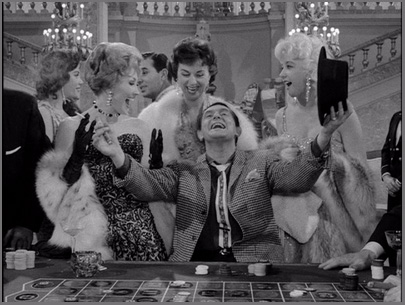

The angel offers him anything his heart desires. Whatever he wants he gets. He wants women? They're his. He wants money, it's his. He wants to win at pool, the table is "tilted". After some time, however, this form of success and invincibility grows cloying to him, and he longs for a little bit of surprise and uncertainty. Consequently, he says to his angelic host; "Is it possible to arrange it so that on occasion there's chance I might not win at pool?" His angel responds with a thoughtful nod, and replies; "Sure.. sure, I think we could arrange that… How often would you like to lose?" The thief then replies; "No, no! You don't get it… You don't understand! You know what? I don't think I belong in this place, I think I belong in the other place." Laughing diabolically, the angel responds with a sudden infernal clarity; "You fool, you are in the other place!" The episode ends with the "angel" breaking off into a sinister form of hysterics, and the camera pans out, leaving us to imagine the horror into which this man has placed himself.


Hitler was trying to build an "immaculate" race. The former North Korean dictator, Kim Jong Il, reportedly commanded every male in the country to get the same hair cut. Serial Killers are quite exacting and methodical about how they torture and violate their victims. People with OCD are very… well... obsessive, and precise in their attempt to kill germs. The point is there is something higher than this kind of "perfection," something far superior to making all of the margins even; more essential than an all-knowing grammar Nazi who imposes autocorrect on everything.


By contrast, from the perspective of a more heavenly sensibility, a little child can misspell a word in a birthday card and it can actually be more perfect than any of the subsequent words that are correctly spelled. The reason for this is simple. A grammar mistake by a child is not beautiful and adorable because it is a mistake. It is beautiful and adorable because- in spite of his or her grammatical limitations, the child wills to express his or her love for their parent. Hence, it is in such a sublime limitation as this that the true intention of the individual is ultimately revealed. This divine imperfection not only reveals that the child is more than a tiny automaton, but equally important, that they have a will which, in spite of certain developmental limitations, seeks to express itself through love. It is like the story of the Widow's Mite, but set against the background of a child's sweet and sincere gesture.


Thus, when my students object to man having free will, I can understand the sentiment. Yet at the same time, I have to wonder how much they genuinely believe their own objection. In other words, do they really want to be forced to wear a Catholic school uniform for the rest of their lives? Would they really prefer to be completely incapable of objecting to anything I say in class, as if I were the magisterium of their lives, and they were some kind of human tupperware dish of information, or some kind of file cabinet of my preferred thoughts? Oh, how I would love such a classroom full of eager little puppets pupils!

On the other hand, perhaps in truth my students would prefer to be as free as they are right now to fight me every step of the way. Perhaps they might prefer the autonomy and opportunity to challenge something/everything that I have to say in class, especially when they fail to see the logic in my arguments. The truth is this may not be their will for themselves, but it is my will for them… that they actually have one in the first place.

My will for them is not that they agree (or disagree) with everything I say, but that as a result of taking my class, they might receive all the tools they need to fight, pull, and claw (if necessary) in order to "get to what's real" (as David Lee Roth once said). Far from wanting them simply to parrot back what I have to say, I want them to be seekers of truth and goodness, even when they doubt whether God Himself possesses these virtues. After all, if they are seeking beauty, truth, and goodness, then they are (I would argue) seeking the Lord in disguise. Hence, by opposing me and by arguing (in essence) that it is not right for God to give us such a dangerous gift, they are implicitly arguing in favor of everything that they claim to be arguing against; namely, the freedom to oppose injustice in all its forms.        


Monday, September 28, 2015

Why Men Should Propose to Women (and not the other way about)


I have never been a particularly huge fan of the so-called Sadie Hawkins dance, or "Morp" as they call it around here (prom backwards). I am not dogmatic about it, I just think that there is more virtue and value in men asking women to these events than the other way around. In order for young men to reach beyond their little "man-cave" mentality, they need to learn how to address and reach out to the other half of the species. Simply learning how to ask a lady out on a date is one of the first steps in a man's journey beyond the typical grunts and growls of their adolescent reality.


Call me sexist if you like, but men would never have dreamed of writing poetry, singing love songs, or behaving in a chivalrous manner were it not for the feminine. Indeed, this co-mingling of the sexes allows for the full expression of the Yin and Yang of reality, elevating both sexes according to their own respective needs. Boys are perfectly content to be catered to as long as the opposite sex is willing to do them the honor. The problem is if you only "do them the honor" they may never learn to honor you.

All I can say is the hardest/scariest words that I have ever uttered in my whole life were; "Will you marry me!" Not because my wife isn't wonderful and beautiful (she is), but because I knew I had to own them, and I didn't know if I was "man enough" to be a "man of my word". Yet how much more would I have doubted myself, or the situation, had those words not come from me; "You pressured me into this, I wasn't ready!"


Obviously it is easy enough to dispute this claim by simply pointing out that my circumstances are not the same as others, and that in such and such a case it might be just as "romantic" (and necessary) for a woman to propose to a man. Perhaps. But allow me to explain why, historically speaking, it makes sense that every woman (especially the feminist), should revel in the fact that it is a man's duty to propose to a woman.

In the ancient world the norm was not to honor power in its more subtle forms, but rather to emphasize personal or collective might (viz. "might makes right"). An individual's ability to impose their will on the rest of the world came- not from their value as an individual- but rather from their particular fate/birth. The recognition of an individual's dignity, or the idea that they were a part of some "underprivileged class", did not warrant you any special attention or sympathy. To the contrary, it re-enforced your destiny. The "fates" dealt you a particular hand, slave or free, and their wasn't much you could do about it, nor were you under the impression that you could (or should) do anything about it. This kind of fatalism was part of the air they breathed in the ancient world.

For this reason, unless a woman was born into nobility, she too was treated according to her physical power and influence. In other words, she was not "here own" in any sense of the word. Because women were presumed to be the "weaker sex" they were treated as such. That doesn't mean their weren't exceptional cases here or there, but on a general scale, no one presumed, including women, that they were free to do anything but obey. And servitude extended even to the bonds of marriage (both in choice of spouse and during the marriage itself).


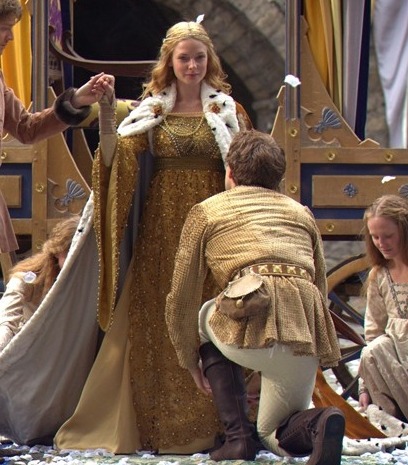
If for no other reason than this alone, the symbol of a man proposing to a woman on one knee should be honored. Indeed, the above photo(s) do not suggest a new kind of liberation for women, but rather the re-establishment of the old order (however ironically it may be re-envisioned).

What tends to be honored today is more of a generic equality of the sexes, one which simply assumes equality involves only having a woman do everything that a man used to do, without any regard for what makes a woman unique in her own right. In other words, a woman (in my humble and right opinion) is not only valuable because she is capable of performing every task that a man can (whether that is true or not), but because she can perform many that he can't! I must admit I am for a higher equality in this regard, or rather a higher "inequality."


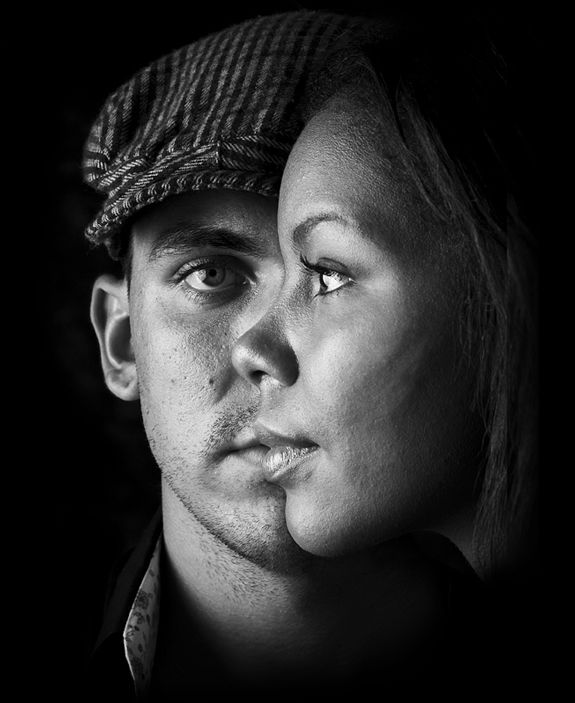
I am for the Christian revolution that turned the pagan world on its head, not by castrating men (see above photo), but by compelling them to use their swords in the service of their lady (as opposed to using it to subjugate them). A man genuflects when proposing to a woman, not as a means of diminishing her, but as a means of diminishing himself. He does this as a courageous recognition of her power over him. At this moment, the man is not only saying that he intends to place himself in her service, but even that she is free to reject his offer. There would have been no such choice for women in antiquity. And wherever this kind of chivalry is not embraced in the world today, we can see just how ugly the consequences may be.


There is so much in this gesture that is both a rejection of what was wrong with the ancient world, and an an embrace of what was right (if we truly wish to be truly liberal about the whole thing). In itself, there is nothing at all wrong with a patriarchal sense of duty, ruggedness, and responsibility. What this small gesture introduces into the narrative (in one fell swoop) is a shift in the balance of power from a kind of primitive Darwinism, to a story that is a little more like a romance. The king will reign, yes, but his power will come from his love and service to the queen… So much so in fact, that one will have trouble distinguishing who's reign it is in the end.


Incidentally, it is important to note that this shift in power is not a happy coincidence of history, but rather a direct result of the Biblical narrative. Christ triumphed over evil through his vulnerability to his bride as expressed on the cross. He won the battle over death and evil because he exercised a form of weakness that is more powerful than any worldly strength; a love, as it were, which is "stronger than death" (Songs of Songs 8:6). And thus as the curtain was/is lifted/will be lifted in the book of Revelation, it seems highly appropriate that we should find ourselves at a wedding ceremony, awaiting the sacred "yes" of a mysterious Bride, the veiled one who has such profound dignity, that even God must await her answer to his proposal. If that is not a higher equality, I do not know what is.
    
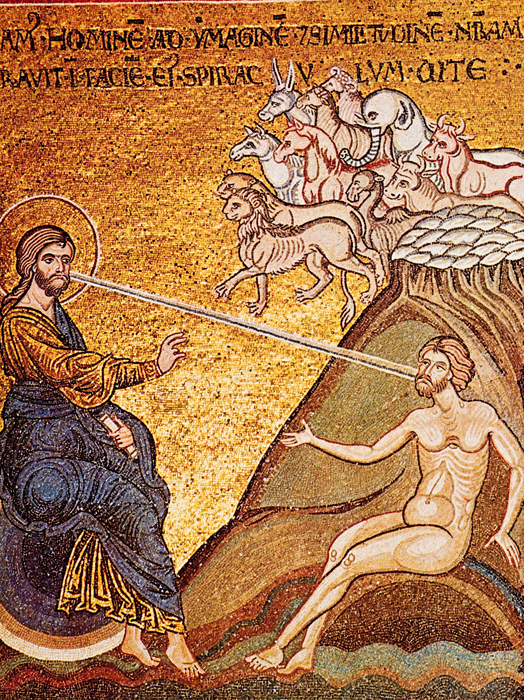
Thus, wherever you see a double standard with regard to sex and sexual behavior today, do not blame Christian theology for such a terrible misogyny, rather blame a culture that is backsliding towards the worst of paganism. Blame a culture that no longer recognizes the inherent worth and dignity of women,  and instead views them as chattel for consumption. Indeed, it was only with the advent of the doctrine of Christian dignity, coupled with the notion that as Children of God we all have the power to choose our own destiny, that people for the first time began to subscribe to any notion of equality of the sexes. In fact, in the beginning such a disparity apparently did not exist at all. For according to the book of Genesis, it was only in the communion of flesh between a man and a woman, that one was truly able to witness the face of God. (Genesis 1:27)


Sunday, September 13, 2015

Are You Saved? If You're Sure You Are, Then You May Not Be… Here's Why


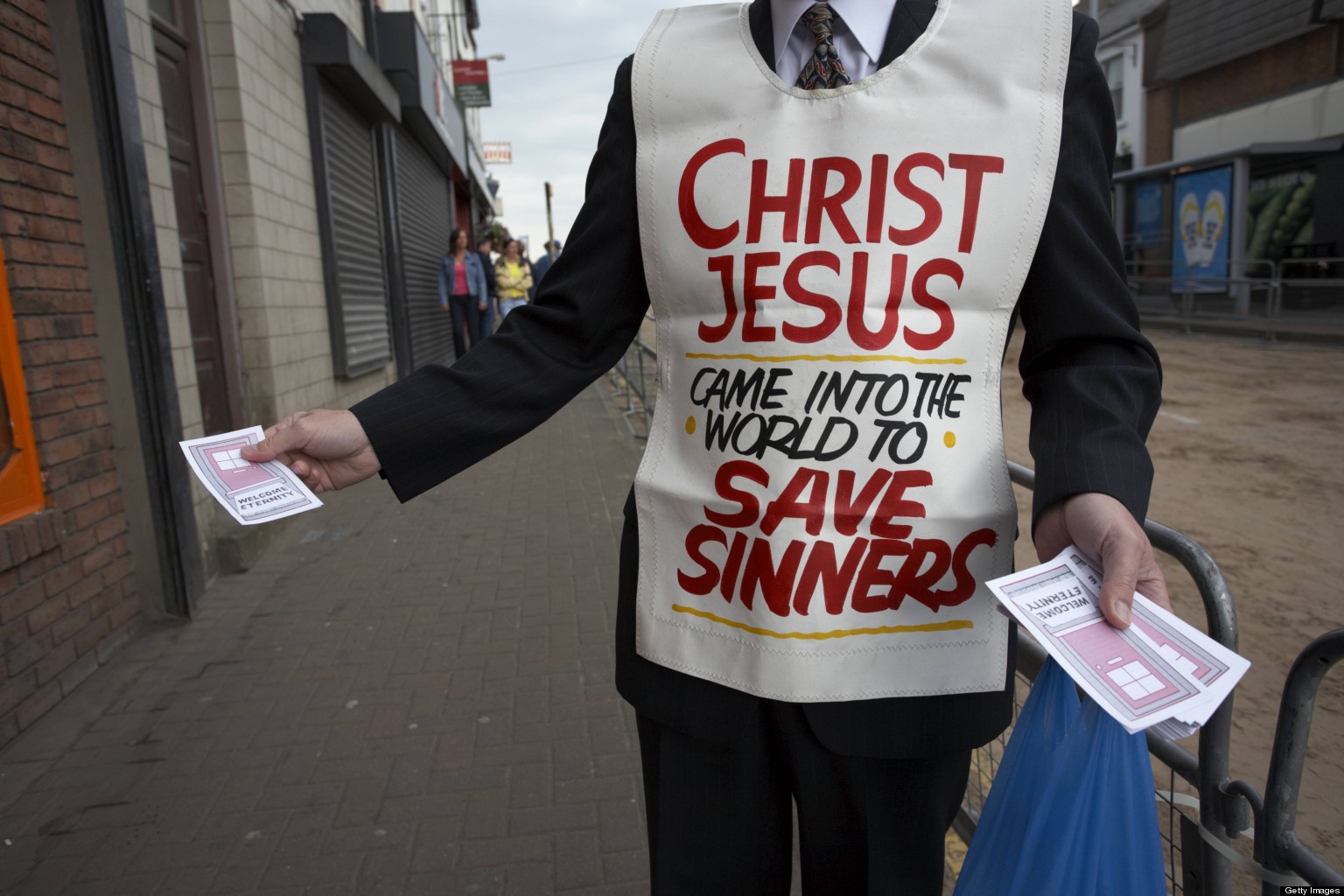
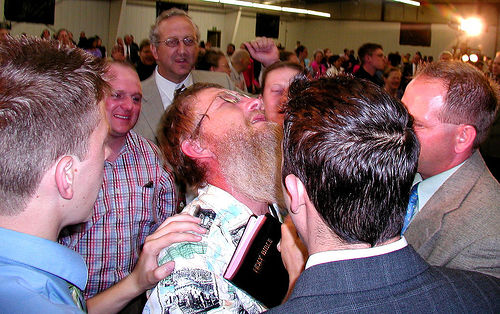
Are you saved?! If you live in the south like I do, then at some point you have probably heard this phrase either directly or indirectly. In a more religious age, such a question might have more rhetorical punch. However, in a culture which is essentially post-Christian, the question might come off like a bizarre non sequitur. To put it another way, what does this phrase even mean in an age which is post (post) modern? "Why yes, of course I'm saved, after all, there's really nothing to be saved from..." or perhaps, "Of course I'm saved… I'm a good person!"

From the standpoint of an Evangelical, things were never meant to turn out this way. The question was intended to be self-evident, and/or to lead to a deeper question about Jesus and the how one was to find salvation. Now in the most ironic mockery of the idea of being "saved by faith", the average person really does feel at peace about their eternal salvation, but not because of their faith in Jesus, but because, well, they just feel it in their heart. Yet between us folk who still think Jesus is necessary for salvation, what should we say about the specific requirements surrounding our eternal fate?  


According to some interpretations of Scripture, salvation is a relatively clear process. By grace you are moved to accept Jesus in faith, and by doing so you become justified in the sight of God... Signed, sealed and delivered. However, the minor (or major, depending on how you look at it) dilemma on this front, as acknowledged by many Christians themselves, is the fact that some Christians may not be sincerely saved in the first place (even when they claim to be), because they lacked the necessary sincerity at the moment when they claimed to have accepted Christ into their heart.


For those who acknowledge this fact, one Scripture passage may be particularly instructive; "Not everyone who says to me Lord, Lord will enter the kingdom of heaven, but he who does the will of my heavenly father" (Matthew 7:21). Consequently, it seems relatively clear, based on this passage, why it is not so easy to say who's in, and who's out.

Another reason for the lack of certitude in these situations has to do with the fact that everyone about whom we are speaking is still on earth, and is not as yet, in the strictest sense, saved. There is a reason why they call this life a valley of tears. And so, in truth, until "every tear is wiped away", we cannot really say that we are completely "saved". Thus, it may be more accurate to say, in all humility, "I was saved, am being saved… and God willing, I will let Him finish the job!"


However, rather than go down the circular rabbit hole of trying to figure out (on earth) who has completely filled the requirements for one who is saved, and who has not (including those who have done so in a phony or unsatisfactory way), let us go up to heaven, so to speak, and find out.

In Matthew 25 we get a description of the Last Judgment. Most people are aware that "sheep go to heaven and goats go to hell" (to quote the band Cake), but what is rarely mentioned is why the sheep are particularly heavenly, and why the goats are particularly infernal. The truth is the final judgment has very little to do with poor genetic breeding, or rather if it does, it has far more to do with our subsequent treatment of the ill bred.

Jesus states that our final judgment is directly proportional to our treatment of the most poor. In fact, in Matthew 25, Jesus identifies so completely with the "least of our brethren", that he practically calls them Jesus. There is no other group or person, apart from the Father, with which he identifies more.


Still, the fact that we appear to be judged based primarily on our acts of mercy (not simply based on our acceptance of Christ in our heart), isn't even the most interesting and ironic part of the passage. The "kicker" on Judgment Day, at least from the standpoint of Matthew 25, is the fact that the people who are saved/condemned are apparently confounded by the nature of God's decision. Not only is judgment day, not merely a re-affirmation of those who thought they were saved, but it is practically the opposite!

From the standpoint of grace, as well as virtue (as opposed to vice), this makes a lot of sense. Grace is fundamentally an unmerited gift. And in order for a gift to be truly a gift, it must have some element of surprise. The greatest enemy of surprise is presumption. Presumption is to gratitude, what parasites are to good wood. Hence, the devil is in hell (along with the rest of the goats), not simply because they deserve hell, but, more importantly, because they "deserve" heaven. Heaven is owed to him. He is confounded, like all the rest of the goats in hell, because this is not the way things ought to have played out. He is obsessed with being right, but funny, he is not so much interested in being good for goodness sake.

Consequently, the souls in hell are already saved! In fact, they are so "saved", that they never had any need of salvation at all. They are good people. Worthy people. God is the one who is unjust.


On the other hand, the sheep are both elated and confounded because they can't believe that God would count them worthy to share in such a sublime gift. They are like the ones for whom a surprise party has been thrown, or rather the one who has, in spite of all the odds, won the lottery. Like St. Matthew pointing to himself, they say, "Who, me?" How is it that the Lord might come to me this day!? One is surprised because holiness is never presumptuous, while the other is miserable, because "naturally," the wedding feast should have been celebrated in their honor. One believes themselves to be saved, and thus good to go, while the other is saved because "goodness" is the last word they would use to describe themselves. For them virtue is an act of justice, or rather it is the result of God's generosity towards them.


To put it in the form of a fable, saints are a little like the Tortoise. The Hare has, by his own estimation, already won the race, and thus he loses it. While the tortoise keeps his head down and "peddles" never assuming anything. Quite the opposite, because he assumes that he may in fact lose the race, "he runs so as to win" (to quote St. Paul), and thus prevents himself from being "disqualified."


However, in fairness to those who do claim victory before it is firmly in their grasp, perhaps their confidence is like a battle cry. Perhaps it motivates them to press onward, not because of their own prowess, but because of the love they have for the One waiting for them at the finish line. And so like a lover's boast, they too declare from the rooftops their "victory" even as they continue to woo her unceasingly. Nevertheless, this does not change the importance of having a humble disposition as it relates to the Lord, a disposition which is inclined to boast of the Lord's goodness, yet one that never takes for granted, or presumes, that salvation and victory are firmly in hand, until they actually are.    

"Oh Jesus, watch over me always, especially today, or I shall betray you like Judas."
                                                                                 
                                                                                       -St. Philip Neri


Friday, August 7, 2015

The Audacity "To" Hope: The 7 Signs of Hope in 7 Classic Movie Clips


One of the things that has always annoyed me about the otherwise excellent title of President Obama's book, "The Audacity of Hope", is its grammatical structure. Yes, I know this sounds a little petty, but it really does make a huge difference. The "Audacity of Hope" makes it sound as if the virtue of hope simply floats around out there like an abstract idea appearing here or there regardless of whether or not someone is there to exercise it.

For this reason, I have always preferred the title of George Weigel's biography of pope John Paul II, "A Witness to Hope." In this case, you really do have an agent who is doing the "hoping" (viz. JP II), and thus the virtue of hope is not mistaken for some kind of feeling or atmosphere, but rather an action of the will.

Consequently, when one is speaking of hope, it is important to understand just that. In order for there to be any real sense of hope, there needs to be someone to will it, choose it, and subsequently act in accord with it. And why is this important? Because when it comes to the difficult questions of life we oftentimes find ourselves at odds. Yet there is one thing that we do share in common. No matter what our creed or philosophy, we all suffer, and in this respect, we all huddle together in the shared dream of a future wherein "every tear is wiped away."

The following movie clips epitomize (in my opinion) the spirit of hope, demonstrating, in a very practical way, how we ourselves can be agents and signs of this life saving virtue, heartening and encouraging one another- especially during those seasons of life that might best be described as winter.


1. Life is Beautiful - Rebellion and Resistance (especially in the face of despair) 


In this exquisite scene from the classic film Life is Beautiful, the father, Guido, sets aside his own fear (which is quite understandable) out of love for his son- so that his baby boy will have the strength and endurance to survive the camp. In this sense then, hope is also a kind of rebellion, for instead of giving into despair, it declares implicitly that there is some good that lies beyond the present state of darkness, and thus one will not give in or be conquered by the ministers of despair. Such a rebellion is a fearful and confounding thing to those whose program it is to promote hopelessness.


2. Shawshank Redemption - Beauty 


Shawshank is not a concentration camp, but it is a high security penitentiary, where prisoners oftentimes lose any sense of hope. Thus, Andy Dufresne definitely serves as an agent of hope, especially as he labors to promote dignity among his fellow inmates, reminding them that they are men and not animals. In this particular scene, Dufresene exchanges two weeks in solitary confinement for the opportunity to give the prison inmates a little taste of heaven, not to mention the experience of knowing that their true destiny lies beyond those prison walls. Music and beauty are powerful reminders that there is something beyond the walls of this life, and those who make this gift available to others serve as great witness to that reality.


3. Lord of the Rings - Friendship


Everyone has wanted to give up at one time or another. And there are plenty of agents of despair out there willing to take us up on the offer, reciting their favorite mantra; "you might as well give up, what's the point of even trying?" However, thankfully there are also those who attempt to keep us in the game, and snap us out of our self-indulgent funk. Yet sometimes we are so given to despair, that we are even tempted to view those who are trying to help us as the enemy (as is the suggestion of this clip). But whatever the case, we all lose our way, and we all forget ourselves, and so sometimes we need someone to take us aside and get in our face a little bit to remind us of who we are and what we should be about. So yes, hope can on occasion come in the form of a friend's slap across the face, especially if it gives us strength to get back on the path of righteousness.    


4. The Mission - Perseverance and Fortitude


As is the case with any long pilgrimage, there are points at which both the end and the beginning seem far too remote to offer any real consolation. In other words, you have come too far to go back, but you're are also not far enough along the way to even imagine the glory and satisfaction of what it means to reach the finish line. Thus, there are certain moments in the pilgrimage, where the best you can do is put one foot in front of the other without thinking too much about anything else. These folks may not realize that they are tremendous "witnesses to hope", but they are indeed. Even while they are grimacing and struggling in the pain and severity of this purgative experience, others watch in awe realizing, and perhaps even saying to themselves, if he/she can do it, why can't I? They are, if nothing else, a sign that "it" (whatever that may be) can be accomplished. I can make it through this difficult time too! There is a light at the end of the tunnel. "I think I can, I think can!" But whatever the case, this spectacular scene from the movie "The Mission," demonstrates not only the beauty and grit of perseverance, but its redemptive quality as well. For the main character in this clip, Rodrigo, will not allow himself to enjoy the spoils of beatitude (and in truth cannot) until he has "carried his cross" in a way that satisfies his own sense of justice.


5. Cool Hand Luke - Resilience


Those with a profound sense of hope generally demonstrate a spirit of resilience, and while they may wish to remain laid out on the canvas of life, they feel, for whatever reason, compelled to peel themselves off the canvas and fight on. Much like "Cool Hand Luke" in this scene, the man with genuine hope sees victory not merely in the externals (for everyone is limited in this regard), but in the act of conquering through the unconquerable will. We are all ultimately sent to the canvas in this life in one way or another, but only the man of true hope is courageous enough to continue get up and fight on for what is good and just, even when the reward is not immediately apparent.


6. Children of Men - New Life


The two primary enemies of hope are both presumption and despair, two opposites that are so far apart that they actually resemble one another (if the devil is two-faced, then these are his faces). If despair is the act of giving up the fight, then I guess presumption is the act of losing the fight because you take winning for granted. In this sense then, we too demonstrate such a presumption about the gift of life when, for lack reverence and gratitude, we throw it in the trash. The movie of Children of Men, however, reminds us of what the world might look like if that gift were for some reason taken away. In this apocalyptic tale of despair (i.e. a future where no one can conceive) even the sound of a baby crying is the like noise of salvation, reminding the viewer in a very practical way, that without children there is no tomorrow, and thus no real reason to hope. Consequently, in this sense, a baby is quite literally the sacrament of tomorrow/hope. Yet a baby is not merely a sign of hope in what they are objectively in themselves, but also in what they give to us. Indeed, just by being in their presence, they actually take us back to our own innocence, providing us memories and inspiration for our own renewal. If this were not the case, then why else would some of stiffest individuals (like me) be inspired to talk in such a ridiculous fashion, as if they were learning to speak for the first time again?


7. Joyeux Noel - Peace and Reconciliation


A near miraculous event occurred during World War 1, an event whereby a ceasefire occurred on Christmas day. Hence, in spite of the relentless war that was going on in the trenches at the time, there was something that allowed opposing sides, at least for the moment, to transcend their enmity: the birth of Jesus Christ. This extraordinary event is captured, at least in part, by the movie Joyeux Noel. The mind reels at the paradox of enemies seeking to kill each other one minute, and singing carols and playing games with one another the next. Any man who who seeks to build a bridge between two opposing groups can be regarded as a sign of hope, but only Christ in his Incarnation, can be regarded as Hope itself. For he is only One who has ever declared that in order to enter heaven you must not only forgive your enemies, but you must (of all things), love them. Is there any more practical sign of hope than this? Is there any other way out of the endless cycle of violence than a religion and philosophy that commands its adherents to be willing to lay down their lives, not only for the sake of their friends, but perhaps even for the sake of their enemies?


Bonus Clip from Shawshank Redemption:


Monday, August 3, 2015

It's a Cookbook! How We Became the Aliens from the Twilight Zone


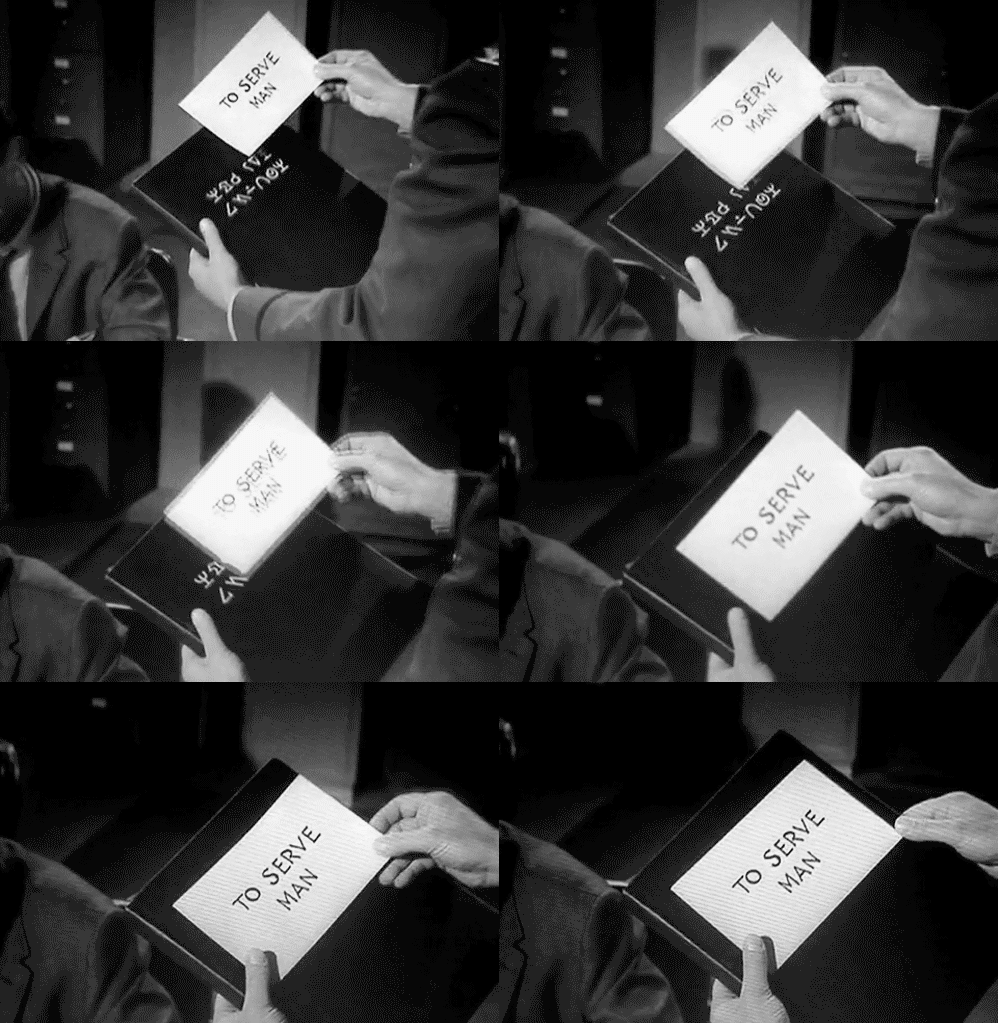
Of all the Twilight Zone episodes, perhaps the creepiest and most jaw dropping is the episode called "To Serve Man". The premise runs something like this (spoiler alert): Aliens land in Washington D.C. At first, everyone is utterly terrified of them, in part because they are nine feet tall and can speak telepathically, and also did I mention that they are aliens? Soon however, just about everyone's fears are allayed by the fact that they seem genuinely benign. With apparent sincerity, they insist they have only come to earth to bring an end to human suffering. Indeed, they promise to end world hunger, create the conditions for world peace, and ultimately bring healing to the infirm. What's more, the goal of their mission (at least according to the title of the book that they carry around with them) is merely "to serve man".

Of course everyone buys into this enticing program, mainly because, well, materially speaking, it is a dream come true. Who wouldn't want someone to come along and promise to end all needless suffering in the world? Subsequently, even the skeptics eventually cede to the apparent generosity and benevolence of these intergalactic missionaries.

The truth is these aliens really aren't lying about their designs, and they really do wish to provide human beings with all of their basic necessities. However, their reasons for doing so are not exactly what they initially appear to be. As mentioned before, they genuinely do wish to "serve man", but not in the spirit of Mother Theresa, rather they connive to do so in the spirit of Buffalo Bill from the Silence of the Lambs. Tragically, by the time the main protagonist in the story wakes up to this fact, it's too late (see photo below), and before he knows it he is being whisked away to the aliens' home planet, never to be heard from again.


I remember being haunted by this episode for some time afterwards, not simply because aliens kind of freak me out in general, but because of the imaginative experience of being kidnapped and trapped inside a space ship beyond the reach of earth. For my part, few things could be more psychologically terrifying than this form of helplessness.

With the exception of E.T. (and a few other notable exceptions), there really aren't many alien stories (including Alien itself) which depict other-worldly beings in a positive light. Whatever the reasons for this, and I have my theories, there are certain attributes common to these aliens. The most typical of these are as follows: they tend to have an air of hostility about them, they like to toy with the procreative processes of humanity (ex. creating alien-human hybrids), abduction and kidnappings are a popular part of their regimen, they have an affinity for dissecting humans (and implanting devices), they appear to be without much of a conscience, their brains are generally quite large (while we get no account of their hearts), they are curious about us like a scientist is curious about his specimen, and lastly, as depicted in this particular episode of the Twilight Zone, they do, on occasion, see us as a culinary treat and/or a potential candidate for harvesting.


From whence all of this imagination comes, I will not dwell here, but safe to say these aforementioned aliens have a lot in common with demons, and as it turns out, with us. The idea of aliens/demons experimenting on human beings is terrifying enough, but add to that the fact that this episode, along with similar extra-terrestrial tales, can no longer even be regarded as mere science "fiction". The truth is we have become those dreadful aliens in these stories. We are the ones that exhibit their inhumane behavior. The "law and the prophets" of science fiction have been fulfilled, but we haven't the eyes or the conscience to recognize it.

One of the strangest details surrounding those recent under cover videos at Planned Parenthood (i.e. those videos that reveal top executives at the company glibly discussing the sale of vital organs of aborted fetuses) is the fact that there really isn't anything surprising in them at all. Abortion has been legal for over forty years, and so it's no surprise that some people profit from it, nor is it terribly surprising that the ugliness of this industry gets exposed on occasion (see a few recent examples: Kermit Gosnell and Planned Parenthood lawyer). Interestingly enough, much like those terrible aliens from the Twilight Zone, those who are behind these clinics claim that they are only here out of pure altruism, and that their only wish is "to serve man". But in a profoundly sinister twist of the phrase, they also mean something quite different than what was initially suspected by this phrase.


Do I blame Planned Parenthood for all of this? Of course I do! But what is even creepier than an organization that claims to do something brutal (and then carries it out), is a general populace that feigns surprise at the fact that Planned Parenthood has done exactly what it said it would do. "You mean a company that regards unborn children as little more than a "lump of tissue", would actually have the gall to treat unborn children as little more than tissue? The nerve of it all! In truth, if fetuses have no real intrinsic value or dignity, then why can't we treat them like they are worthless? How could Planned Parenthood treat aborted babies as a lab experiment?! Well, because they have little or no problem throwing babies in the dumpster in the first place... along with all the other medical garbage. Yet if that "trash" does indeed have monetary value, then why not recycle it, right?

"Guess which one of these isn't protected?" We shed tears over lions being needlessly killed (as we have seen in recent
days), but babies in the womb… not so much.


Protestors do not mince words when it comes to expressing their disdain for the dentist who killed "Cecil the Lion"

What should really outrage us in all this is our own complicity in Planned Parenthood's behavior. They have done exact what they have been legally permitted to do, and so if they are just a little bit fuzzy about their ethics, and tend to be a little bit lax about keeping the letter of the law when it comes to defending it, you can forgive them. Indeed, it is hard to make fine distinctions about the value of innocent life, especially when you have been given charge by the legislators and the courts to butcher it.

They are consistent (at least in what they do, not necessarily in what they say), and we are not. As a society we have declared in essence; "I'm OK if you kill this or that baby, just make sure there is a sufficient cause for doing so (whatever that means), and whatever you do with the body, take care to dispose of it quickly, so that no of us has to feel too bad about a baby being needlessly slaughtered." Consequently, Planned Parenthood's biggest crime in this situation is leaving a bloody mess.

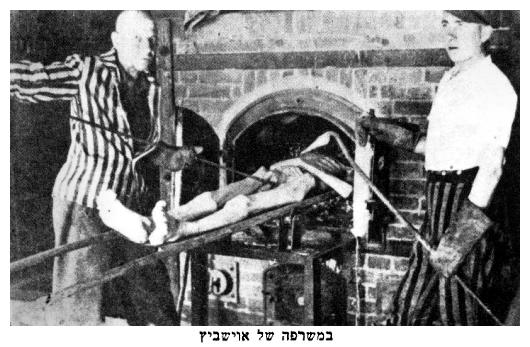
Look, Planned Parenthood is merely carrying out its own wretched, despicable Nazi philosophy to its natural end. We are the ones who have the nerve to whistle and look the other way as the train heads towards Dachau and Auschwitz. Is it more evil to do the dirty deed, or to enable it? Seems like two sides of the same coin to me. Evil generally requires both a passive and an active element; one who commits the act in cold blood, and the one who excuses it (or at minimum stands by and does nothing to prevent it).


Another prime example of these "alien indecencies", can be seen in the treachery committed against human embryos. Whatever you think of In Vitro Fertilization, at least consider this: as we speak there are upwards of 600, 000 thousand human embryos frozen in "storage banks" in this country alone.

Yes, I do not deny, that some of these embryos will be permitted to enter a womb and live their lives. Nevertheless, a large number of these "leftovers" (as they are frequently called), will eventually die or be thrown out. Other embryonic children will suffer the indignity of being used for experimentation, while still others will ultimately end up as casualties of the implantation process itself (when In Vitro is performed, doctors generally implant three- so as to achieve pregnancy for one). To those embryos presently frozen and kept in laboratory holding cells, how can we as a society be deemed as anything different than a bunch of cold and cruel aliens interlopers?

To demonstrate just how weird and inhumane this whole process can get (if you haven't figured it out already), consider the recent case involving Sofia Vergara (the lead actress from Modern Family), and her now estranged ex-husband. Apparently before they got married they created a prenup that stipulated that- in the event of a divorce- the embryos that they had already created would be destroyed. When a legal ethicist was asked recently on Fox News about these embryos (and their subsequent legal status), she admitted, in essence, that these embryos are little more than "property" of the couple (welcome to a new form of child slavery).


As a consequence of a tragic equestrian accident some twenty years ago, Christopher Reeve spent the remaining nine years of his life in a wheelchair. During that time, he worked diligently to find a medical cure for this type of spinal injury (and presumably others). For this reason, he petitioned Congress (and anyone else who would listen), for greater access to those previously mentioned "leftover embryos" in the hope of pioneering a medical cure (Michael J. Fox also was initially involved in this campaign, but his initial enthusiasm wore off when the initial hype elicited little medical success).  
            
Personally, I am not a huge fan of the show South Park, but I suppose comedians who indiscriminately take a swing at everything eventually knock down something that ought to be knocked down. In one particular episode, Christopher Reeve is attending a rally in support of embryonic stem cell research. During this particular rally, he makes a speech during which he pulls out a dead fetus and begins to gnaw on it ravenously. After essentially absorbing its "nutrients", he then begins to get up and walk around the stage, evidently cured of his prior affliction.  

I find this satire disgusting– in part because it mocks someone who suffered tremendously. But I do not find it any more disgusting than the fact that it is actually true. Regardless of how offensive this parody may be, it is based on a medical fact, and should serve as a powerful reminder of why emotions alone should not be the final arbiter of our ethics. Reeve (and others) may not have perceived their actions in this light, but are they not in the end essentially doing what this South Park episode suggests (i.e. supping on the lives of the unborn in order to save their own)?  


Amidst all of these disturbing and gruesome examples of how we abuse human life, I have not even included in this discussion some of the more decadent examples. One such example involves the use of aborted fetal cells in cosmetic products in order to regenerate the skin of the aging consumer. Next, we have the story of how Pepsi used tissue derived from aborted fetal lines in order to test the savoriness of their products. And lastly, we have the recent scandal of several large hospitals using aborted fetuses as an alternative energy source in order to heat the facility. It's great being green, isn't it?! Note, in all of these instances, I have not simply focused on some lone crazy going rogue, but rather on the decisions of entire cooperations. Obviously this does not mean that everyone in these organizations is aware of these practices, but presumably in order for such controversial methods to go forward, consent must be given at the highest levels.    


Looking in the mirror as a society, we are no doubt horrified by the set of alien eyes that we find staring back at us, but strangely enough, we do not associate them with our own. I suppose this all makes sense in a way, especially considering the nature and psychology of evil, a kind of dissociative disorder whereby humans and angels alike become particularly adept at the practice of denying any personal culpability for anything. 

Evil is always over there, it's never here. The truly wicked man is immaculate in his own eyes... or at least never responsible for the subsequent effects of his action. Proverbs puts it another way; "Every man is right in his own eyes, but God judges the heart" (Proverbs 21:2). So it is likewise with the general response to the behavior of Planned Parenthood. We are naturally horrified (at least most of us are) to discover that “Soylent Green is people!", but we nevertheless remain fundamentally detached and disassociated from our own culpability in the wide distribution of this mystery meat. 


Yes, To Serve Man, is a story about a fictional alien cookbook, but it may as well be the Cliff's Notes to the Satanic Bible. The goal here is simple: reduce the human race to a bunch of mindless tablet-watching zombies with giant unblinking eyes, who both consume and are consumed by one another. How do you accomplish this? Not by withholding things from humanity, but rather by gorging him on every imaginable material good (just as the aliens did in the Twilight Zone). This will subsequently result in a humanity that is utterly anesthetized and stupefied, a slave to his own appetites, so much so that he will serve as the perfect host body and specimen for harvesting, even as we- in this most tragic days- have done the same to one another. 


Rod Serling: (closing narration from To Serve Man) The recollections of one Michael Chambers with appropriate flashbacks and soliloquy. Or more simply stated, the evolution of man. The cycle of going from dust to dessert. The metamorphosis from being the ruler of a planet to an ingredient in someone's soup. It's tonight's bill of fare in the Twilight Zone. 


Saturday, June 27, 2015

Can You "Prove" the Existence of God?


When you talk to an atheist or a skeptic about proof for the existence of God, one particularly effective challenge they pose is the apparent lack of indisputable evidence in favor of a Deity. Leaving aside the usual attempts to prove to the contrary, let us consider for the moment a different question. What does it mean to "prove" something exactly? In other words, when we say that we have effectively "proved" that something exists, what are we implying?

What most people assume is meant by this is often quite different from the reality. What we assume we mean is that we have demonstrated some truth beyond a shadow of a doubt. Without getting too much into the weeds about the nature of being, it is safe to say there is very little, if anything, that we can definitively prove if this is the criterion. Exhibit A: Because I once thought my garage door was closed at night, and, as it turns out, it was actually open, I now check the garage door at least twice before determining that I have actually closed it.

To explain it another way, there is a certain level of faith that even goes into believing that what you see corresponds to reality. Perhaps I am confusing a memory with an action, and the garage door isn't closed after all (etc.). Hence, in order to trust that something is, as opposed to is not, we have to settle for a certain level of trust in our senses, a trust that will inevitably fall short of absolute certitude.


When discussing "proof", whether scientific, religious, or otherwise, our standards must necessarily be imperfect. Reason-based proof can only get us as far as reason can get us, which is only as far as the senses and intellect can. Human beings are characterized by limitations. No matter what we are attempting to prove (natural or supernatural), a thing can only be verified on the particular horizon of our awareness. Anything that lies beyond that particular horizon, requires that we make certain inferences about things that we cannot see, based on things that we can. Why do we do this? Because we recognize quite rightly- the things that we see do not exhaustively explain themselves. The question is not whether something is irrefutable (everything is refutable on some level), but whether or not a certain reality meets the definitional standard of "proof."

The sun does not cease to exist when it falls beneath the horizon line, but you nevertheless cannot see it with your own two eyes 

The first definition of "proof" makes this quite clear: "Evidence sufficient to establish a thing as true, or to produce belief in its truth"; "the effect of evidence convincing the mind"; (in law) "evidence having probative weight". Consequently, if one is to establish something as true, one must first observe the evidence, and then determine whether or not there is sufficient evidence to assent to that particular truth.

People talk all the time about a "smoking gun" in a case, but even were you to literally find one (which seems unlikely), the gun would presumably cease to smoke at some point in the process, thus leaving room for potential doubt in the final analysis. Yet whether we speak about the smoke of an actual gun, or that of the original "Big Bang", the question isn't really whether you can absolutely prove it or see it, but whether the "probative weight" of evidence points to that particular conclusion. In point of fact, if absolute proof were necessary at every trial, you could never put anyone on trial, much less convict them.

In the Gospel of St. Matthew, after the Resurrection (but before the Ascension), Jesus takes the disciples up the mountain, and then proceeds to tell them to go into the world preaching, teaching, and baptizing. However, what is particularly odd about this encounter, other than the fact that a resurrected man is standing in front of them (though that is impressive enough), is the fact that the some of the disciples are relatively skeptical about the one who is staring them in the face; "they worshiped him, but some doubted". Whether you accept the resurrection or not, you get a glimpse of the inevitable limitations and shortcomings of the senses. Empirical evidence is great, but sometimes even that is not enough, especially when a thing is beyond our horizon expectation level. So no, seeing doesn't always mean believing, and yes, there are things that we see and hear that make us say things like; "I can't believe what I am seeing and hearing".


Obviously one cannot absolutely verify God's existence, especially if you reject proofs that involve the Incarnation. God is not, or so it would seem, an everlasting table that shouts his name over and over so that we have clear evidence that he exists. Nor does he stand in the sky and wave (or threaten) endlessly like some Monty Python character. This might seem convenient on one level, but I am not sure what purpose it would serve in light of our freedom to be thinking and loving creatures.

In any case, what can be proven absolutely by empirical evidence, is the likelihood that God does exist. There is always a chance that you or I are wrong about anything, or that what seems to apply universally, only applies locally. However, what can be said empirically and universally, is that the universe, along with all the life that inhabits it, demands some sort of satisfactory explanation to explain it being there. The likelihood that the universe simply fell together by accident, and that it continues to function and evolve (inexplicably) in a way that is both intelligible and operational, seems to strain credulity. Referred to as the Anthropic Principle, this argument argues that, statistically speaking, the likelihood of the universe occurring by happenstance borders on the impossible. Put another way, the resurrection seems like peanuts compared to this. Hence, percentage-wise, it is far more reasonable (and less of a leap of faith) to posit a Supreme Being at back of everything.

The second definition for "proof" offers a more practical side ; "(Something) able to withstand"; successful in not being overcome"; "to demonstrate as having a particular quality of worth." Biblically speaking, the word "proof" is often used as a metaphor to describe the "worth" of a man's faith. The metaphor is usually employed in like manner; "For thou, oh God, has proved us; though has tested/tried us as silver is tried" Psalm 66:10. Hence, "proving" in this sense means not only that something can endure a "trial" by fire, but that the testing actually "proves" the worthiness of the material (hence it is transformed into gold). Not only in this case does the unpleasant experience fail to destroy the individual or their faith, but it actually "proves" their faith (double meaning intended).  

As it relates to the big ideas of history, something "proves" itself based on whether or not it can "stand the test of time". The question isn't whether something is fashionable a lengthy period, but whether it endures every age and culture. Indeed, time is the great editor of all things inessential, and so if an idea is weak it will simply melt away like dross into the fire of history.


But what about lies, you may ask? Haven't there been any number of successful (as well as enduring) lies? And indeed there have been, but just like any true/false section of a test or quiz, the wrong answer survives, and is popular, only to the extent that it successfully mimics the right one.

The third definition for "proof" offers a more legal angle; "the act of testing or making a trial of something." Understood in this context, proving something actually requires subjecting it to a kind of crucible, putting it up on the stand, so to speak, holding it up to scrutiny.


In a similar sense, we can test something's effectiveness by simply employing it; "We took the car for a test drive; a "trial run." The point is you can't know whether something works and/or is true unless you "try it out". Furthermore, you cannot know whether a theory, a hypothesis, or a theological premise is true unless you test it, let it run the gauntlet, and thoroughly scrutinize it from all angles. Is it universally applicable (all times and places)? Does it bear fruit when practiced according to the formula proposed? Is the "formula" capable, not only of maintaining the status quo, but of adapting and answering unforeseen dilemmas? Does it present new vistas of possibility?

Just as evolution is not disproved by those who reject it based on theological bigotry, neither is God, nor the Catholic Faith disproved because some prefer to call it irrelevant. The truth is buoyant. You can put it on trial, you can martyr it, you can bury it under the floor boards, but in the end you will only wind up "proving" it all the more when it rises from the dead again.


You cannot absolutely prove that there is such a thing called science (a.k.a. cosmic order), but you can apply certain principles/doctrine to test the veracity of the idea. To this extent, there seems to be sufficient proof/evidence to suggest that there is a cosmic order, just as there appears to be evidence for proving the Big Bang as well as Evolution. The proof is not simply in the fact that we can obtain general data by studying it, but that the datum once examined, is progressive (viz. it bears much fruit). In other words, it continues to open new doors of understanding that closed with the prior model. Simply put, it works! In the same sense, you cannot point to the abstraction known as science, but you can infer that there is such a thing as it by virtue of all of the bounty that we have experienced by presuming it.


Consequently, based on these definitional standards, there does seem to to be adequate "proof" to argue in favor of the existence of God. Can you prove that there needs to be a First Cause in order that there be subsequent causes? Based on the definition of proof, not to mention the general logic that we apply to every day life...yes.

The case becomes even stronger when all of the logical "proofs" are considered in tandem (i.e. The Argument from Design, Cause, Degrees of Perfection, Conscience, History, etc.). In other words, when these proofs are taken collectively they appear to  establish a reasonable basis for positing a First Principle that initiated this process, a process which seems otherwise completely mystifying and inexplicable otherwise.

What is unreasonable is the suggestion that logic can be applied to science (and everything else for that matter), but not for the biggest question of all. Point being, if we apply this logic to every other link in the chain, why wouldn't it make sense to apply it to the First? We all knew that religion was "irrational", but who knew that it was simply because scientists demanded that it had to be!? Damned if you do, and damned if you don't!


As far as whether the standard has been met in definitions two and three, I would have to answer in the affirmative again. Belief in a Deity has stood the test of time. It has been put on trial by barbarians and thinkers alike (which are on occasion the same people). And as it turns out, atheism and skepticism are the aberration in history, not religion (and a recent one at that). Complete skepticism and atheism are in the end the creeds which are most unlivable, while belief in a Deity that orders the universe in a rational manner is, well, the most rational.

Religious folks are expected to make their case for religion, and understandably so. But shouldn't we expect more of our atheist and skeptic friends than an argument that is basically goes something like this; "na na na na you can't prove God 100%". I have already pointed out why such a bar- from the standpoint of reason- is necessarily an impossible one (which seems to be why it is set where it is). I am not here suggesting that every religion is equally logical, rather I am suggesting that the general belief in a Creative force at the back of everything is quite a logical position. Superstition is to religion what alchemy, astrology, and certain ideological scientists are to science.


So can you prove the existence of God? Well, according to science, logic, law, every day experience, history, and Webster's dictionary- Yes. In point of fact, I would argue (as some already have), that it is precisely because of such a "God hypothesis", that science, as it is understood today, was able to find a firm footing in the first place; "Thou hast ordered all things in measure, number, and weight" Wisdom 11:21

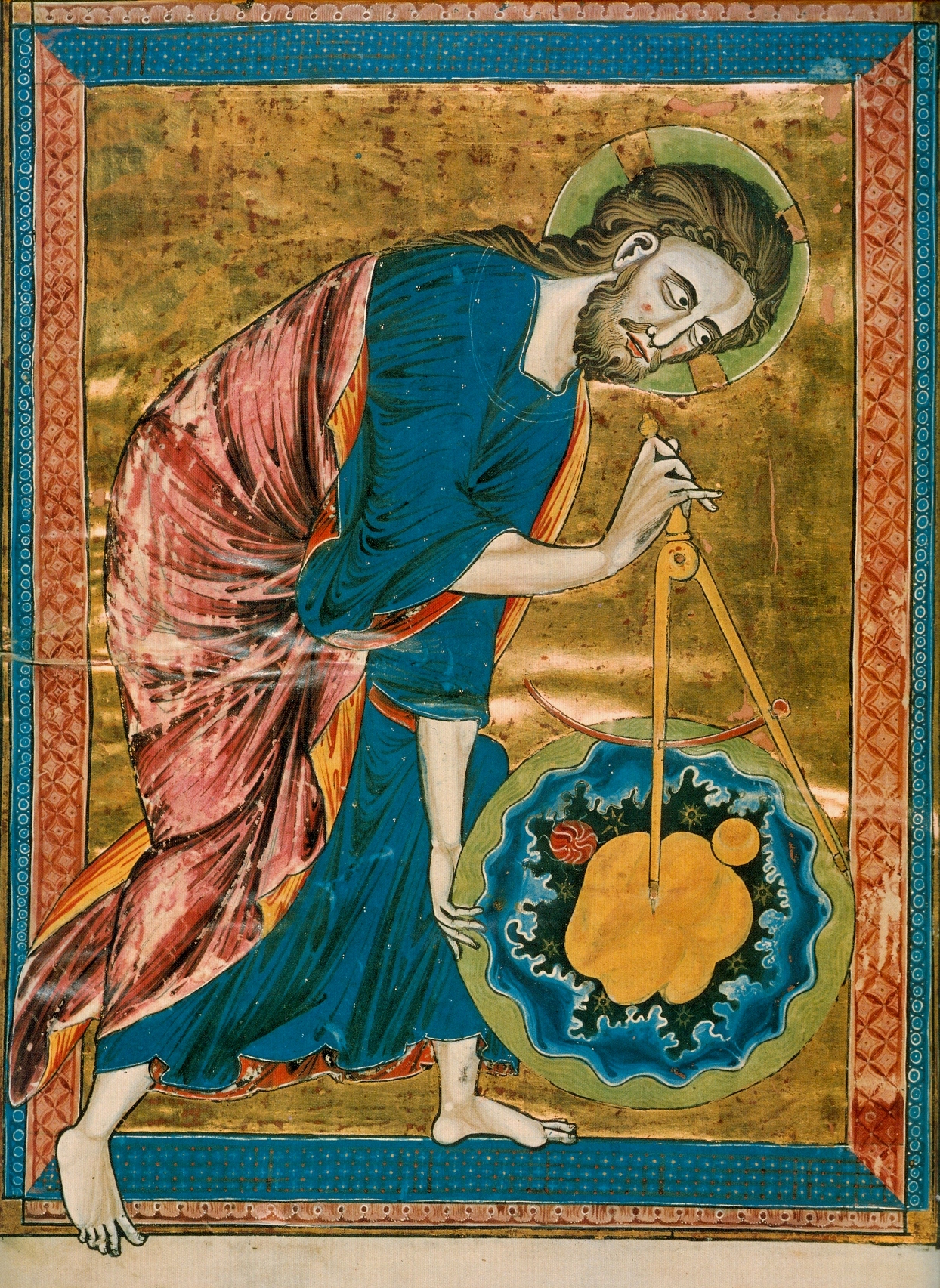
Jesus as the divine Geometer- 13th century

In everything that can be seen there are certain assumptions made about about those things which are unseen; "For his invisible attributes, namely, his eternal power and divine nature, have been clearly perceived, ever since the creation of the world, in things that have been made." (Romans 1:20) We cannot see science, but we have come to believe that it works because we have applied its principals and they have subsequently borne fruit. The same goes for right religion.

Is this not a better explanation for the advance of modern science than the suggestion that it arose from a heretofore unheard of school unbelieving scientists? If you believe that the universe is a giant mortuary of chaos and meaninglessness, why would that then lead you to come to recognize its logic and order.

But whatever the case, history and observation do not bear out this account of the story (see above photo from French Bible circa 13th century). Nonetheless, I suppose if you can believe that the universe began arbitrarily and without cause, then you can also believe that science happened in the same fashion. By contrast, if my hypothesis is correct, then is it not particularly ironic that some in this whole debate would employ the exact same logic gleaned from an explicit belief in a Designer in order to prove that there is no need for a Designer at all? Very Prodigal Son, if you ask me.      


Tuesday, June 23, 2015

I Too Am "Transitioning"...


With all of this talk about "transitioning", and people "identifying" as this, that, and the other, I thought it only right that I too should "come out" and admit that I myself am in the "transitioning" process. However, before I share any more intimate details on this front, I thought it best that I explain how I came to this life-altering decision.

I was reading (and writing) about all of the hoopla surrounding individuals like Bruce Jenner and Rachel Dolezal (see: Thank you Caitlin, Miley, NAACP Woman, and Dog Boy!), when I realized that there was something about this whole drama that I forgot to consider. We've spent a lot of time discussing whether or not a man can identify as a woman, or whether a woman of Caucasian decent can identify as an African, but what about whether or not someone can/should identify as a higher being (i.e. like a god or a superhero)? I mean if there really is a "Hero" trapped inside of all of us (as Mariah Carey and everyone at Comicon might attest), then why can't this be an option for everyone as well?


If you were to ask me what I envisioned to be the next frontier of cosmetic surgery, I would probably suggest something like super-sensory enhancement. And yes, there's an actual term for this already: trans-humanism. Forget a nose job, breast augmentation, or the possibility of changing genders- what about the ability to see something a mile away like an osprey, or a built-in GPS system like a bee, or perhaps even the gift of "Spidey senses" like, well, Spider Man? This form of surgery would not merely involve enhancement of your current appearance, it would also involve elevating every imaginable human perception to the level of a super hero/god.


In any case, I'm sure you can imagine what the critique might be of all this so called "progress". You know how it goes; "If we play Frankenstein with the world, the world is more than likely to return the favor." Fair enough. The inevitable down-side is obvious, but what, if anything, is potentially redeeming about a world which seems so bent on some sort of radical transformation? I propose the following.

Now when I say redeeming, I do not mean that we are going in the right direction by seeking to live out our personal fantasies via advanced cosmetics and/or technology. What I am proposing is that this desire to "transition" into something different/better is not only an understandable desire, but when applied correctly, is in fact Godly.

Indeed, just as the  preposition "trans" has become a kind of by word in the world of gender ideology, so also in Catholic circles it possesses tremendous power and significance.


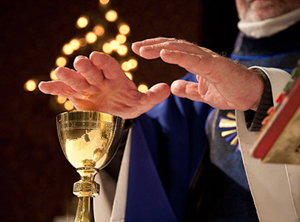
The philosophical terminology for the action of changing bread and wine into the body, blood, soul and divinity of Christ is referred to as transubstantiation. And while it's connection to our current topic may seem tangential at best, the logic most certainly is not. Indeed, so much of our modern technology is geared- not only towards changing the artifice of things- but actually changing the underlying substance of them as well. The problem isn't so much that we are attempting to repair what is broken in the world (a perfectly commendable enterprise), but that we are carelessly going about trying to redefine and re-interpet life itself. If life has no meaning in itself, then this is not a problem, but if it does, then we are doing unimaginable violence to nature.


Obviously today we are experiencing this kind of existential identity crisis in a profound way, for not only are we attempting to warp Mother Nature, but I think it's safe to say that we are going so far as to warp "mother's nature". Were this not the case, would we really be pumping people with all of these artificial hormones, removing their sexual organs, and obsessing over which pronoun to use for them (or anyone for that matter)? With so much emphasis on all things organic these days, one would think that such behavior would be regarded as counter-productive.

…Which brings me to my own personal confession, my own personal "coming out party"; the revelation of my new identity. I too feel at times a profound impulse to jump out of my own skin, and "transition" into someone else. However, if/when I do make this transition, I fully intend to do so without the aid of any kind of drugs and/or self-inflicted wounds. For my hunger is not to become a feline, a woman, or even Tony Stark (though that is admittedly tempting).


According to the Christian narrative, we are all guilty of suppressing something deep within ourselves; something that inspires us to lie about who we really are. Consequently, God is waiting for us, not only to liberate us from this lie and change our names, but to share with us His own immortal identity. Yet as is the case with most superheroes, the goal here is not to erase the former self, but rather to fulfill our ultimate destiny (remember, grace builds on nature-it doesn't destroy it).

When St. Thomas Aquinas was offered the gift of anything in the world, his response was quite stunning, he said to God; "I will have Thyself". And as bold and shocking as this request may seem, it is in many ways the summary of the Christian vocation.

It is possible that one day men may of their own efforts be able to create their own kind of Über Brot; a bread which infuses tremendous strength and energy in us- and perhaps even longer life. However, in the end it can only be a counterfeit, a placebo, a chintzy plagiarism of what God has accomplished already. For if God is able to cause a tiny sliver of bread to "transition" into Himself, how much more then will he do the same for us? So let us set aside all of these colorful counterfeits, and instead take up our true identity. Let us put on Christ, and find out what it really means to be at home in our own skin.